
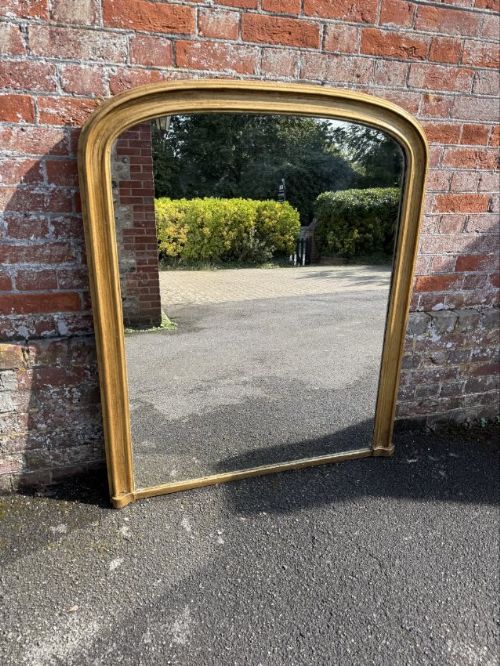
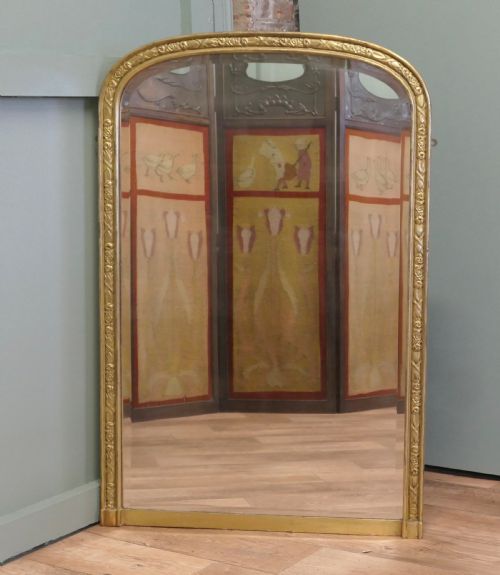
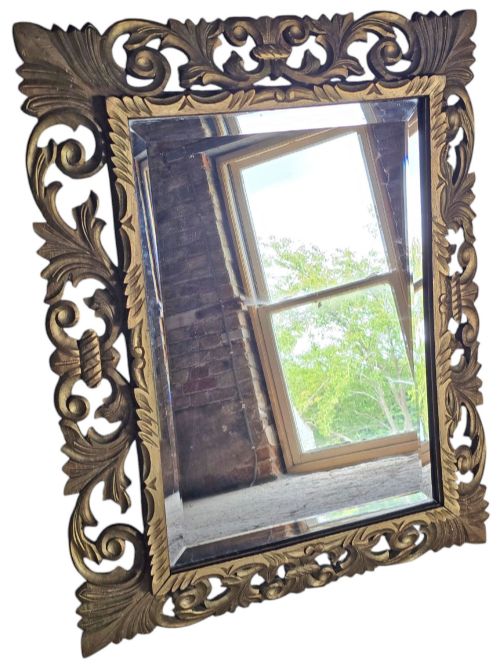
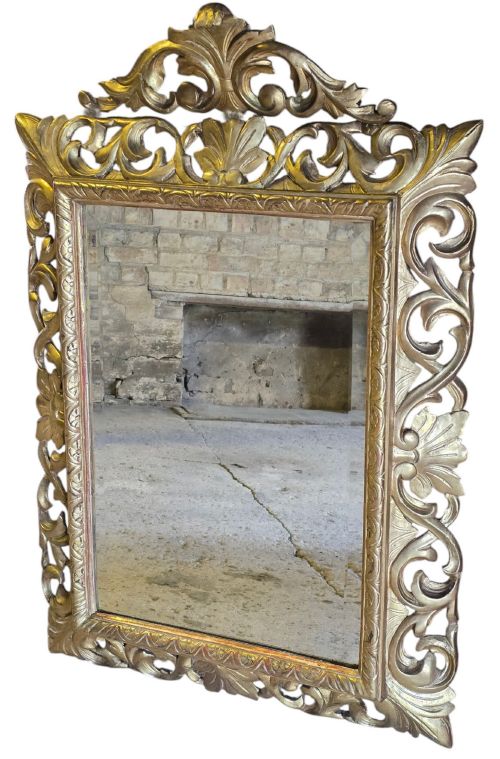


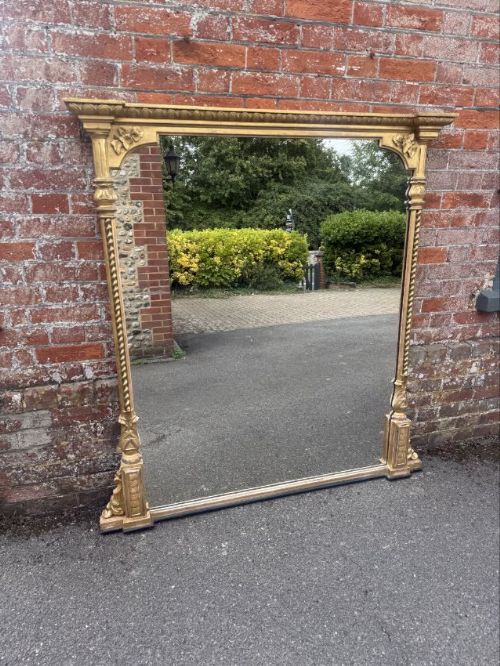
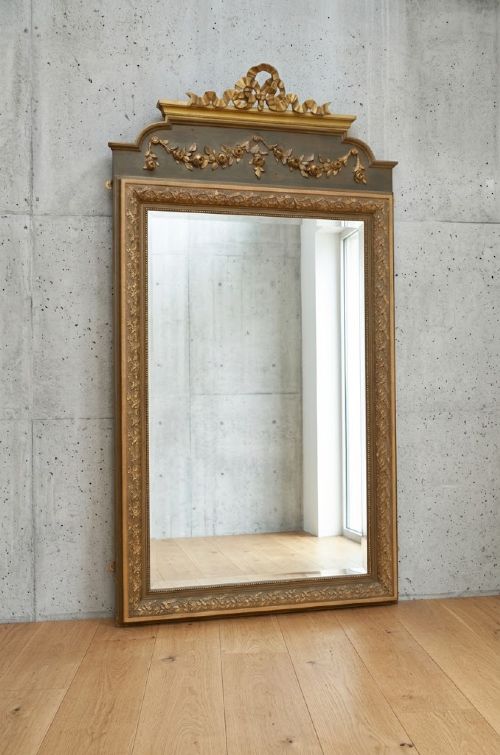
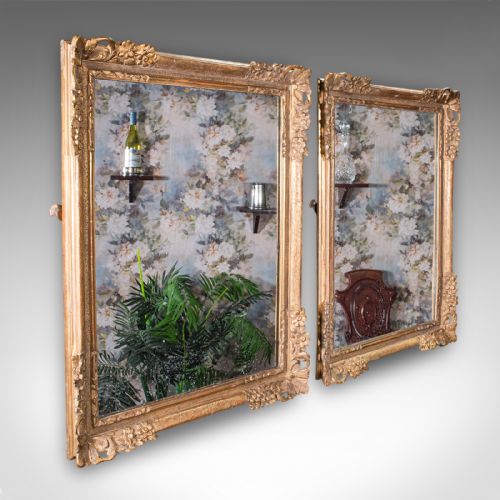
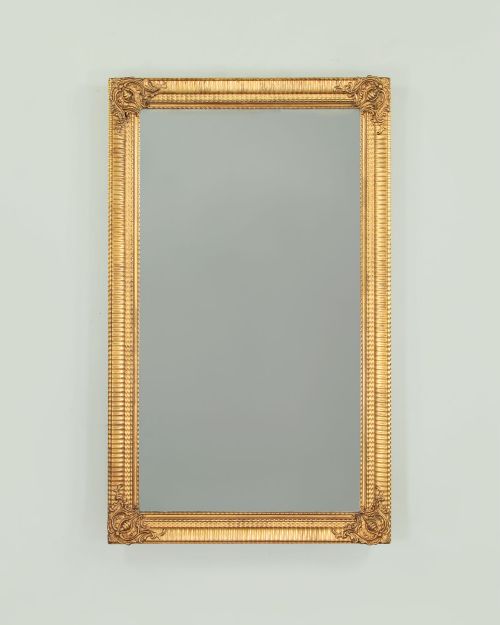
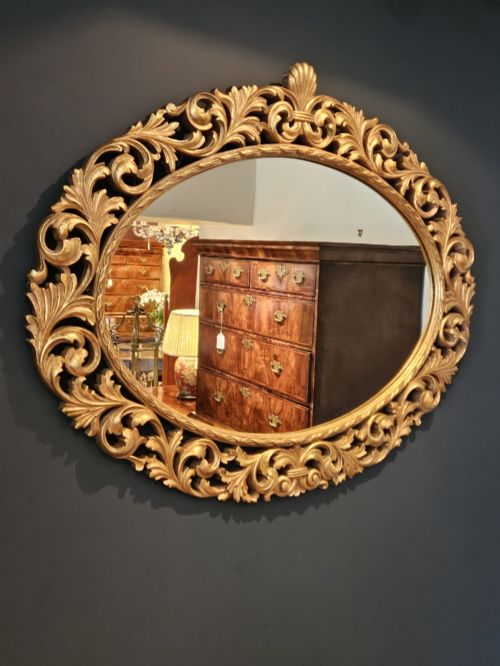
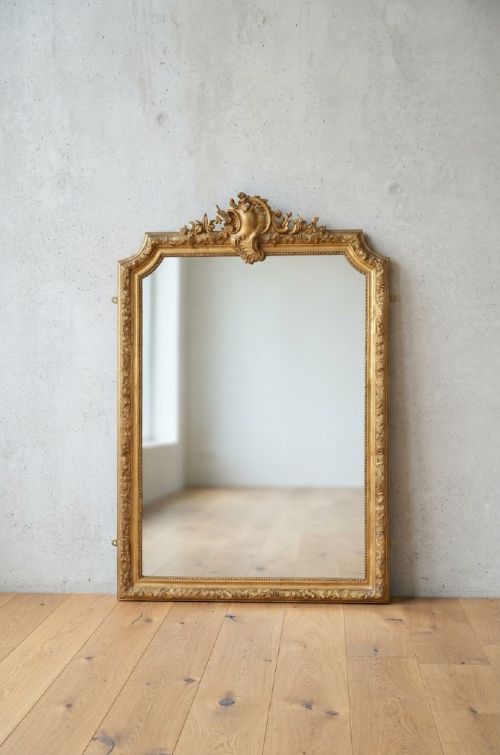
Large Carved Frame Mirror
A large carved frame mirror brings architectural presence to a room, combining substantial wooden construction with ornate surface detail.
Large Carved Frame Mirror
A large carved frame mirror serves as a dominant wall hanging or overmantel piece, designed to reflect light and expand interior spaces. The selection ranges widely across the nineteenth and early twentieth centuries, drawing on Victorian, Georgian, Regency, and continental French traditions.
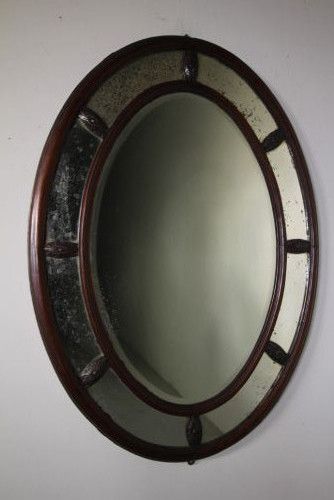
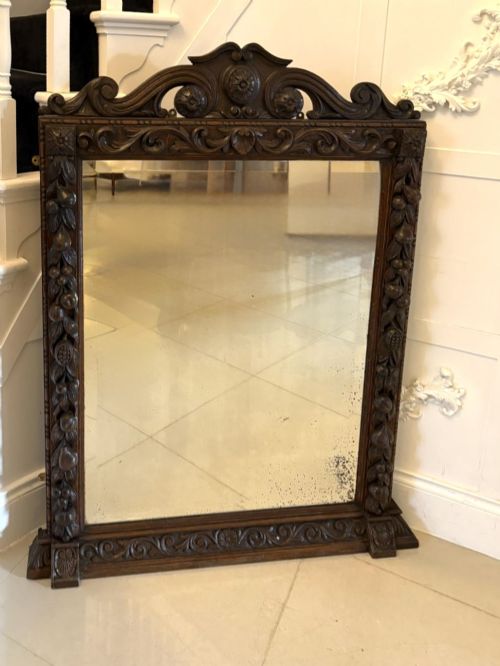
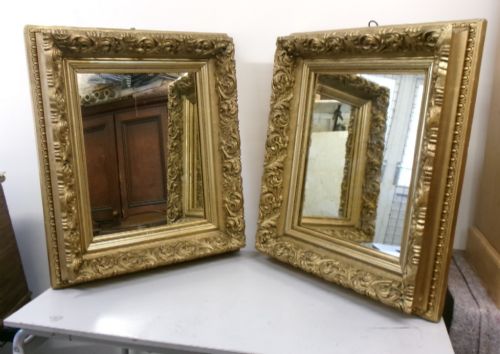
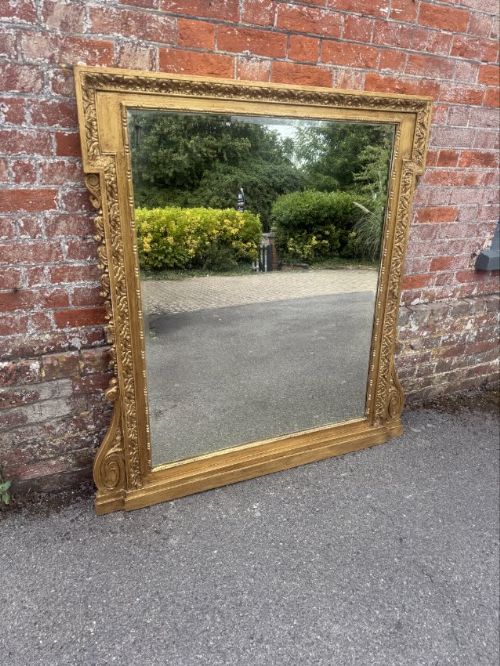
Overmantel mirrors and tall wall mirrors dominate the offerings, frequently taking rectangular, arched, or oval forms. English country house mahogany designs and elaborate giltwood Florentine or Louis-style frames appear alongside heavier carved oak pieces from the eighteen-eighties and eighteen-nineties.
How They Were Made
Craftsmen carved solid timbers such as oak, walnut, mahogany, and pine to form the structural carcass of each piece. Artisans applied layers of gesso over the wood substrate to build up crisp relief ornaments, ribbon crests, and rope twist mouldings.
Gilding involved applying thin sheets of gold leaf or silver-gilt onto the prepared gesso surfaces, whilst alternative examples received painted finishes or left the natural oak and bleached wood exposed.
Some nineteenth-century mirror frames incorporate carved nautical rope twists, bringing unexpected maritime flair directly into inland drawing rooms.
What Varies in Quality
The depth and definition of the wood carving dictate the standard of the piece, separating hand-chiseled depth from flat, moulded composition ornament. Crisp relief work in the gesso and clean joinery at the frame corners demonstrate superior workshop practice.
The retention of original mercury glass plates, uncompromised gilding, and the integrity of the original backing boards distinguish well-preserved specimens from heavily restored iterations.
The Large Carved Frame Mirror Glossary
- Gesso
- A plaster-like mixture applied to wood frames to provide a smooth surface for gilding or deep relief carving. It allows intricate decorative motifs to be moulded onto the timber carcass.
- Giltwood
- Timber coated with gold leaf or metal leaf over a prepared base. This finish provides a reflective golden surface popular in nineteenth-century formal interiors.
- Overmantel mirror
- A wide mirror specifically proportioned to hang above a fireplace mantelpiece. These pieces often feature arched tops to match architectural chimney recesses.
- Pier glass
- A tall mirror designed to hang on the narrow pier of wall between two windows. They frequently incorporate original flat plates to bounce light directly into the room centre.
- Composition
- A moulded mixture of whiting, resin, glue, and linseed oil pressed into shape. Makers utilised this material as a cost-effective alternative to hand-carving complex repeating decorative details.
Large Carved Frame Mirror: Frequently Asked Questions
Where should I hang a large carved frame mirror?
These pieces suit positions above mantelpieces, along principal reception room walls, or serving as dressing mirrors in larger bedrooms.
Ensure the wall construction supports substantial weight, as substantial timber and glass assemblies require secure fixings into structural studs or masonry.
How do I date a nineteenth-century mirror?
Examine the timber species, backboards, frame assembly methods, and the reflective glass plate itself. Hand-beveled edges, original fixings, and specific stylistic markers such as rope twist mouldings or gesso applications help narrow the period.
Comparative analysis with documented pieces from Victorian, Regency, and Edwardian eras confirms stylistic attribution.
Are the mirror plates original?
Many antique mirrors retain their original glass, which often displays minor foxing, dark spots, or subtle distortions caused by early manufacturing methods. Replacement glass typically appears clearer and lacks the characteristic surface age of period plates.
Original mercury glass carries a distinct depth and softness of reflection compared to modern silvered alternatives.
How do I clean a giltwood frame?
Dust gently using a soft, dry brush to avoid disturbing fragile gesso or flaking gold leaf. Avoid liquid cleaners, moisture, and abrasive cloths entirely, as water strips historical water gilding finishes.
Professional conservation is recommended for securing loose ornaments or stabilizing degraded gilding.