


Large Bronze Incense Burner
A large bronze incense burner anchors a room with weight and history, bringing centuries of metalwork into domestic spaces.
Large Bronze Incense Burner
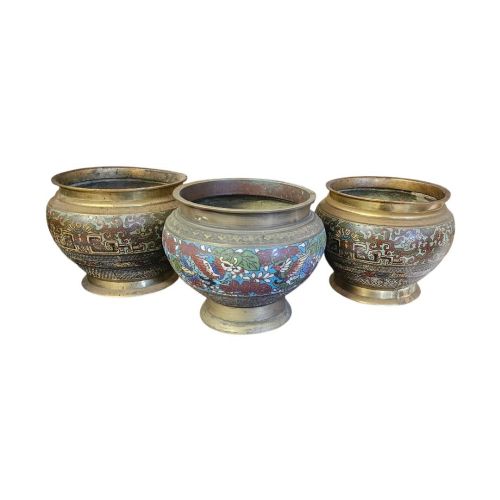
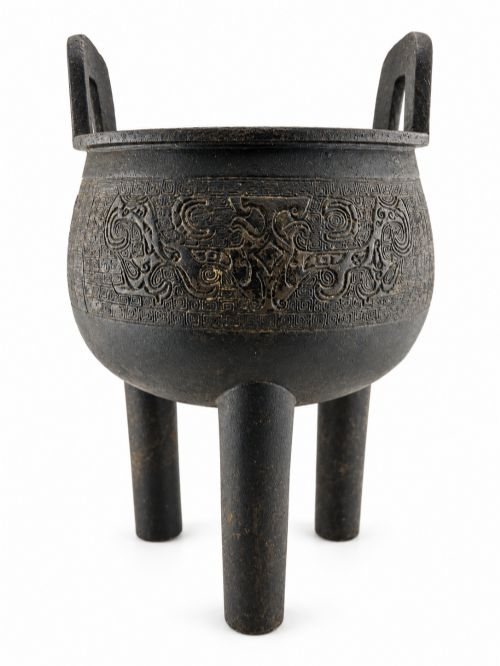
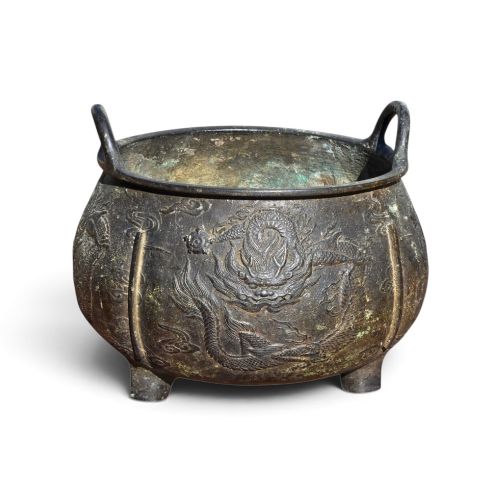
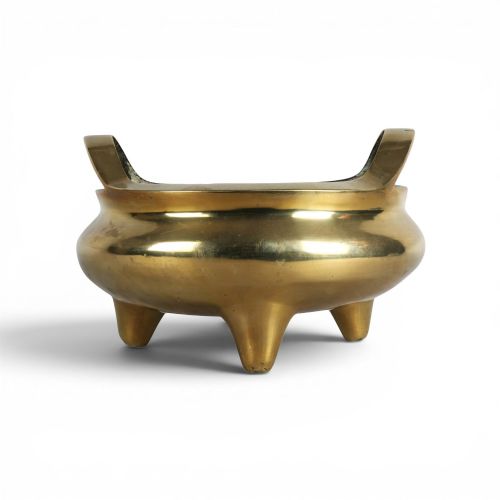
Large bronze incense burners appear across multiple centuries and origins, with Chinese pieces from the Ming and Qing dynasties and Japanese Meiji period forming the core of what turns up here. Formats range from tripod censers and lidded koros to heavy bowls, jardinières and occasional French ormolu cassolettes.
Most examples date to the nineteenth century, though earlier sixteenth and eighteenth-century pieces surface alongside works bearing marks such as Wu Bangzuo. Buyers encounter vessels featuring dragon and mask handles, taotie decoration, bamboo motifs or champlevé and cloisonné enamel.
Objects catalogued under this phrase often double as decorative urns or large bowls, shifting in function between ritual vessels and ornamental centerpieces. Their substantial scale, often weighing several kilograms, sets them apart from smaller cabinet pieces.
Materials and construction
Makers utilised bronze, cast bronze, and patinated bronze as the primary structural metals, sometimes combining them with brass or mounting them with ormolu and gilt bronze. Weight is a constant factor, with heavy cast bodies providing the stability needed for large ritual vessels.
Surface decoration frequently incorporates cloisonne enamel and champlevre enamel, fusing coloured glass pastes into wire-formed or cast compartments. These enamel elements introduce vibrant colour contrasts against the dark, patinated metallic surfaces of the bronze bodies.
Surface decoration ranges from austere patinated bronze and bamboo-moulded bodies to complex multi-coloured champleve and cloisonne enamels.
Evaluating quality
Quality rests upon the crispness of cast details like taotie motifs, dragon handles and relief work, where sharper lines indicate superior workshop standards. The depth and stability of the original bronze patina or the precision of the cloisonne enamel cells further separate standard production from finer pieces.
Substantial weight and thick-walled casting distinguish the most robust examples, while balanced proportions in tripod legs and handles show careful design execution. Markers such as specific historical reign or maker stamps add historical depth when present and legible on the base.
Wu Bangzuo
The Large Bronze Incense Burner Glossary
- Censer
- A vessel designed for burning incense. These pieces often feature perforated lids to allow smoke to escape.
- Tripod
- A vessel supported by three feet. This formation is common in archaic-style bronze vessels.
- Cloisonne
- A decorative metalwork technique utilising soldered metal wires to create cells that hold enamel paste. Artisans fire the piece to fuse the glass to the metal base.
- Cassolette
- A decorative vessel that functions as a perfume burner or vase, often fitted with a reversible lid. French examples frequently incorporate ormolu mounts.
Large Bronze Incense Burner: Frequently Asked Questions
What is a large bronze incense burner used for?
These vessels were originally created to burn aromatic incense during ritual ceremonies or in domestic spaces. Today, collectors primarily display them as sculptural decorative objects.
Larger examples often serve as statement pieces on tables, sideboards or architectural mantels.
How do I date a bronze censer?
Dating relies on stylistic markers, such as archaistic taotie motifs from the Qing dynasty or refined metalwork from the Japanese Meiji period. Surface patination, casting weight and any inscribed reign or maker marks provide further chronological clues.
Comparing the manufacturing technique, such as the style of cloisonne wiring, helps place the piece within a specific century.
Are these burners heavy?
Substantial weight is characteristic of these pieces, with many listings recording weights between several kilograms and over six kilograms. Thick bronze casting ensured durability and stability for ritual use.
This heft requires sturdy placement surfaces when exhibiting them in a room.
What is a koro?
A koro is a traditional Japanese incense burner, often featuring a lidded bowl supported by legs and decorated with intricate metalwork or enamel. They frequently appear alongside Chinese bronze censers in oriental collections.
Many examples combine bronze bodies with detailed cloisonne panels.