
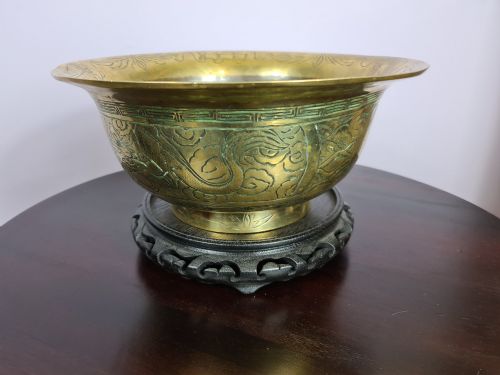


Large Brass Planter
A large brass planter brings substance and historic character to a room, holding greenery or serving fireside utility.
Large Brass Planter
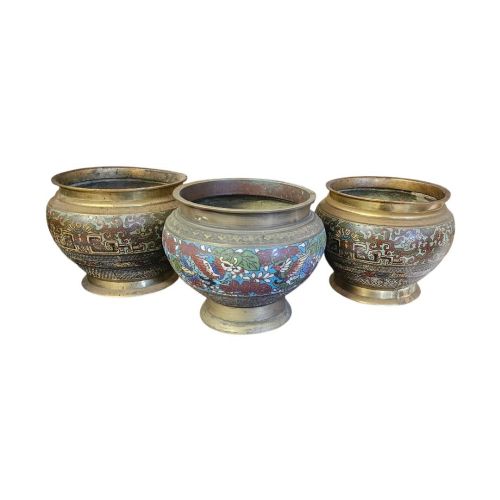
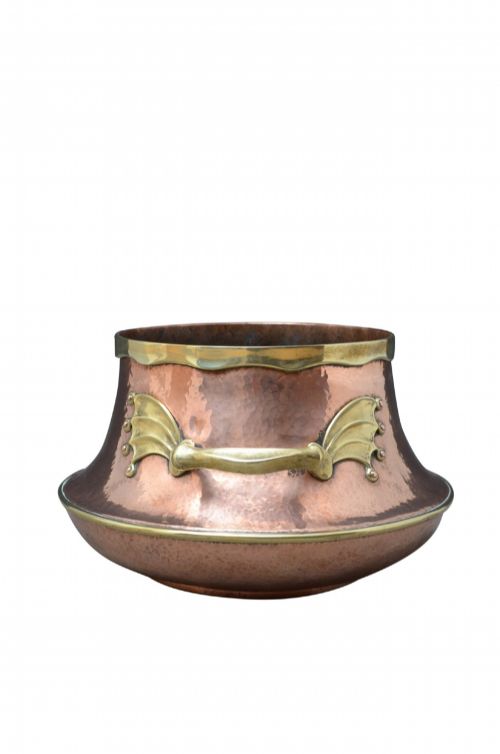
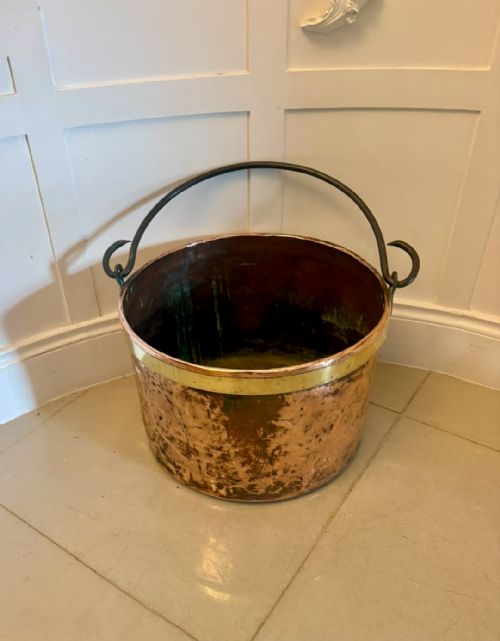
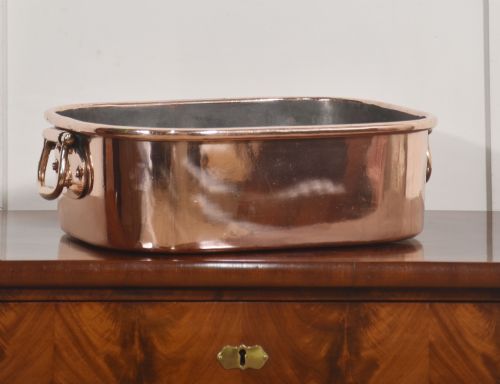
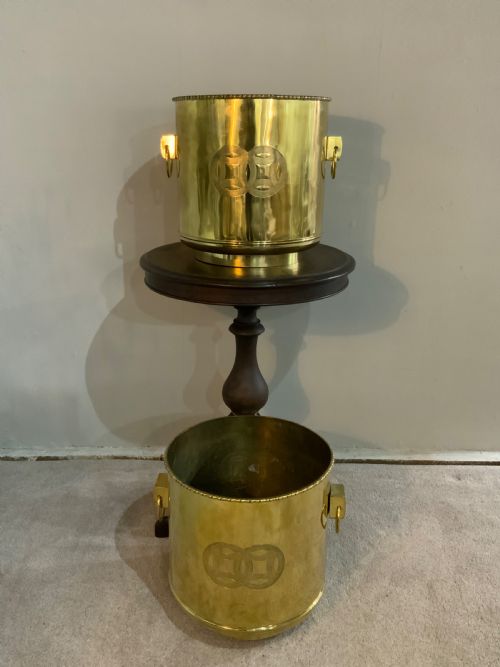
A large brass planter combines utilitarian function with decorative presence, frequently crossing paths with log bins, coal buckets, and jardinières. When searching for a large brass planter, collectors encounter vessels spanning the Georgian, Victorian, and Arts and Crafts periods, alongside Chinese bronze and cloisonné examples.
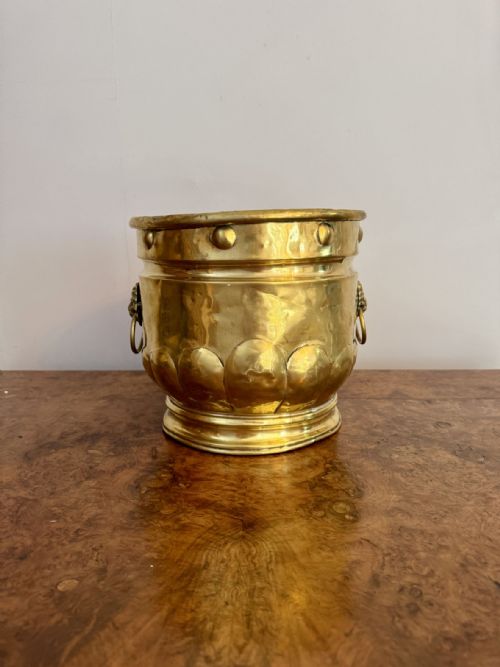
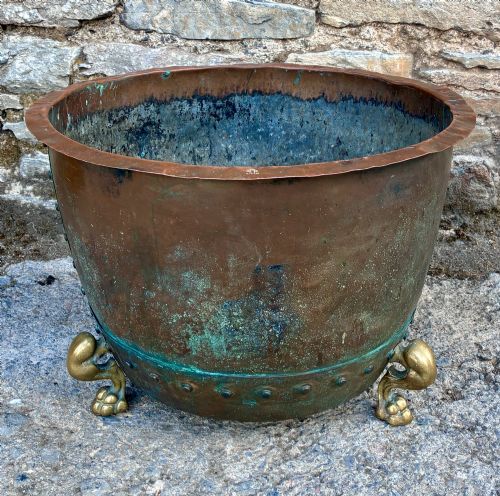
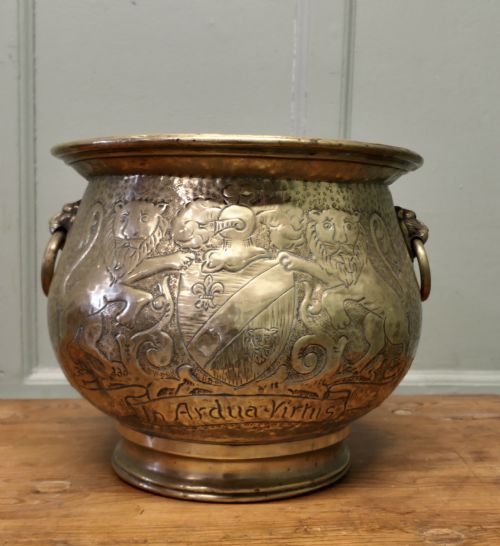
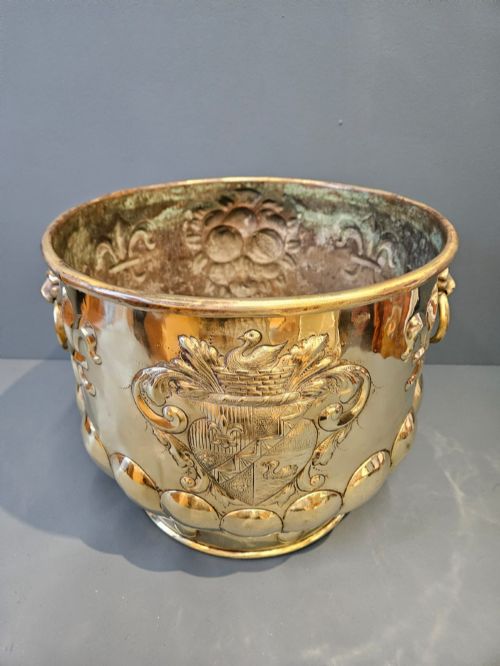
Many of these containers served multiple purposes in period homes, functioning equally as wine coolers, umbrella stands, or hearth receptacles. The most common form on this page is the Victorian brass or copper vessel featuring riveted construction, heraldic crests, or lion mask handles.
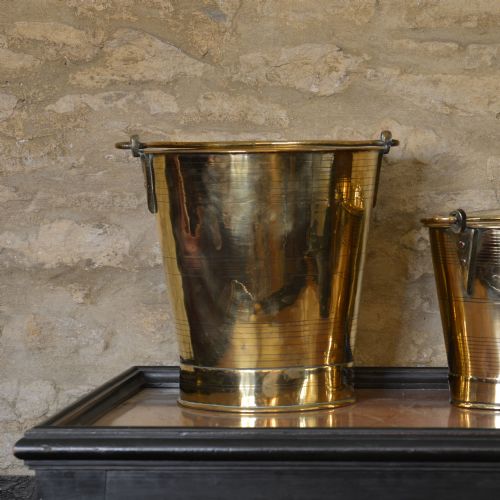
Origins stretch from English country houses to Anglo-Indian workshops and Dutch coopered teak and brass tubs. Buyers select these objects to anchor a traditional interior or to provide a metallic contrast in contemporary spaces.
Construction and materials
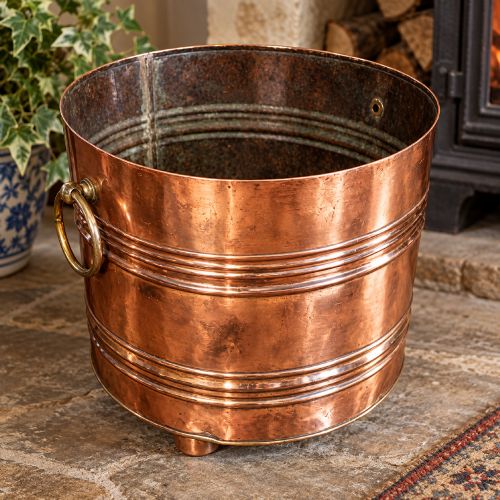
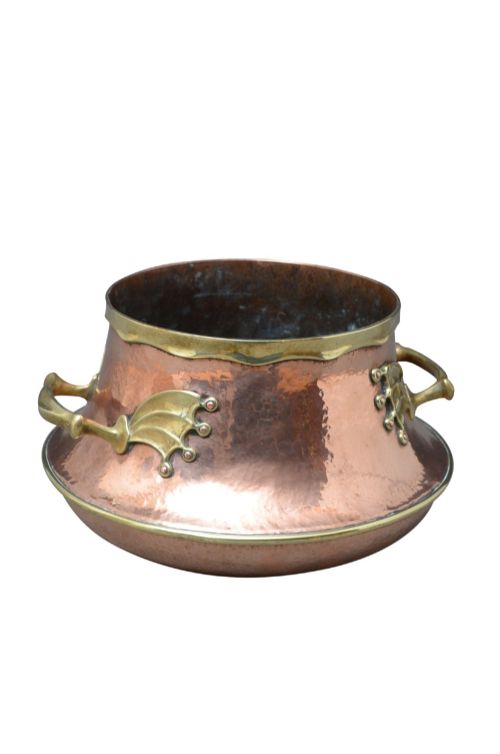
Metalworkers utilised sheet brass, copper, and bronze, often hammering, riveting, or spinning the metal into robust bowls and troughs. Many Victorian and Georgian examples combine a copper body with brass feet, rims, and swing handles.
Dinanderie techniques and champlevé enamel appear on Asian and Arts and Crafts pieces, bringing surface pattern and texture to the metallic structure. Coopered vessels join staves of teak or mahogany with metal bands, marrying woodwork with hardware.
Several vessels spent their youth hauling coal before retiring to a life of quiet dignity holding ferns.
Judging quality and character
Quality rests in the weight of the metal and the crispness of the hand-chased or embossed details, such as crests and lion mask handles. Substantial gauge metal holds its shape against dents and bears the weight of damp soil or heavy logs without sagging.
The integrity of construction separates standard production pieces from finer workshop creations. Dovetailed seams, hand-beaten hammering marks, and original paw feet or cast mounts indicate superior craftsmanship.
Champion and Co London
The Large Brass Planter Glossary
- Jardiniere
- An ornamental pot or stand for holding plants or flowers. These vessels are typically manufactured from brass, copper, or ceramic.
- Dinanderie
- A term for various objects made of brass or bronze, particularly medieval and later inlaid or engraved wares. The name originates from the Belgian town of Dinant.
- Champlevy
- An enamelling technique where hollows are carved into metal and filled with vitreous paste before firing. This method creates vibrant patterns on bronze and brass surfaces.
- Coopered
- Formed of staves fitted together and bound with hoops, similar to barrel construction. This technique appears in wooden planters fitted with brass bands.
- Cloisonne
- An ancient technique for decorating metal object surfaces with coloured material separated by strips of metal. It frequently appears on Chinese bronze vessels from the nineteenth century.
Large Brass Planter: Frequently Asked Questions
How were large brass planters originally used?
These vessels served diverse roles in period households, containing indoor palms, ferns, and floral arrangements in reception rooms. They also performed heavy domestic duties by holding coal, firewood, or peat beside the fireplace.
Some large copper and brass receptacles functioned as wine coolers or champagne buckets during dining events. Their robust construction allowed them to transition easily between botanical displays and hearthside storage.
How do I clean an antique brass planter?
Most collectors prefer to leave an aged patina, which accumulates over decades and highlights the character of the metal. Gentle dusting with a dry cloth is usually sufficient for regular maintenance.
Harsh chemical polishes strip away historical surface tones and reduce the visual depth of hand-hammered brass. If cleaning is necessary, use a mild, non-abrasive soap solution and dry thoroughly.
Can I use an antique planter for live plants?
Many of these vessels lack watertight seals due to their age and construction methods, particularly riveted or coopered examples. Direct planting can accelerate corrosion and damage historical surfaces.
Placing a modern plastic liner or pot inside the metal container protects the interior from moisture. This approach permits live planting while preserving the original fabric of the vessel.
How can I tell a Victorian planter from a later piece?
Victorian examples frequently feature heavy gauge brass, cast lion mask handles, and hand-beaten surfaces with visible tool marks. Construction methods typically involve dovetailed seams, hand-cut rivets, and applied brass crests or paw feet.
Twentieth-century reproductions or later decorative pieces often display uniform machine finishing and lighter metal weights. Examining the underside and interior seams reveals the hand-assembly methods characteristic of the nineteenth century.