


Large Brass Jardiniere
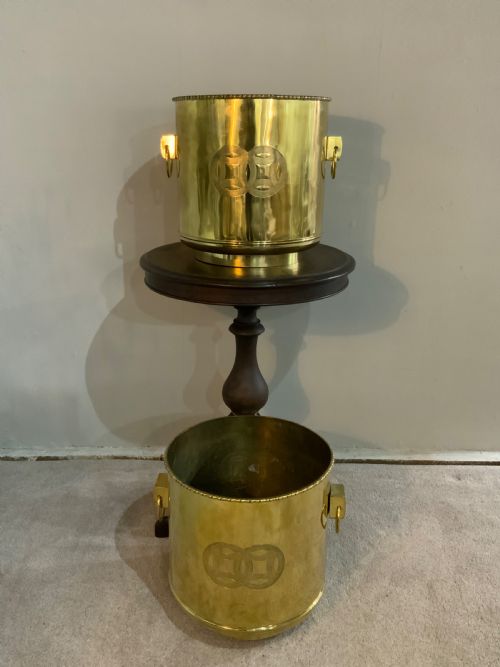
A large brass jardiniere brings substantial metalwork into a room to hold a potted plant, a palm, or a cooling bottle.
Large Brass Jardiniere
A large brass jardiniere functions as a heavy container for indoor plants, large ferns, or floral arrangements. The phrase covers vessels made across the nineteenth and twentieth centuries, spanning Victorian, Edwardian, and earlier periods.
Many examples emerge from British workshops, while others arrive from Chinese Qing and Late Qing dynasties, the Indian Raj, North Africa, and Japan. Forms range from simple round bowls to oval troughs, coopered wood and brass buckets, and footed vessels.
Buyers meet pieces styled in the Gothic Revival, Arts and Crafts movement, Dutch Revival, and Asian Revival traditions. These items double as wine coolers, log bins, and decorative bowls depending on their depth and lining.
How they were made
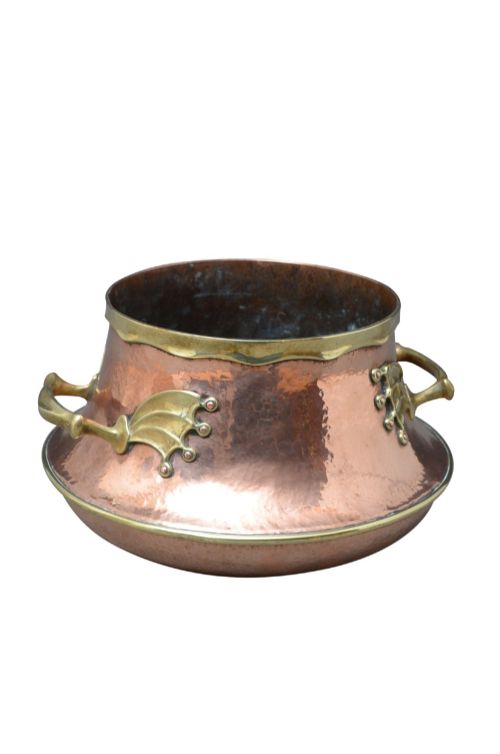
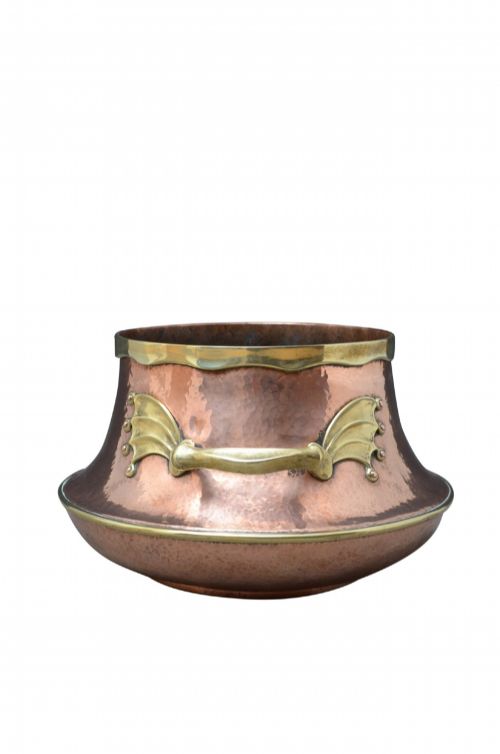
Makers shaped the bodies using sheet brass, copper, and bronze, often hammering the metal by hand to create textured surfaces or smooth polished finishes. Rivets, dovetails, and soldered seams hold the heavy metal panels together.
Some vessels incorporate turned teak, mahogany, or other hardwoods, utilising coopered stave construction with brass bands. Zinc linings protect the timber and metal from moisture when holding damp soil.
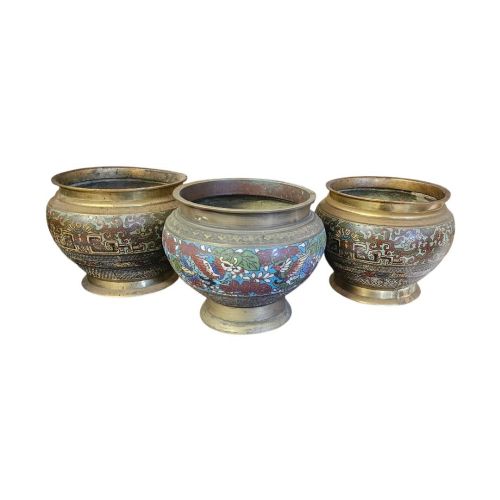
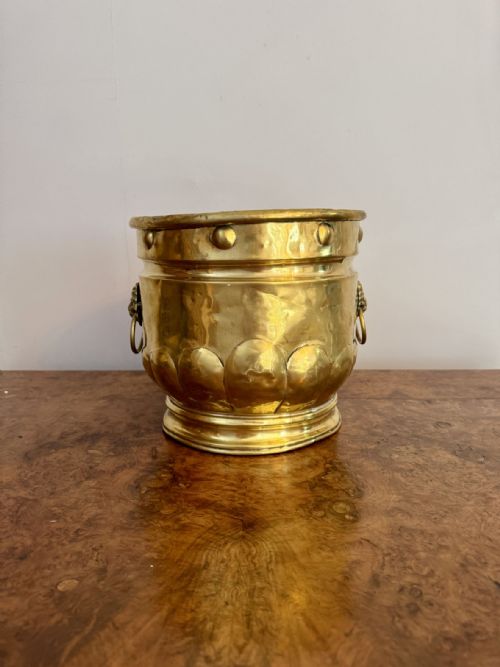
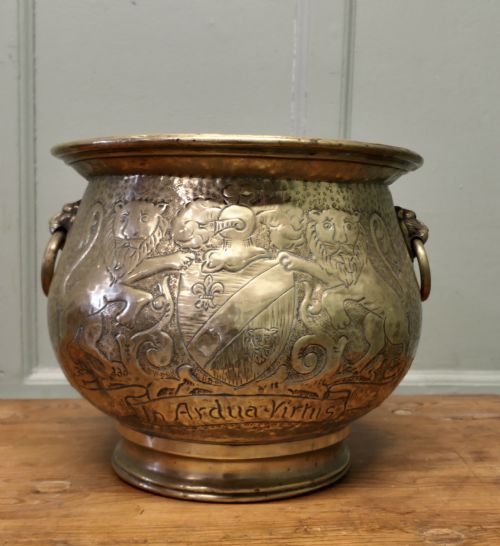
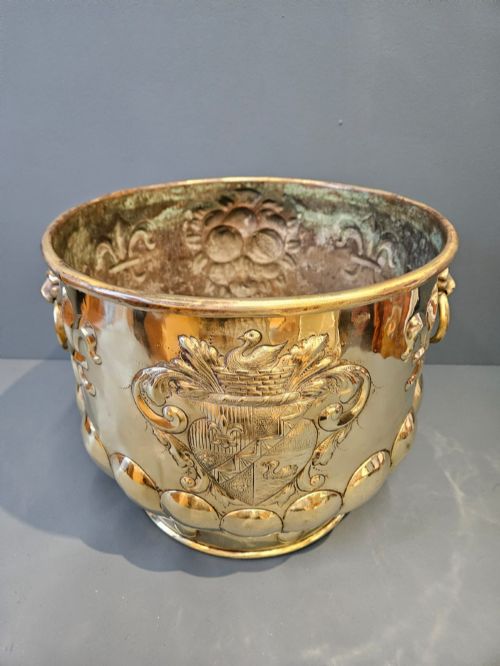
Decorative elements involve hand-engraving, applied brass crests and shields, lion mask handles, and champlevé or cloisonné enamel work. Cast bronze components provide sturdy feet and mounts on heavier vessels.
The listings show materials spanning solid brass, copper, bronze, enamel, zinc linings, and turned teak or mahogany.
What varies in quality
The thickness of the metal plate and the weight of the vessel set the baseline for quality. Heavier gauge brass and solid copper or bronze resist denting and hold water securely without sagging.
The crispness of hand-engraving, the depth of hammered texture, and the precision of applied mounts distinguish workshop standards. Plain utilitarian tubs contrast with pieces featuring elaborate armorial crests, lion masks, and enamel detailing.
The integrity of internal linings determines practical utility. Intact zinc liners or well-maintained timber staves show superior preservation compared to degraded interiors.
The Large Brass Jardiniere Glossary
- Jardiniere
- An ornamental pot or stand for holding flowers or plants. The term derives from the French word for gardener.
- Coopered
- Constructed from wooden staves bound together by metal hoops, similar to a barrel. This technique appears in vessels combining teak and brass.
- Champlevé
- An enamelling technique where troughs are carved into metal and filled with vitreous enamel powder before firing. This adorns Chinese bronze vessels.
- Dinanderie
- A term for various objects made of brass, copper, or bronze originating from Dinant in Belgium. It describes heavy medieval and revival metalware containers.
- Armorial
- Adorned with heraldic bearings, coats of arms, or family crests. These designs denote bespoke commissions for prominent households.
Large Brass Jardiniere: Frequently Asked Questions
How were these vessels used historically?
Victorian and Edwardian households placed these large containers in reception rooms and hallways to display indoor ferns and potted palms. Their substantial weight accommodated large root systems and heavy soil loads.
Beyond plant housing, many served alternative domestic functions such as wine coolers for dining rooms or log and peat buckets beside fireplaces.
How do I care for antique brass and copper?
Maintenance involves dusting with a soft cloth and avoiding abrasive cleaning compounds that strip historical patination. Keeping the interior dry prevents corrosion of the base metal.
If using the vessel for living plants, ensure a protective inner liner remains intact to prevent moisture contact with the primary brass or wood structure.
How do I tell different periods apart?
Stylistic motifs and construction methods indicate the era of manufacture. Gothic Revival and Victorian pieces often display cast shields, crests, or heavy lion mask handles.
Arts and Crafts examples show visible hand-hammering marks, while Asian pieces utilise bronze casting and cloisonne or champleve enamel techniques from the Qing dynasty.