

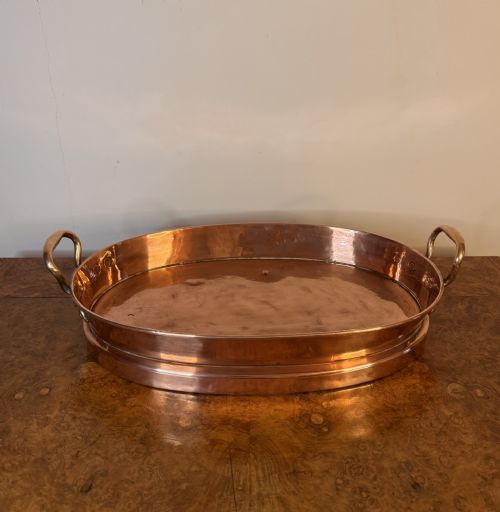
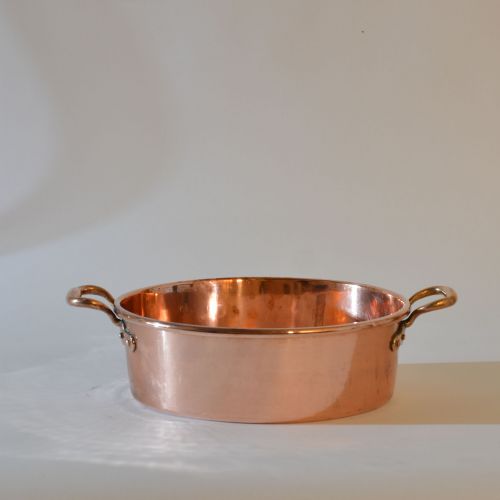

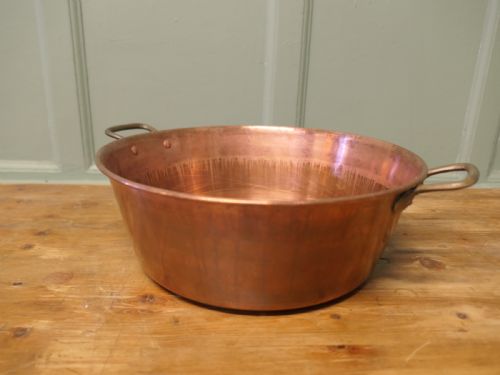
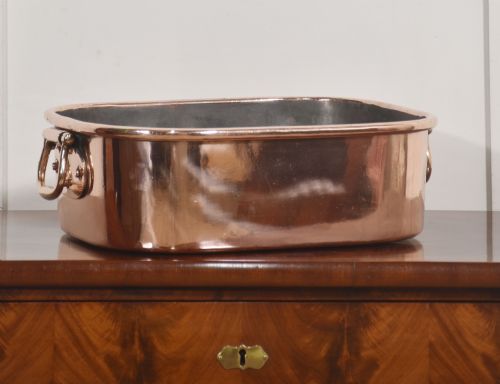
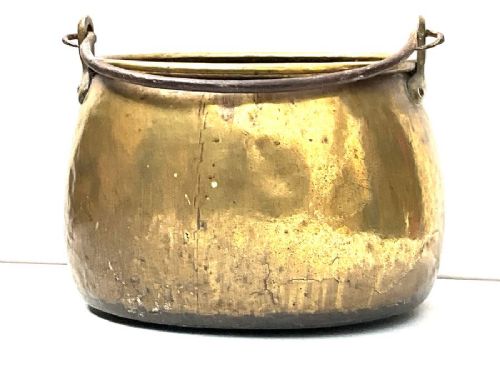


Large Brass Handle Pan
These large brass handle pan examples bring genuine heft and warmth to a kitchen, prized for their gleaming metal and robust historical utility.
Large Brass Handle Pan
When you search for a large brass handle pan, you are looking at substantial vessels designed for heavy domestic labour, typically originating from the Georgian and Victorian eras. These items served practical roles in historic kitchens and dairies, handling everything from fruit preserves to large quantities of cream.
The versions you are most likely to meet on this page are generous copper or brass preserving pans and heavy saucepans featuring sturdy metal handles. They combine robust utility with display appeal, reflecting the practical craftsmanship of rustic farmhouse and Victorian country interiors.
Materials and construction
The pieces listed here rely heavily on copper and brass, frequently paired with iron handles for structural strength during heavy kitchen tasks. Craftsmen hammered and shaped these metals to create durable preserving pans, fish kettles, and cream setting pans that could withstand intense hearth heat.
Handles were securely attached using traditional methods, utilising heavy brass or wrought iron to support the substantial weight of the vessel and its contents. The combination of tactile metals gave these utilitarian kitchen objects a distinct longevity.
Large Brass Handle Pan Retail Price Guide 2026
Typical asking prices for large brass handle pan among the pieces listed under this phrase on Sellingantiques today, from the lower quarter to the upper quarter. They describe what is for sale here now, not the wider market.
The listings here span the Georgian and Victorian periods, utilising copper, brass, iron, and wrought iron in various rustic farmhouse forms.
Judging quality in domestic metalware
Quality in these items rests on the thickness of the metal and the integrity of the construction rather than surface shine. Heavier copper and brass walls indicate a vessel built for serious culinary work, whereas thinner examples offer less structural substance.
The proportion and finish of the handles also distinguish finer pieces, with well-balanced brass mounts and sturdy wrought iron attachments showing superior workshop standards. The harmony between the main vessel and its handle dictates the overall desirability.
The Large Brass Handle Pan Glossary
- Preserve pan
- A wide, open vessel designed for boiling fruit and sugar to make jams and preserves. Its shallow shape allows rapid evaporation.
- Fish kettle
- An elongated metal pan equipped with a lid and internal draining rack for poaching whole fish. These items showcase specialised historic kitchen equipment.
- Cream setting pan
- A wide, shallow vessel used in dairies to allow cream to rise to the top of milk before skimming. This form highlights agricultural domestic routines.
- Wrought iron
- A tough, malleable form of iron worked by hand while hot, commonly used for durable handles and attachments. It resists shock and bending under heavy loads.
Large Brass Handle Pan: Frequently Asked Questions
What were large brass handle pans used for?
These vessels were primarily utilised for heavy domestic tasks such as boiling large batches of fruit preserves, jams, or heavy creams over a hearth.
Their generous proportions made them ideal for communal cooking and dairy work in historic kitchens, where durability and heat distribution were paramount.
How do I date a copper preserving pan?
Dating relies on observing construction marks, handle attachment styles, and the specific weight and hammer marks of the metal body.
Georgian and Victorian examples often feature distinct hand-beaten textures and heavy brass or wrought iron mounts that reflect the manufacturing methods of their specific period.
Can these pans still be used for cooking?
Many of these historic vessels can still function for cooking if the interior surface is properly tinned and maintained for food safety.
However, many collectors choose to display them as decorative hearth accessories or statement kitchen pieces rather than subjecting them to modern culinary use.
How should I clean antique brass and copper?
Maintenance involves gentle cleaning with appropriate metal polishes to remove tarnish while preserving the historic patina and character of the surface.
Avoid harsh abrasives that can thin the historic metal or obliterate the subtle marks left by original handcrafting techniques.