
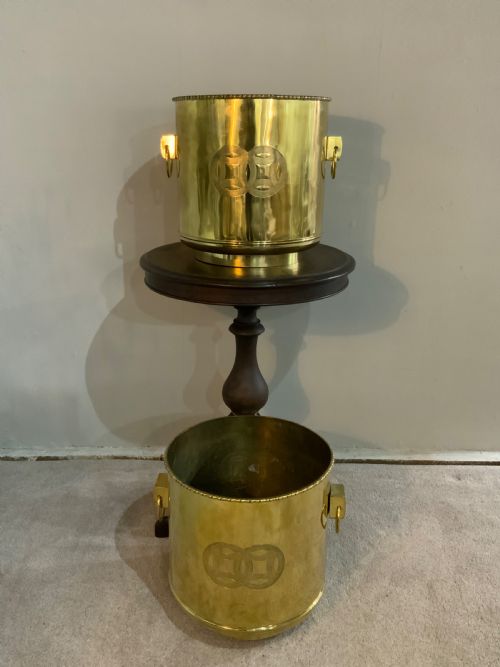


Large Brass Cachepot
A large brass cachepot holds house plants with weight and shine, drawing the eye in any room.
Large Brass Cachepot
A large brass cachepot is a heavy metal vessel designed to hold potted plants, appearing here as planters, jardiniere styles, and decorative bowls. These pieces serve primarily as plant holders or display pieces for indoor greenery, adding metallic warmth to interiors.
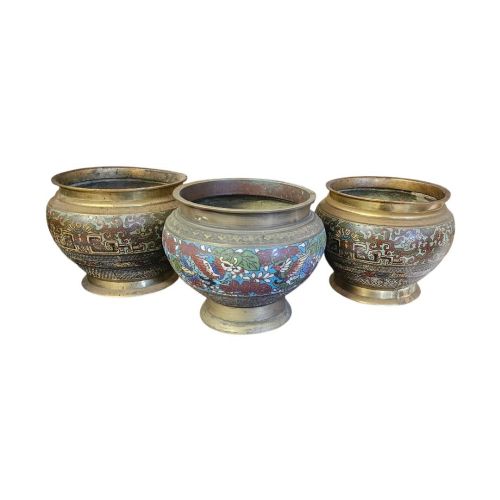
Most examples found on this page date from the nineteenth century, including Victorian, Arts and Crafts, and Gothic Revival pieces. Alongside British and European metalwork, the selection includes Chinese and Japanese bronze and cloisonne items from the late Qing period.
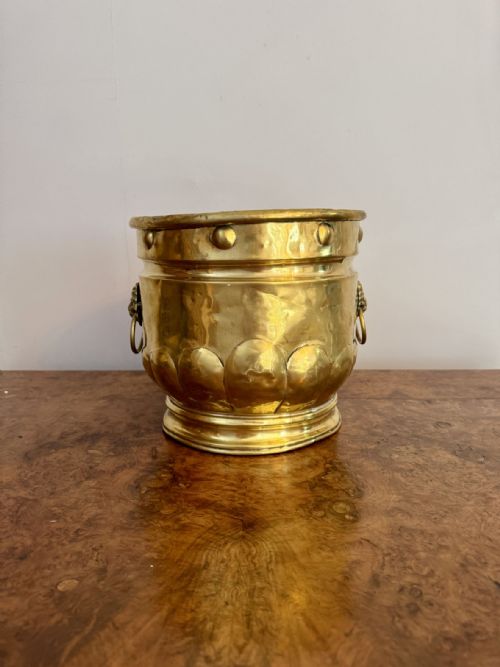
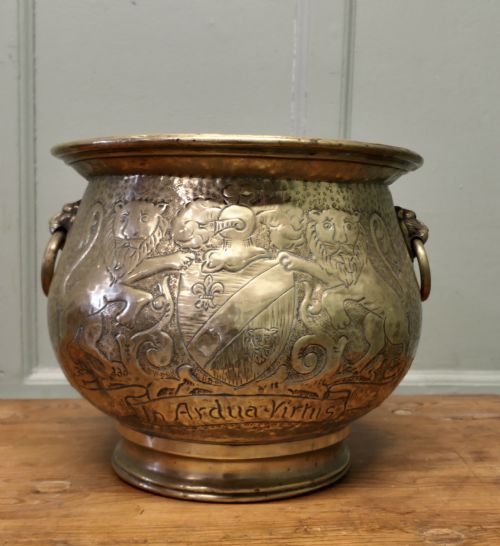
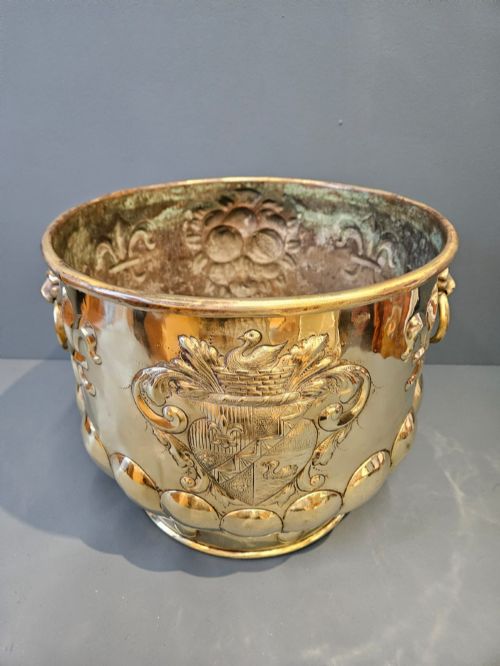
Forms range from plain heavy brass cylinders with handles to vessels decorated with champleve enamel, hand-engravings, and heraldic crests. Buyers choose these objects to house large ferns or palms, utilising their watertight metal construction indoors.
How they were made
Metals such as brass, copper, and bronze form the primary body of these vessels, often shaped by hand-beating or casting. Artisans combined these metals with enamel work, cloisonne, and porcelain inserts to create varied surface textures.
Decoration techniques include hand-engraving, applied shields, lion mask handles, and crests soldered or riveted to the main body. Some Asian and European pieces utilise gilt bronze details or contrasting hardwood and tin elements to finish the design.
Materials recorded across the selection include brass, bronze, copper, enamel, porcelain, tin, and hardwood.
What varies in quality
The thickness of the metal and the weight of the piece separate standard utility items from finer decorative examples. Heavier bronze and brass vessels demonstrate more substantial casting and sturdier handles.
The precision of surface decoration, from hand-engraved motifs to detailed champleve enamel and cloisonne work, defines the finer pieces. Condition of the metal surface and the integrity of any applied crests or handles also influence the overall standard.
The Large Brass Cachepot Glossary
- Cachepot
- An ornamental container used to hide an ordinary flowerpot. The word originates from the French term for hiding a pot.
- Jardiniere
- A large ornamental pot or stand for plants or flowers. These vessels often feature decorative handles or embossed motifs.
- Cloisonne
- An ancient technique for decorating metalwork objects with coloured material held in place by thin metal strips. Artisans fill the resulting compartments with enamel before firing.
- Champleve
- An enamelling technique where artists trough out troughs or cells in a metal surface and fill them with vitreous enamel. The surrounding metal remains visible as part of the design.
Large Brass Cachepot: Frequently Asked Questions
What is a large brass cachepot used for?
These vessels serve as decorative outer containers for potted houseplants, ferns, and indoor trees.
They protect furniture and window sills from water drainage while adding a reflective metallic element to domestic spaces.
How do I clean a brass cachepot?
Maintenance involves dusting the metal surface with a dry cloth and avoiding harsh chemical polishes that strip historic patination.
Leaving the natural aged surface intact preserves the character of nineteenth-century metalwork.
Are these pots watertight?
Most metal planters and jardiniere forms were constructed to hold damp soil or potted plants directly.
Using a plastic liner inside older copper and brass vessels prevents moisture from sitting against historical solder seams.
How do I date an antique brass cachepot?
Dating relies on observing manufacturing marks, handle attachments, and stylistic clues such as Gothic Revival or Arts and Crafts motifs.
Nineteenth-century pieces often display hand-beating marks, heavier casting methods, and distinct patination compared to later reproductions.