
Large Bedroom Wardrobe
A large bedroom wardrobe provides substantial presence and generous storage, combining timber and craftsmanship to anchor a period interior.
Large Bedroom Wardrobe
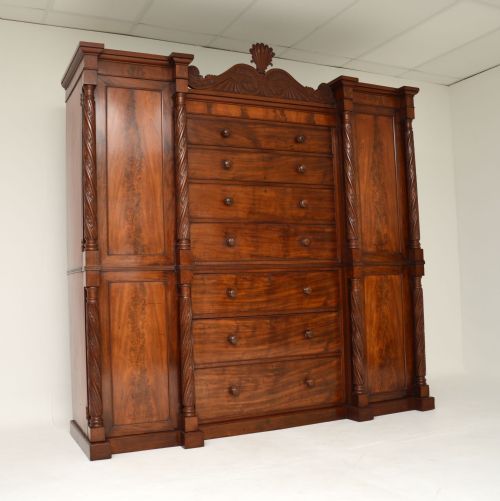
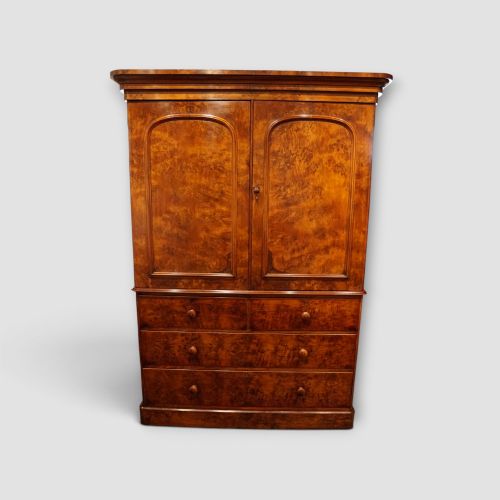
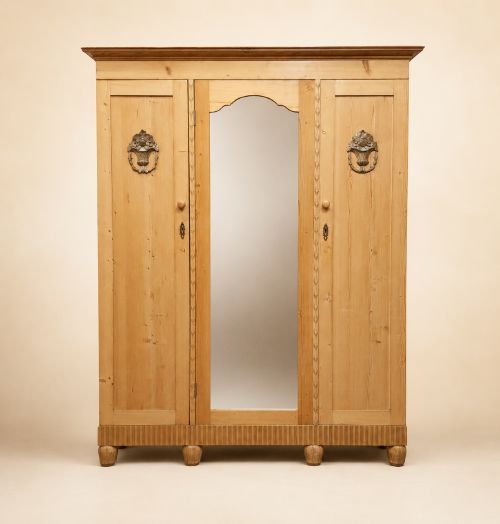
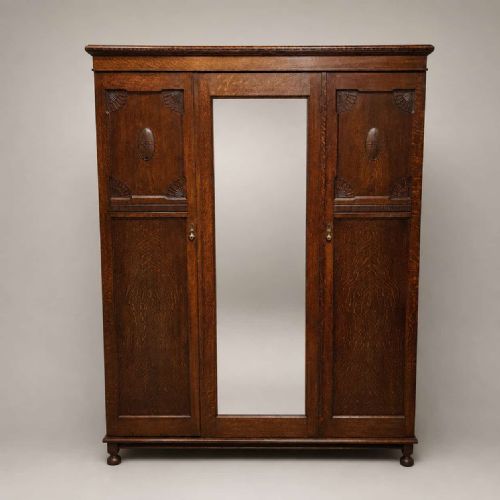
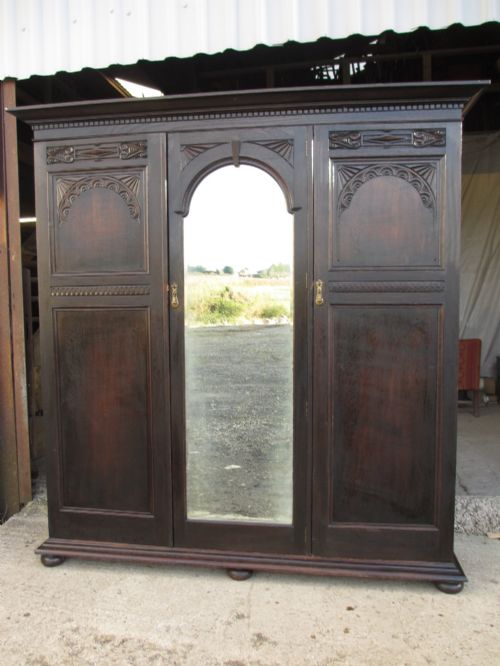
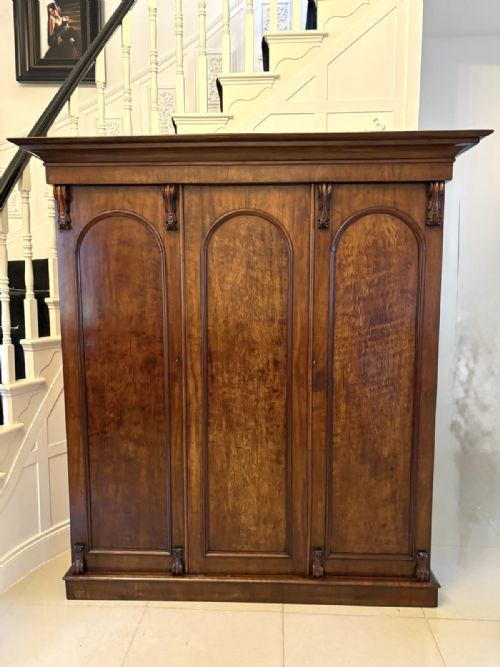
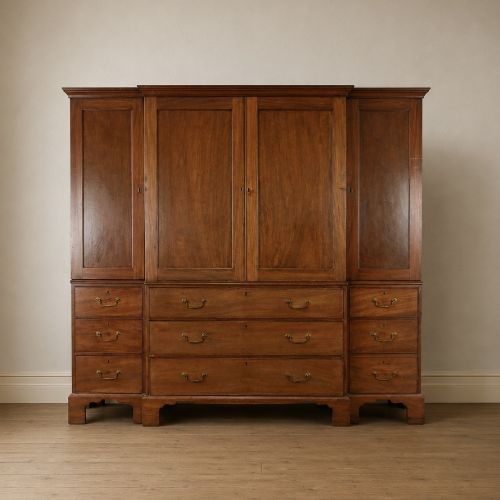
A large bedroom wardrobe is a commanding storage piece designed to hold garments and linens while defining the scale of a traditional bedroom. These substantial items appear frequently as triple or multi-door configurations in the evidence, offering fitted internal compartments and hanging space.
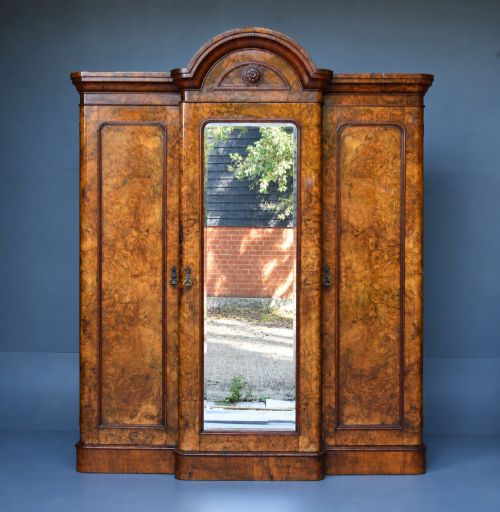
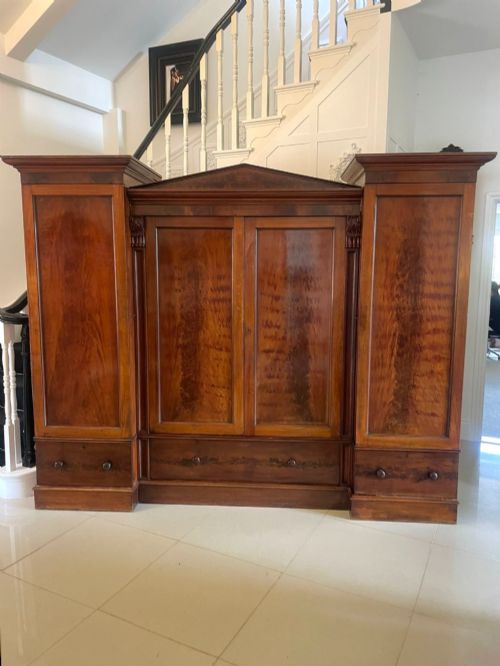
The pieces span several distinct periods, with Victorian and Edwardian examples forming the bulk of the selection alongside earlier Georgian and William IV designs. Buyers encounter grand architectural forms in mahogany and burr walnut alongside more utilitarian pine carcasses intended for versatile domestic use.
How They Were Made
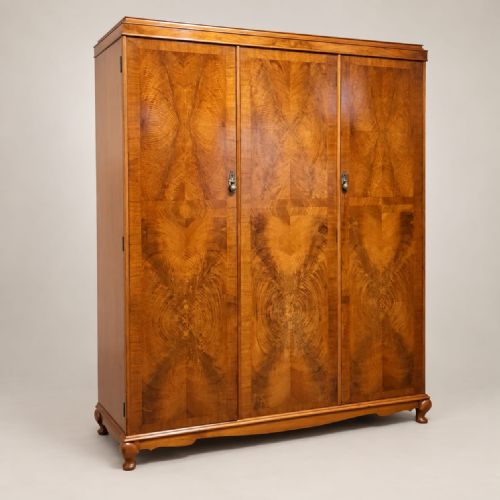
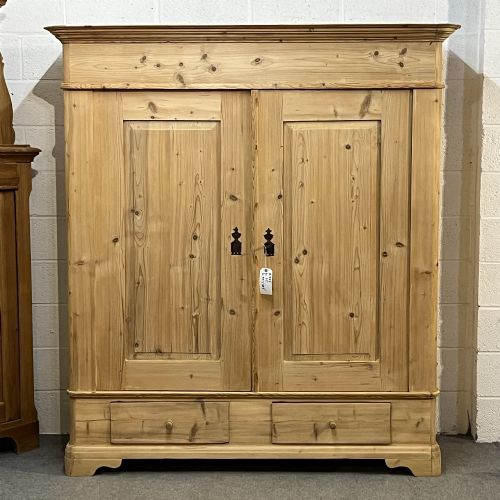
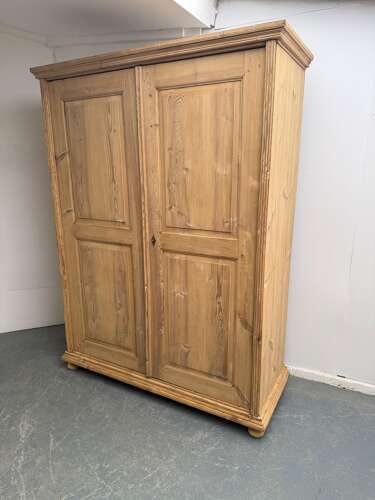
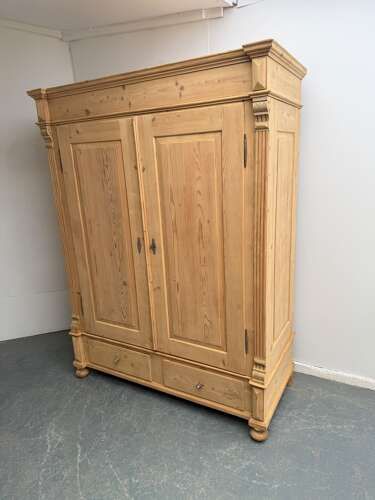
Cabinetmakers utilised dense hardwoods such as mahogany and walnut, frequently applying figured veneers or burr walnut to create striking visual grain patterns on the principal doors. Solid pine served for robust knockdown carcases designed for easier transport and assembly within domestic chambers.
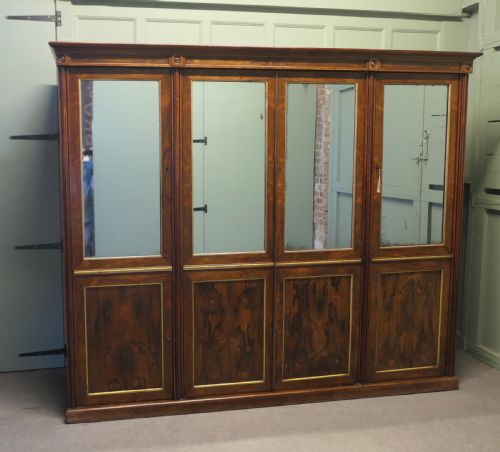
Construction techniques encompassed traditional frame and panel assembly, dovetail joints for internal drawers, and hand-carved decorative motifs. Workshops also incorporated mirrored glass door panels and cast brass or gilt bronze ormolu mounts to finish the grander architectural elevations.
Several heavy pine examples arrive with instructions for their future aesthetic life, neatly catalogued in listings simply as knockdown wardrobes awaiting a coat of paint or wax.
What Varies In Quality
The caliber of a large bedroom wardrobe rests upon the selection of timber and the precision of its application, particularly where figured veneers meet curved or serpentine fronts. Superior examples demonstrate meticulous matching of grain across multiple doors and harmonious proportions throughout the cornice and plinth.
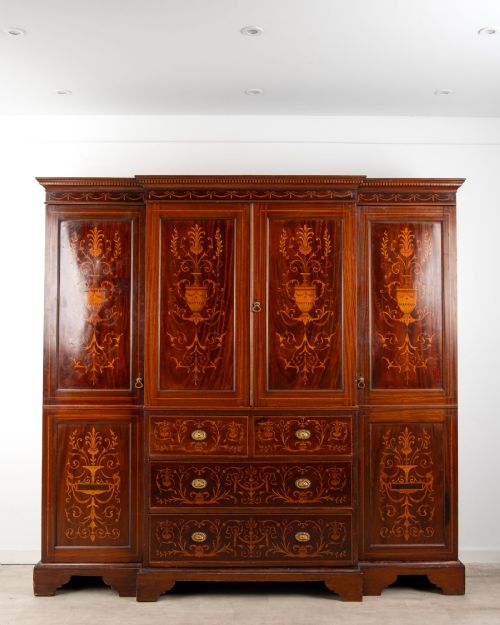
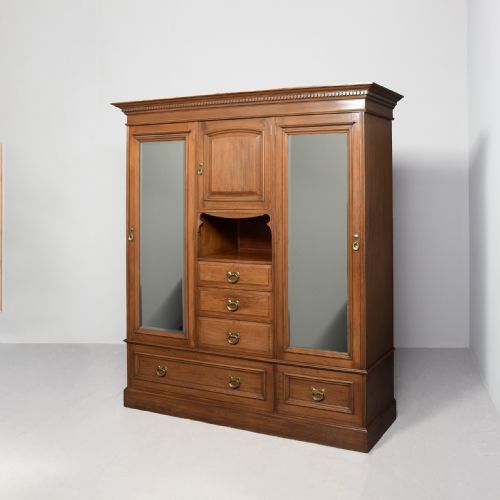
Internal joinery and configuration further separate standard utility pieces from exceptional productions by notable makers. Fine compactums incorporate elaborate fitted sliding trays, linen presses, and multi-drawer arrangements executed in secondary hardwoods with uncompromised attention to structural integrity.
Holland and Sons·Gillows·Maple and Co
The Large Bedroom Wardrobe Glossary
- Compactum
- A multi-compartment wardrobe combining hanging spaces, linen slides, and internal drawers within a single architectural carcase. These comprehensive units offer multifaceted storage solutions for the chamber.
- Linen Press
- A tall storage cupboard featuring upper sliding trays for folded textiles above a base chest of drawers. They frequently share form with traditional wardrobes in period listings.
- Knockdown
- A piece engineered to dismantle into separate sections for transportation and site assembly. This clever historical construction method allowed bulky bedroom furniture to negotiate tight staircases.
- Breakfront
- A cabinet facade where the central section projects forward from the flanking wings. This architectural arrangement creates depth and rhythm across large multi-door elevations.
- Ormolu
- Gilt bronze mounts applied as decorative highlights on fine furniture doors and cornices. The technique adds metallic contrast to rich timber surfaces.
Large Bedroom Wardrobe: Frequently Asked Questions
What is a compactum wardrobe?
A compactum wardrobe is a specialised storage unit that integrates multiple functions into one footprint, combining hanging space with linen slides and banks of internal drawers.
These pieces typically date from the Victorian and Edwardian eras and were designed to keep an entire wardrobe organised within a single architectural piece.
How do I dismantle a knockdown wardrobe?
Knockdown wardrobes utilise pegged or bolted joints that allow the cornice, base, sides, and doors to separate into manageable components for transport.
Marking each joint during disassembly ensures straightforward reassembly when the piece reaches its intended chamber.
What woods were used for these wardrobes?
Cabinetmakers employed rich hardwoods such as mahogany, walnut, satinwood, and rosewood for principal display pieces, often utilising figured veneers or burr walnut for decorative impact.
Pining served extensively for utilitarian, painted, or knockdown examples destined for secondary chambers and servants quarters.
How do I distinguish Victorian from Edwardian pieces?
Victorian wardrobes generally favor heavier proportions, rich dark mahogany, and robust architectural carvings, reflecting a taste for substantial presence.
Edwardian examples often display lighter satinwood inlays, painted decorations, Chippendale revivals, or mirrored panels designed to brighten bedroom spaces.