



Large Art Pottery
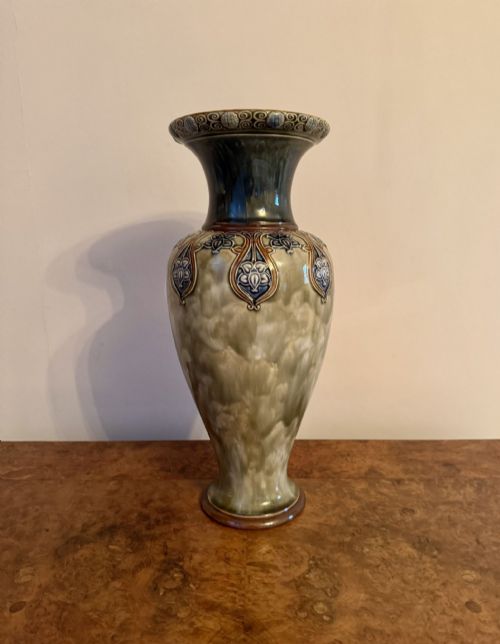
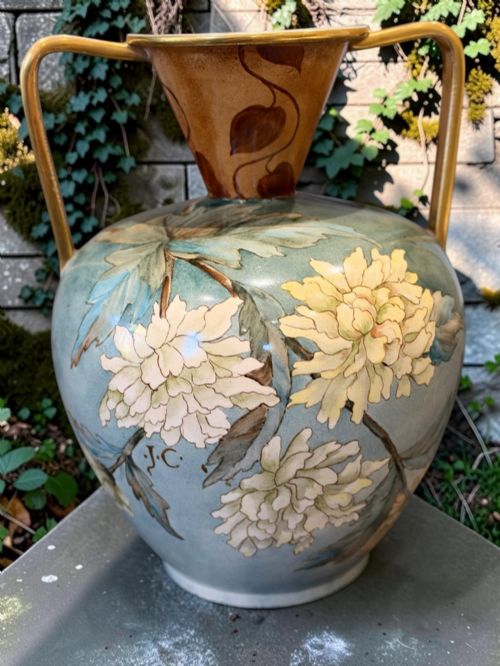
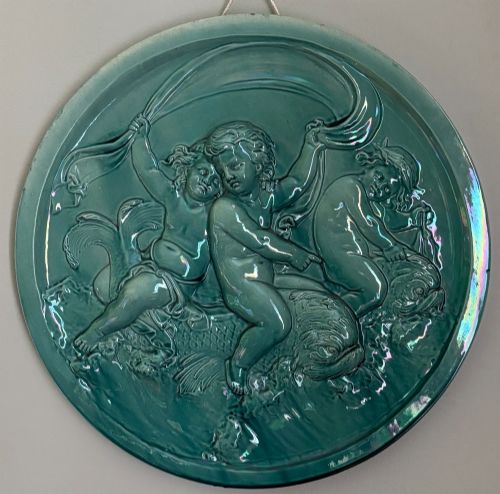
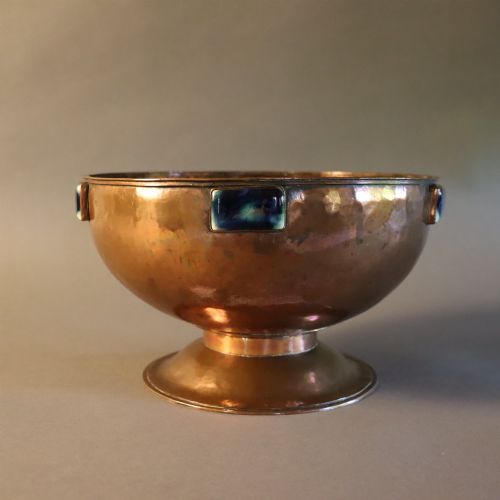
Large art pottery brings substantial presence and sculptural weight to a room, offering striking forms from the late nineteenth and early twentieth centuries.
Large Art Pottery
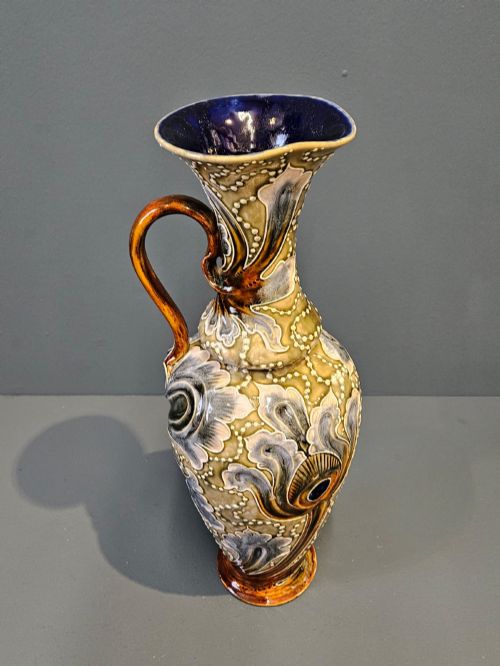
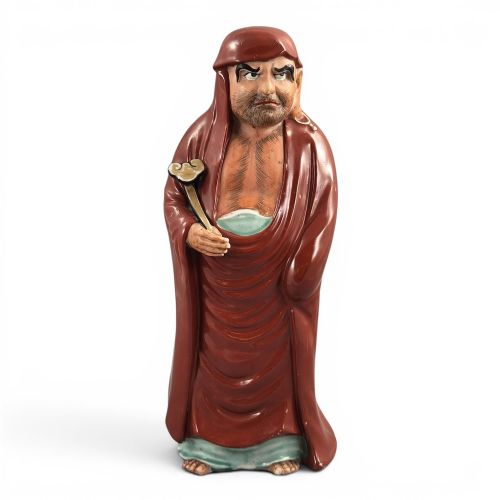
Large art pottery encompasses substantial decorative vessels, figures, and chargers produced during periods such as the Victorian era, the Edwardian period, and the 1920s and 1930s. When exploring large art pottery, collectors encounter diverse forms including monumental vases, ewers, jardinières, and sculptural figures.
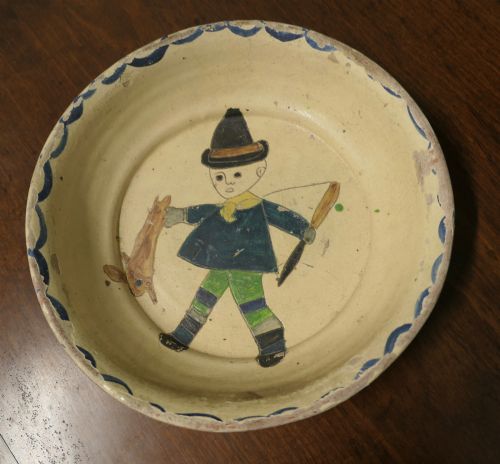
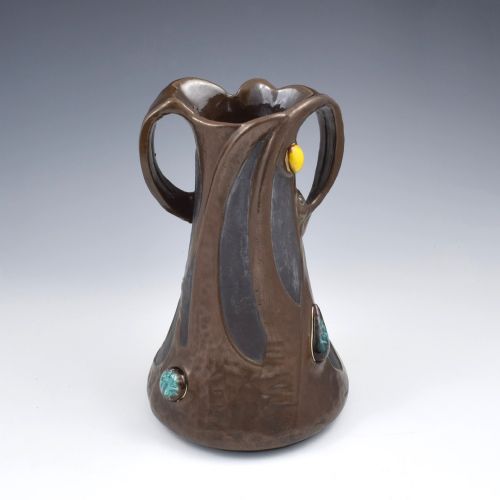
The selections span distinct stylistic movements, notably Art Nouveau, Art Deco, and Arts and Crafts, alongside traditional slipware and oriental ceramics. Vases and bowls dominate the forms, frequently displaying expressive handles, applied cabochons, or tubelined patterns.
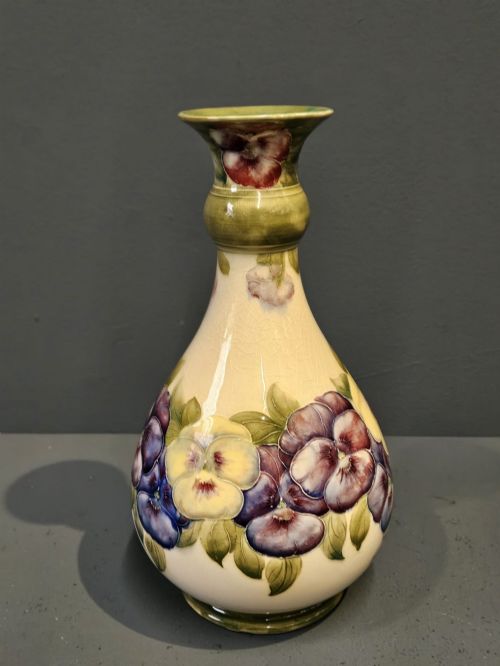
Origins range across British potteries like Doulton Lambeth, Moorcroft, and Burmantofts, as well as continental European works from Amphora and Royal Dux, and Japanese Satsuma production.
How they were made
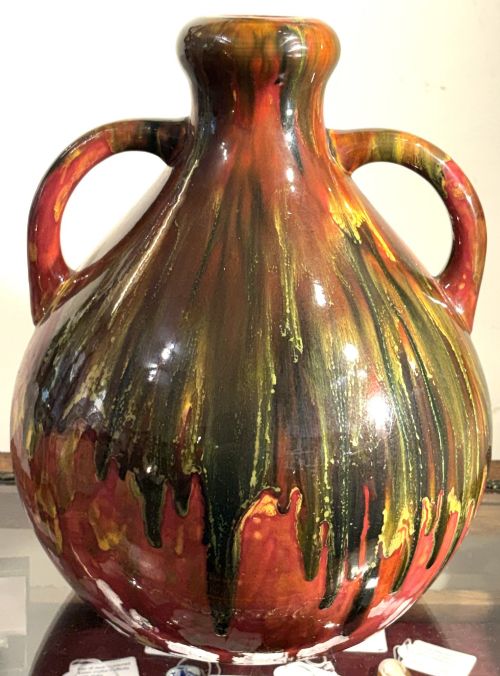
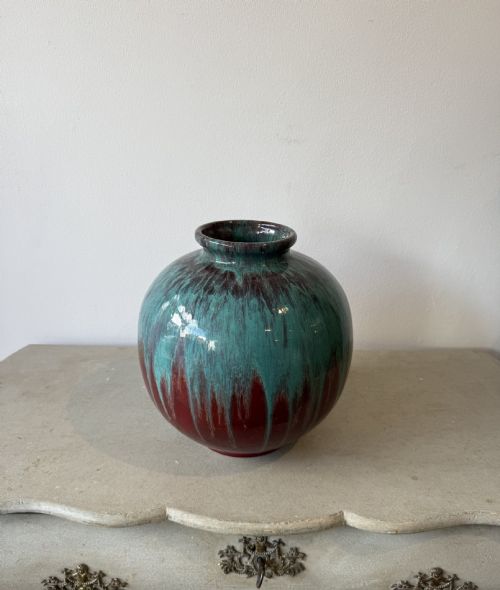
Makers utilised earthenware, terracotta, stoneware, and porcelain as the foundational bodies for these substantial pieces, shaping them on the wheel or forming them in moulds. Surface decoration relied heavily on specialised glazes, including lead glaze, iron rust glaze, and enamel finishes, often enriched with gold leaf or jewelled cabochons.
Techniques such as tubelining allowed artists to pipe raised outlines on the clay body before applying coloured glazes, creating distinct compartmentalised patterns seen in works by designers like Charlotte Rhead. Firing kilns set the vitrified ceramic and fixed the complex chemical reactions within the glaze layers.
Large Art Pottery Retail Price Guide 2026
Typical asking prices for large art pottery among the pieces listed under this phrase on Sellingantiques today, from the lower quarter to the upper quarter. They describe what is for sale here now, not the wider market.
Listings feature earthenware, stoneware, and porcelain bodies decorated with lead and iron rust glazes across the Victorian, Edwardian, and Art Deco eras.
What varies in quality
Quality in large art pottery rests upon the crispness of the modelled form and the ambition of the glaze execution. Pieces carrying the signature or monogram of a known designer or decorator demonstrate superior execution compared to unmarked studio output.
The complexity of the surface treatment, such as intricate hand-painted Satsuma enamel work or deep relief mouldings in Art Nouveau ewers, distinguishes standard production from exceptional works. Preservation of the original glaze sheen and the structural integrity of large clay bodies determine the standing of individual pieces.
Burmantofts·Moorcroft·Doulton Lambeth·Goldscheider·Royal Dux Bohemia·Makuzu Kozan·Maling·Crown Ducal
The Large Art Pottery Glossary
- Slipware
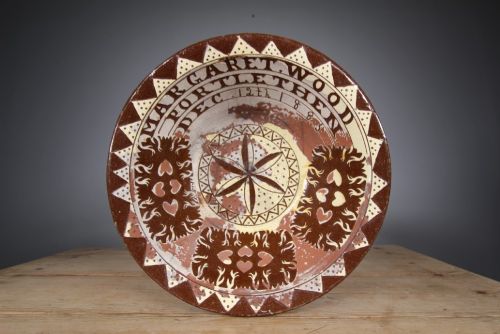
- Pottery decorated with slip, which is a liquid clay mixture, applied to the wet or leather-hard body before firing. This technique produces bold linear patterns or rich monochromatic coatings.
- Tubelining
- A ceramic decoration method where a fine tube dispenses a line of liquid clay onto the vessel to form cells that hold coloured glazes. It creates a raised, compartmentalised design.
- Cabochon
- A polished gemstone or moulded glass or ceramic jewel set in relief onto the surface of a piece. They frequently accent the collars and handles of Art Nouveau vessels.
- Ewer
- A large jug with a wide spout and a curved handle, traditionally used for holding water but produced as an ornamental display piece in ceramic wares.
- Okimono
- A Japanese term for a freestanding decorative figurine or carving meant for display on a shelf or in a tokonoma alcove.
Large Art Pottery: Frequently Asked Questions
How do I identify Art Nouveau pottery?
Art Nouveau pottery displays characteristic flowing organic lines, stylised floral motifs, and female figures inspired by natural forms. These pieces often feature iridescent glazes or applied cabochons that mimic plant structures.
Potteries from Austria, England, and France embraced this aesthetic around the turn of the twentieth century, applying it to large ewers, vases, and monumental planters.
What is slipware pottery?
Slipware involves coating an earthenware body with a liquid clay mixture known as slip before the firing process. Artisans manipulate this surface layer to create trailing patterns, combed designs, or rich honey-coloured glazes.
This tradition extends from seventeenth-century tavern jugs to nineteenth-century folk bowls, valued for its direct connection to early hand-craft methods.
How should I display large ceramic pieces?
Large ceramic pieces require stable, weight-bearing surfaces such as low tables, sturdy pedestals, or dedicated display cabinets. Their substantial mass and height make them natural focal points for an interior space.
Pole placement away from high-traffic walkways protects vulnerable handles and protruding decorative elements from accidental impact.
How do I date antique pottery?
Dating relies on identifying maker marks, impressed factory stamps, and painted signatures on the underside of the ceramic body. Stylistic indicators, such as the geometric patterns of Art Deco or the sinuous curves of Art Nouveau, narrow the period of manufacture.
Reference guides cataloguing manufacturer ciphers provide precise date ranges for pieces produced by major potteries.