





Large Tapestry Hanging
A large antique tapestry hanging brings centuries of woven texture, historic narrative and grand scale directly onto a room's walls.

Large Tapestry Hanging
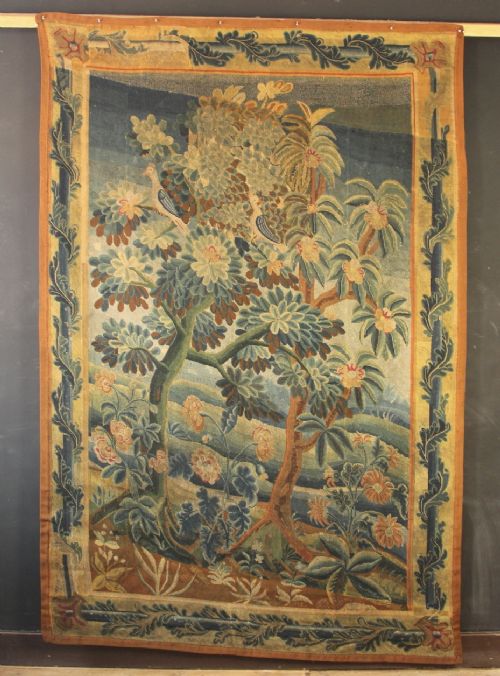
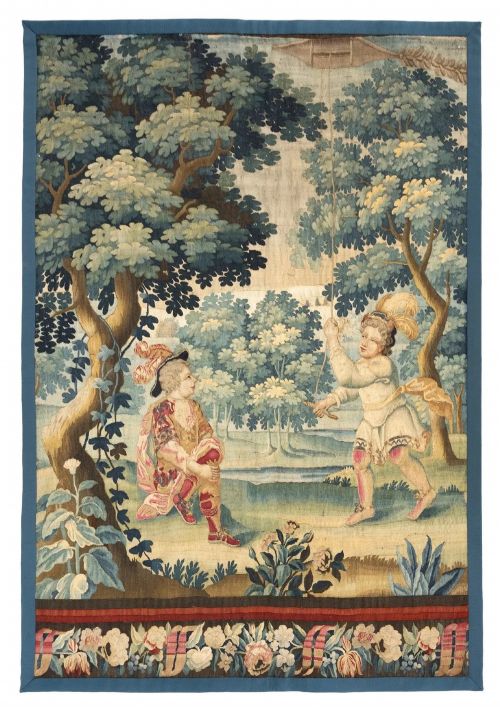
A large antique tapestry hanging encompasses woven wall coverings, embroidered textile panels, and framed textile art originating from European workshops and Asian regions. When searching for a large antique tapestry hanging, buyers encounter monumental Flemish verdure scenes from the seventeenth century alongside nineteenth-century French Aubusson designs and Central Asian silk panels.
The selections span grand mythological Flemish compositions, pastoral landscapes, and delicate floral mille-fleurs motifs. Pieces range from unmounted floor-to-ceiling weaves to wall art secured within walnut or gilt frames.
Materials and construction methods
These textiles rely primarily on natural fibres such as wool, silk, cotton, and linen, occasionally incorporating metal thread for reflective detail within the weave. Artisans employed complex loom techniques or intricate needlework and crewelwork embroidery to build up dense pictorial surfaces.
Support structures frequently involve secondary materials including wood, glass, and brass, particularly when panels are stretched onto boards or fitted into historical frames.
Current listings feature textiles spanning the sixteenth century through to the 1930s, constructed from wool, silk, cotton, and linen.
Distinguishing quality in historical textiles
Quality rests upon the density of the weave, the intricacy of the pictorial design, and the survival of the original material fibres. Tightly knotted wool and silk yarns retain crisper botanical or figural outlines than looser needlework alternatives.
The origin heavily influences standing, with documented weaving centres like Aubusson, Audenarde, or traditional Uzbek workshops commanding distinct artistic weight through their characteristic colour palettes and narrative depth.
The Large Tapestry Hanging Glossary
- Verdure Tapestry
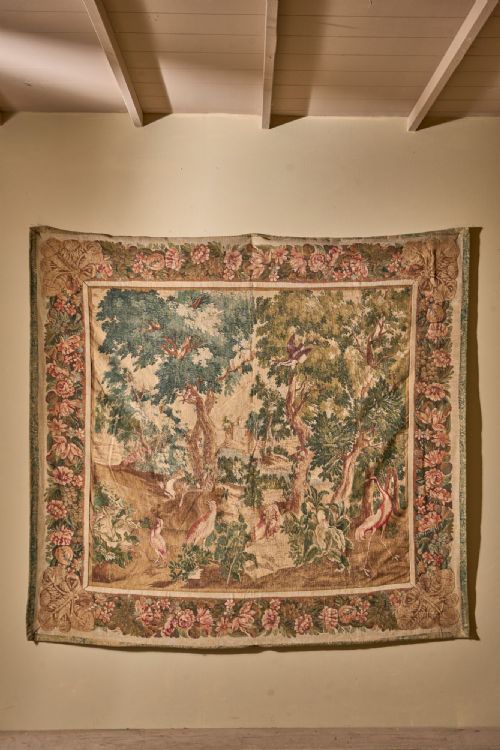
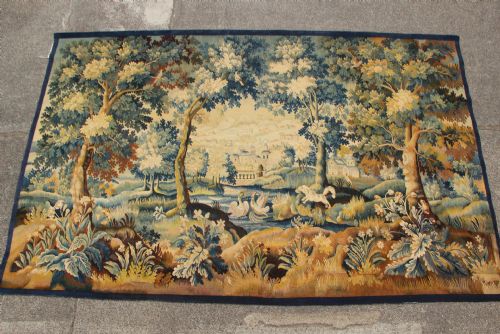
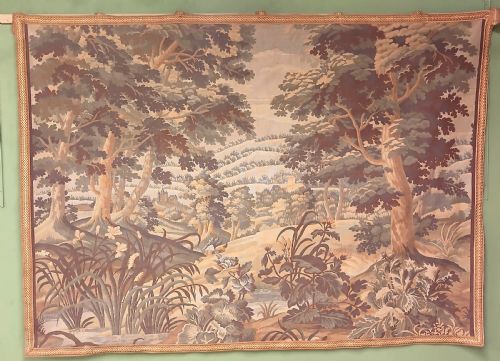
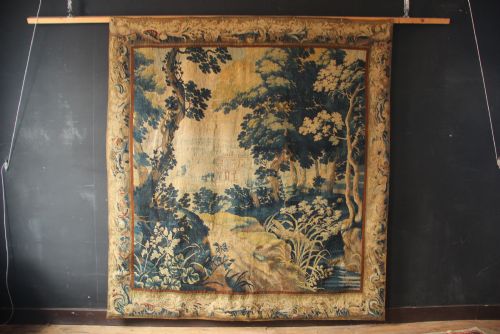
- A European woven wall hanging dominated by lush foliage, trees, and landscape scenery. These panels frequently depict stylised gardens and woodlands populated by birds or animals.
- Aubusson
- A style of tapestry originating from the town of Aubusson in France, known for pastoral scenes and floral motifs. Workshops here produced both woven wall coverings and floor carpets.
- Suzani
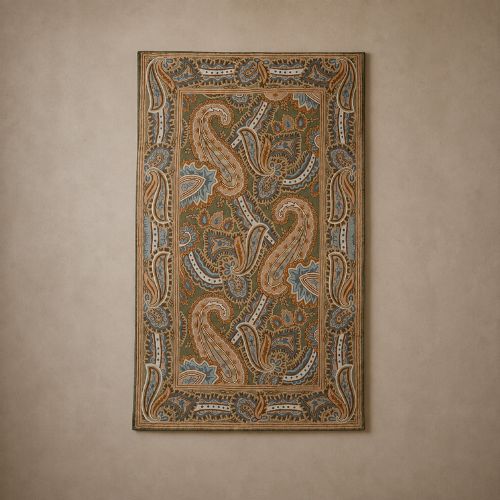
- A type of embroidered tribal textile originating from Central Asian regions such as Uzbekistan. They typically feature large-scale floral medallion patterns stitched on a cotton or linen ground.
- Mille-Fleurs
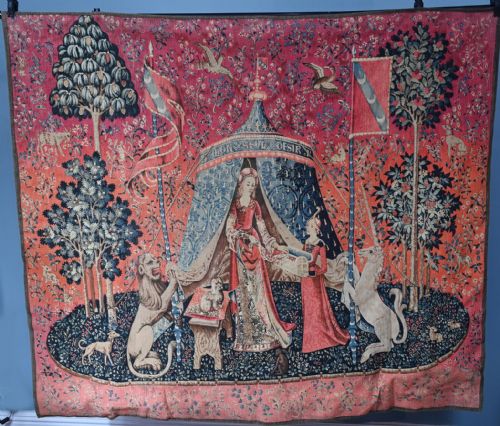
- A background style composed of countless small flowers and plants spread across a dark or neutral field. This French term translates literally to thousand flowers and appears in early woven panels.
- Crewelwork
- A form of surface embroidery executed using wool yarn on a heavy linen or cotton foundation. It produces a textured, raised design well suited to large decorative wall panels.
Large Tapestry Hanging: Frequently Asked Questions
How do I hang a heavy antique tapestry?
Large textiles require weight distribution across a sturdy wooden batten or a hidden metal rod inserted through a custom-sewn sleeve at the top edge. This prevents the historical fibres from bearing stress at isolated points.
Heavier framed pieces rely on traditional mirror plates or secured picture wire fixed directly into solid wall studs rather than standard plaster fixings.
Where were these large tapestries originally displayed?
Historic European wall hangings functioned as functional insulation inside drafty stone chateaux and manor houses, adding warmth alongside decorative narrative displays. Grand chambers and formal reception rooms housed the largest mythological and pastoral scenes.
Asian textile panels and embroidered Suzanis served traditional domestic roles within households, often functioning as wall decor or ceremonial furnishings.
How do I protect my textile from sunlight?
Natural fibres such as silk and dyed wool fade permanently when exposed to direct ultraviolet rays over extended periods. Position large wall hangings away from south-facing windows or install UV-filtering window film.
Indirect ambient lighting preserves the historic dyes without risking thermal or light-induced degradation of the fragile material.
How do I tell Flemish and French tapestries apart?
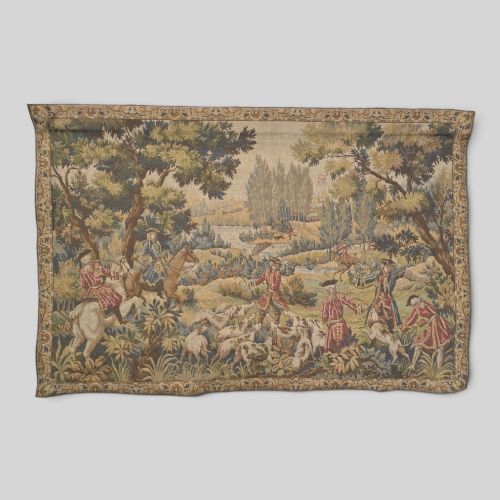
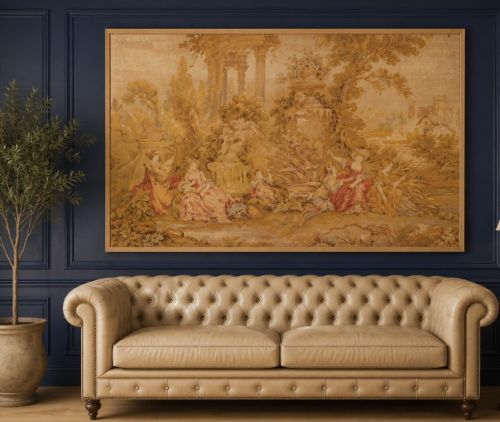
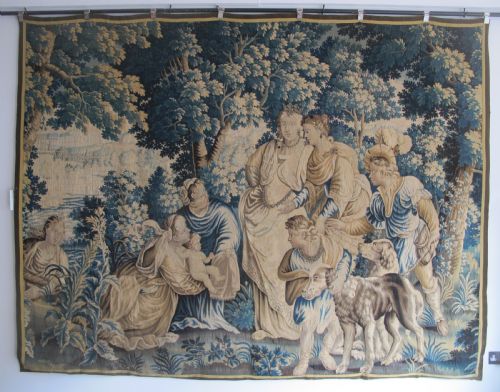
Flemish pieces from the seventeenth century often feature dense verdure landscapes with heavy foliage, dark green tones, and dramatic mythological narratives. French works, particularly later Aubusson or pastoral variations, tend towards lighter pastel palettes and refined floral or courtly compositions.
Examining the border design and weave density frequently clarifies the regional workshop traditions behind the panel.