




Large Rosewood Table
A large antique rosewood table brings commanding presence to a room, offering rich timber grain and enduring nineteenth-century craftsmanship.
Large Rosewood Table
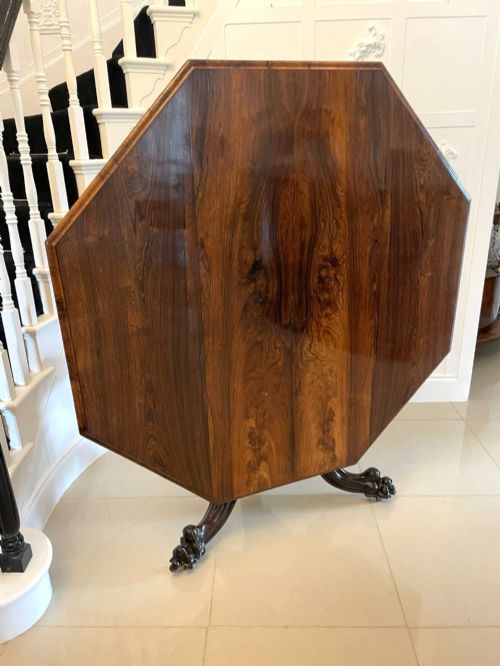
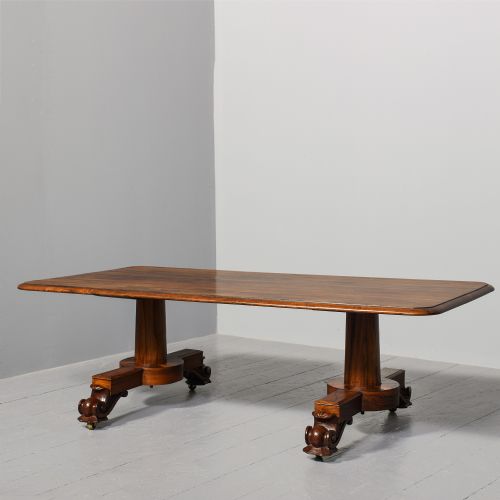
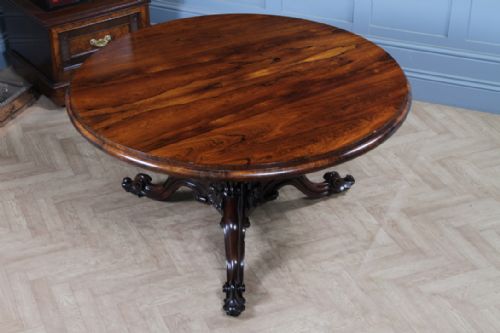
A large antique rosewood table encompasses substantial centre tables, dining surfaces, and tilt-top breakfast pieces originating primarily in the nineteenth century. The selection leans heavily toward Victorian, William IV, and Regency examples designed to anchor principal reception rooms.
Buyers encounter versatile formats ranging from circular pedestal dining pieces to rectangular writing desks and sofa tables. These substantial furniture items reflect the grand scale and formal entertaining needs of their original domestic settings.
How they were made
Cabinet makers utilised dense rosewood timbers, often applied as finely figured veneers over sound hardwood carcases to display dramatic grain patterns. Structural elements frequently incorporate brass inlay, ormolu mounts, and intricate hand-carved pedestal supports.
Tilt-top mechanisms and multi-pedestal bases allowed large dining and centre tables to combine mobility with stability. Joinery relied on traditional techniques that accommodated the heavy weight and expansive surface area of the timber.
Some nineteenth-century tables hide ingenious mechanisms designed so one person could tilt a massive mahogany-lined top without trapping their fingers.
What varies in quality
Quality rests upon the selection of the rosewood timber itself, where symmetrical figuring and rich natural colour elevate the visual impact of the top. Superior examples display crisp, deep hand-carving on the pedestals and legs rather than soft or mechanical moulding.
The precision of secondary materials, such as finely chased brass inlay or original ormolu mounts, distinguishes workshop execution. Sound construction of internal mechanisms, including tilt-top catches and drawer linings, preserves structural integrity over generations.
Gillows·George Orpwood
The Large Rosewood Table Glossary
- Rosewood
- A dense, heavily figured timber prized for its dark grain and polished finish. It served as the primary surface material for formal nineteenth-century tables.
- Tilt-top
- A table mechanism allowing the circular or rectangular top to pivot vertically for storage or room clearance. This design became standard for large breakfast and centre tables.
- Centre table
- A freestanding piece finished on all sides to sit in the middle of a room rather than against a wall. These items typically formed the decorative focal point of Victorian and Regency interiors.
- Ormolu
- Gilded bronze applied as decorative mounts and accents on high-status furniture. It provided rich metallic contrast against dark rosewood surfaces.
- Marquetry
- The art of applying decorative pieces of veneer to form geometric or pictorial designs. Skilled artisans used contrasting woods to embellish tabletop surfaces.
Large Rosewood Table: Frequently Asked Questions
Where should a large rosewood table go?
These substantial tables serve as focal points in spacious dining rooms, grand hallways, or open reception areas. Their finished backs and freestanding designs suit central placement.
Ensure adequate clearance around the perimeter for chairs or movement, particularly with tilt-top or pedestal variants.
How do I care for antique rosewood?
Protect the polished timber from direct sunlight and excessive heat fluctuations to prevent veneer splitting or fading. Regular dusting with a soft, dry cloth maintains the surface.
Apply quality beeswax sparingly when the wood appears dry, avoiding modern silicones or harsh chemical cleaners.
How do I identify a Regency table?
Regency pieces often display classical architectural influences, balanced proportions, and restrained brass inlay rather than heavy Victorian carving. Look for saber legs, reeded edges, and architectural pedestals dating from the early nineteenth century.
Cabinetwork from this era emphasises clean geometric lines and contrasting dark wood grains.
What is a tilt-top table used for?
A tilt-top mechanism allowed large dining or breakfast tables to be folded upright and pushed against a wall when not in use. This practical feature saved valuable floor space in nineteenth-century homes.
Today, many owners keep them permanently flat to display the figured rosewood grain.