


Large Conference Table
A large antique conference table provides monumental surface area and rich timber character for a boardroom, uniting period presence with enduring practical utility.

Identifying a large antique conference table
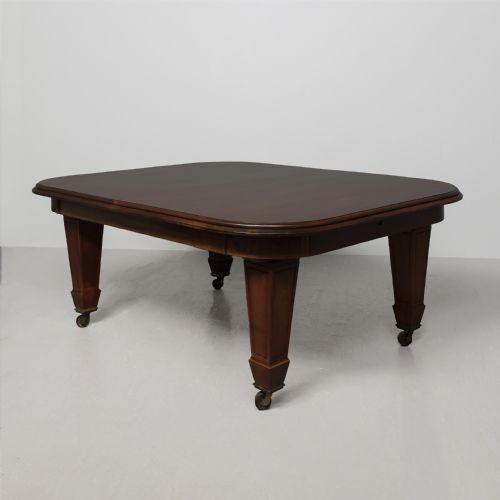
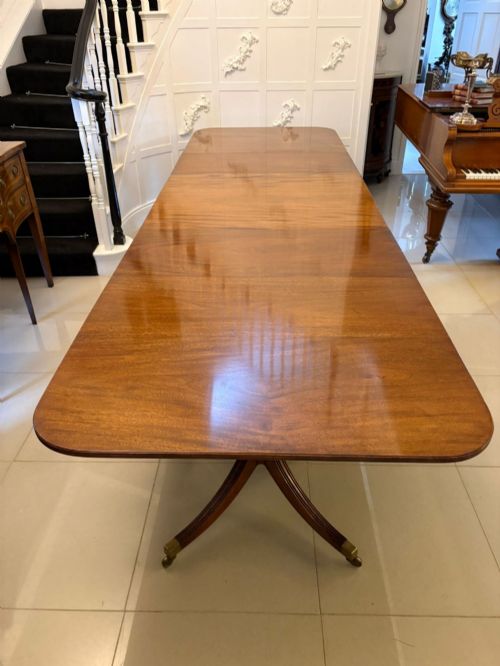
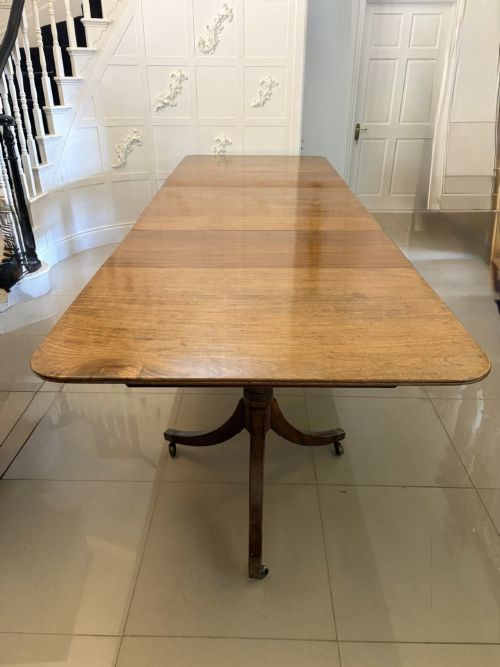
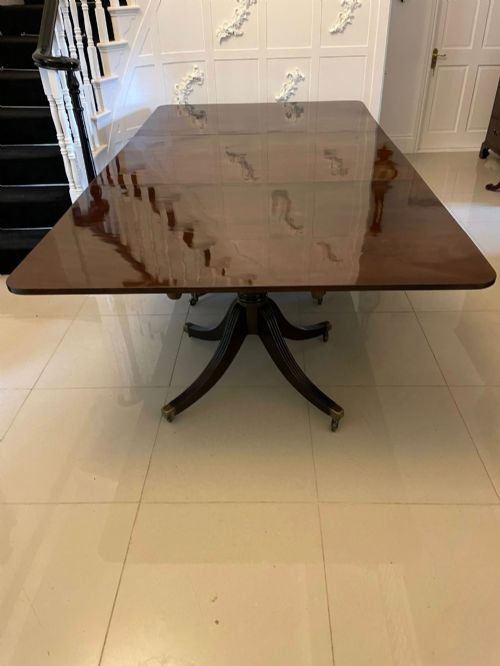
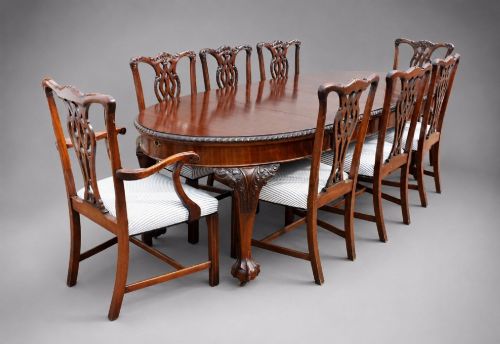
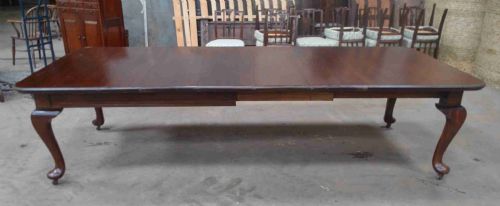
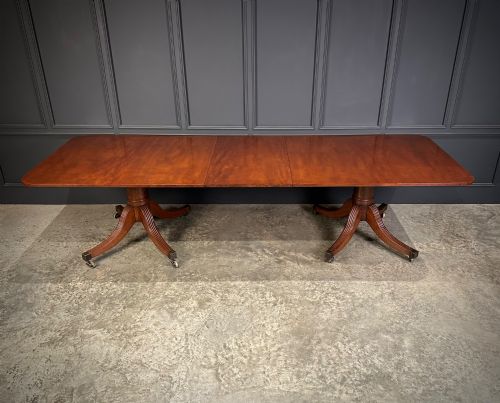
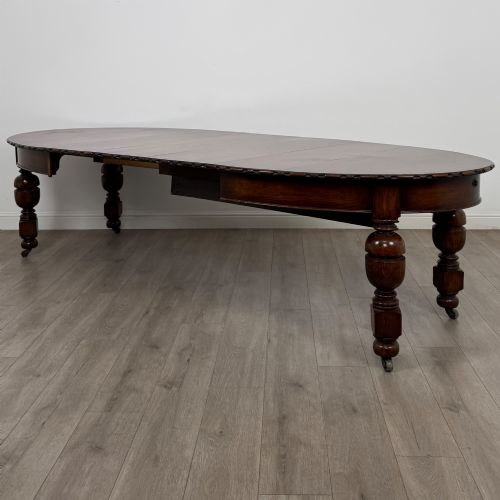
A large antique conference table serves multiple occupants with substantial length, frequently appearing in forms originally designed for formal dining rooms. These pieces span the Regency, Georgian, Victorian, and William IV periods, constructed during the nineteenth century or around eighteen hundred.
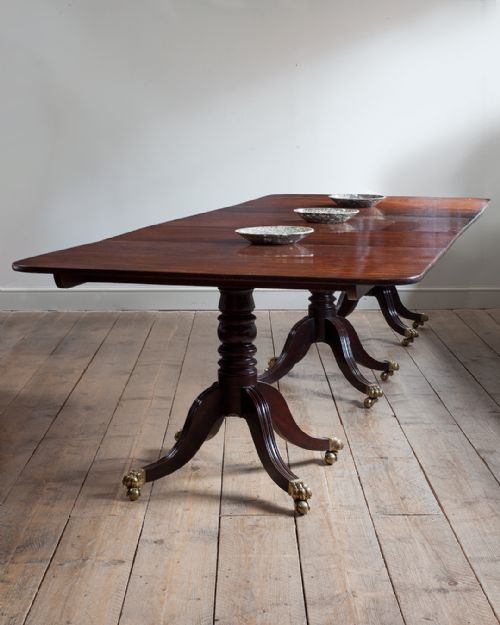
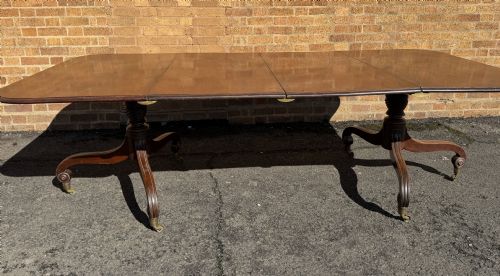
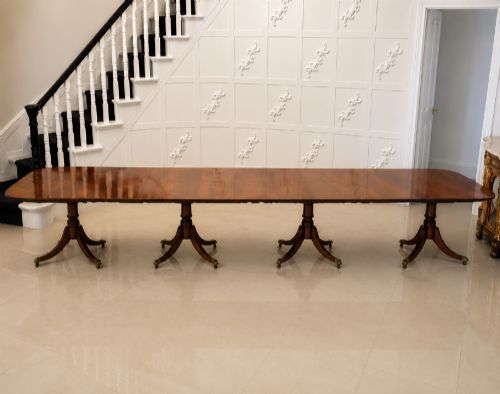
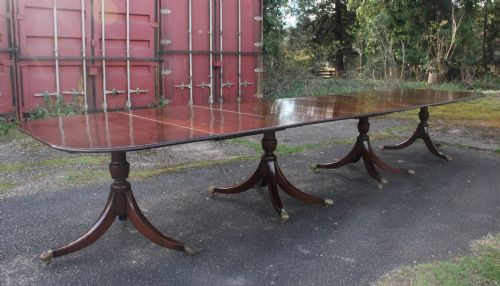
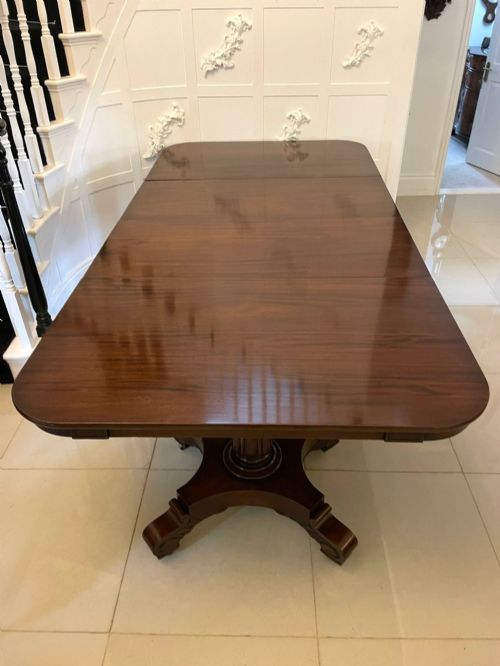
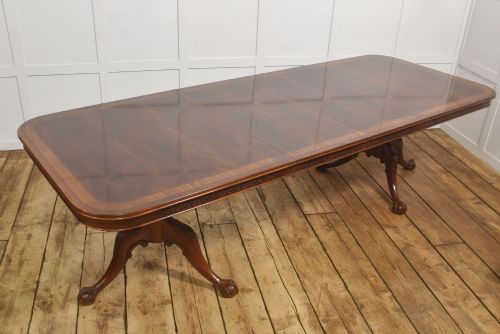
The configurations on this page include three-pillar extending formats, triple pedestal arrangements, and "D" end designs that accommodate ten to fourteen seated individuals. Lengths reach up to fifteen feet, featuring modular sections supported by pillars or pedestals.
Makers such as Whytock & Reid and Gillows Lancaster are represented, alongside unmarked examples that display the proportions and timber quality typical of grand nineteenth-century cabinet making.
Materials and construction
Constructed primarily from figured mahogany and pollard oak, these tables utilise dense hardwoods selected for deep grain patterns and resilience. Oak also appears alongside mahogany in the underlying framework and structural supports.
Metal components such as brass are incorporated into castors and extending mechanisms, allowing heavy multi-pillar sections to move smoothly. Carved details appear on elements like claw and ball legs, demonstrating disciplined hand-tool techniques.
Retail Price Guide 2026
Typical UK retail prices for large conference table, calculated from the Sellingantiques database of over a million retail prices indexed since 2003. This retail price guide relies exclusively on Sellingantiques data; no external sources or auction records are used, so the figures do not describe the wider market.
Some tables hide clever metamorphic mechanisms inside their mahogany frames, ready to surprise anyone looking beneath the top.
Distinguishing quality across examples
The selection of timber grain defines the visual impact, with highly figured mahogany and pollard oak representing the upper tier of aesthetic refinement. Richly patterned surfaces demand careful matching across multiple extending leaves.
Structural complexity dictates mechanical merit, particularly in metamorphic designs and multi-pillar extending systems that maintain stability across lengths exceeding twelve feet. Stamped signatures from established workshops add documented provenance to the construction.
Whytock & Reid·Gillows Lancaster
The Large Conference Table Glossary
- Pedestal
- A central support column, often resting on splayed legs, that holds the weight of large extending tables. Multiple pedestals are essential for supporting lengths reaching fifteen feet.
- Extending table
- A dining or conference format designed with removable leaves and internal mechanisms to expand seating capacity. This allows the overall length to adjust according to requirements.
- D end
- A semi-circular table end section resembling the letter D, which can stand alone or combine with central leaves to form a long oval surface. These sections are common in Regency and Georgian formats.
- Metamorphic
- Describing furniture designed to transform its function or configuration through integrated mechanical systems. In these listings, such a table adapts its form for alternative uses.
Frequently Asked Questions
How many people do these tables seat?
These tables accommodate ten to fourteen seated individuals comfortably, depending on the specific length and configuration of the extending leaves.
Lengths stretch from eight feet up to fifteen feet, providing ample room for boardrooms and large dining settings.
What periods do these tables represent?
The pieces span the Georgian, Regency, William IV, and Victorian eras, originating predominantly throughout the nineteenth century.
Stylistic revivals from around nineteen hundred also appear, replicating earlier proportions and architectural details.
How do multi-pillar tables extend?
Multi-pillar formats utilise internal runners and removable leaves supported by two or three central pedestals that distribute weight evenly.
Brass castors fitted beneath the feet assist in moving the heavy mahogany and oak sections apart when adding leaves.
What timbers were used?
Makers relied on figured mahogany, pollard oak, and standard oak for both visible surfaces and internal framing.
These dense hardwoods provide the structural integrity required to support tabletops extending beyond twelve feet.