




Large Basin Bowl
A large antique basin bowl brings substantial weight and generous capacity to a room, serving practical and decorative roles alike.
Large Basin Bowl
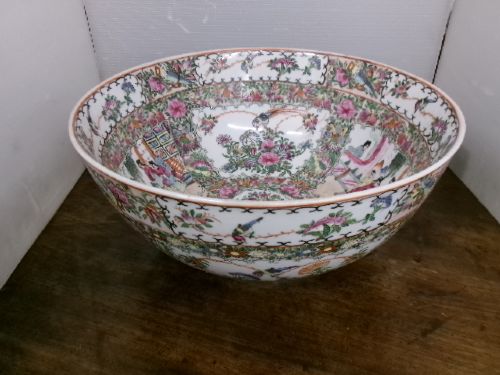
A large antique basin bowl serves as a striking centrepiece or a robust utility vessel, drawing on centuries of domestic and decorative traditions. When searching for a large antique basin bowl, buyers encounter diverse forms ranging from Chinese porcelain punch bowls and Japanese Imari vessels to heavy copper preserving pans and marble mortars.
The selections span multiple eras, notably the eighteenth and nineteenth centuries, alongside regional styles such as French green glaze earthenware tian bowls and English dairy bowls. These objects bridge the gap between utilitarian kitchenware and fine display pieces, offering tangible links to past methods of food preparation, storage, and presentation.
Materials and construction methods
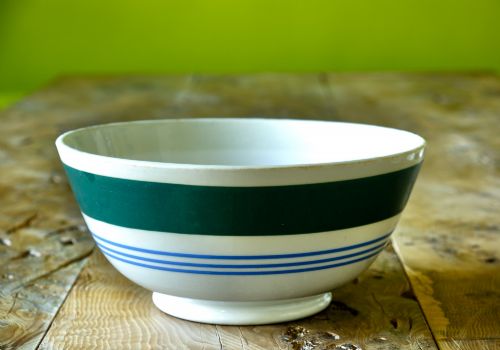
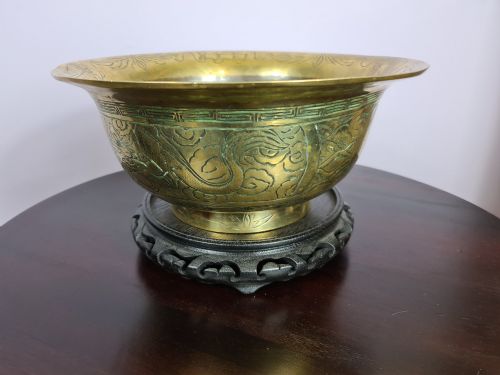
Metal vessels rely on heavy copper, brass, and bronze, often shaped by hand with riveted handles or cast in substantial moulds for durability in domestic and culinary tasks. Ironstone, earthenware, stoneware, and porcelain utilise skilled throwing, hand-painting, and glazing techniques, frequently finished with cobalt blue motifs or polychrome enamel palettes.
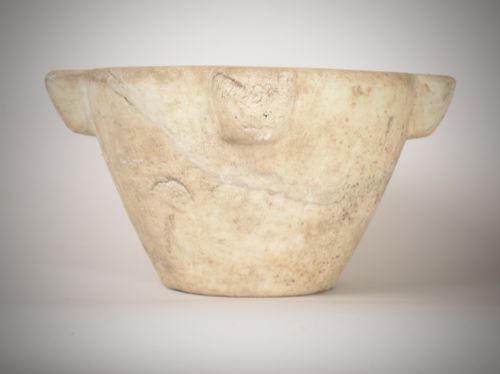
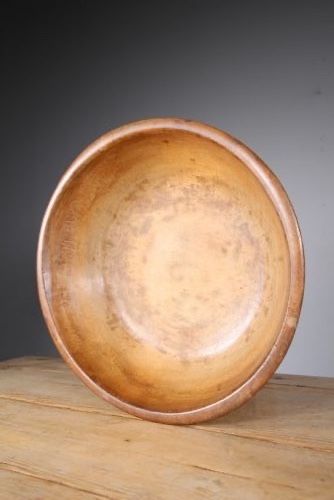
Organic and stone materials appear in carved white marble mortars, turned sycamore dairy bowls, and terracotta bodies featuring interior glazes. Each material dictates the manufacturing process, from the high-temperature firing of Chinese export porcelain to the precision turning of dense hardwoods.
Listings feature materials spanning copper, brass, bronze, porcelain, stoneware, earthenware, marble, and sycamore wood.
Assessing quality and craftsmanship
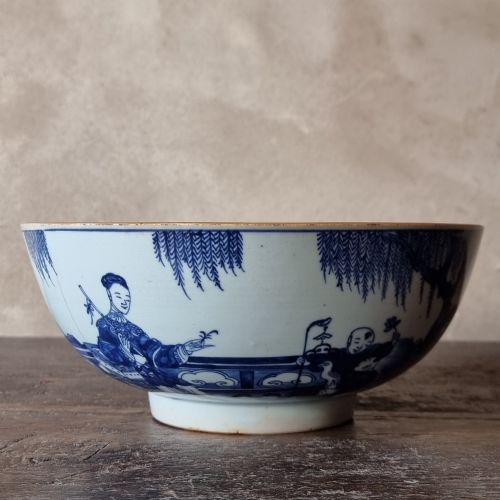
Quality rests upon the crispness of hand-painted detail in porcelain and ceramic examples, where fine brushwork and rich cobalt or famille rose pigments distinguish superior execution. In metalwork, thickness of gauge, heavy construction, and well-executed dovetail joints or hand-engraved brass surfaces separate utilitarian items from finer decorative pieces.
The integrity of the material, whether an evenly potted stoneware body or a heavily carved marble mortar, dictates the overall standing of the object. Weight, balance, and the preservation of original surface patination further define the finer specimens across ceramic, metal, and stone mediums.
T G Green Pottery·Mann & Co·Mappin & Webb·Barker Ellis·Seaton Pottery·Hodges & Sons·Ryuzan
The Large Basin Bowl Glossary
- Famille rose
- A major palette of Chinese ceramic glazes introduced in the eighteenth century, notable for its opaque pink enamel derived from colloidal gold. This colour scheme adorns numerous large export porcelain bowls.
- Imari
- A style of Japanese export porcelain characterised by underglaze blue and overglaze red, gold, and green decorations. Pieces display intricate patterns developed in the Arita region.
- Mortar
- A heavy bowl-shaped vessel used with a pestle for grinding and crushing ingredients. Antique examples frequently employ solid white marble or dense stone.
- Tian bowl
- A traditional large earthenware vessel originating from the south of France, typically featuring a green glaze. These heavy bowls served rural agricultural and dairy purposes.
- Slipware
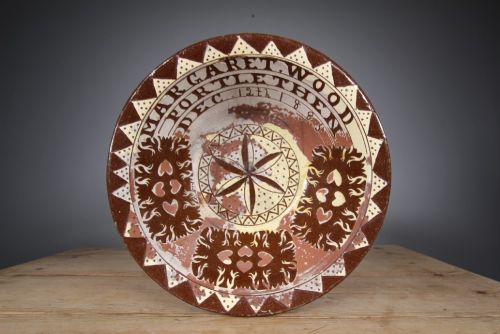
- Pottery decorated with a liquid clay mixture called slip, applied before firing to create surface patterns. Pieces often exhibit rustic earth tones and traditional lead glazes.
Large Basin Bowl: Frequently Asked Questions
How were large copper basin bowls originally used?
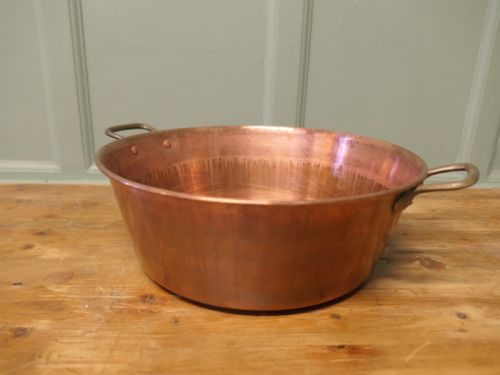
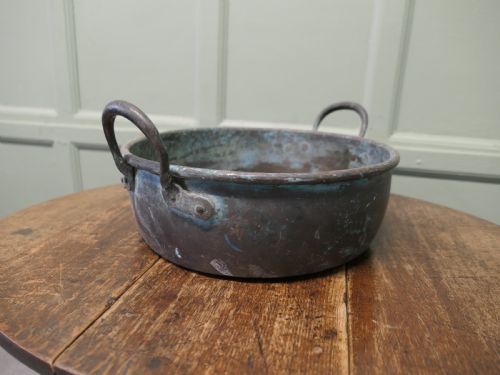
Large copper vessels functioned primarily as preserving pans or jam pans in domestic kitchens, utilising the metal's excellent heat conductivity for boiling fruit and sugar.
They also served as laundry tubs, water carriers, or wine coolers, depending on their depth and the presence of handles.
What is the difference between an Imari bowl and a Canton bowl?
Imari bowls originate from Japan and typically feature a distinct palette of underglaze blue combined with iron red and gilt ornamentation.
Canton bowls hail from China and usually display expansive hand-painted famille rose scenes featuring figures, birds, and floral motifs.
How do I care for an antique marble mortar?
Clean white marble surfaces using a damp cloth with mild soap, avoiding acidic cleaning agents that can etch the stone.
Dry the vessel thoroughly after washing to maintain the smooth interior finish and preserve the natural patination.
Where should I display a heavy bronze or brass bowl?
Place substantial metal bowls on low, sturdy tables or heavy wooden sideboards capable of supporting considerable weight.
Ensure the location highlights the reflective surface and allows the patinated metal to act as a standalone focal point.