
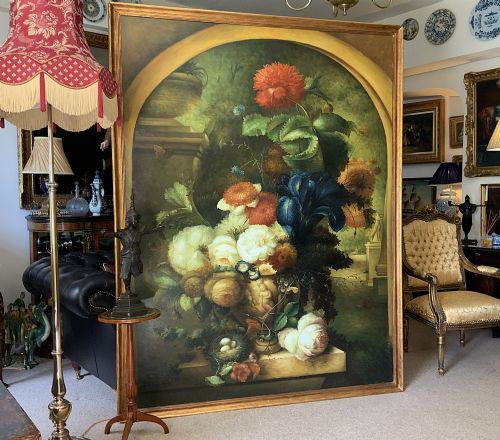
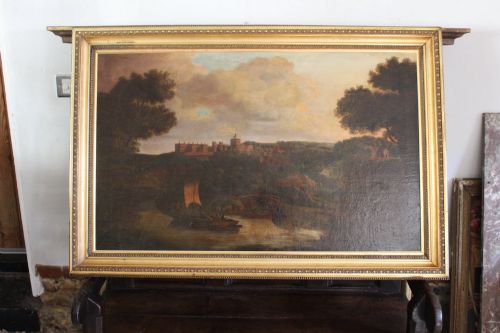
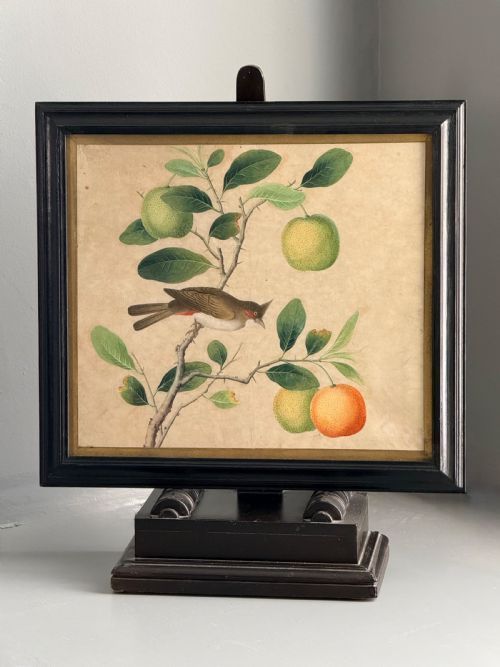
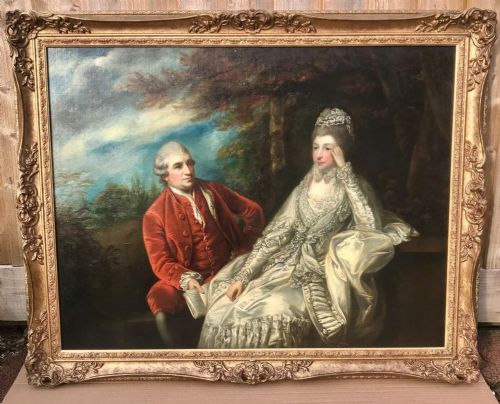


Large 18th Century Artwork
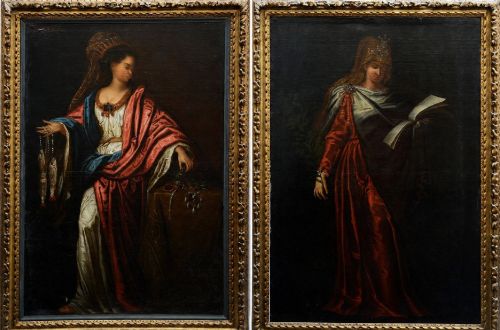
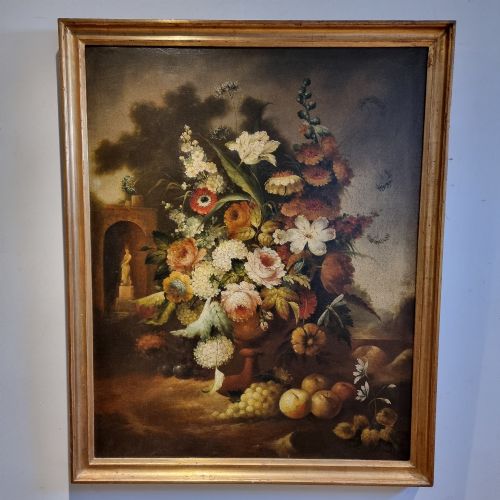
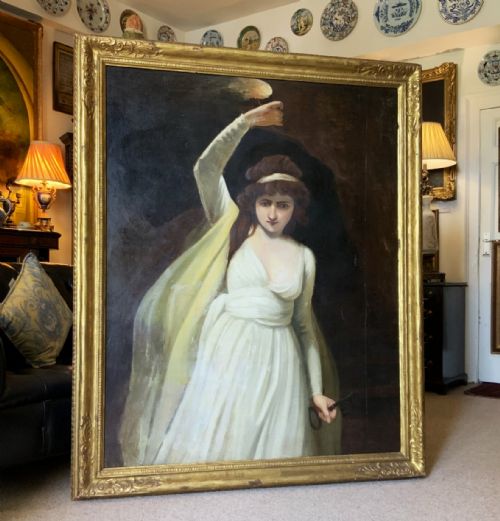
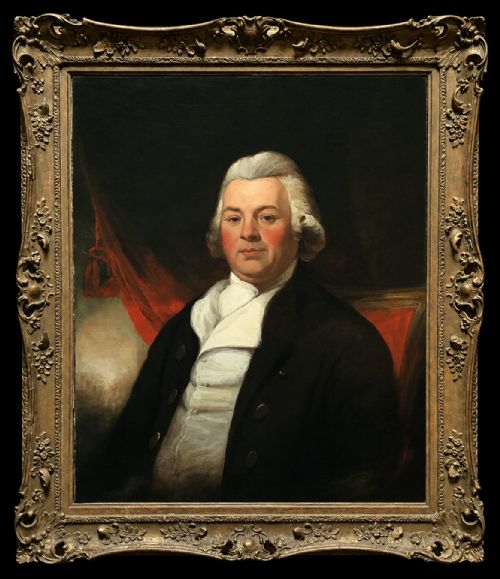
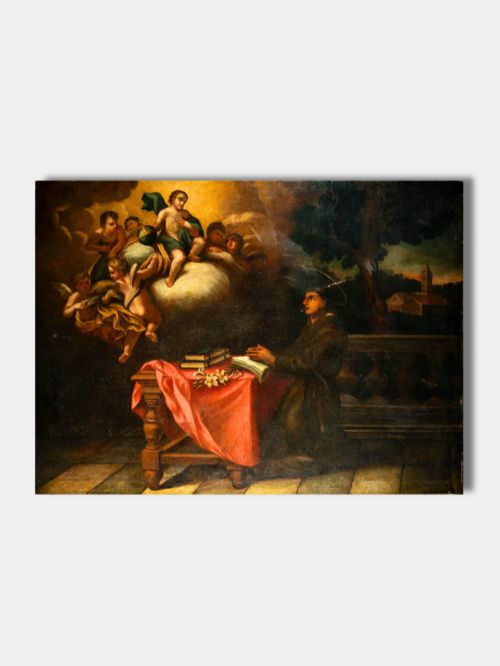
A large 18th century artwork commands a room through monumental scale and heavy oil on canvas portraiture or architectural engraving.
Large 18th Century Artwork
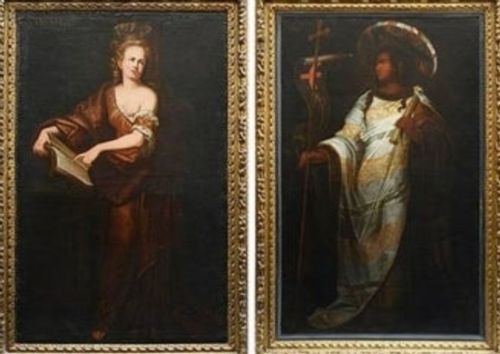
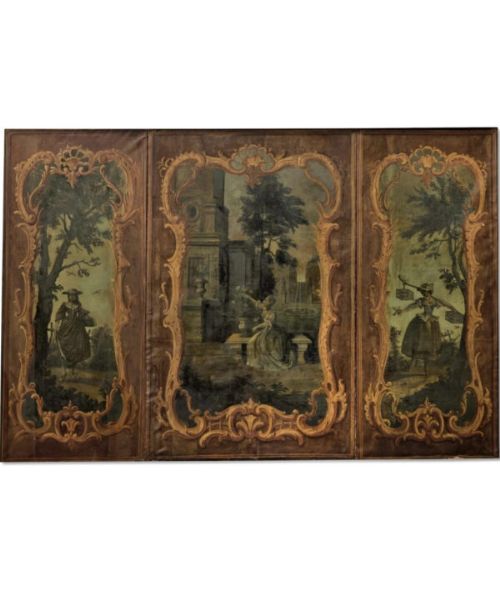
A large 18th century artwork encompasses grand oil paintings, architectural engravings, and gouache on pith paper spanning periods from the seventeen-fifties through the Georgian era. Buyers seek these substantial pieces to anchor high-ceilinged interiors with historical gravitas and grand visual narratives.
The selection frequently includes expansive oil on canvas portraits, Italian old master landscapes, and classical engravings depicting mythological or architectural subjects. These grand formats often arrive in heavy giltwood frames suited to country houses and formal reception rooms.
Materials and construction
Makers utilised oil paint on stretched canvas, fine paper, and pith paper, supported by substantial timber stretchers and elaborate gilt wood or giltwood frames. Engravings were pulled from detailed plates on paper, capturing precise architectural antiquities.
Pigments were worked in rich oil or delicate gouache, creating deep chiaroscuro effects in portraits and crisp line work in architectural prints. Giltwood surrounds were carved and gilded to complement the scale of the central canvas or paper sheet.
Ducks, ducklings, and frogs occasionally share the canvas with old masters, proving eighteenth-century wildlife had a sense of drama.
Assessing visual excellence
Quality rests upon the strength of attribution, the vibrancy of the remaining pigment, and the integrity of the canvas or paper support. Works linked directly to notable schools or painters display superior brushwork and anatomical command.
The preservation of the original giltwood frame and the depth of the composition elevate certain examples above standard decorative pieces. Clarity in fine engravings and stability in large oil paintings dictate the standing of an artwork.
John Opie RA·George Watson·Philipp Ferdinand de Hamilton·George Morland·Giacomo Nani·James Basire·Giovanni Ottaviani·Thomas Gainsborough
The Large 18th Century Artwork Glossary
- Giltwood
- Timber carved and coated with gold leaf. This material defines the ornate frames encasing many grand canvases.
- Grisaille
- Monochromatic painting executed in shades of grey. This technique mimics the appearance of relief sculpture within decorative schemes.
- Engraving
- An image incised into a metal plate for printing multiple impressions. These works record classical antiquities and architectural details.
- Old Master
- A European artist of high skill working before the nineteenth century. These painters produced the historical portraits and landscapes seen in this category.
- Gouache
- An opaque water-based paint. It provides dense colour saturation on paper surfaces.
Large 18th Century Artwork: Frequently Asked Questions
Where should I hang a large 18th century artwork?
These expansive pieces require substantial wall space with stable humidity levels, away from direct sunlight to protect oil paint and paper.
Rooms with high ceilings, such as libraries or formal reception halls, accommodate their considerable height and width most effectively.
How do I care for an antique oil painting?
Keep the canvas away from extreme temperature fluctuations and excessive moisture to prevent warping of the wood stretcher and cracking of the oil paint.
Dust the surface gently with a soft, dry brush and leave professional cleaning or varnish removal to experienced conservators.
What subjects are common in these large artworks?
Portraits of historical figures, sibyls, and classical deities dominate the painted works, alongside Italian landscapes and still life arrangements.
Engravings frequently record Greek architecture, antiquities of Athens, and mythological scenes from classical antiquity.
Are original frames important for these pieces?
The surrounding giltwood frame often shares the period of the artwork and contributes significantly to its historical integrity and visual impact.
Matching the scale of a monumental canvas requires a substantial, period-appropriate frame to support the overall composition.