




Lake District Artwork
Lake district artwork captures the distinct topography and shifting light of northern England through centuries of changing media.
Lake District Artwork
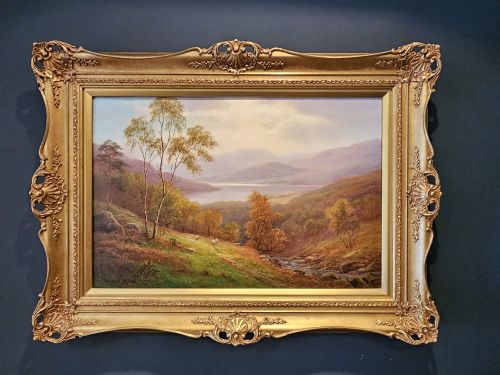
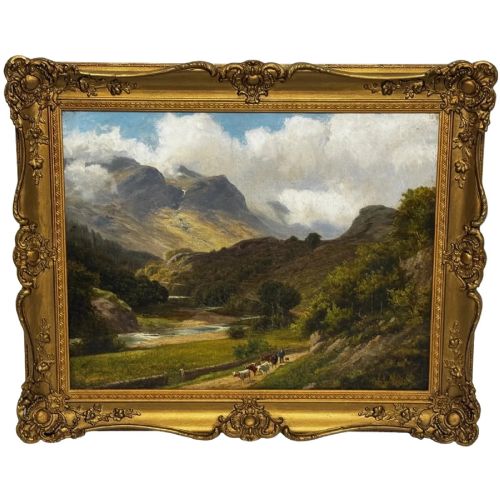
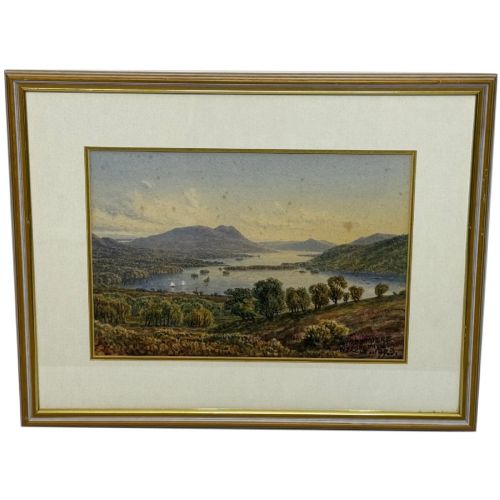
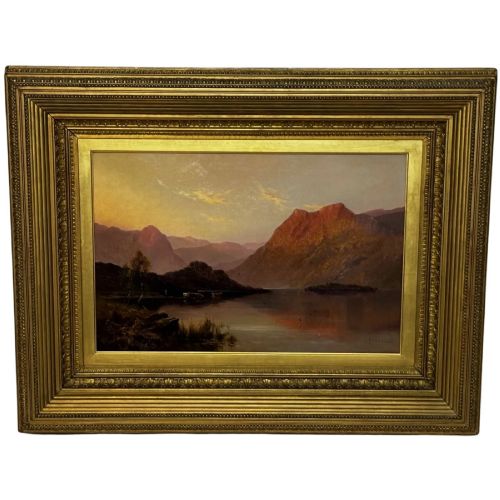
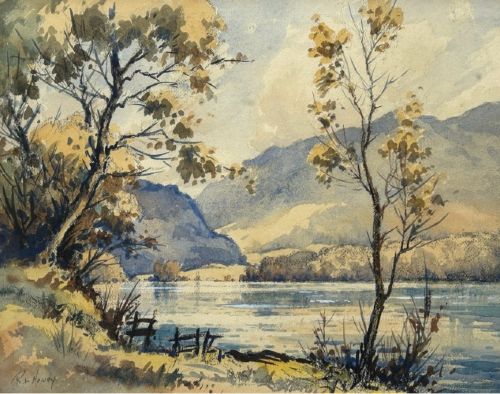
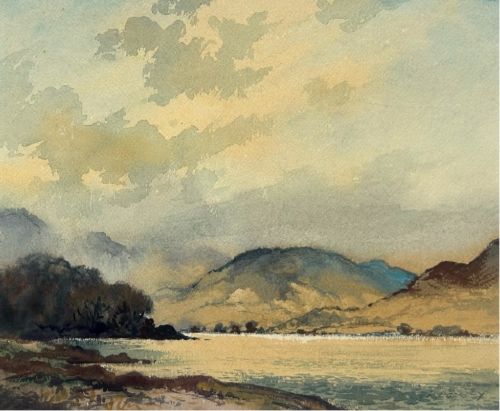
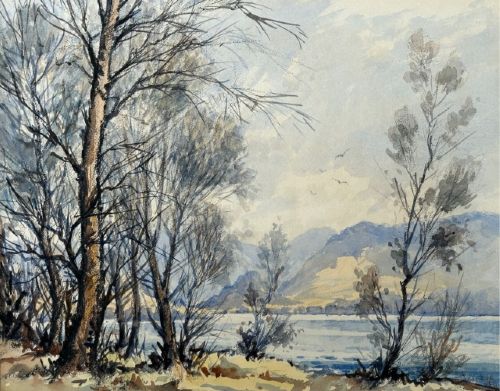
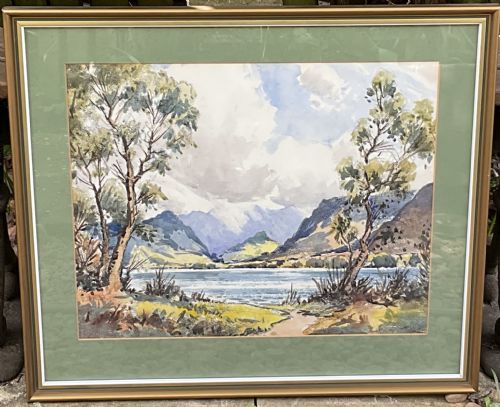
Lake district artwork brings the rugged mountains, tarns and valleys of Cumbria directly onto the wall in various historical styles. These pieces capture specific topographical views such as Derwentwater, Windermere and Grasmere through the eyes of artists working from the seventeenth century into the mid-twentieth century.
The selection here encompasses everything from delicate topographical watercolours and ink sketches to substantial oil paintings on canvas. Regional locations like Borrowdale, Langdale and Ullswater recur across different periods, showing how generations of painters returned to the same striking terrain.
Buyers encounter works spanning multiple eras, including Georgian sketches, Victorian landscapes, and mid-century British school impressions. Each period applies its own palette and handling to the Cumbrian landscape, creating distinct visual records of the region.
Materials and techniques
Traditional watercolours utilise pigment applied to paper, often accompanied by pen-and-ink lines to define crags, trees and water. Many works employ watercolour and ink sketches to capture rapid atmospheric changes across the fells.
Oil paintings rely on canvas or panel supports, sometimes built up with impasto brushwork to describe the heavy textures of stone and foliage. Gesso frames frequently house these oil works, providing structured borders that complement the painted surfaces.
Charcoal and pencil appear in original drawings, offering direct monochromatic studies of Lakeland scenes like Ambleside. Glass and framing protect these diverse paper and canvas mediums from environmental damage.
Listings feature works spanning from the seventeenth century to the mid-twentieth century, executed in oil on canvas, watercolour, and charcoal.
Judging quality and execution
Quality rests upon the artist's ability to render the particular atmospheric conditions and topography of Cumbria rather than relying on generic formulas. Stronger works demonstrate confident brushwork or precise ink control that defines the structure of the fells and the surface of the water.
Provenance and attribution elevate certain pieces, particularly when signed by established regional painters or securely linked to historical exhibitions. The integrity of the original medium, whether oil pigment on canvas or watercolour on paper, also dictates the visual impact of the composition.
Alfred Fontville de Breanski Jr·Robert Leslie Howey·Helen Layfield Bradley·Edward Dayes·Joseph Farrington RA·Sidney Richard Percy
The Lake District Artwork Glossary
- Impasto
- Paint applied thickly to a canvas or panel, standing out in relief from the surface. This technique allows artists to build physical texture into the representation of rock and heather.
- Topographical
- Representing specific real-world locations with a degree of geographical accuracy. These views record actual Cumbrian terrain such as specific becks, fells and lakes.
- Gesso
- A plaster-like mixture applied to wooden frames or panels as a base for painting or gilding. It provides a smooth foundation for decorative frame mouldings.
- Watercolour pigment
- Finely ground colour particles mixed with a water-soluble binder for painting on paper. It allows for transparent washes that capture shifting northern light.
Lake District Artwork: Frequently Asked Questions
Are watercolours on this page original works?
The watercolours listed here are hand-painted original works on paper rather than mass-produced prints or reproductions. Artists applied watercolour pigment directly to capture light and weather across the Cumbrian landscape.
Close inspection reveals brush strokes, pencil underdrawings, and variations in wash density unique to each individual sheet.
How should I care for antique paper art?
Works on paper require protection from direct sunlight to prevent fading of watercolour pigments and discolouration of the paper support. Framing behind glass with acid-free mounts ensures proper separation between the artwork and the glazing.
Maintaining stable relative humidity in the room prevents moisture damage, cockling, and foxing on older paper surfaces.
What is the difference between Victorian and mid-century lake art?
Victorian depictions often emphasise detailed realism, romantic atmosphere, and structured composition within ornate gesso frames. Painters from this era sought to capture the sublime grandeur of the mountains with careful tonal gradation.
Mid-century works frequently adopt looser brushwork, impressionist palettes, or simplified forms reflecting the influence of the mid-century British school.