
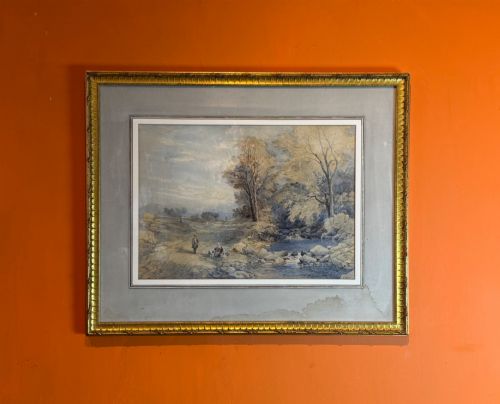


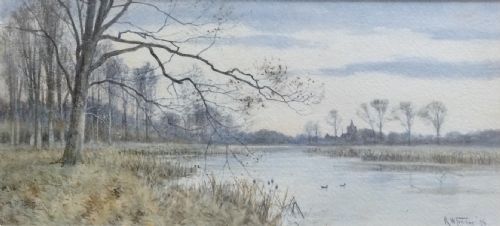


English School Watercolour Picture
An English school watercolour picture brings domestic history and landscape into your room through delicate pigment on paper.
English School Watercolour Picture
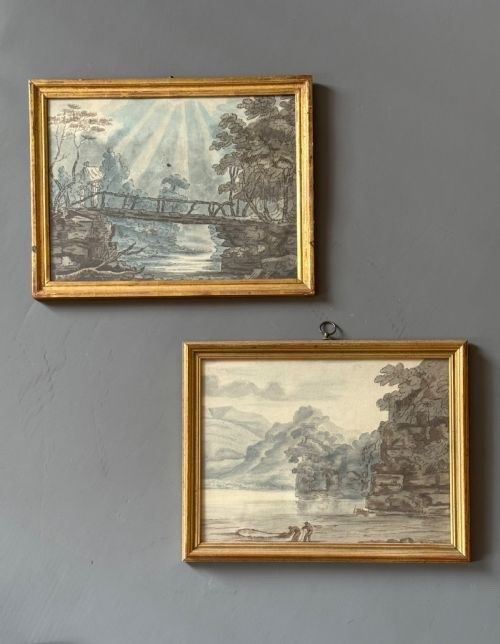
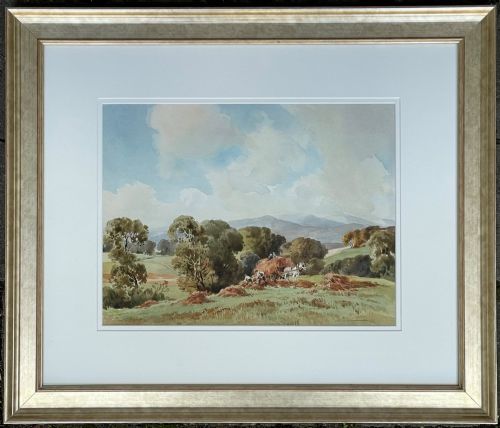
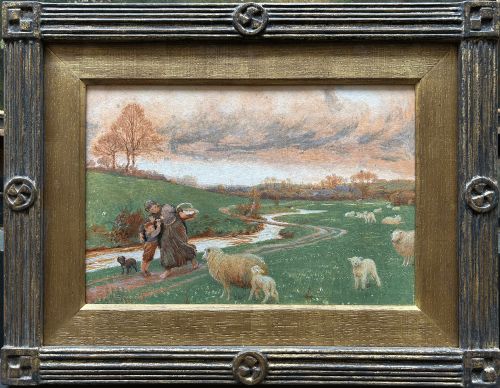
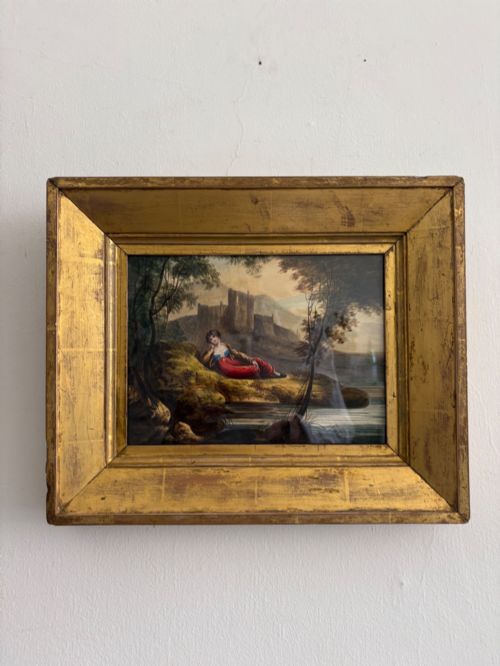
An english school watercolour picture captures landscapes, botanical studies, and architectural views across the eighteenth, nineteenth, and early twentieth centuries. These works range from intimate rural scenes to detailed studies by named artists working within traditional British traditions.
You will most frequently encounter nineteenth-century and Victorian examples on this page, often framed in gilt wood behind glass to protect the paper. Subjects span from quiet riverbanks and lake districts to village cottages and botanical arrangements.
Many pieces reflect regional schools such as the Norwich School or specific rural localities across England. Unsigned examples attributed to the English school sit alongside firmly signed works by established painters.
Materials and Technique
Makers applied watercolour pigment, and occasionally gouache or pencil, directly onto paper supports. This combination allows for both transparent washes of colour and opaque highlights that define light and texture.
Framing typically involves wood and gilt wood surrounds combined with glass protection. This method preserved the fragile paper surfaces from atmospheric moisture and handling over many decades.
Several botanical studies preserve exact seventeenth- and nineteenth-century plant specimens long after their garden beds vanished.
Distinctions in Quality
Quality rests upon the sureness of the brushwork and the preservation of the pigment's original tone. Stronger examples display confident handling of light and perspective rather than purely mechanical execution.
The sophistication of the composition and the detail found in subsidiary elements, such as foliage or architectural stonework, distinguish the finer pieces from simpler topographical records.
Percy Lancaster·Frederick Walker·Thomas Cooper Moore·David Cox Jnr·J Laporte·Harry Bright·Edward Horace Thompson·William Hough·Robert Winchester Fraser·Angus Rands·Charles Branwhite·Cornelius Pearson·James Stephen Gresley·J.Tim Macdonald·George Cattermole·Tom Dudley·Theresa Sylvester Stannard·Frank Saltfleet·George Graham·WD Scull·Henry Bright·John Thistle·George Jackson
The English School Watercolour Picture Glossary
- Gouache
- An opaque watercolour paint that provides heavier coverage and solid highlights. It is frequently combined with transparent watercolour on paper.
- Norwich School
- A regional art movement of painters depicting local landscapes and rural scenes in East Anglia. This group represents the first provincial art movement in Britain.
- Gilt Wood
- Timber framing coated with a thin layer of gold leaf or metallic gilt finish. These frames protect the watercolour while adding decorative weight.
- English School
- A designation for works produced by artists trained or working in England without a specific attributed master. It groups together traditional British fine art painting.
- Topographical
- Artwork depicting specific geographical locations, buildings, or towns with documentary accuracy. These pictures record historical changes in the British landscape.
English School Watercolour Picture: Frequently Asked Questions
How should I hang watercolour pictures?
Keep watercolour pictures away from direct sunlight to prevent the pigments from fading over time. Indirect natural light in a dry room suits them best.
Ensure the frame remains sealed behind glass to protect the fragile paper from humidity and atmospheric dust.
What does English school mean?
The term denotes works created within the broad stylistic traditions of British art without necessarily pointing to a single famous master. It embraces regional painters and professional artists alike.
Many nineteenth-century pictures carry this attribution when the specific hand remains undocumented or collaborative.
Are these paintings original?
Every piece listed is an original hand-painted work on paper rather than a modern mechanical reproduction. Artists applied wet pigments directly to the support.
Brushstrokes, pencil underdrawings, and paper textures confirm the individual creation of each artwork.
How do I date an old watercolour?
Dating relies on the paper type, framing style, costume of any figures depicted, and handwritten inscriptions on the reverse. Victorian and Edwardian works often show distinct mounting methods.
Stylistic cues such as Norwich School influences or specific artist signatures help narrow the period of creation.