
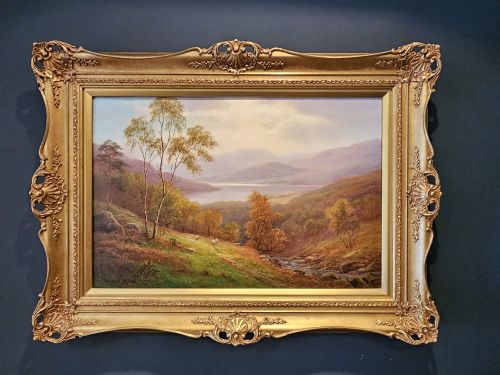
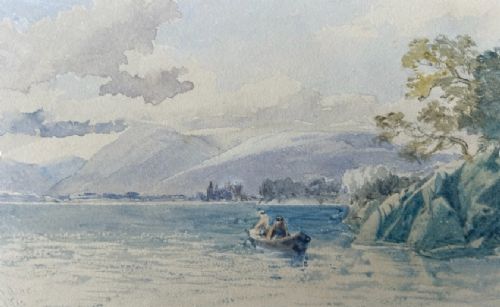
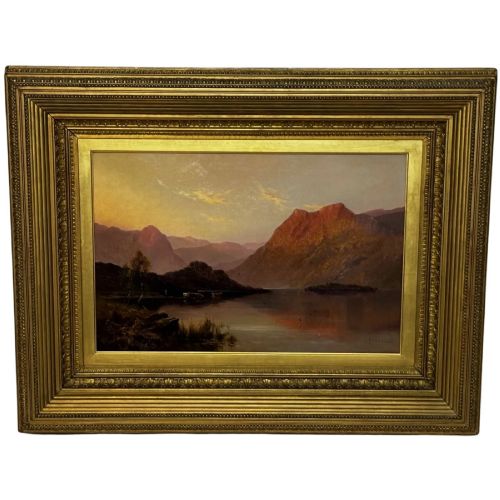


Original Victorian Lake Painting
An original victorian lake painting captures tranquil waters and mountain horizons, bringing nineteenth-century atmosphere straight to your wall.
Original Victorian Lake Painting
An original victorian lake painting encompasses framed works depicting water views, mountains, and skies created during the nineteenth century. Buyers searching this phrase meet landscapes rendered in oil on canvas or delicate watercolour on paper.
The selections span scenes from Scottish lochs and English lakes to continental and New Zealand vistas. These works frequently arrive behind glass in period gilt wood frames finished with gesso.
Compositions range from intimate watercolours to large oil paintings signed by listed artists of the period. The subject matter captures pastoral life, sailing, fishing, and dramatic weather across mountainous terrains.
Materials and Technique
Artists painted primarily with oil on canvas or applied watercolour pigments to paper, often capturing light on water through layered washes or thick impasto brushwork. These mediums defined the depth and atmospheric quality characteristic of the period.
Frames combined carved wooden mouldings with gesso layers, finished with gold leaf or metallic gilt to complement the artwork. Glass protected vulnerable watercolours from moisture and atmospheric dust.
Current listings feature works spanning the nineteenth century, utilising watercolour on paper and oil on canvas within period gilt frames.
Assessing the Work
Quality rests upon the artist's handling of light, atmospheric perspective, and topographical detail within the landscape. Masterly brushwork in oils or controlled washes in watercolours elevate certain pieces above standard topographical records.
The integrity of the original surface, the presence of a clear signature or monogram, and the preservation of the matching gilt frame influence the standing of the piece. Works retaining their early mount and undisturbed backing papers hold distinct appeal.
Thomas Miles Richardson Jnr·Alfred Fontville de Breanski·Charles Leslie·John Douglas Perrett·Thomas Bush Hardy·Benjamin Williams Leader·Frederick Tucker·Cornelius Pearson·Tom Dudley·William Mellor·Samuel Hart Turpin·Robert Thomas Buttery·Charles Pettitt·John Atkinson Grimshaw
The Original Victorian Lake Painting Glossary
- Gesso
- A plaster mixture applied to wooden frames before gilding, providing a smooth base for intricate moulded details. It forms the decorative relief work seen on many nineteenth-century frames.
- Watercolour
- A painting method where paint is made of pigments suspended in a water-based solution, traditionally applied to paper. It allows for transparent washes of colour that evoke luminous skies and water.
- Impasto
- The process of laying paint thickly on a canvas so that it stands out from the surface. This technique adds tactile texture to water surfaces or rocky foregrounds in oil paintings.
- Monogram
- A motif made by overlapping or combining letters to form a logo or identifier, frequently used by artists to sign their work in place of a full signature.
- Gilt Wood
- Timber coated with gold leaf or gold paint to give a luxurious metallic finish. It defines the traditional framing style associated with Victorian fine art.
Original Victorian Lake Painting: Frequently Asked Questions
How do I date a lake painting?
Examine the stylistic cues, costume of any figures, and framing materials. Signatures can often be cross-referenced with artist registry dates from the nineteenth century.
Paper watermarks, canvas stamps, and archival inscriptions on the reverse also offer reliable chronological markers.
Where should I hang these paintings?
Position them away from direct sunlight and damp environments to protect the paper, canvas, and gilt framing. Wall placement should consider eye level to appreciate the fine brushwork.
Stable indoor temperatures prevent the gesso frames from cracking and keep canvas tension secure.
Are watercolours harder to care for than oils?
Watercolours require continuous protection behind glass to prevent humidity damage and fading from light exposure. Oils on canvas are more resilient but still benefit from stable atmospheric conditions.
Both mediums should avoid sudden temperature shifts to preserve the substrate.
What defines Victorian romanticism in landscapes?
This style emphasises emotional resonance, dramatic weather, and the sublime power of nature. Paintings often feature moody skies, gathering storms, or serene twilight over remote waters.
Artists aimed to evoke awe rather than strict topographical accuracy.