






Lacquer Accent Tables
Lacquer accent tables bring a polished surface and painted detail to a room, ranging from small occasional pieces to nesting sets.
Lacquer Accent Tables
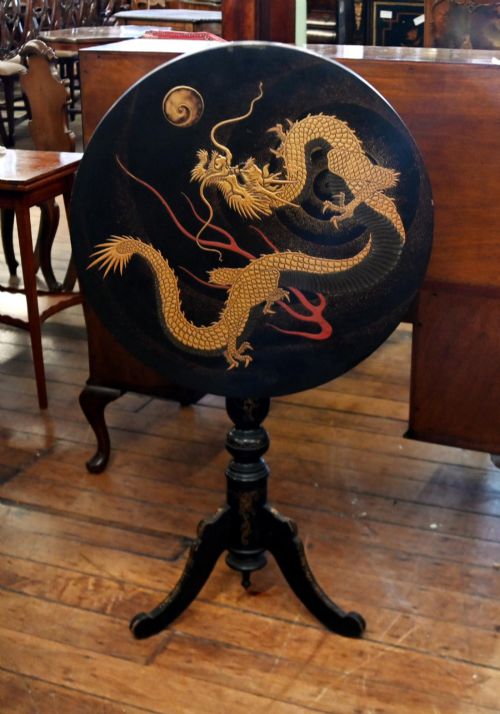
Lacquer accent tables encompass a variety of small surfaces such as occasional tables, side tables, coffee tables, and nests of tables designed for domestic use. The pieces found here span the eighteenth, nineteenth, and early twentieth centuries, reflecting diverse origins from English workshops to Chinese and Kashmiri makers.
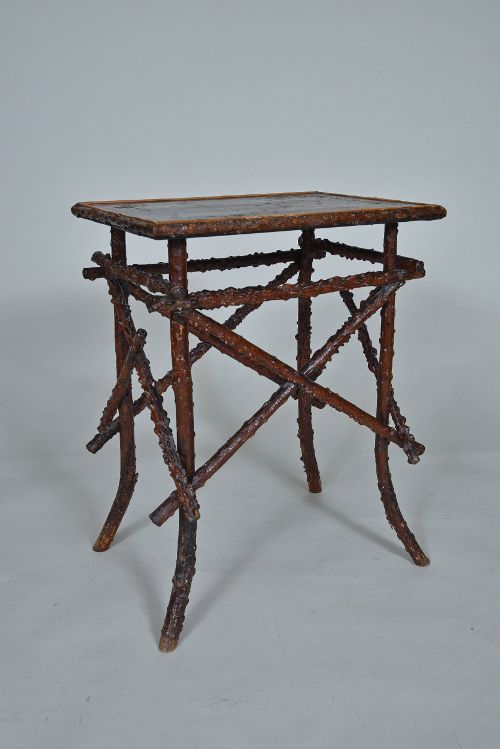
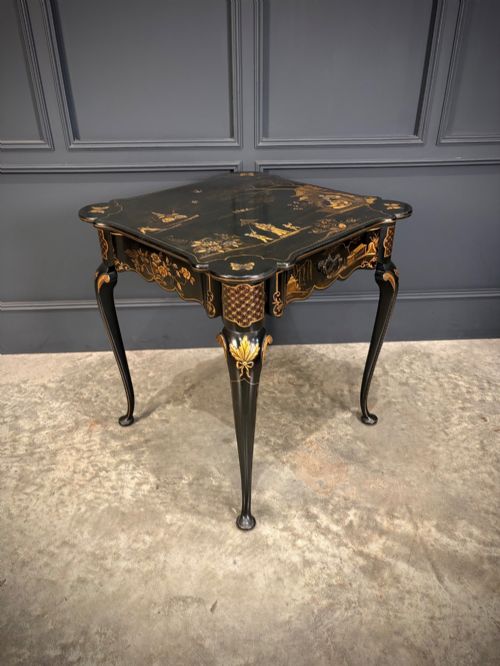
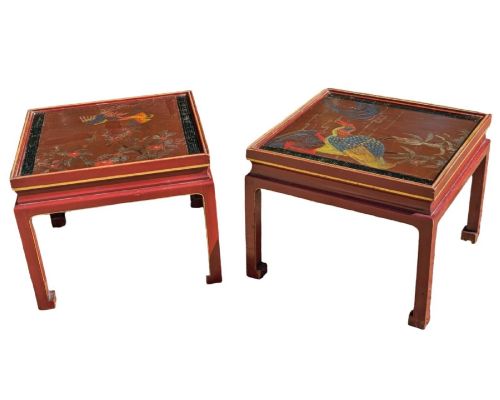
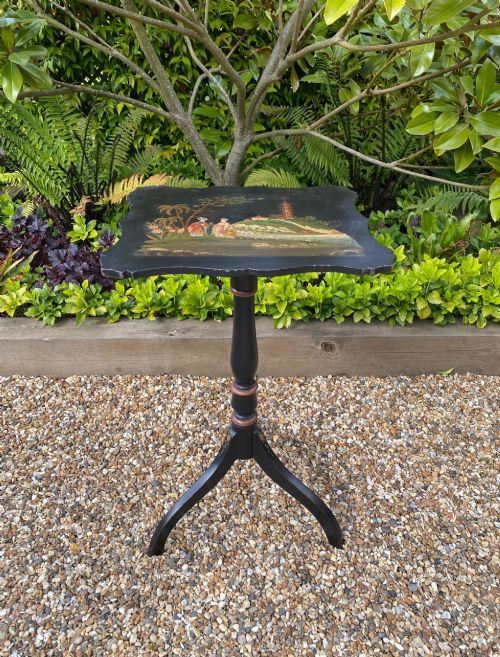
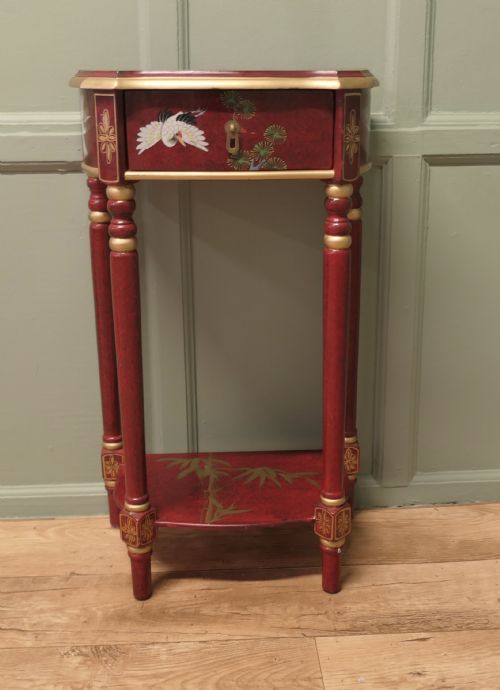
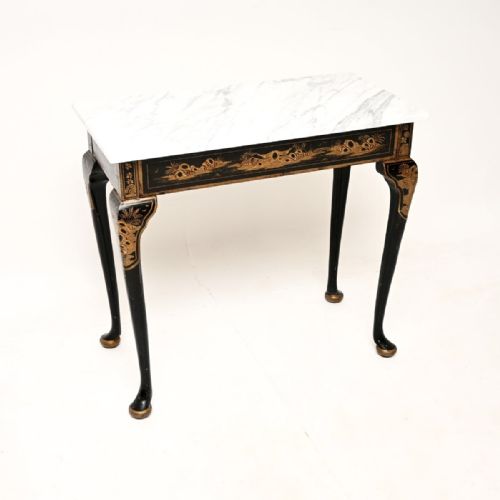
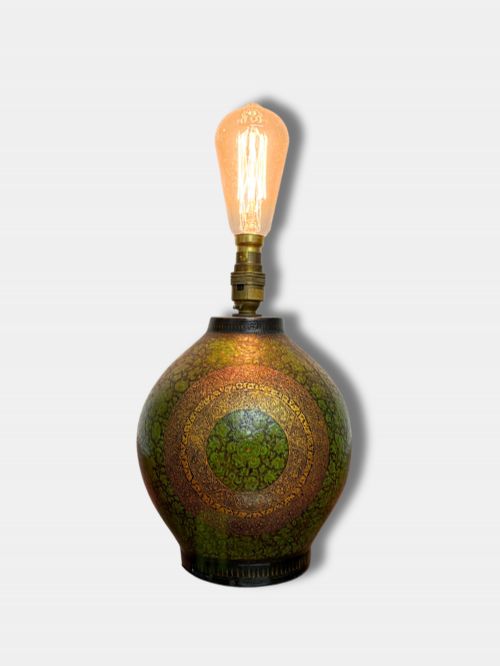
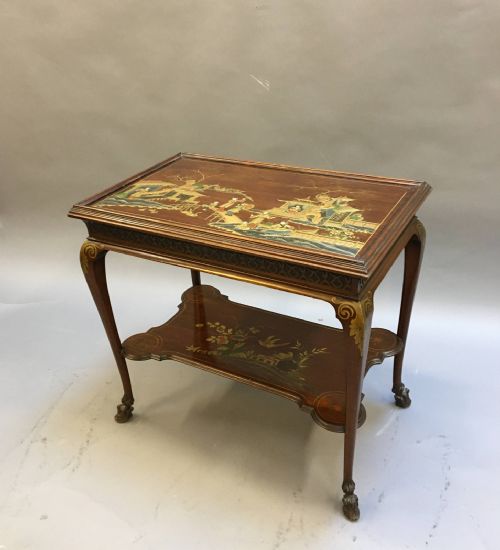
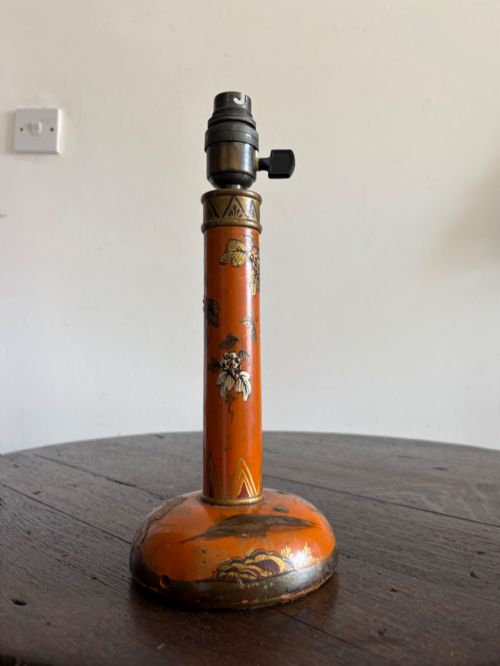
Buyers will frequently encounter occasional tables and side tables finished in black, red, or ochre lacquer, often decorated with Chinoiserie motifs. Forms range from bamboo frames and papier-mâché tray tables to tripod stands and low tables.
The selection includes specific regional styles like Kashmiri and Chinese works alongside Victorian and Edwardian interpretations. These items serve functional roles as display surfaces while introducing distinct colour and pattern to an interior space.
How they were made
The construction of these pieces relies on woods such as elm, rootwood, and bamboo, paired with specialised finishes like lacquer, paint, and gold leaf. Artisans applied layers of lacquer to wooden or papier-mâché bases to create a durable, glossy surface capable of holding intricate painted ornamentation.
Decoration often involved hand-painted Chinoiserie scenes executed in gold, red, and green pigments directly onto the dark or bright ground. Additional materials like brass, marble tops, and cloisonné details appear on specific forms to enhance the structural and visual complexity of the furniture.
Lacquer Accent Tables Retail Price Guide 2026
Typical asking prices for lacquer accent tables among the pieces listed under this phrase on Sellingantiques today, from the lower quarter to the upper quarter. They describe what is for sale here now, not the wider market.
Materials in these listings include lacquer, wood, brass, gold leaf, papier-mâché, gilt, and paint.
What varies in quality
Quality in these items rests upon the depth and preservation of the lacquer finish and the precision of the hand-painted decoration. Pieces with crisp detailing, intact gold leaf, and stable structural foundations stand apart from those with heavy surface wear or later repainting.
The choice of underlying material also defines the tier of the piece, with solid timbers, bamboo frames, and finely moulded papier-mâché tray structures representing different levels of period craftsmanship.
The Lacquer Accent Tables Glossary
- Chinoiserie
- European decorative style reflecting Chinese artistic influences, commonly seen in painted landscapes and figures on lacquer furniture.
- Papier-mâché
- A composite material made from paper pulp or layers of paper bound with glue, used to form lightweight table tops and trays.
- Etagere
- A piece of furniture consisting of open shelves for displaying small objects, appearing in bamboo and lacquered wood.
- Tripod table
- A small standalone table supported by a central pillar resting on three feet, frequently utilised for tea or display.
Lacquer Accent Tables: Frequently Asked Questions
What periods do these tables come from?
The pieces span from the eighteenth century through the Victorian and Edwardian eras up to the 1930s.
Most examples date from the nineteenth and early twentieth centuries, reflecting various revival styles and regional production methods.
How do I clean a lacquered surface?
Dust the surface gently with a soft, dry cloth to prevent scratching the delicate finish.
Avoid using harsh chemical cleaners or excess moisture, which can damage the old paint and lacquer layers.
Were these tables made in Europe or Asia?
The selection includes both Asian imports and European interpretations made in the Chinoiserie taste.
Origin locations range from China and Kashmir to English workshops influenced by Eastern aesthetics.
What materials form the bases?
Makers utilised various woods including elm, rootwood, and bamboo to build the internal frames and supports.
Some lighter items employ papier-mâché for tray tops mounted onto wooden or metal stands.