





Kurdish Geometric Rug
When you want a kurdish geometric rug, you are looking at resilient tribal floor coverings that bring direct village designs into modern rooms.
Kurdish Geometric Rug
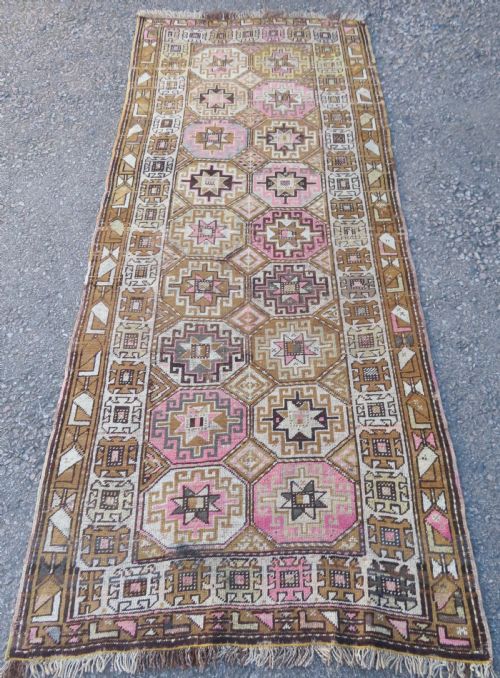
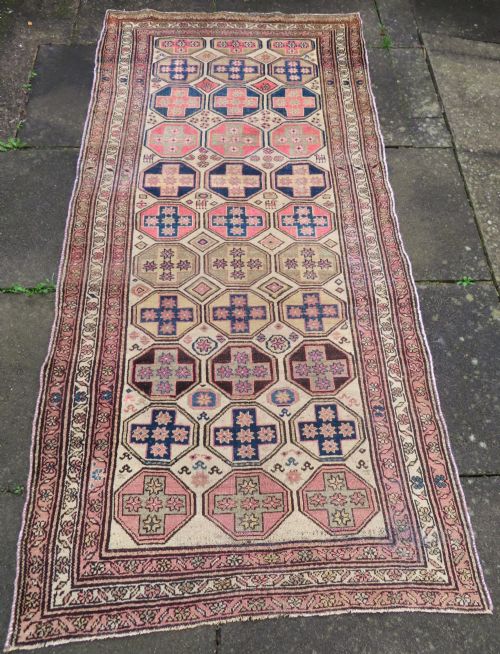
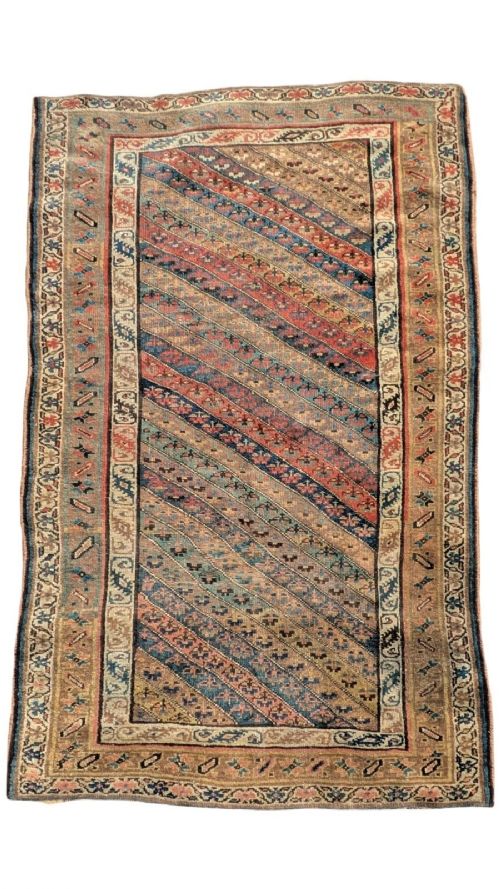
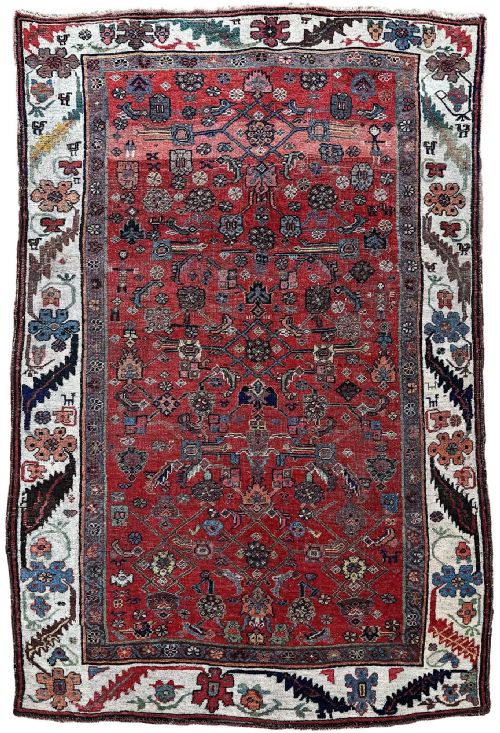
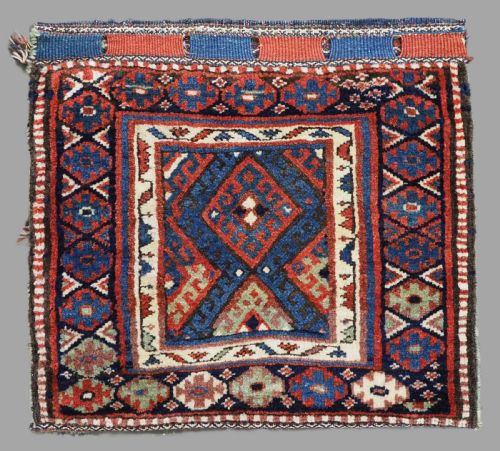
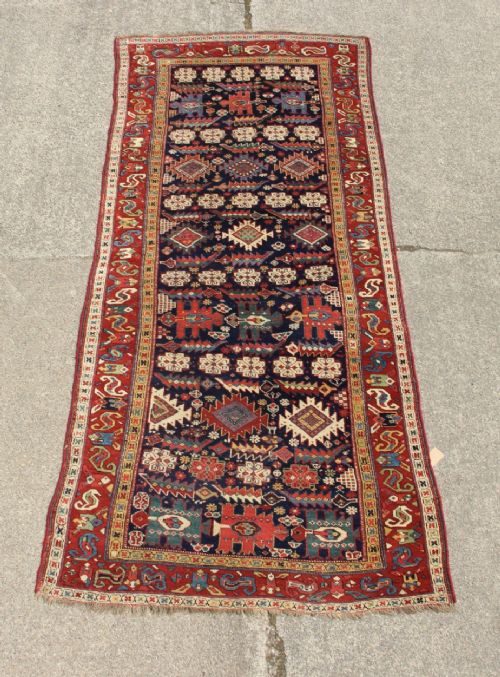
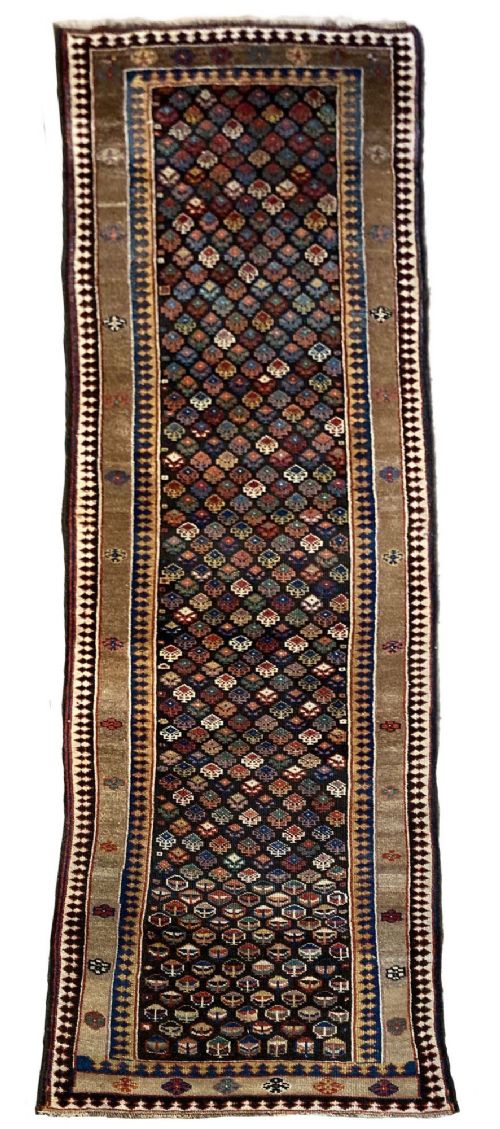
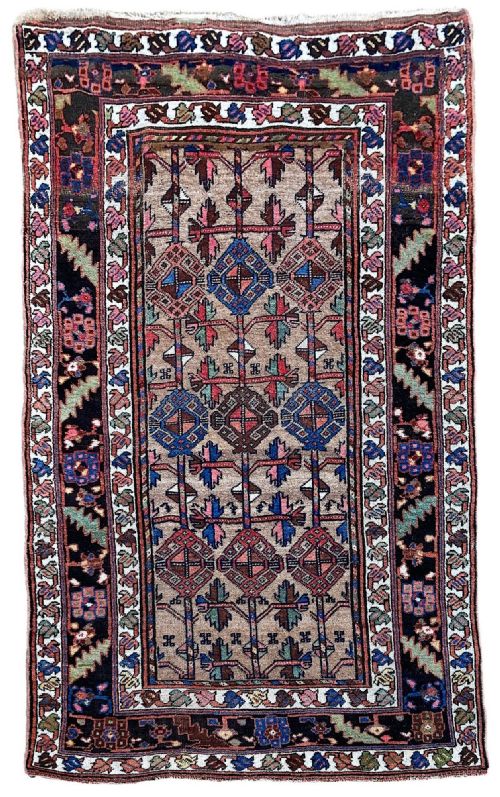
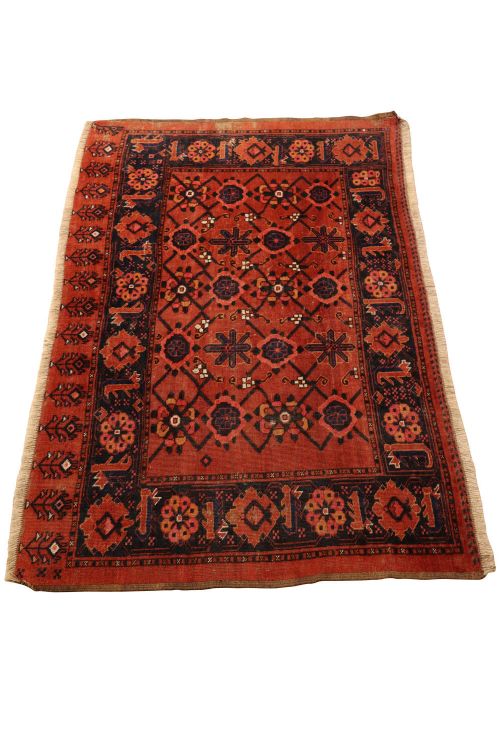
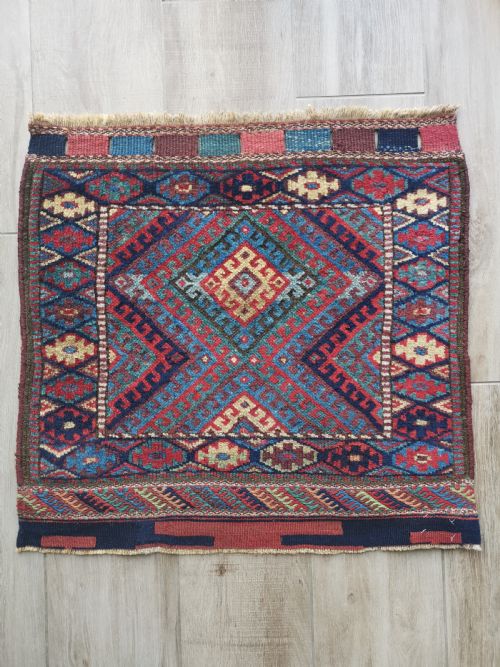
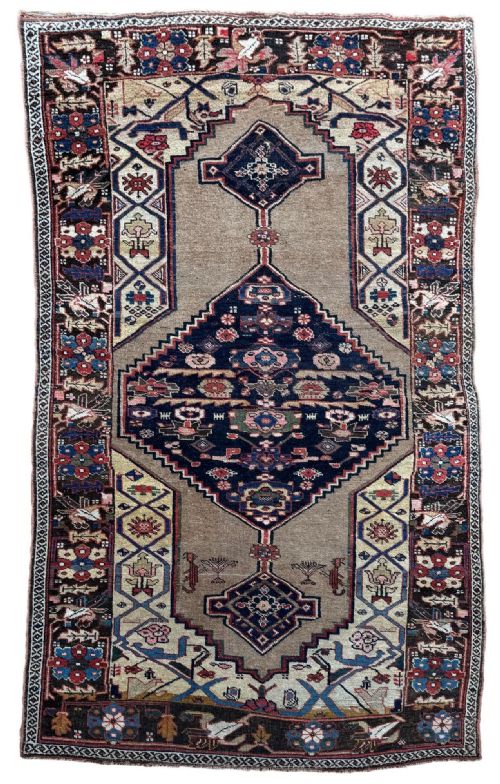
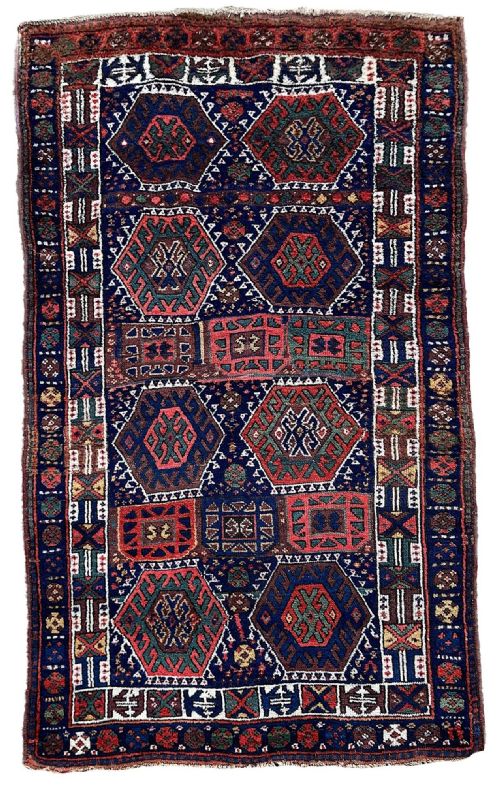
A kurdish geometric rug comprises traditional village and tribal floor coverings originating from Western Persia, Anatolia, and the Caucasus. These textile pieces include long runners, saddlebag faces, and broad area carpets woven by nomadic and semi-nomadic groups.
The pieces encountered most frequently on this page date from the late nineteenth century through to the early decades of the twentieth century. Examples range from small square bagfaces to room-sized carpets carrying bold rectilinear motifs.
How They Were Made
Weavers constructed these textiles using hand-spun wool for the pile, combined with cotton or wool foundations depending on the specific tribal origin. Natural dyes provided the palette, yielding deep indigos, madder reds, and earthy tones that age gracefully.
The hand-knotted pile creates a dense and durable surface designed to withstand heavy everyday use in tribal households. Plain weave techniques also appear on the backs and sides of complete bags and runners, adding structural contrast.
Kurdish Geometric Rug Retail Price Guide 2026
Typical asking prices for kurdish geometric rug among the pieces listed under this phrase on Sellingantiques today, from the lower quarter to the upper quarter. They describe what is for sale here now, not the wider market.
The inventory encompasses various formats, ranging from compact saddlebag faces to expansive long carpets and narrow hallway runners.
What Varies in Quality
The distinction between standard village weaving and superior examples rests on the handling of the wool and the depth of the dye palette. Finer pieces demonstrate tighter knotting and greater precision in executing complex tribal patterns.
Proportions also dictate the character of the piece, with narrow runners and expansive kelleh formats requiring deliberate spatial planning from the weaver. The survival of complete outer borders and original plain weave finishes elevates the integrity of an antique textile.
The Kurdish Geometric Rug Glossary
- Kelleh
- A large rectangular format traditionally used as a room-sized long rug or carpet. These pieces offer an extended field for repeating geometric motifs.
- Gul
- A medallion or repeating octagonal motif used extensively in tribal rug design. Different tribes utilised distinct variations to signify lineage or regional identity.
- Kilim
- A flat-weave textile produced without a pile by tightly interweaving warp and weft threads. These serve as runners or structural backs for utility bags.
- Runner
- A long and narrow rug format suited for hallways and corridors. They repeat central geometric medallions along a linear axis.
Kurdish Geometric Rug: Frequently Asked Questions
How do I care for a tribal rug?
Regular gentle vacuuming without a rotating brush roll keeps dust from settling into the wool pile. Professional cleaning is recommended when dirt accumulates deeply within the foundation.
Keep the textile out of direct, intense sunlight to protect the natural dyes from fading over time. Using a breathable rug underlay prevents slipping and allows air circulation underneath.
Where were these textiles woven?
The pieces originate across the historic regions of Kurdistan, spanning parts of Western Persia, Anatolia, and the Caucasus. Nomadic and village weavers produced them in distinct regional communities.
Local preferences influenced the specific wool qualities, structural foundations, and geometric vocabulary used in each valley or settlement.
What is a saddlebag face?
Saddlebag faces are small rectangular textile panels that formed the front of utility bags carried by pack animals. Weavers decorated these visible sections with concentrated geometric patterns.
When separated from their original utility backs over time, these panels survived as small decorative rugs or cushion covers.
How do I distinguish between regional styles?
Different tribal groups employed characteristic border arrangements, colour combinations, and specific geometric symbols. For instance, specific patterns link certain pieces directly to the Jaf or Quchan communities.
Examining the weave structure, handling of the wool, and dye palette helps identify the likely geographic origin within Kurdistan.