



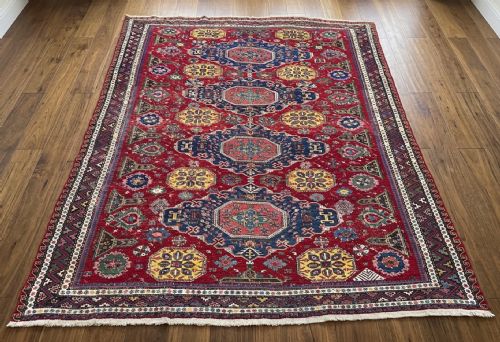


Kuba Geometric Rug
A kuba geometric rug brings striking Caucasian tribal artistry into a room through bold patterns and rich wool work.
Kuba Geometric Rug
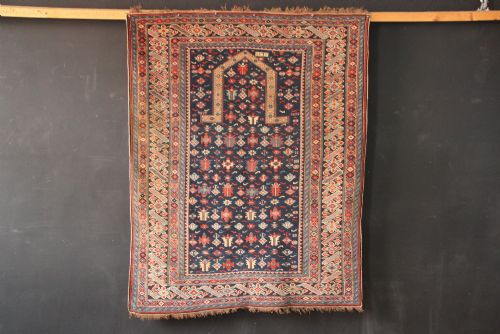
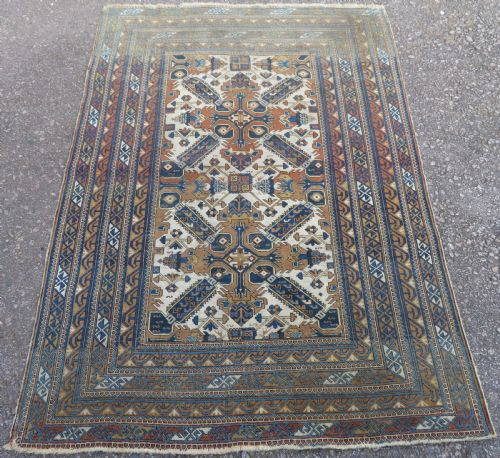
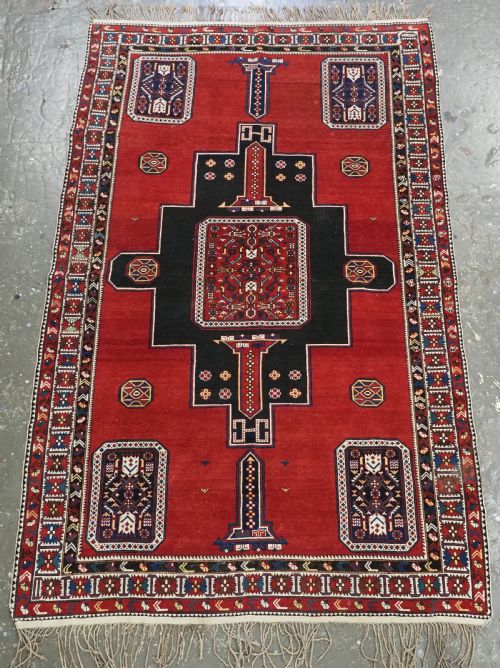
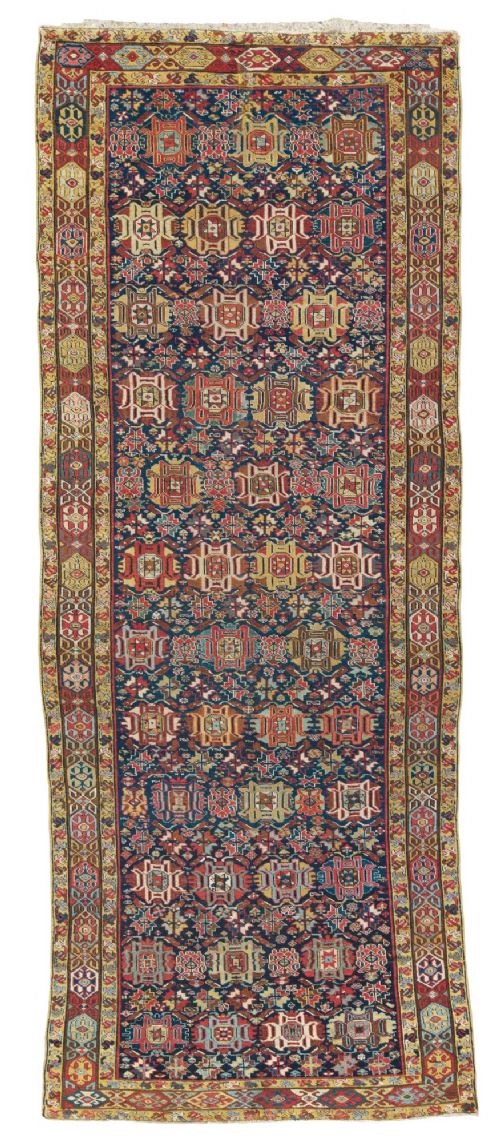
A kuba geometric rug represents traditional Caucasian weaving from the eastern Caucasus, spanning the mid nineteenth century through the early twentieth century. These pieces encompass various formats including small rugs, elongated runners, and larger carpets featuring distinct regional patterns.
Buyers encounter regional subtypes named after specific weaving centres such as Konagkend, Alpan, Seychour, Perepedil, Karagashli, and Kelleh. These examples typically display characteristic cruciform medallions, shield motifs, and intricate border systems executed in wool.
Materials and construction
These textiles are constructed entirely from wool, utilising traditional hand-knotted pile techniques alongside flatwoven Soumak and kilim structures. The natural fibres provide durability and a dense texture that supports complex geometric layouts.
Weavers employed traditional dyeing methods to achieve the palettes seen in these Caucasian works, ranging from soft faded tones to bright hues. The resulting fabric combines structural resilience with precise graphic ornamentation.
Kuba Geometric Rug Retail Price Guide 2026
Typical asking prices for kuba geometric rug among the pieces listed under this phrase on Sellingantiques today, from the lower quarter to the upper quarter. They describe what is for sale here now, not the wider market.
Every single runner and rug on this page shares an unwavering dedication to the geometric straight line.
Quality and craftsmanship
Quality in these items rests on the precision of the weave and the clarity of the design structure. Finer knots allow for sharper definition within medallions and borders, distinguishing standard examples from exceptionally meticulous work.
The preservation of the original pile depth and structural integrity also dictates the standing of a piece. Examples retaining full wool pile alongside intact outer edges demonstrate superior survival through time.
The Kuba Geometric Rug Glossary
- Caucasian
- Pertaining to the Caucasus region situated between the Black Sea and the Caspian Sea, noted for distinctive tribal weaving traditions.
- Kelleh
- A large format rectangular carpet, typically longer than a standard room rug, produced in Persian and Caucasian workshops.
- Soumak
- A flatweave technique utilising a wrap-and-weft method that creates a textured surface without a traditional cut pile.
- Cruciform medallion
- A cross-shaped central design motif frequently found anchored in the field of eastern Caucasian rugs.
- Runner
- An elongated narrow carpet format suited for hallways, corridors, and passage spaces.
Kuba Geometric Rug: Frequently Asked Questions
Where were kuba geometric rugs made?
These pieces originated in the Kuba region located within the eastern Caucasus, encompassing traditional weaving communities near the Caspian Sea.
Local workshops and village weavers produced distinct regional variations characterised by specific medallion systems and border arrangements.
What materials are used in these rugs?
Authentic period examples consist entirely of wool, utilised for both the foundation warp and weft threads as well as the surface pile.
Natural dyes provided the traditional colour palettes observed across these nineteenth and early twentieth century textiles.
How do I identify a regional subtype?
Specific patterns such as the ram horn motifs of Perepedil or the distinct hooks of Karagashli point directly to particular weaving villages.
Examining the central medallions and the configuration of the border guards helps determine the exact stylistic group.
How should I care for a wool rug?
Protect the textile by placing it in areas with moderate foot traffic and avoiding direct, prolonged exposure to harsh sunlight.
Regular gentle vacuuming without a rotating brush roll helps maintain the wool fibres and prevents dirt accumulation.