

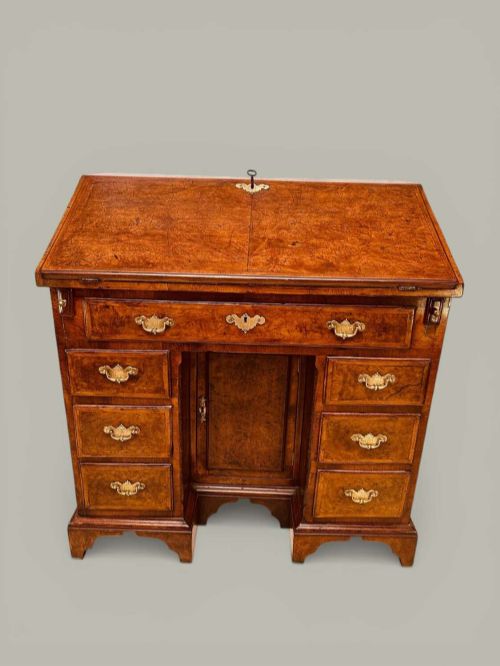
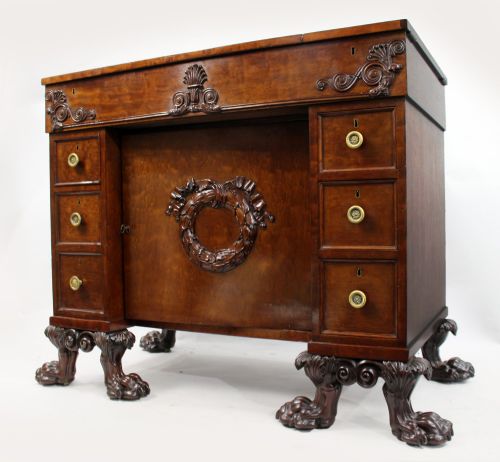
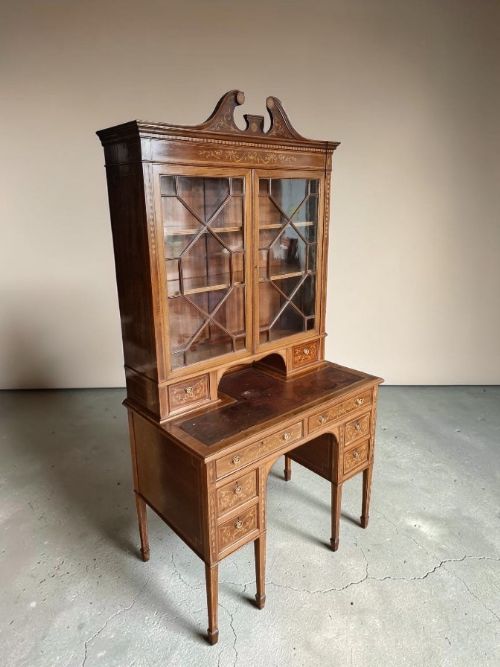
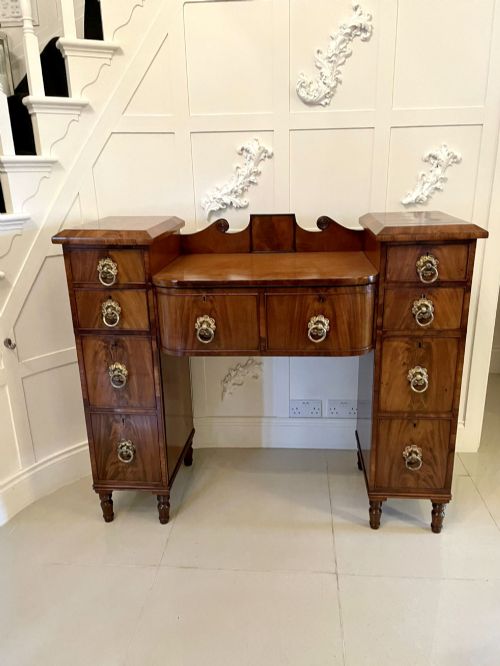
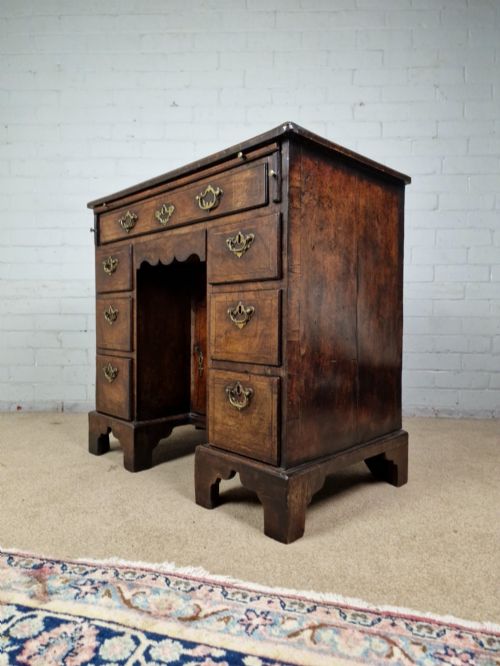

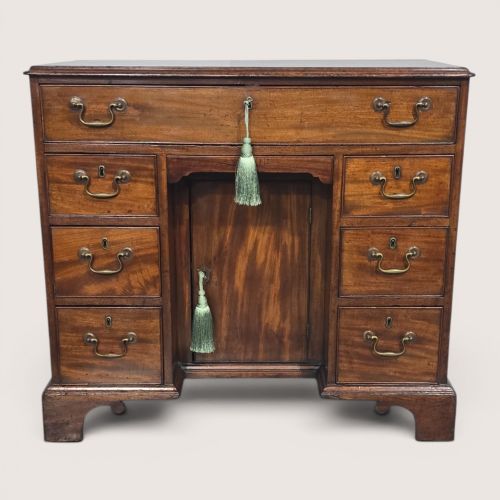

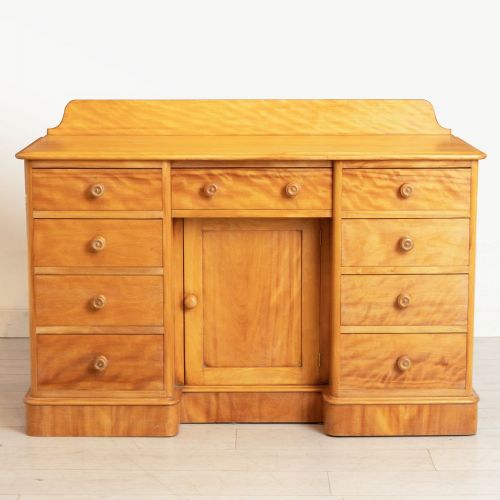


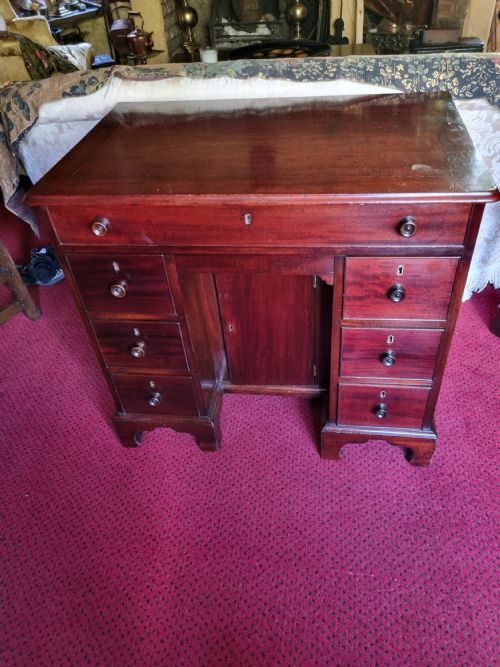


Kneehole Writing Cabinet
A kneehole writing cabinet is a compact desk offering concealed storage and a recessed central recess, sought after for domestic utility and traditional form.
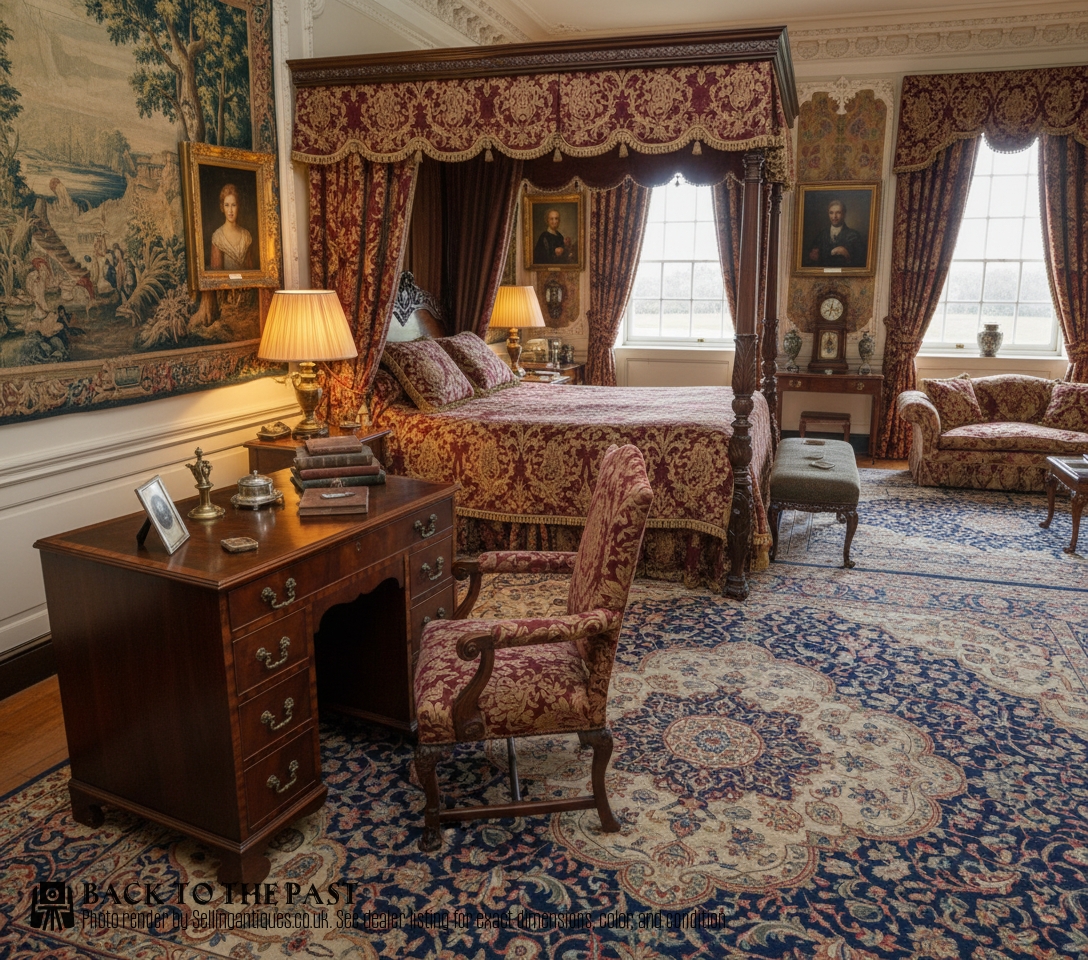
Kneehole Writing Cabinet
A kneehole writing cabinet provides a dedicated writing surface combined with flanking tiers of drawers and a central recess. These pieces emerge primarily from eighteenth-century workshops through to the Edwardian era, spanning styles such as Georgian, Victorian, and Queen Anne revivals.
The versions most commonly met on this page utilise timbers like mahogany, walnut, and oak. Formats range from full-sized kneehole desks and bureau bookcases to diminutive and miniature pieces.
Early examples concentrate in the eighteenth century, showcasing figured veneers and brass hardware. Later interpretations from the Victorian and Edwardian periods adopt satin birch, yew wood, and revivalist decorative motifs.
Materials and construction
Cabinet makers constructed these pieces using solid hardwoods and dense cabinet timbers, notably mahogany, walnut, and oak, often applied as finely figured veneers over secondary pine or oak carcases.
Joinery techniques relied on dovetail construction for drawer boxes and mortise and tenon joints for the structural frames. Hardware consisted of cast brass drop handles and escutcheons secured with threaded pins.
Kneehole Writing Cabinet Retail Price Guide 2026
Typical asking prices for kneehole writing cabinet among the pieces listed under this phrase on Sellingantiques today, from the lower quarter to the upper quarter. They describe what is for sale here now, not the wider market.
One listed piece carries the attribution to Grendy, tying a domestic cabinet directly to documented eighteenth-century joinery.
Distinctions in quality
Quality rests upon the selection and matching of timber veneers, particularly figured walnut or flame mahogany across drawer fronts and top surfaces. Superior examples demonstrate careful grain alignment and restrained proportions.
The refinement of internal drawer construction and the original retention of brass hardware further separate standard production from exceptional cabinet work.
Grendy
The Kneehole Writing Cabinet Glossary
- Kneehole
- A recessed space beneath the central part of a desk or cabinet, designed to accommodate the legs of a seated user.
- Bureau bookcase
- A writing cabinet featuring a fall-front desk section surmounted by glazed or panelled shelving doors.
- Lowboy
- A small side table with drawers, standing on relatively tall legs, often serving similar domestic functions to early writing tables.
- Dovetail
- A joinery technique utilising interlocking wedge-shaped fingers to secure corners of drawers and frames with high tensile strength.
- Veneer
- A thin slice of figured timber applied over a stable secondary wood to provide decorative surface pattern without structural warping.
Kneehole Writing Cabinet: Frequently Asked Questions
What is a kneehole writing cabinet?
A kneehole writing cabinet is a traditional desk form featuring a central recessed space flanked by multiple small drawers. These pieces provide a writing surface alongside structured compartment storage.
They appear across eighteenth, nineteenth, and early twentieth-century periods in woods such as mahogany, walnut, and oak.
How do I date a kneehole cabinet?
Dating relies on timber selection, structural joinery, and stylistic vocabulary. Eighteenth-century pieces often utilise solid walnut or mahogany with hand-cut dovetails and brass drop handles.
Later Victorian and Edwardian examples incorporate machine-sawn elements, alternative timbers like satin birch, or revivalist ornamentation.
Where were these cabinets used?
These cabinets served primarily as private writing desks and storage pieces within domestic studies, parlours, or bedrooms. Their compact footprints suited smaller chamber spaces.
The central kneehole allowed the user to sit comfortably while managing correspondence and personal papers.
How do I care for antique wood furniture?
Preserving antique wood requires maintaining stable indoor humidity and avoiding direct exposure to heat sources or strong sunlight. These precautions protect timber veneers from splitting.
Occasional application of appropriate wax polish maintains the lustre of the historic finish without sealing the grain permanently.