

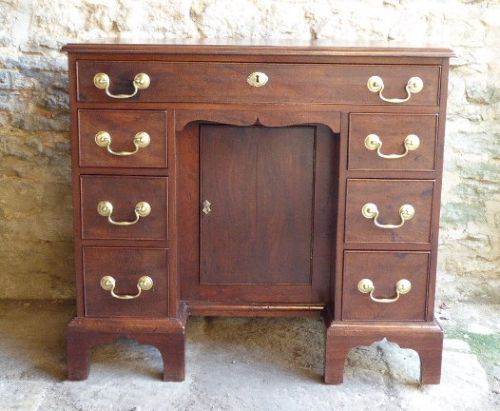
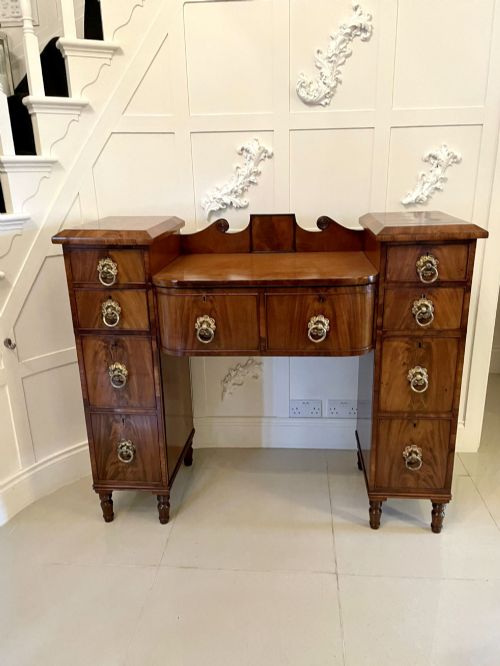
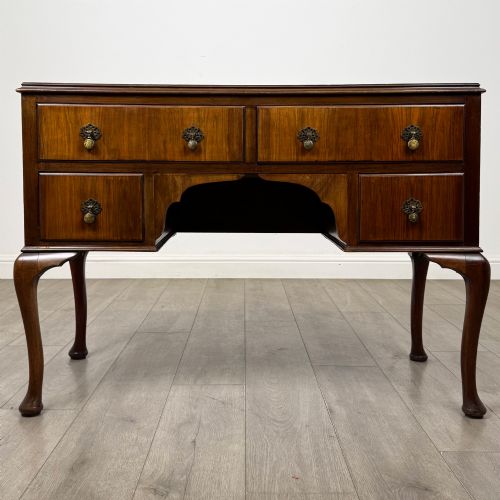

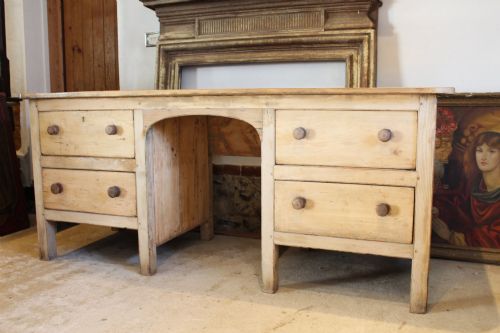
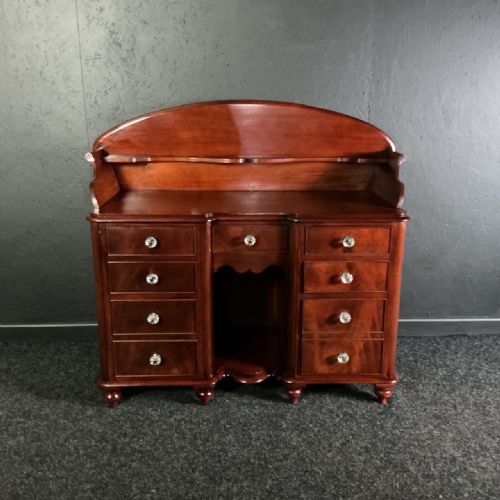
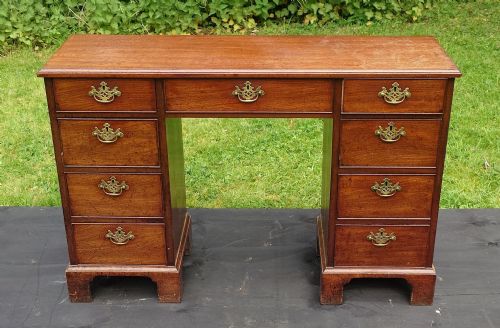
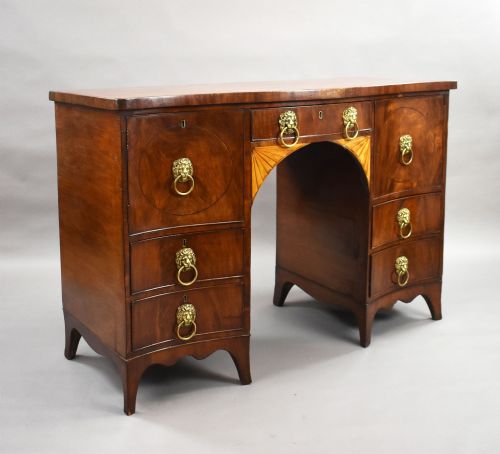
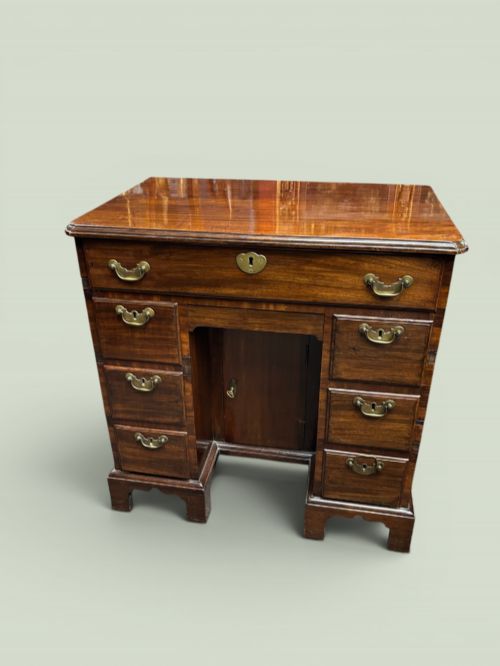


Kneehole Sideboard Desk
A kneehole sideboard desk provides compact working space and deep drawer storage, uniting the utility of a writing table with the proportion of a low cabinet.
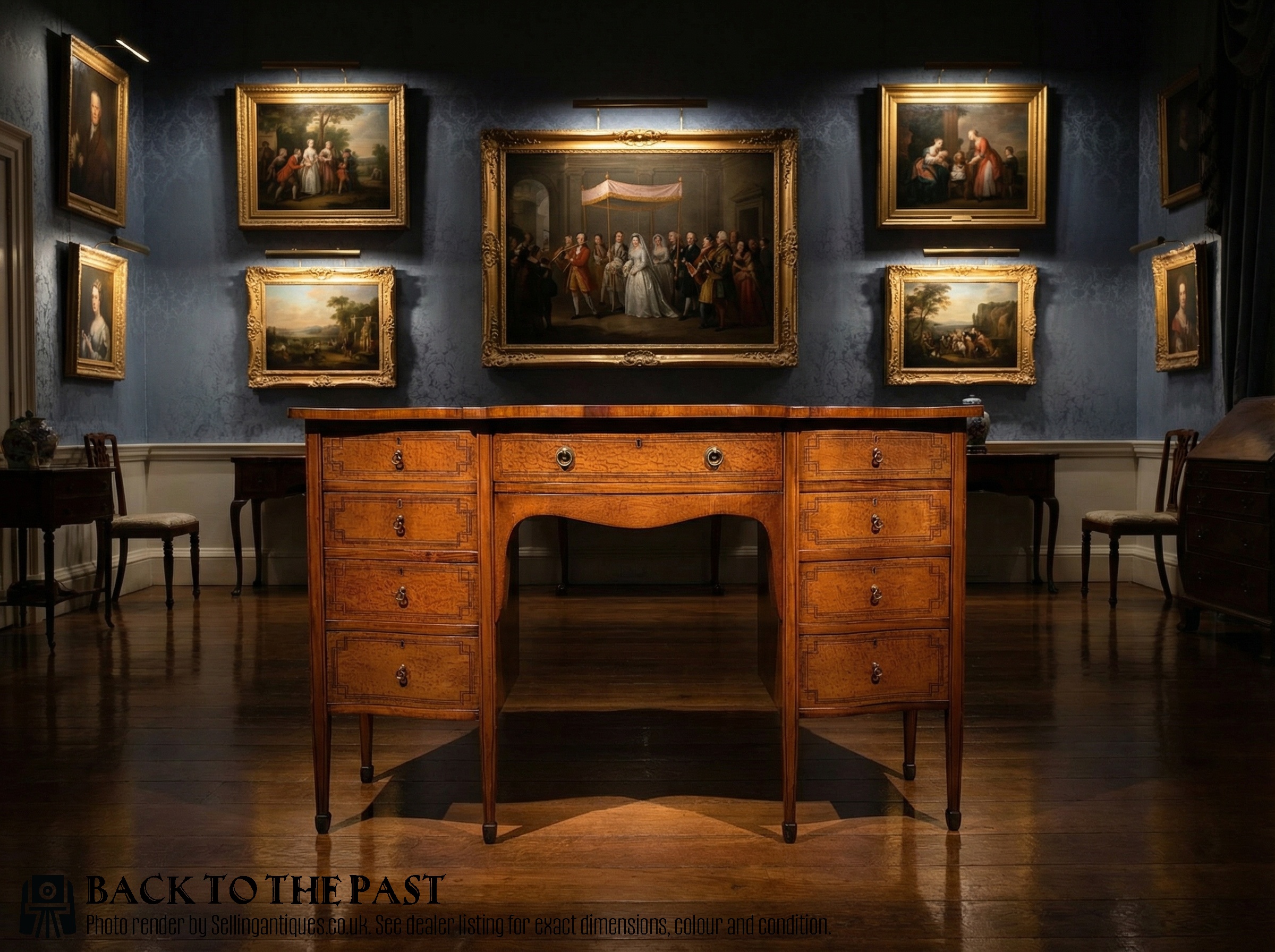
Kneehole Sideboard Desk
A kneehole sideboard desk combines utilitarian surface area with central recess space, appearing in forms spanning the Georgian, Regency, and Edwardian eras. These pieces bridge the functions of desks, dressing tables, and sideboards across the 18th and 19th centuries.
Origins stretch from early 18th-century walnut pieces to late 19th-century oak and satinwood variations. Each item demonstrates the adaptation of a central kneehole recess to diverse room settings.
Distinctions in craftsmanship and materials
The grade of timber selection dictates the visual impact, with figured flame mahogany and richly patinated walnut sitting at the upper end. Plain pine and utilitarian painted surfaces represent more straightforward country workshops.
The crispness of carved mouldings, inlay work, and dovetail joinery separates high-tier cabinet work from simpler utilitarian items. Original brass hardware and intact secondary woods preserve the historical integrity of the piece.
Proportion and scale influence desirability, particularly in narrow or miniature formats. The survival of original surfaces without extensive timber replacement determines the enduring character of the piece.
Kneehole Sideboard Desk Retail Price Guide 2026
Typical asking prices for kneehole sideboard desk among the pieces listed under this phrase on Sellingantiques today, from the lower quarter to the upper quarter. They describe what is for sale here now, not the wider market.
John Gregory London·Étienne Kohlmann
The Kneehole Sideboard Desk Glossary
- Kneehole
- A central recessed space beneath the desktop or drawer tier designed to accommodate the user's legs. This architectural feature defines the configuration of writing tables and dressing chests.
- Gallery
- A low decorative upstand or railing fitted around the rear and side edges of a tabletop. It prevents items from sliding off the working surface.
- Secretaire
- A desk fitted with a pull-down writing flap that conceals small drawers and pigeonholes. It merges cabinet storage with a functional writing surface.
- Serpentine
- A curved front outline that undulates outward at the centre and inward at the sides. This contour requires precise woodworking skill to execute.
- Veneer
- A thin layer of decorative wood applied over a secondary timber base. It allows cabinetmakers to display striking grain patterns economically.
Kneehole Sideboard Desk: Frequently Asked Questions
What is a kneehole sideboard desk?
A kneehole sideboard desk is a multi-functional item featuring a central recessed opening flanked by banks of drawers. It serves writing, storage, and display purposes within domestic interiors.
These pieces draw on Georgian and Regency design traditions, offering a compact footprint compared to standard partners desks.
How were these desks used historically?
Historically, these items functioned as personal writing spaces, dressing tables, or serving consoles in parlours and bedchambers. The central kneehole allowed the user to sit comfortably while tending to correspondence.
Secondary drawers housed writing implements, documents, or personal grooming items depending on the specific room placement.
How do I identify a Georgian period piece?
Georgian pieces typically display solid mahogany or walnut construction with hand-cut dovetails and traditional timber secondary woods. Proportions remain restrained, often featuring bracket feet and restrained brass hardware.
Look for signs of age in the drawer linings and backboards, which reflect 18th-century workshop practices.
Where does walnut appear on these desks?
Walnut is utilised both as solid timber and as figured veneer across the carcass and drawer fronts. Early 18th-century examples frequently showcase rich walnut grain patterns.
Later Victorian and Edwardian revivals also employ walnut to emulate earlier aristocratic furniture styles.
How do I care for antique mahogany surfaces?
Maintain antique mahogany by applying appropriate wax polishes sparingly and avoiding direct exposure to strong sunlight. This preserves the natural patina developed over centuries.
Keep the timber away from extreme temperature fluctuations to prevent movement in the wood panels.