
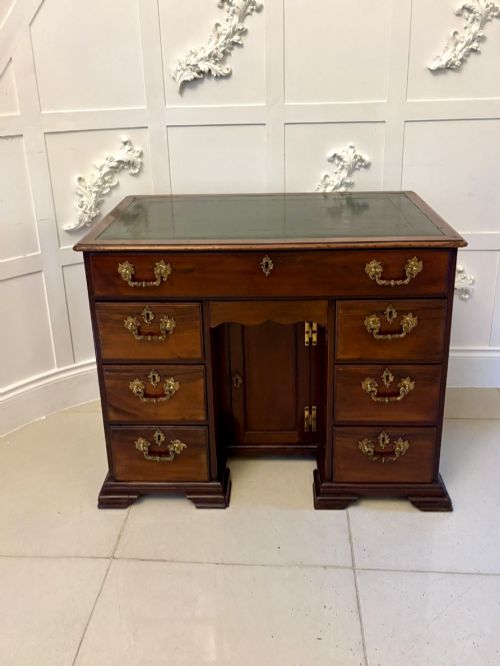
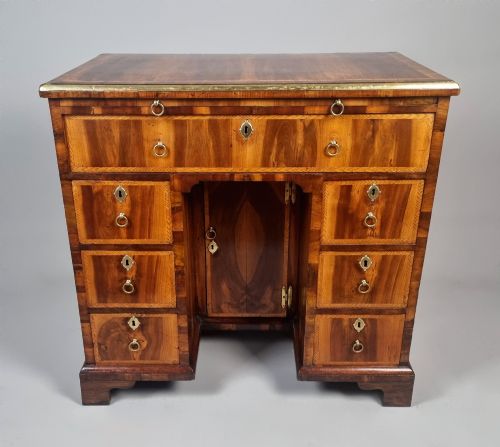
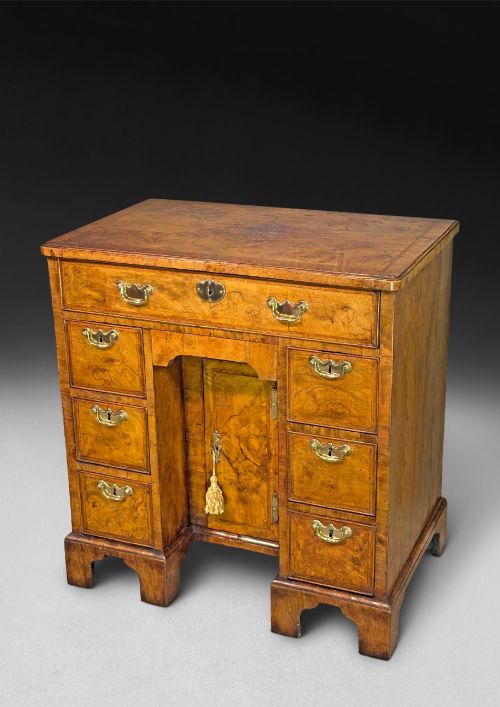
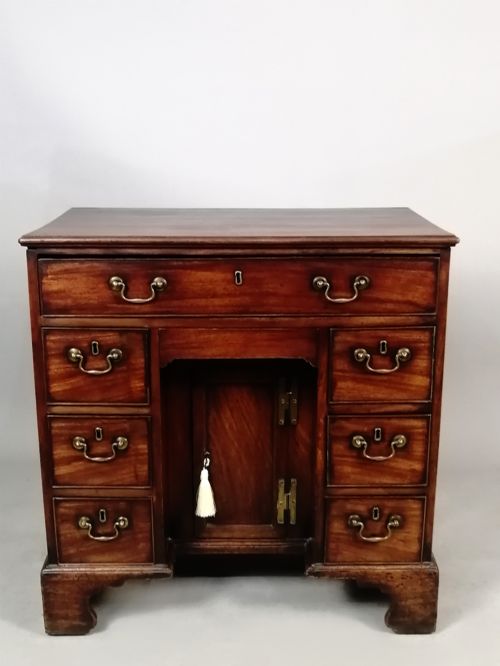
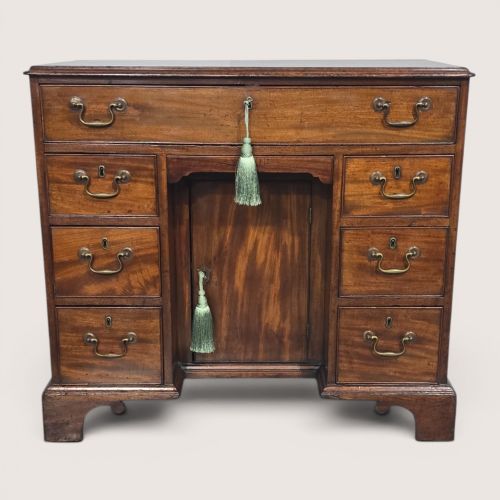
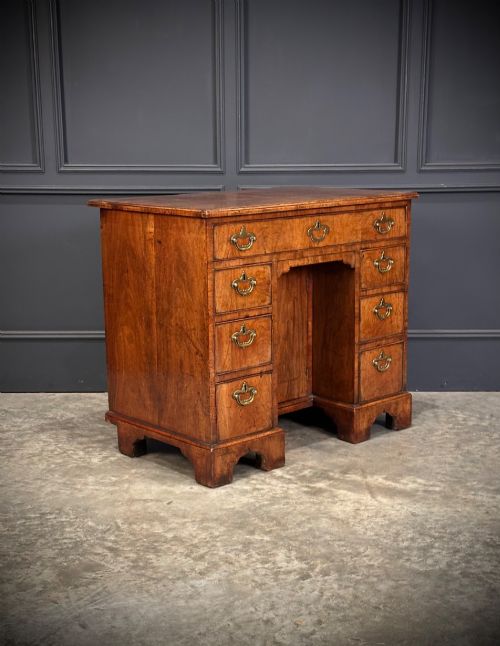
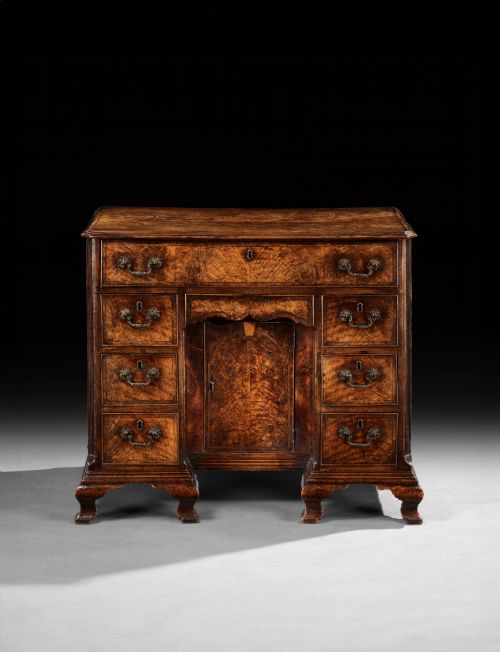

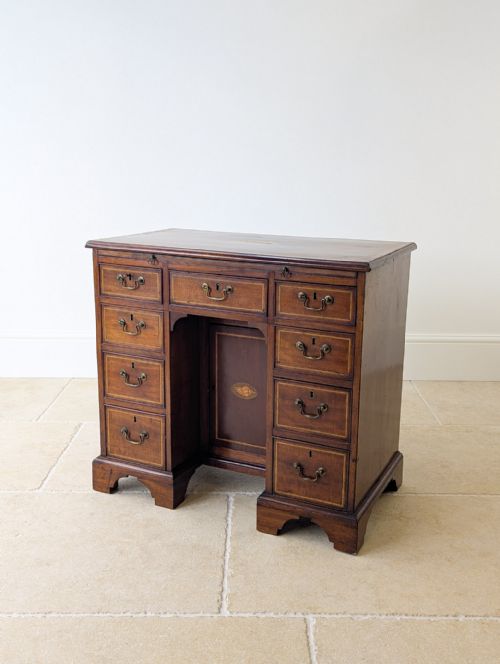

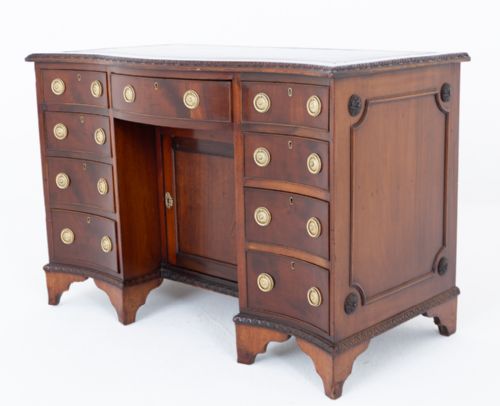

Kneehole Desk with Cupboard
These kneehole desk with cupboard examples combine compact writing surfaces with concealed central compartments, offering functional elegance for period interiors.
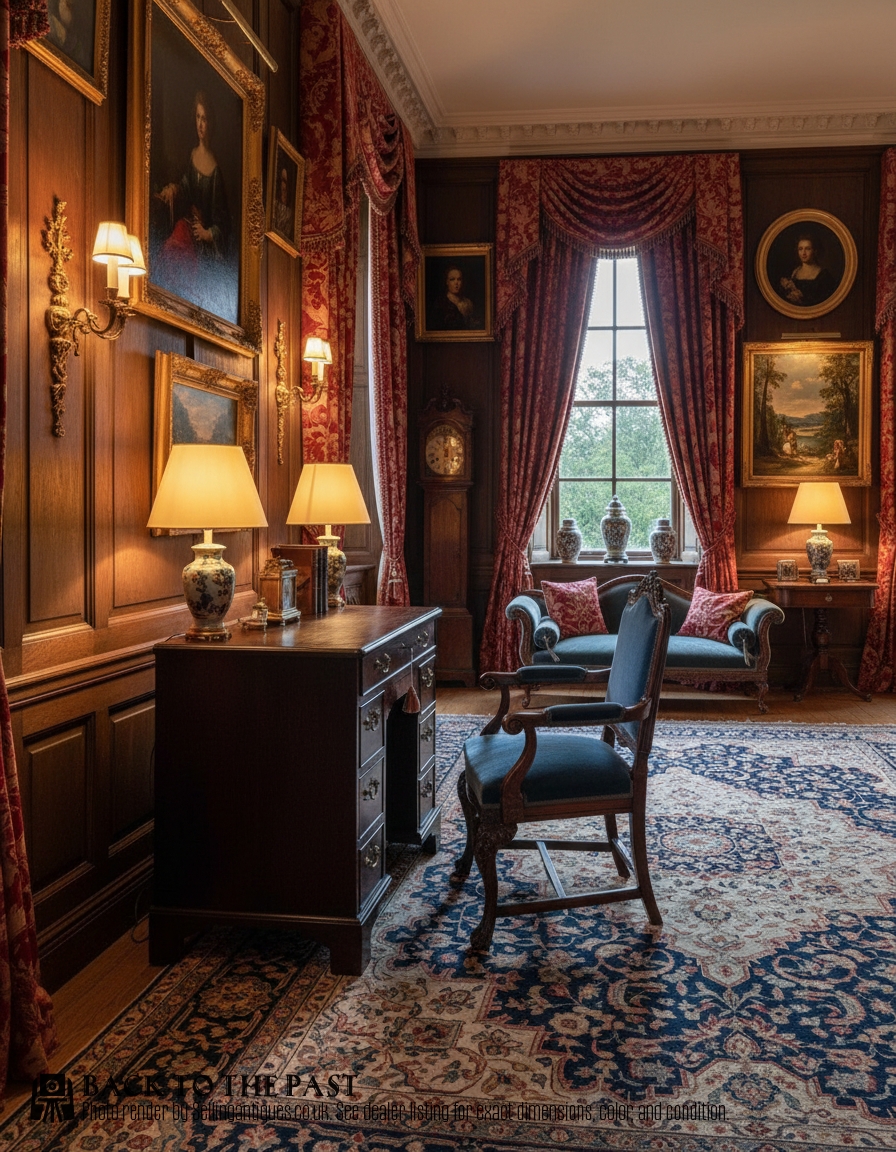
Kneehole Desk with Cupboard
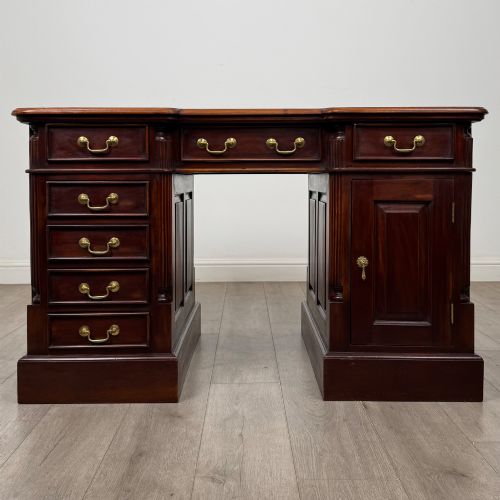
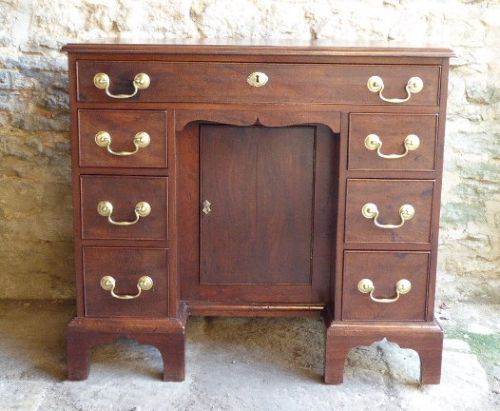
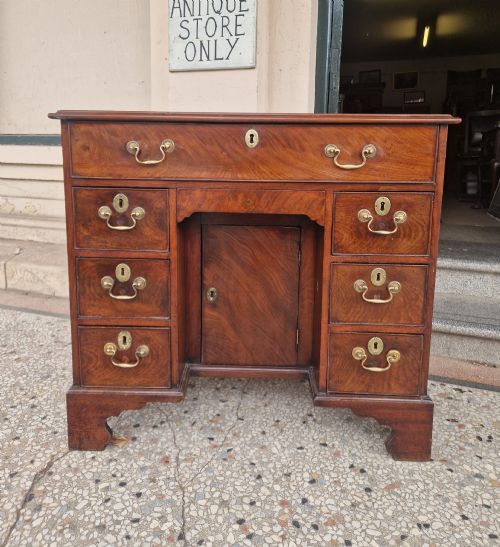
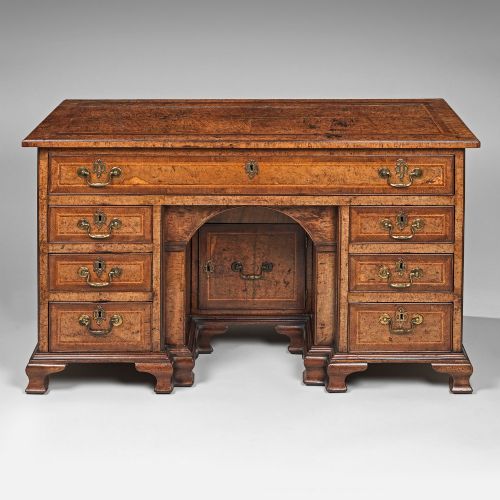
A kneehole desk with cupboard is a compact writing table featuring a central recessed space flanked by banks of drawers, typically concealing a small cupboard door directly beneath the writing surface. These pieces span several centuries of British cabinet making, ranging from restrained early designs to later nineteenth and twentieth century interpretations.
The versions most frequently encountered on this page date from the eighteenth century through the Victorian and Edwardian periods, demonstrating shifts in scale and decorative taste. Early iterations often employ figured timbers like walnut or mahogany, while later pieces showcase the enduring popularity of oak, mahogany, and satinwood in domestic studies.
Materials and construction methods
Cabinet makers built these desks using solid timbers and veneers, selecting dense hardwoods such as mahogany, oak, and walnut to ensure structural stability over generations. Flame mahogany and Cuban mahogany feature prominently in high-grade examples, valued for their rich grain patterns and deep natural colour.
Drawer linings and secondary woods show traditional craftsmanship, often paired with brass hardware including drop handles and escutcheons. Leather writing inserts frequently provide a durable surface for daily correspondence.
Assessing quality in period desks
Quality in a kneehole desk with cupboard rests upon the selection of timber figures and the precision of the joinery rather than mere ornamentation. Superior examples display carefully matched veneers and uncompromised structural integrity throughout the drawer carcases and internal dividers.
The condition of original brass hardware, working locks, and interior fittings distinguishes standard commercial production from finer cabinet work. Subtle details, such as the dovetail construction and the retention of original keys, separate exceptional pieces from later replacements.
Johnstone & Jeanes
The Kneehole Desk with Cupboard Glossary
- Kneehole
- A recessed space beneath the desk top designed to accommodate the user's legs while seated. This central void typically separates two pedestals of drawers.
- Cupboard
- A small enclosed storage space positioned centrally behind the kneehole door. It provides concealment for documents or valuables.
- Flame mahogany
- A timber cut from the branching part of the tree to produce a distinctive undulating flame pattern. Cabinet makers prized this wood for decorative drawer fronts.
- Escutcheon
- A protective brass plate surrounding a keyhole. It prevents the surrounding wood from sustaining damage during daily use.
Kneehole Desk with Cupboard: Frequently Asked Questions
What is inside a kneehole desk with cupboard?
These desks contain multiple small drawers arranged in pedestals on either side of the central user space. A concealed cupboard door sits directly above the kneehole, hiding a small interior compartment.
This layout allowed writers to organise correspondence and store smaller items securely while maintaining a neat exterior appearance.
How do I date an antique kneehole desk?
Dating relies on examining the timber species, construction methods, and secondary woods used inside the drawer carcases. Early eighteenth century pieces often feature walnut or dense oak, while later Georgian and Victorian examples frequently utilise mahogany.
Hardware styles, dovetail precision, and overall proportions also provide clear indicators of the period in which the piece was constructed.
Where should I place a kneehole desk?
Because these desks are often finished on all sides or designed with flat backs for wall placement, they suit studies, libraries, and drawing rooms alike. Their compact proportions make them adaptable to smaller spaces where a large partner desk would overwhelm the room.
Ensure the piece sits away from direct heat sources and strong sunlight to protect the polished wood surfaces and leather inserts.
Are these desks suitable for daily writing?
These pieces were originally built for daily correspondence and record keeping, making them well suited for contemporary writing tasks. The sturdy timber construction handles normal use easily when treated with appropriate care.
Maintenance involves regular dusting and occasional waxing to nourish the antique wood grain without damaging the polished finish.