
Kingwood Bureau Plat Desk
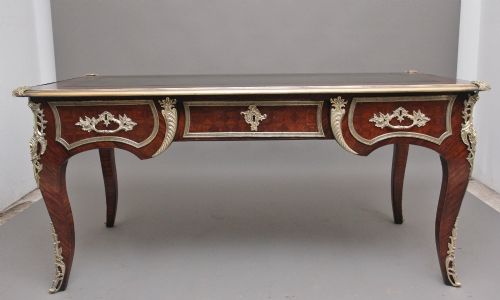
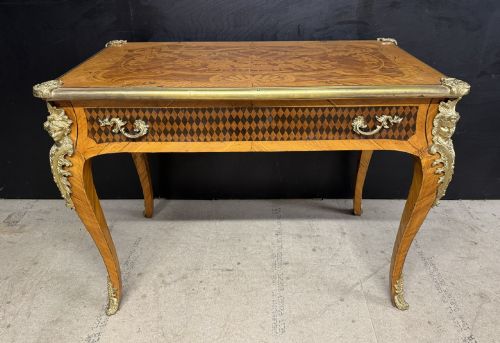
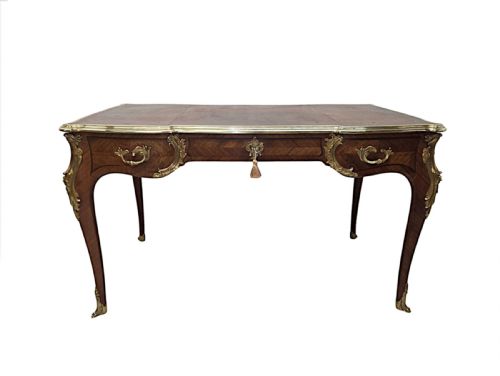
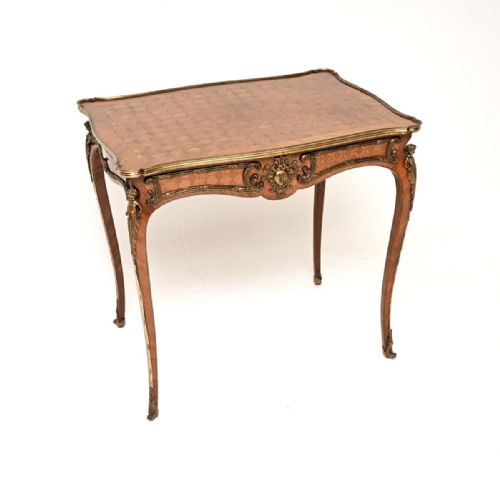
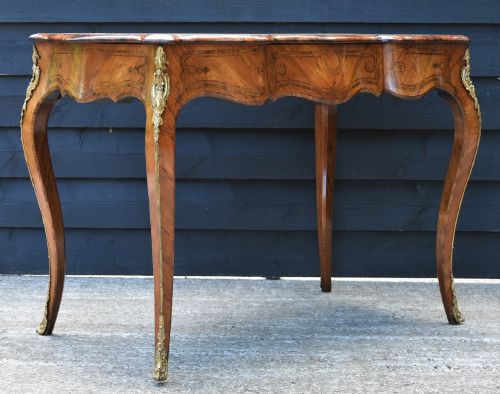
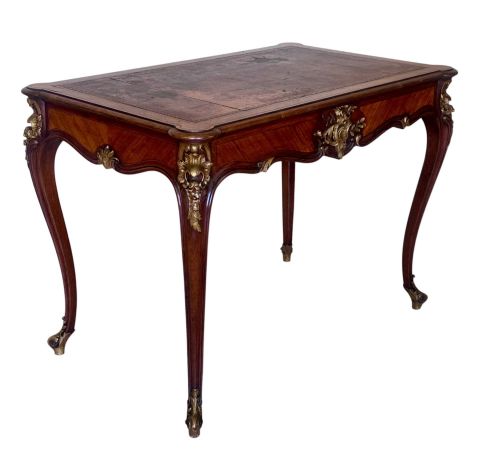
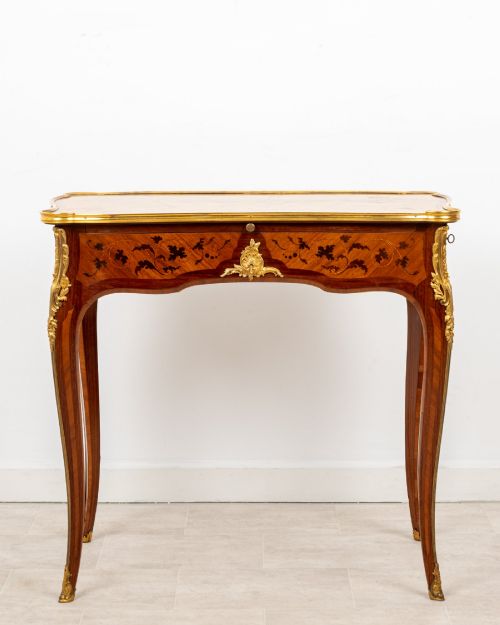
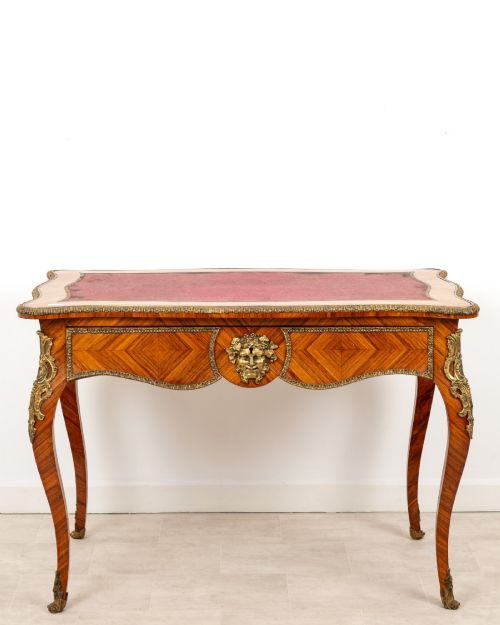
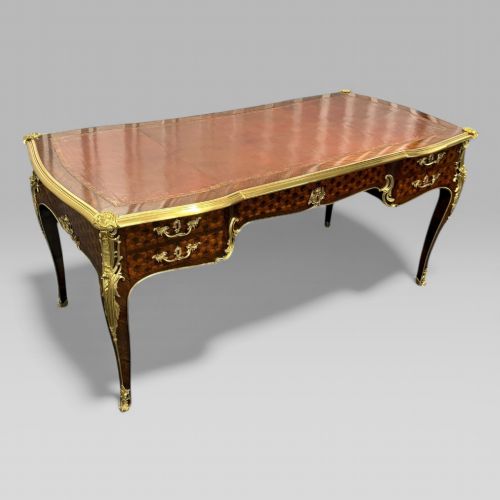
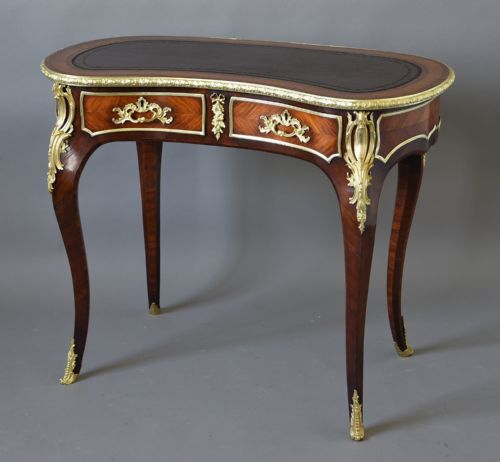
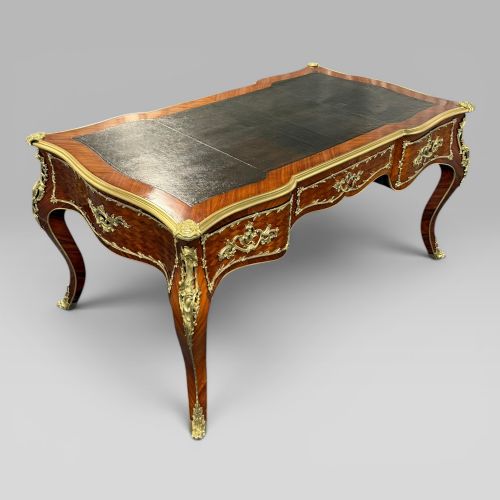
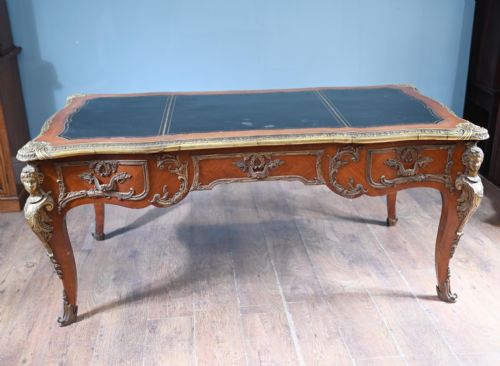
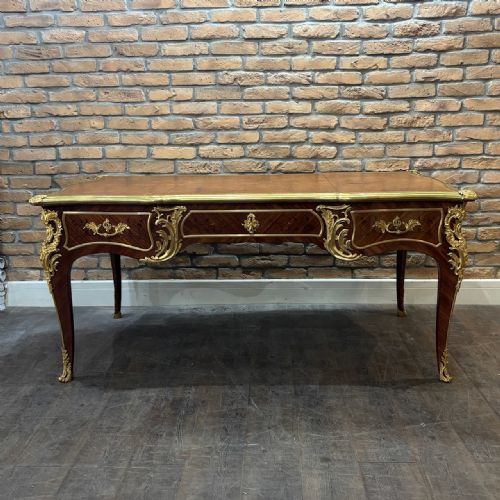
A kingwood bureau plat desk offers a freestanding writing surface defined by symmetrical marquetry, serpentine lines, and chased ormolu mounts.
Kingwood Bureau Plat Desk
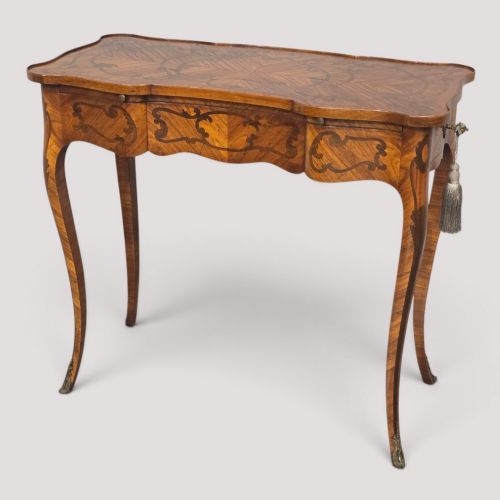
A kingwood bureau plat desk represents a formal freestanding writing table designed to occupy the centre of a room rather than sit against a wall. Most examples encountered here originate from the nineteenth century, drawing heavily on eighteenth-century French design idioms.
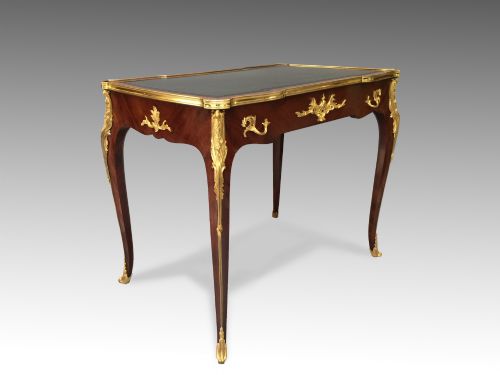
The form typically incorporates a leather-lined writing surface bordered by elaborate gilt bronze or ormolu mounts, frequently featuring three frieze drawers. Makers working within the Louis XV and Louis XVI revivals produced numerous variations of these tables, ranging from compact ladies' writing desks to large partners tables.
Makers utilised rich veneers, notably kingwood, rosewood, and tulipwood, arranged in intricate parquetry or floral marquetry patterns. These tables reflect continental craftsmanship, with several pieces bearing signatures or retailer stamps from prominent nineteenth-century workshops.
Materials and Construction Techniques
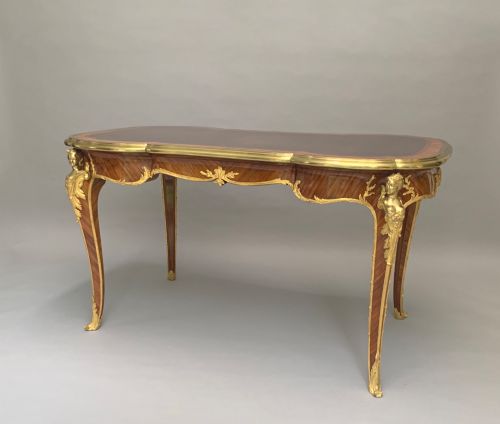
Construction relies upon a sturdy oak or softwood carcass overlaid with sliced veneers of kingwood arranged in geometric parquetry or delicate floral marquetry. Cabinetmakers shaped the carcases to follow serpentine and kidney contours, demanding precise woodworking skills.
Gilt bronze and ormolu mounts decorate the corners, apron, and legs, secured to the wood by tiny brass screws behind cast foliage and scrollwork. Leather inserts, often tooled with gilt accents, form the central writing platform across most desks.
Poured and chased brass or bronze sabots protect the feet, completing the decorative scheme alongside cast escutcheons around the keyholes.
Some nineteenth-century makers cleverly hid inkwells beneath sliding ormolu mounts to keep the grand writing surface entirely unobstructed.
Assessing Craftsmanship and Detail
The standard of an ormolu mount dictates much of the visual merit, distinguishing sharply cast, hand-chased bronze from softer, commercially produced metalwork. Superior workshops employed master sculptors to cast mounts with crisp undercutting and defined details.
Veneer selection and matching also separate the output of standard commercial shops from master makers like François Linke or retailers such as Edwards & Roberts. Symmetrical grain patterns and complex multi-wood marquetry require significantly higher labour and precision.
Interior construction reveals the tier of production, where hand-cut dovetails inside the drawer boxes and substantial oak framing indicate superior longevity compared to lighter pine carcasses.
Francois Linke·Edwards & Roberts·CH. Jeanselme & Co·Durand
The Kingwood Bureau Plat Desk Glossary
- Bureau plat
- A freestanding writing table, typically featuring a rectangular or serpentine top inset with leather and drawers fitted into the frieze.
- Kingwood
- A dense, heavy Brazilian timber displaying distinctive violet and dark brown contrasting grain patterns, heavily utilised in high-end cabinetmaking.
- Ormolu
- Gilded bronze used for decorative mounts, handles, and sabots on fine furniture, finished by hand-chiselling after casting.
- Marquetry
- The art of applying pieces of veneer to a structure to form decorative patterns, pictorial scenes, or floral designs.
- Parquetry
- Geometric mosaic woodwork arranged in patterns such as cubes, chequers, or lozenges across the surface of a desk.
Kingwood Bureau Plat Desk: Frequently Asked Questions
How do I care for kingwood?
Kingwood veneers require stable indoor humidity away from direct sunlight and heat sources to prevent the timber from drying out or splitting. Gentle dusting with a dry, soft cloth maintains the polished finish without damaging the grain.
Applying specialised furniture wax occasionally helps nourish the wood and preserve the depth of the finish.
Where should I place my desk?
Because these tables are finished on all four sides as freestanding pieces, they look best positioned in the centre of a study, library, or drawing room. Placing them away from walls showcases the ormolu mounts and rear parquetry.
Ensure the room maintains consistent temperature and humidity levels to protect both the timber carcase and the leather insert.
How do I identify a revival piece?
Nineteenth-century revival pieces often utilise machine-sawn veneers and specific construction methods characteristic of Victorian or Edwardian workshops, while still copying eighteenth-century forms. Examining the interior secondary woods and screw types helps distinguish nineteenth-century production from earlier eras.
Many pieces from this period also bear the signatures or stamps of prominent makers such as François Linke or retailers like Edwards & Roberts.