

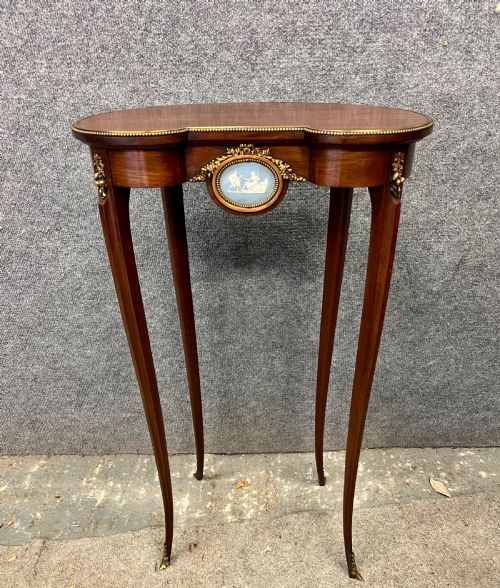


Kidney Shaped Lamp Table
A kidney shaped lamp table brings subtle curves and compact utility to a corner, offering a surface designed to fit snugly beside a chair.
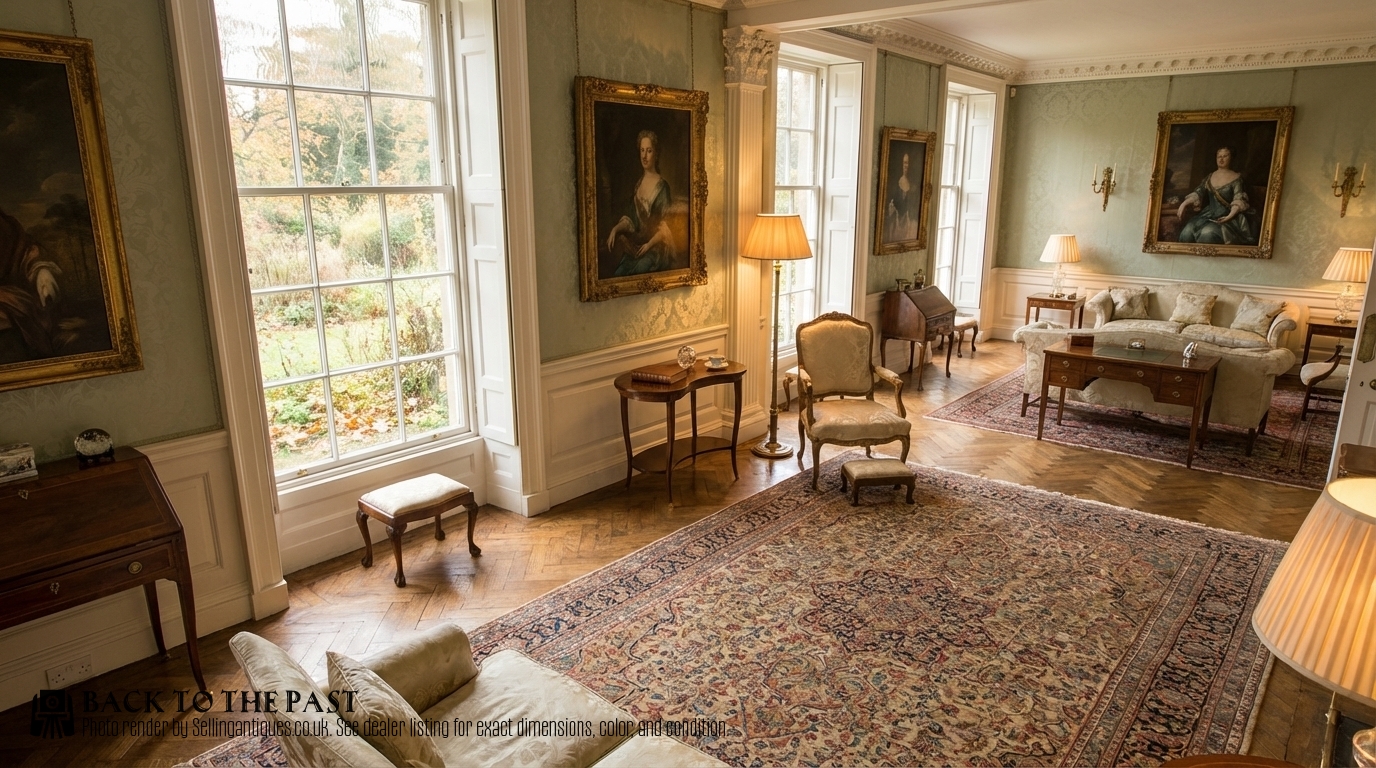
Kidney Shaped Lamp Table
A kidney shaped lamp table is a curved occasional piece designed to stand beside a seat or in a corner, taking up less visual space than a rectangular design while offering a handy surface for lighting and books. These tables appear in forms described variously as side tables, lamp tables, wine writing ladies sofa tables, and hall tables across the selection.
Most examples found here date from the Victorian and Edwardian eras, alongside pieces from the nineteenth century up to nineteen-twenty. Makers of the period produced them as decorative occasional furniture, often incorporating low shelves or distinctive sweeping tops suited to smaller reception rooms.
The prevailing styles span Late Victorian, Victorian, French Louis XV Revival, Edwardian Art Nouveau, and Sheraton Revival. Buyers looking at this page will frequently encounter mahogany and rosewood versions, often embellished with marquetry or stringing.
How they were made
Construction relies heavily on timber framing and veneering, utilising mahogany, walnut veneer, rosewood, kingwood, and satinwood to create patterned surfaces on the curved top. Cabinet makers applied fine wood inlay, boxwood stringing, and marquetry to accentuate the distinct outline of the curve.
Mounts and fittings introduce other materials, with brass and bronze used for castors, galleries, or decorative mounts on French Louis XV style examples. The joinery combines traditional turning for legs with delicate shaping of the aprons to maintain stability across the asymmetric footprint.
Kidney Shaped Lamp Table Retail Price Guide 2026
Typical asking prices for kidney shaped lamp table among the pieces listed under this phrase on Sellingantiques today, from the lower quarter to the upper quarter. They describe what is for sale here now, not the wider market.
The archive and current selection span Victorian, Edwardian, and nineteenth-century pieces, alongside items dated specifically to eighteen-eighty, eighteen-ninety-five, nineteen-hundred, and nineteen-twenty.
What varies in quality
Quality rests in the precision of the timber matching and the crispness of the inlay work following the tight radius of the top. Finer examples display carefully selected grain patterns in woods like satinwood or rosewood rather than plain secondary timber.
The refinement of the legs and the integration of bronze or brass mounts separate standard production from superior pieces. Structural integrity in the curved rails ensures the table withstands daily use as a lamp or side support.
The Kidney Shaped Lamp Table Glossary
- Marquetry
- Decorative veneer work forming pictures or geometric patterns using various coloured woods. This technique requires significant skill to fit pieces together across a curved surface.
- Satinwood
- A pale, lustrous hardwood prized for its yellow sheen and smooth grain. It frequently appears in stringing and inlaid panels.
- Kingwood
- A dense, richly figured timber with dark violet-brown and golden stripes. Cabinet makers used it in high-status French and English revival furniture.
- Stringing
- Thin lines of contrasting wood inlay used to outline the edges of table tops and drawers. Boxwood is a common choice for this detailing.
Kidney Shaped Lamp Table: Frequently Asked Questions
Where should I place a kidney shaped lamp table?
These tables fit naturally beside an armchair or in a corner where a sharp rectangular corner would obstruct movement. Their curved front allows seating to pull up close while keeping a lamp within reach.
They also serve well as small writing surfaces or decorative display pieces in halls and drawing rooms.
How do I identify Victorian examples?
Victorian pieces frequently feature solid mahogany or rosewood construction with heavier proportions and rich, dark patination. Look for classic period turnings on the legs and traditional joinery methods underneath.
Makers of this era often incorporated subtle boxwood stringing or simple marquetry rather than elaborate pictorial designs.
What is the difference between Edwardian and Victorian styles?
Edwardian versions tend to be lighter in appearance, often drawing on Sheraton Revival or Art Nouveau influences with brighter satinwood and delicate inlay. Victorian examples generally offer heavier timber weight and deeper colour.
Both periods utilise the signature curved top, but the decorative vocabulary on the surface shifts from formal revivalism to lighter floral motifs.
Can these tables hold a heavy lamp?
Most occasional tables handle standard table lamps and small decorative items securely if placed on an even floor. The curved structure is stable, though the slender legs mean excessive downward pressure should be avoided.
Checking the tightness of the leg joints ensures the table remains steady under daily use.
How do French revival tables differ from English ones?
French Louis XV style pieces often include bronze or brass mounts, parquetry, and more pronounced cabriole legs. English tables from the Sheraton Revival lean towards straight tapered legs and refined mahogany or satinwood veneers.
Both share the characteristic kidney outline but express different regional interpretations of eighteenth-century elegance.