



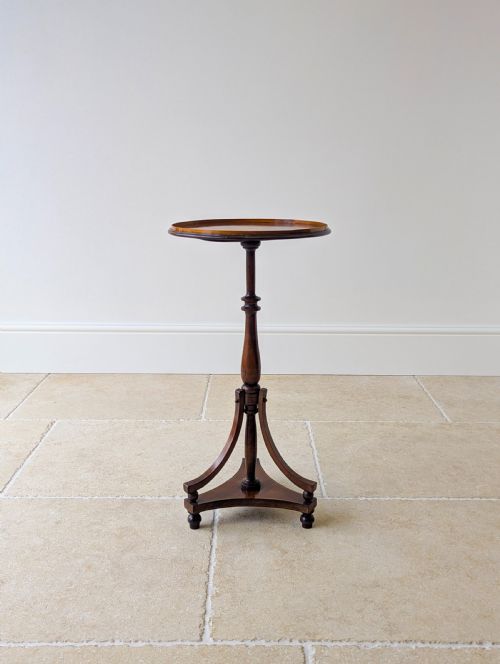
Inlaid Mahogany Wine Table
An inlaid mahogany wine table combines compact utility with delicate ornamental banding, offering a portable surface for evening entertaining.
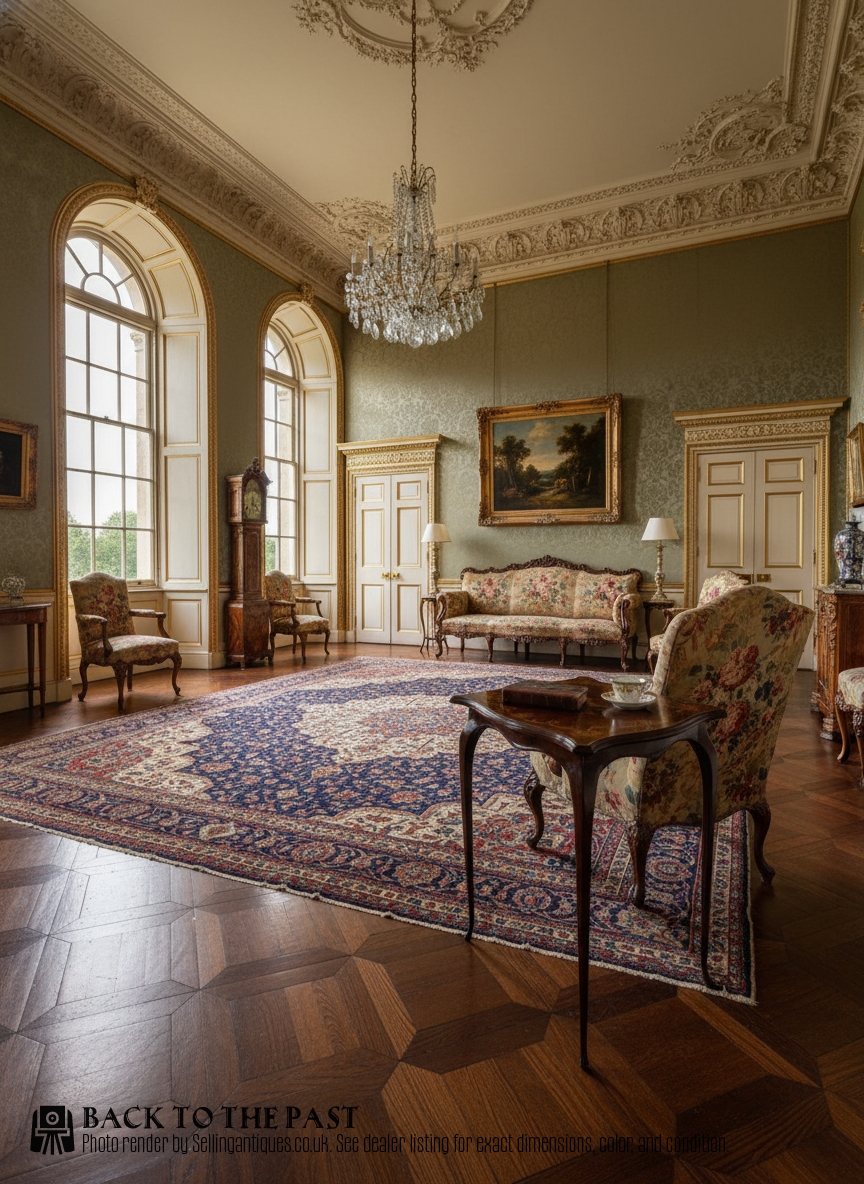
Inlaid Mahogany Wine Table
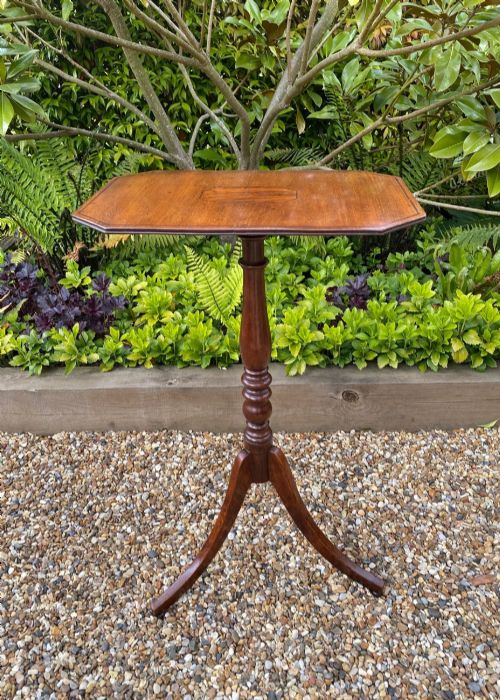
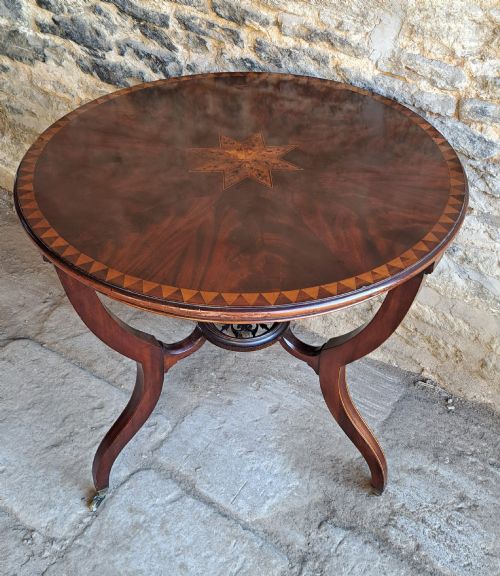
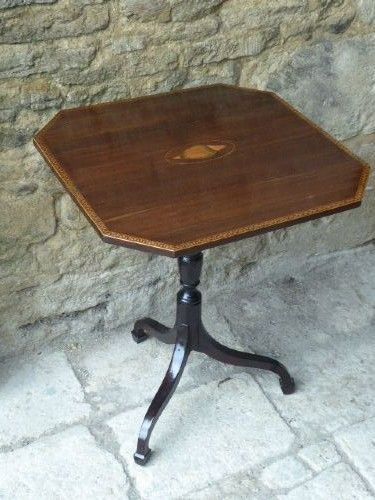
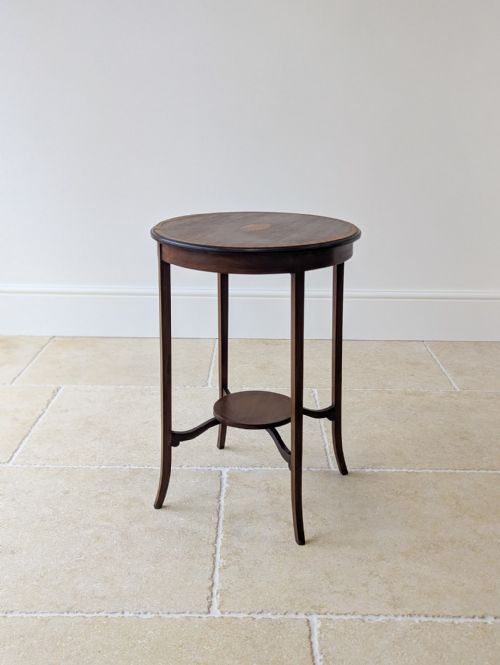
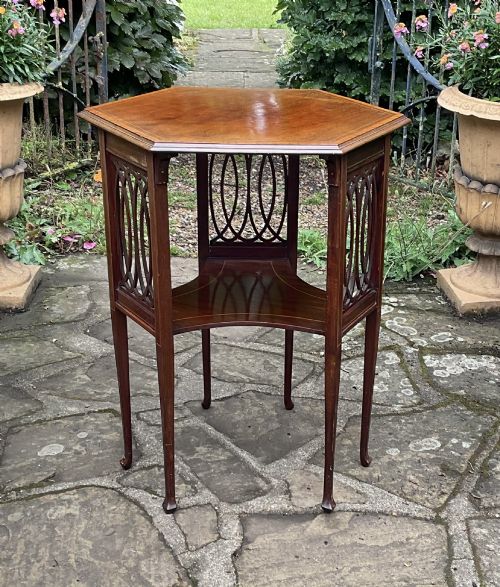
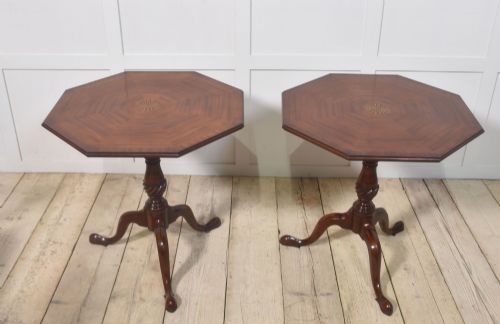
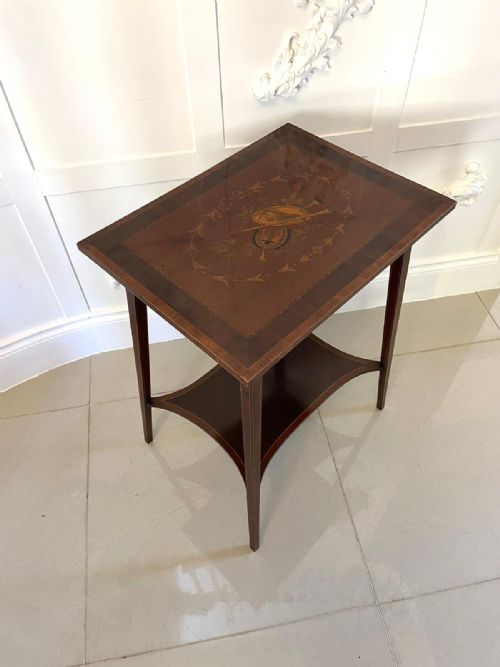
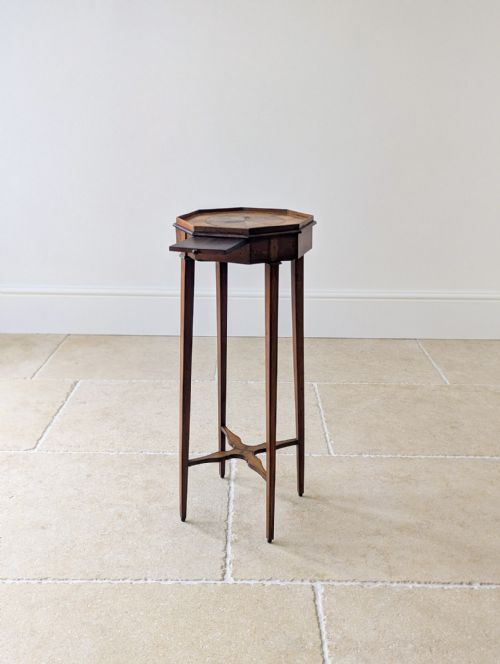
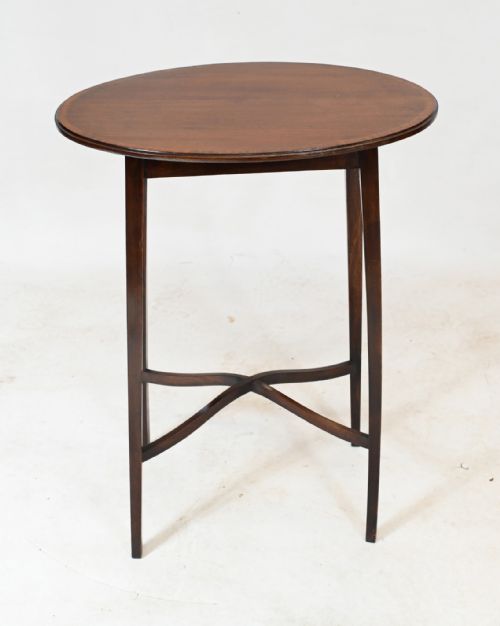
An inlaid mahogany wine table appears across several periods, most frequently during the Edwardian era and the nineteenth century, taking the form of a small pedestal stand used for drinks, lamps, or display.
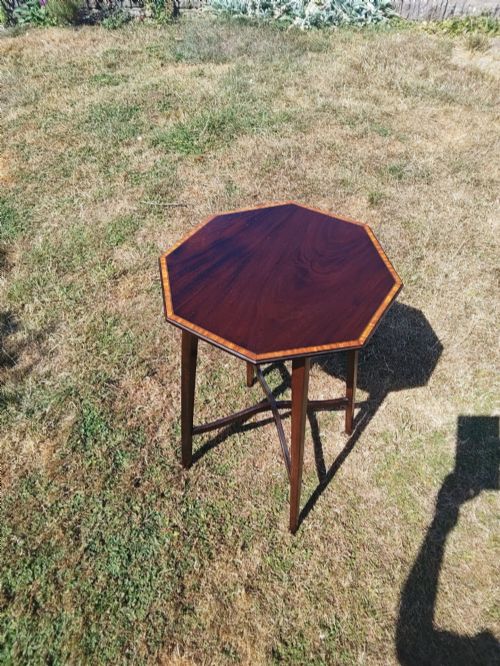
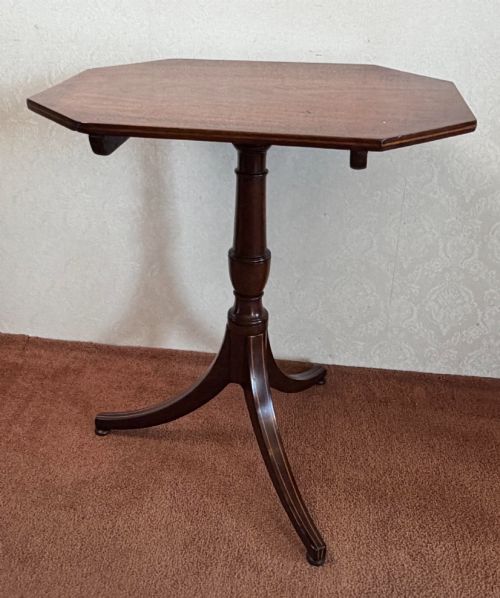
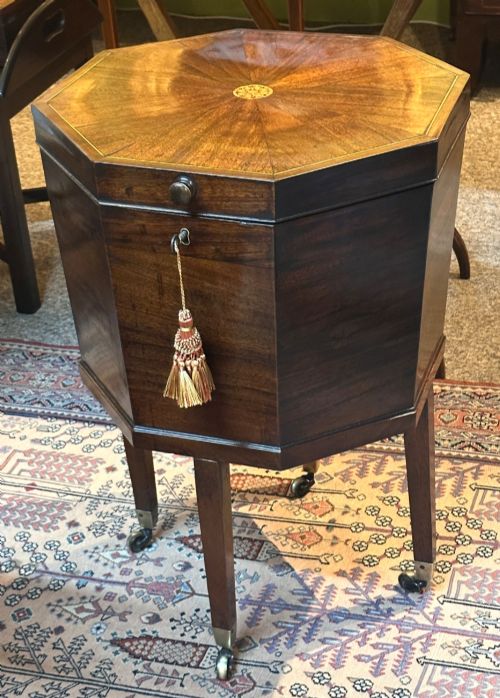
The buyer encounters circular, octagonal, and oval tops supported by tripod legs or central pedestals, often detailed with contrasting stringing or fan motifs.
Many examples date from the Edwardian period or the late nineteenth century, reflecting revival styles like Sheraton alongside earlier Georgian and Regency influences.
Materials and construction
Makers utilised solid mahogany and mahogany veneers for the main structure, providing a stable and rich ground for decorative work.
Contrasting timbers such as satinwood, boxwood, and walnut were shaped into delicate stringing, borders, and central medallions to enrich the surface.
Tripod bases were joined to turned pedestals using traditional carpentry methods, ensuring structural balance for the small top above.
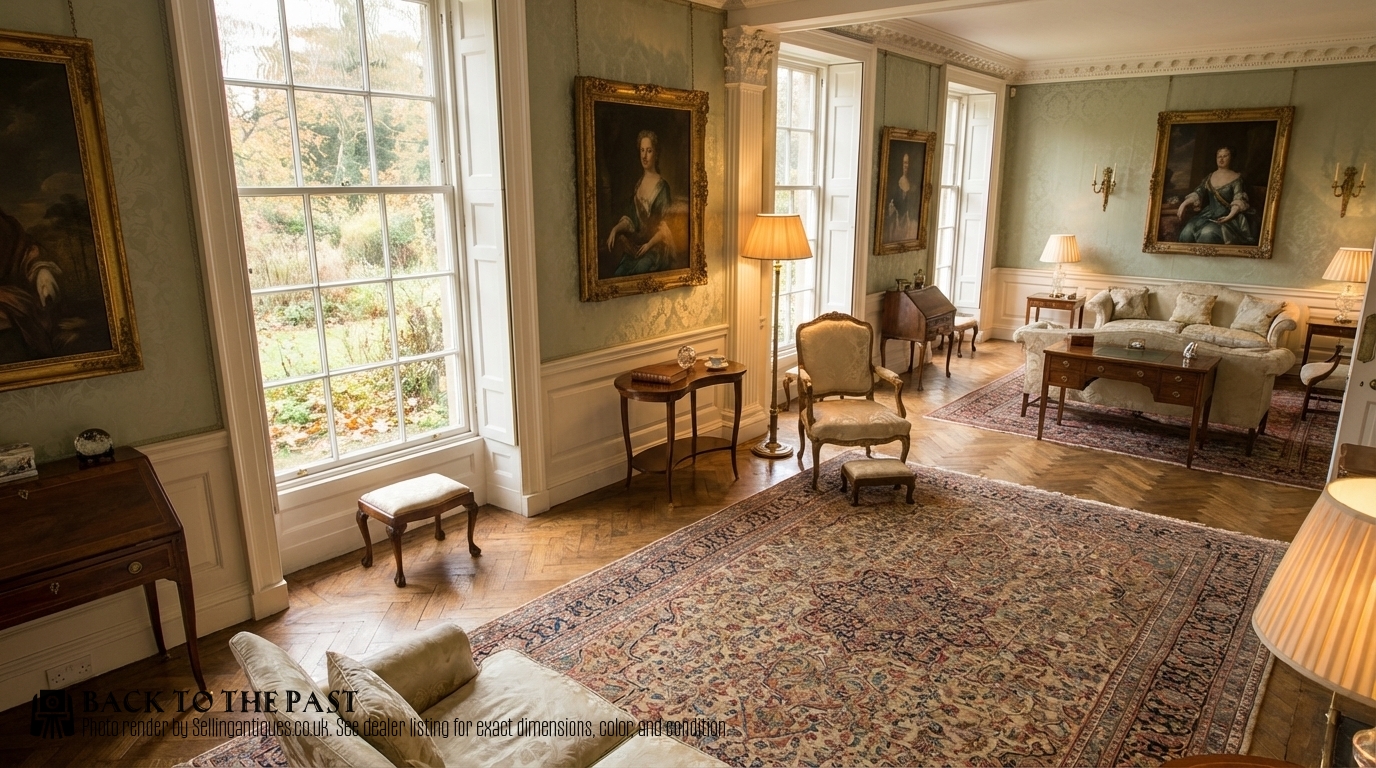
Some miniature tables were designed specifically to hold teacups rather than wine.
Assessing craftsmanship
The refinement of the timber inlay distinguishes standard utility pieces from more ambitious work, particularly where multiple exotic woods form complex geometric or floral patterns.
Proportion and stability determine how successfully the small top balances upon its pedestal, separating finely turned examples from stiffer, heavier proportions.
The crispness of the edge mouldings and the precision of the timber joints reveal the care taken in the workshop during construction.
The Inlaid Mahogany Wine Table Glossary
- Inlay
- The technique of inserting contrasting strips or pieces of wood into depressions within a solid timber surface to create decorative patterns. This method defines the primary ornamentation found across these small stands.
- Tripod
- A base composed of three supporting legs radiating from a central pillar. This configuration ensures stability on uneven floors.
- Stringing
- Thin lines of contrasting wood inlay used to outline the edges of table tops and legs. It creates a subtle geometric border.
- Tilt top
- A table mechanism allowing the surface to fold vertically when not in use. This clever design saved valuable floor space in period rooms.
Inlaid Mahogany Wine Table: Frequently Asked Questions
What was a wine table used for?
These small stands served guests by holding glasses and decanters near seating areas during evening gatherings.
Their portable nature allowed servants to move them easily around a drawing room as needed.
How do I date an inlaid mahogany wine table?
Examining the timber ground, secondary woods underneath, and the style of the inlay helps determine the period.
Edwardian pieces often feature brighter satinwood banding, while Georgian examples rely on darker native timbers and simpler stringing.
Are these tables sturdy enough for daily use?
Most tripod designs provide adequate stability for holding lamps or small decorative objects in a modern home.
Care should be taken not to overload the edges, as the tilt-top mechanisms and slender legs are built for lightness rather than heavy weight.
What is Sheraton revival style?
Sheraton revival furniture draws inspiration from the lighter neoclassical designs popular in the late eighteenth century.
Pieces from this later movement feature symmetrical fan inlays and tapered legs reminiscent of earlier Georgian craftsmanship.