

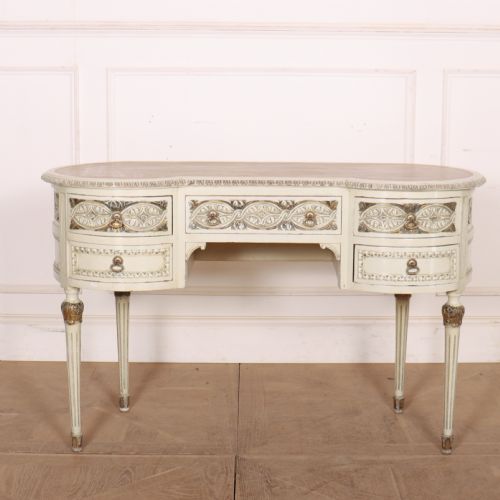


Kidney Shaped Dressing Table
A kidney shaped dressing table curves gently to fit the user, combining deep storage with a graceful silhouette.
Kidney Shaped Dressing Table
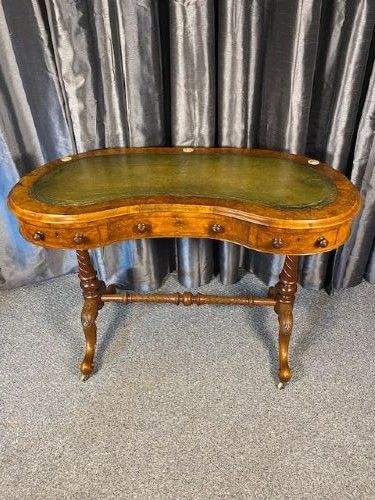
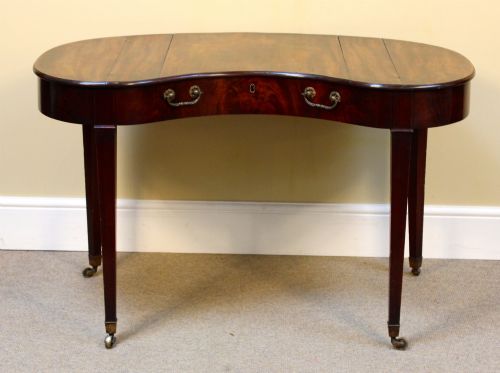
A kidney shaped dressing table offers a sweeping, indented front curve designed to bring the user closer to the mirror and surface. This form appears frequently across Edwardian and Victorian eras, often executed in rich timbers.
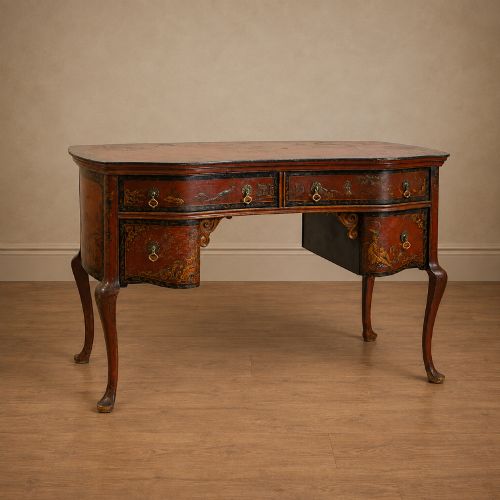
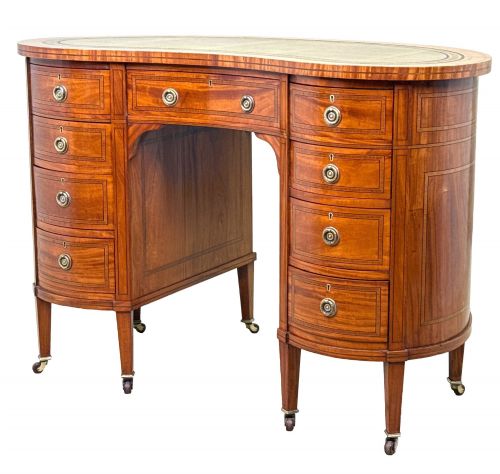
Makers produced these pieces in various guises, ranging from elaborate mirror-backed vanities complete with stools to streamlined writing desks. Examples span styles from late nineteenth century Chinoiserie lacquered surfaces to Sheraton Revival satinwood.
The layout typically incorporates pedestals of drawers flanking a central kneehole, creating a balanced silhouette that functions equally well as a standalone desk or a bedroom vanity.
How they were made
Cabinet makers built these pieces using solid and veneered timbers including mahogany, burr walnut, satinwood, and occasionally oak or elm. Curved rails required skilled steam bending or careful lamination to achieve the characteristic kidney outline.
Surface decoration frequently involved intricate satinwood inlay, marquetry, or painted Chinoiserie lacquer work. Brass handles and mounts finished the drawers, while some surfaces featured inset leather writing panels.
What varies in quality
Quality rests in the precision of the curved joinery and the selection of figured veneers such as flame mahogany or burr walnut. Superior examples display seamless grain matching across the sweeping drawer fronts.
Hand-painted details, fine marquetry inlay, and substantial brass hardware distinguish finer workshops from simpler commercial production.
Shapland & Petter·Maurice Adams·JAS Shoolbred·Waring & Gillow
The Kidney Shaped Dressing Table Glossary
- Kneehole
- A recessed central space beneath a desk or dressing table designed to accommodate the user's legs. It is usually flanked by pedestals containing banks of drawers.
- Marquetry
- Decorative patterns formed by fitting together small pieces of veneered wood of different colours and grains. This technique often decorates the top surface of Edwardian tables.
- Pedestal
- A structural support block or column containing drawers, placed on one or both sides of the kneehole. Twin pedestals provide substantial storage capacity.
- Veneer
- A thin layer of highly figured wood applied over a more stable secondary timber to create a decorative surface. Burr walnut and flame mahogany appear frequently in this form.
- Chinoiserie
- European artistic style reflecting Chinese motifs, often rendered in black lacquer and gilt decoration. It appears on select late Victorian and Edwardian examples.
Kidney Shaped Dressing Table: Frequently Asked Questions
What is a kidney shaped dressing table?
A kidney shaped dressing table is a specialised vanity or desk featuring a concave front curve that wraps around the user. It provides convenient access to surface items and drawers.
These pieces emerged prominently during the Victorian and Edwardian periods, combining decorative appeal with practical bedroom storage.
How do I date a kidney shaped dressing table?
Dating relies on examining the timber, secondary woods, hardware, and decorative styles present. Edwardian pieces often feature delicate satinwood inlay and Sheraton Revival motifs.
Victorian and mid nineteenth century examples tend to use heavier mahogany or walnut constructions, sometimes incorporating Aesthetic Movement ebonising or elaborate lacquer work.
Can I use a dressing table as a desk?
Many dressing tables double effectively as writing desks due to their generous surface area and kneehole clearance. Historic listings frequently categorise them interchangeably as desks or writing tables.
Adding a chair allows the piece to function comfortably in a study or library setting.
What woods were used for these tables?
Cabinet makers utilised a range of fine timbers including mahogany, burr walnut, satinwood, and kingwood. Veneers were carefully selected to highlight natural grain patterns across the curved surfaces.
Some examples also feature painted wood finishes, lacquer, or ebonised highlights.