
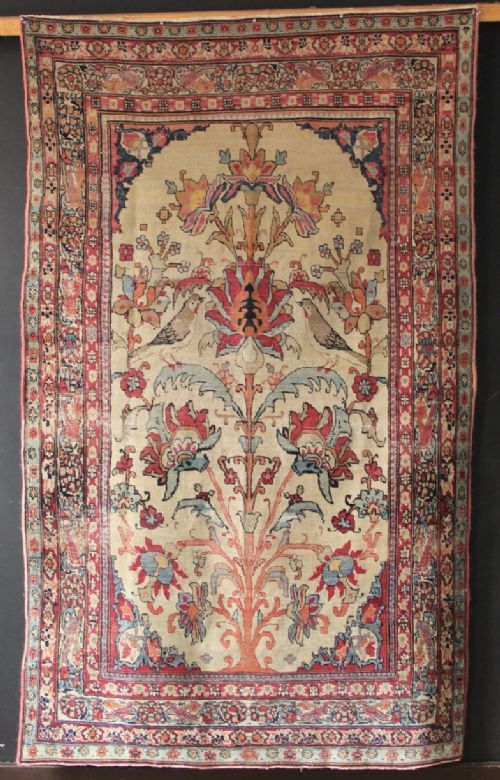
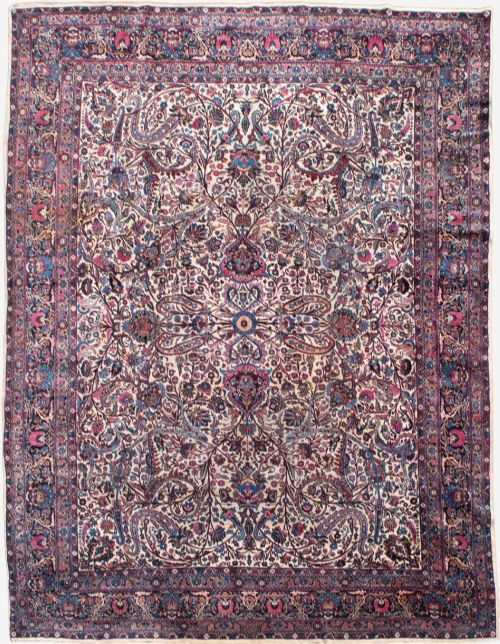
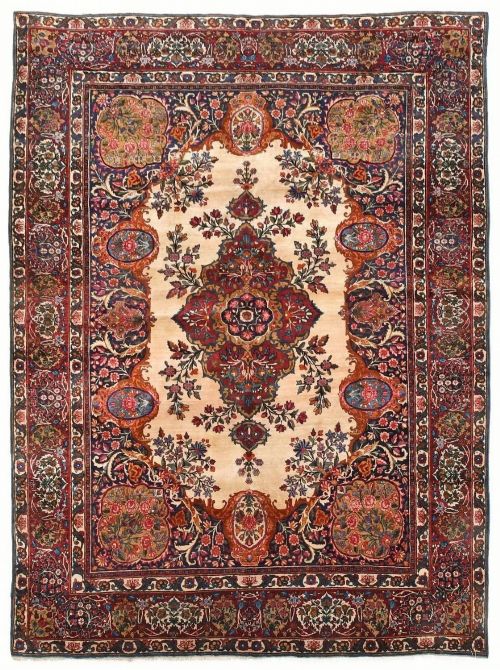


Kerman Floral Rug
A kerman floral rug brings the refined botanical artistry of South Persia into a room through enduring wool and cotton construction.
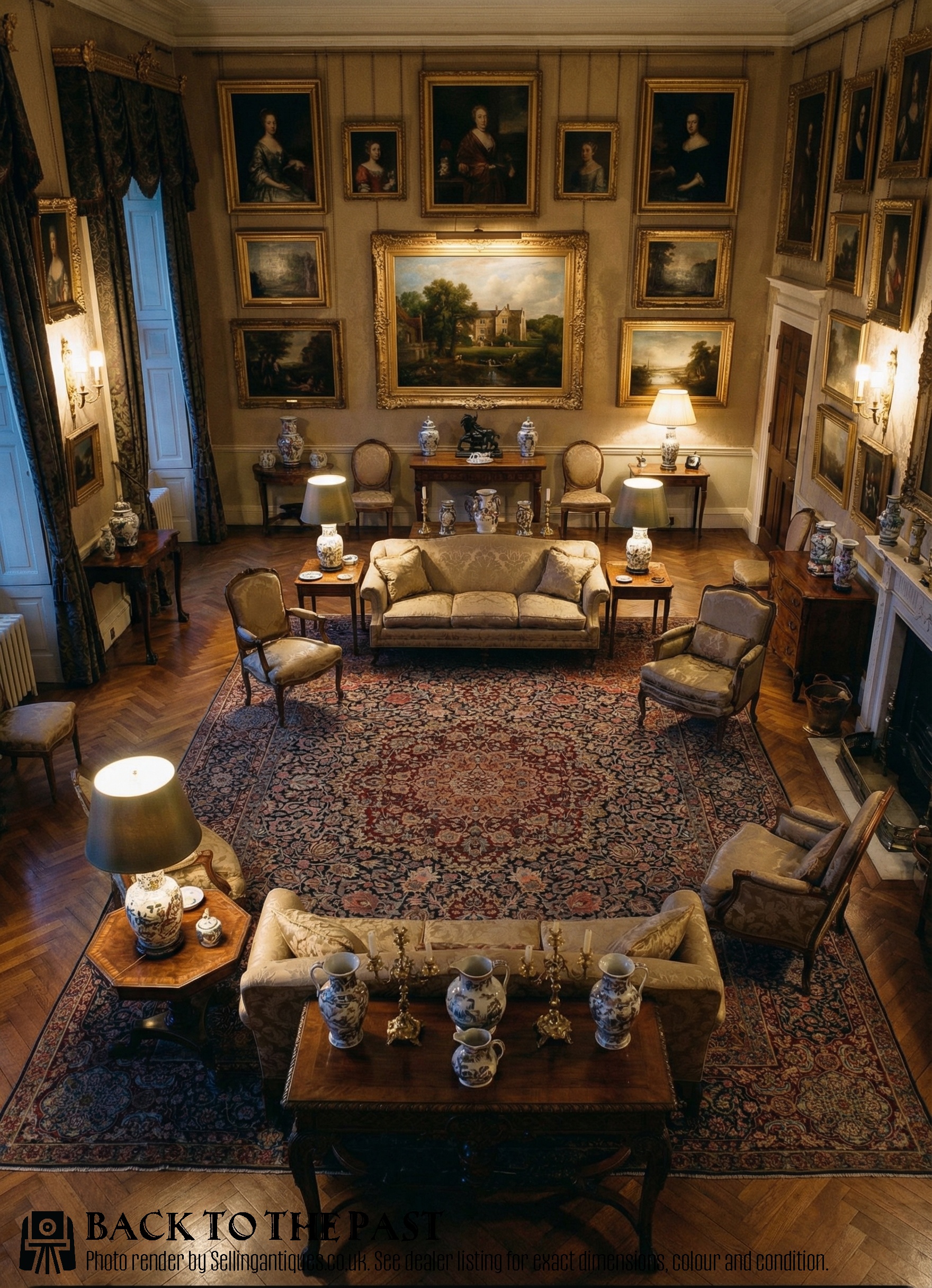
Kerman Floral Rug
A kerman floral rug originates from South Persia, representing centuries of traditional carpet weaving from the Kerman Province. These textiles range from small scatter rugs and prayer formats to large room-size carpets and exceptionally long runners.
The designs typically feature intricate botanical arrangements, repeat floral boteh motifs, millefleurs patterns, and floral festoons against ivory or coloured grounds. Most pieces date from the nineteenth century through the early twentieth century, reflecting classic Persian craftsmanship.
Buyers encounter various formats including small saddle-bags, narrow runners, and grand oversized carpets suitable for substantial spaces. The provenance connects directly to traditional weaving centres in Southern and South Central Persia.
How they were made
These floor coverings utilise a foundation of cotton for warp and weft threads, providing structural stability and durability. Wool forms the pile, knotted tightly to create a dense and resilient surface that withstands regular use.
The traditional construction involves hand-knotting techniques developed by skilled weavers in Persian workshops and nomadic regions. Natural dyeing methods deliver the rich palette seen across ivory grounds and floral fields.
Even nomadic saddle-bags from the Bardsir region arrive bearing intricate floral details.
What varies in quality
Knot density and fineness of weave distinguish standard room-size carpets from exceptionally fine, oversized examples. Tighter knotting allows for crisper botanical detail and greater definition within complex millefleurs and floral festoon designs.
The integrity of the wool pile and the balance of the composition determine the visual impact of each piece. Variations in scale, from small prayer formats to massive carpets, reflect the original purpose and the ambition of the workshop.
The Kerman Floral Rug Glossary
- Boteh
- A stylised floral or almond-shaped motif with a curved upper tip. This ancient Persian design appears frequently in repeat patterns across the field.
- Millefleurs
- A dense pattern composed of countless tiny flowers. This intricate botanical style covers the entire field of specific prayer rugs.
- Lavar
- A term often associated with finer, older Kerman weaving. These pieces exhibit exceptional detail and delicate floral drawing.
- Runner
- A long, narrow carpet format designed for corridors or hallways. Such proportions require specialised weaving to maintain straight edges along extended lengths.
Kerman Floral Rug: Frequently Asked Questions
Where were kerman floral rugs made?
These rugs originate from the Kerman Province in South Persia, spanning urban workshops and regional centres.
Weavers in this area developed distinct botanical traditions incorporating millefleurs and floral festoon designs.
How do I care for an antique rug?
Place the rug in areas with moderate foot traffic and rotate it periodically for even wear.
Vacuum gently without using a beater bar and consult a specialist for professional cleaning.
What sizes do these carpets come in?
The selection includes small scatter rugs, saddle-bags, and prayer formats alongside room-size carpets.
Oversized options and exceptionally long, narrow runners also appear in the historical record.
How can I tell the age of a piece?
Dating relies on stylistic markers, structural analysis of the wool and cotton foundation, and regional weaving characteristics.
Most examples date from the nineteenth century through the early decades of the twentieth century.