
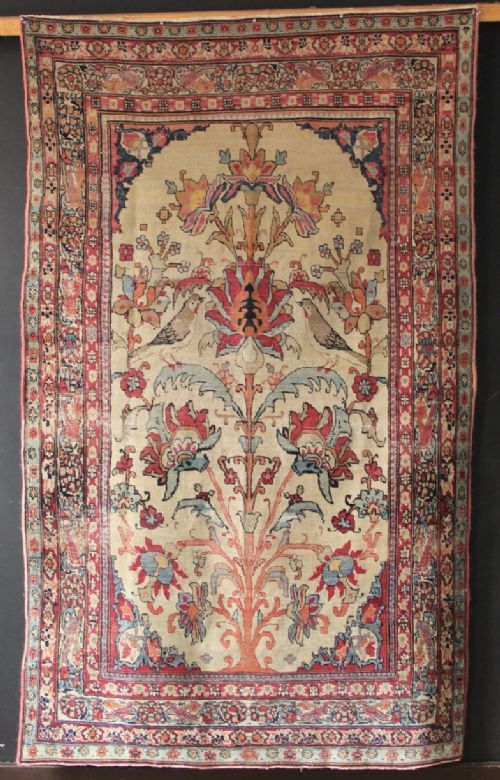
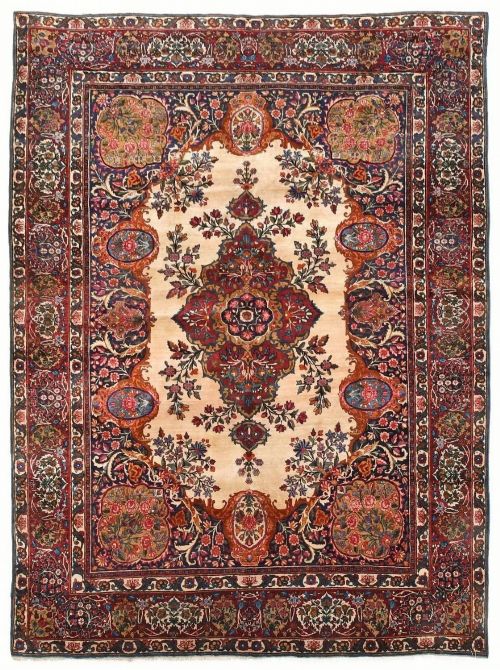


Red Kirman Carpet
A red kirman carpet brings enduring Persian artistry into a room, offering rich floral motifs and deep wool pile woven in south Persia.
Red Kirman Carpet
A red kirman carpet represents a distinct tradition of Persian weaving originating from south Persia, celebrated for intricate floral patterns and classic room sizes. When exploring a red kirman carpet, a buyer encounters pieces originating from the nineteenth century up to the twentieth century, including smaller mats and larger room-size examples.
Buyers frequently find both grand room-size carpets and more intimate mats, allowing these Persian textiles to suit various interior spaces. The enduring appeal lies in the detailed floral iconography and the established craftsmanship of south Persian workshops.
Materials and construction
These floor coverings utilise natural wool pile knotted onto sturdy cotton foundations, providing both comfort underfoot and structural durability. The interplay of wool and cotton allows the intricate floral designs to maintain their definition across centuries of use.
Weavers in south Persia employed traditional techniques to build dense piles and secure foundational warps and wefts. This careful construction ensures that both delicate prayer rugs and large room-size carpets retain their integrity over generations.
The listings here span from the mid-nineteenth century through to the mid-twentieth century, predominantly featuring wool and cotton materials.
Assessing craftsmanship and condition
The distinction between standard examples and finer pieces rests upon knot density, the crispness of the floral drawing, and the overall balance of the composition. Finer specimens display meticulous detail in motifs like the millefleurs or boteh designs.
Patina and wear also influence the character of these textiles, where even distressed surfaces retain the artistic merit of their original south Persian execution. The harmony of the dye palette and the precision of the initial design dictate the standing of each piece.
The Red Kirman Carpet Glossary
- Boteh
- A traditional almond-shaped or paisley motif representing a floral spray or cypress tree. This symbol appears frequently in repeat patterns across Persian weaving.
- Millefleurs
- A decorative style translated as a thousand flowers, featuring dense fields of small blossoms. It creates a rich botanical tapestry across prayer rugs and carpets.
- Lavar
- A specific type associated with high-grade Kirman production, often linked to distinct fineness and delicate coloration. Pieces bearing this attribution are highly regarded by collectors.
- Foundation
- The underlying structure of a rug, comprising warps and wefts usually made from cotton in these Persian examples. It supports the knotted wool pile.
- Pile
- The vertical tufts of wool that form the usable surface of the carpet. The density and clipping of this layer determine the texture and visual depth.
Red Kirman Carpet: Frequently Asked Questions
Where were these carpets made?
These textiles originate from south Persia, specifically the region and workshops associated with Kirman and Lavar. The local weaving tradition flourished across the nineteenth and twentieth centuries.
Craftsmen in these south Persian centres developed distinct floral styles that gained recognition in international markets for their refined aesthetic.
How do I care for a wool rug?
Maintain the wool pile through regular gentle vacuuming without rotary brush heads to prevent fibre damage. Professional cleaning is recommended to preserve the natural lanolin in the wool.
Protect the cotton foundation by keeping the carpet in dry conditions and using appropriate underlays to reduce friction against hard floors.
What size options exist?
The available formats range from small mats measuring under a metre to substantial room-size carpets exceeding three metres in length. This variety accommodates different functional requirements within a home.
Smaller formats often include prayer rugs, whereas larger pieces serve as central floor coverings for principal living areas.