


Kerman Area Rug
A kerman area rug brings centuries of Persian weaving tradition into a room through intricate floral patterns and durable foundations.
Kerman Area Rug
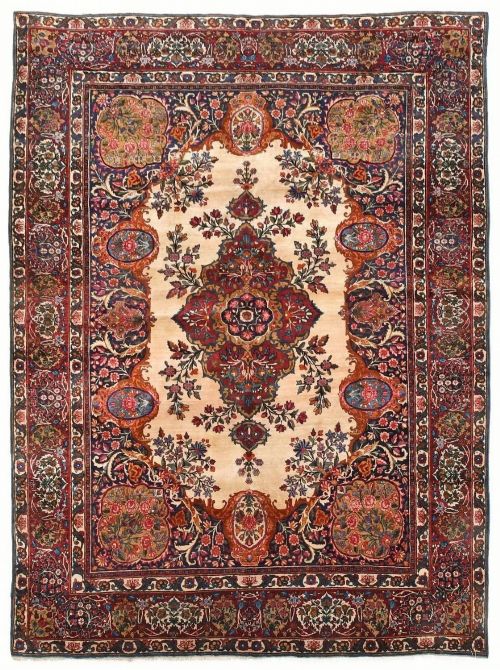
A kerman area rug is a floor covering originating from the Kerman province in southern Persia, encompassing both city workshop carpets and tribal pieces from the surrounding region. Buyers searching for a kerman area rug will find grand room-size carpets alongside smaller floor coverings and nomadic weavings.
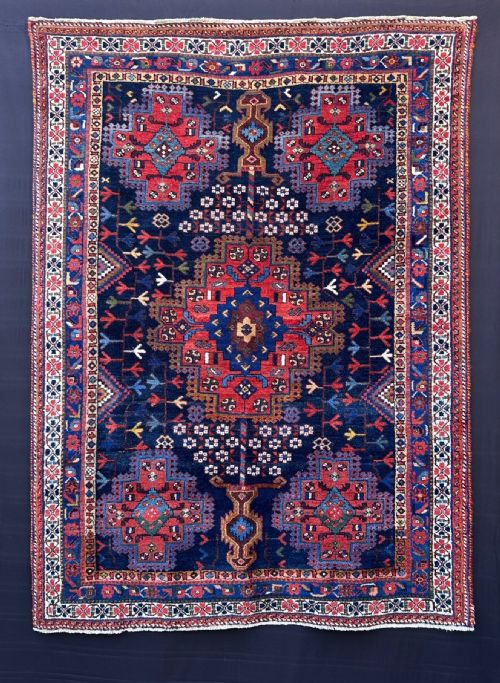
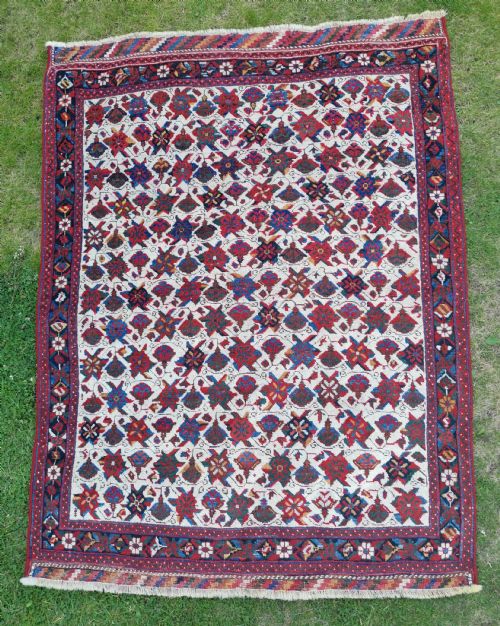
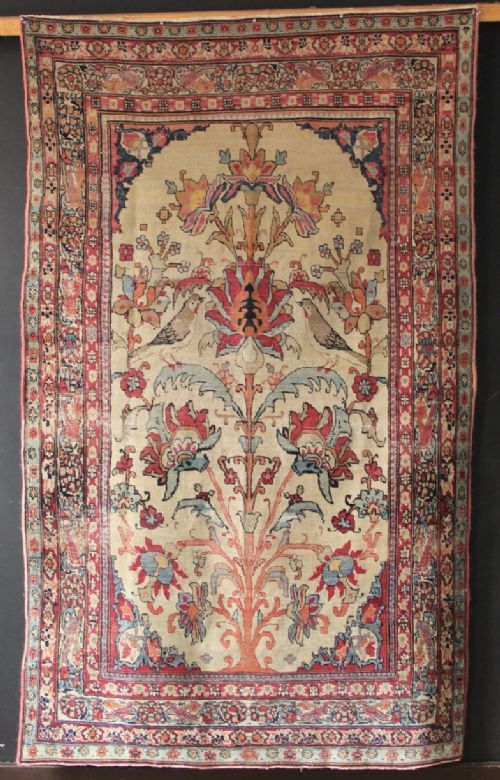
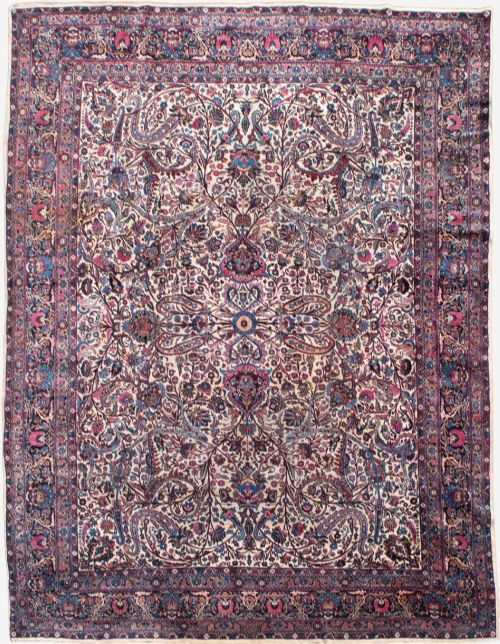
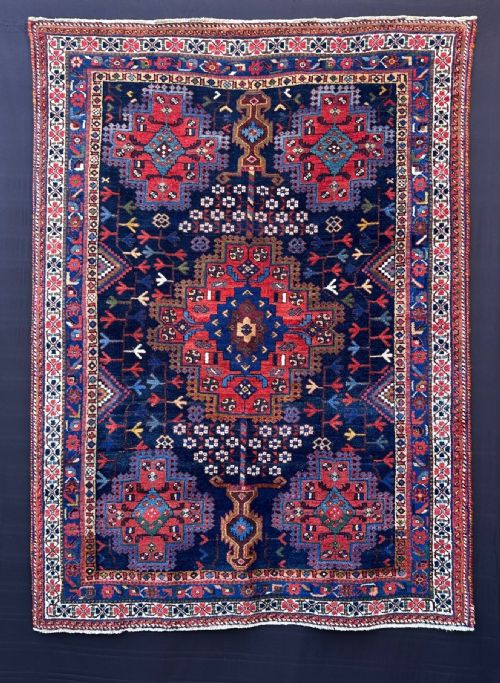
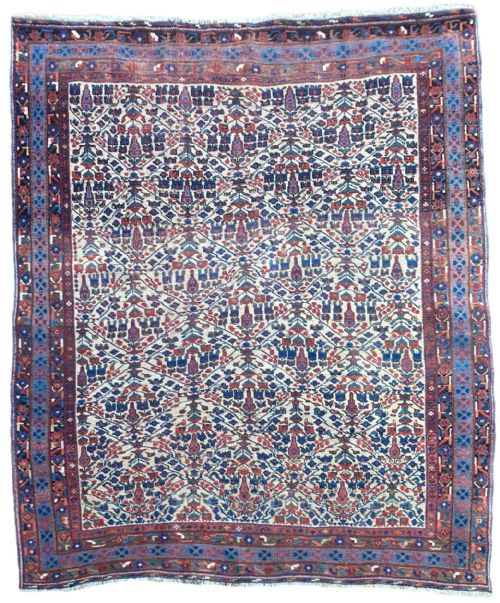
The selection includes pieces attributed to specific localities such as the Neiriz and Sirjan areas, often identified with Afshar tribes. These tribal examples sit alongside finely knotted Kirman Lavar carpets featuring repeat floral boteh designs.
How they were made
These textiles are constructed using wool pile tied onto supportive cotton foundations, providing the structural stability necessary for large formats. The materials combine to create resilient floor coverings capable of enduring decades of domestic use.
Weavers utilised traditional techniques ranging from fine knotting in urban workshops to flatweaving methods seen in bread sofreh and soumak pieces. This variation in construction produces textures that span from dense pile carpets to tactile flatweaves.
Listings span a chronology from the late nineteenth century through to the mid-twentieth century, recording both city-woven Kirman carpets and nomadic Afshar tribal rugs.
What varies in quality
Quality in these rugs depends upon knot density and the precision of the design execution, which separates fine workshop carpets from simpler nomadic work. Finer examples display meticulous floral rendering and tighter foundations.
The handling of wool and the crispness of regional motifs also distinguish the pieces. Superior specimens maintain structural integrity and clear pattern definition across large surfaces.
The Kerman Area Rug Glossary
- Boteh
- A stylised almond or pear-shaped motif frequently seen in Persian textile design. It often appears in repeating patterns across the field of the rug.
- Soumak
- A flatweave technique involving wrapping weft threads around the warp beams. This method creates a durable structure with a distinctive braided appearance on the reverse.
- Sofreh
- A utilitarian cloth used for preparing or serving bread in nomadic households. These pieces often feature geometric tribal patterns.
- Lavar
- A term associated with fine Kirman carpets known for delicate floral compositions. Pieces bearing this designation typically exhibit superior knot counts.
Kerman Area Rug: Frequently Asked Questions
What is a kerman area rug?
A kerman area rug is a hand-knotted floor covering from the Kerman region of Persia, spanning both urban workshop production and nomadic tribal work.
These pieces showcase traditional regional motifs, utilising wool pile on cotton foundations to create durable and decorative floor textiles.
How do I identify an Afshar piece?
Afshar rugs originate from nomadic and village groups within the Kerman province, often displaying geometric medallions and distinct tribal colour palettes.
They contrast with urban Kirman workshop carpets, which lean towards elaborate floral arrangements and repeat boteh designs.
Where were these rugs made?
The pieces originate from southern Persia, specifically the Kerman province and surrounding districts such as the Neiriz and Sirjan areas.
Production includes both city workshops in Kerman proper and surrounding tribal encampments.
How do I care for antique rugs?
Protect the textile by placing it in areas with moderate foot traffic and using a quality underlay to prevent sliding.
Vacuum gently without using a beater bar and consult a specialist for professional cleaning when required.