

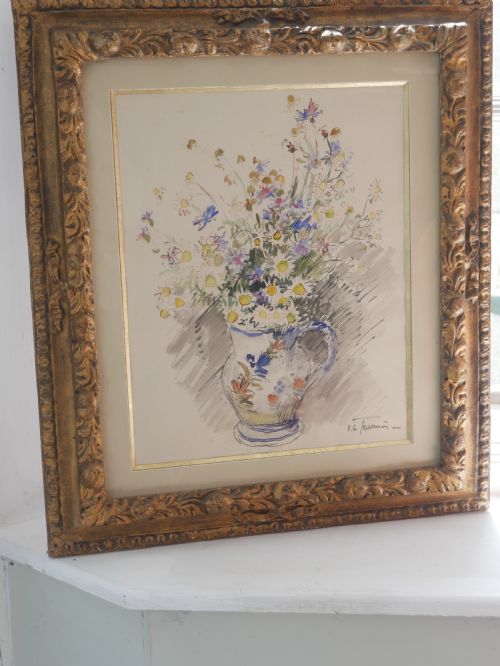


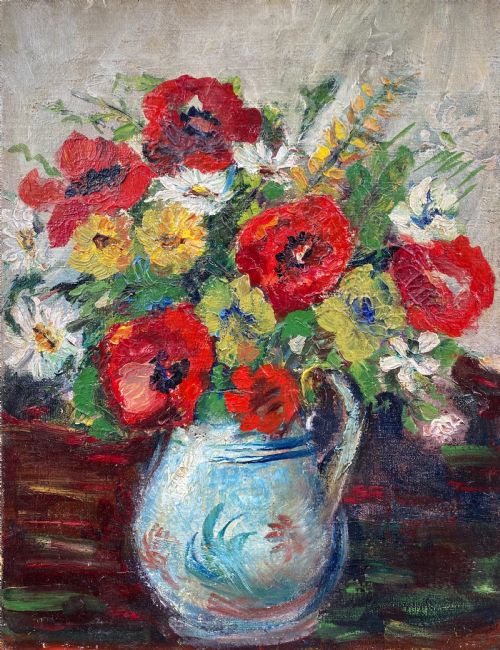

Jug Still Life
A jug still life brings domestic pottery and fruit or flowers into sharp focus, offering an enduring exercise in tone and arrangement.
Jug Still Life
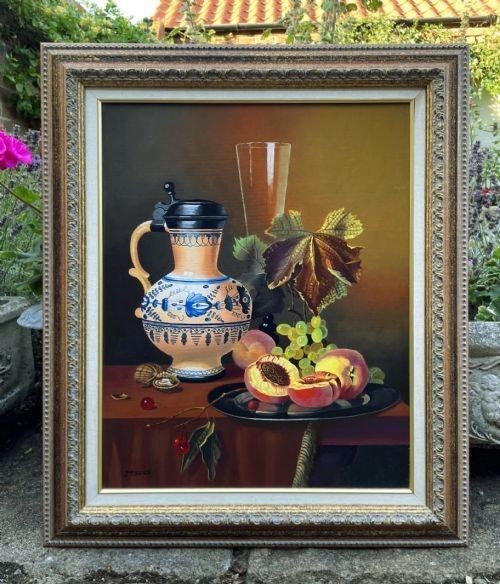
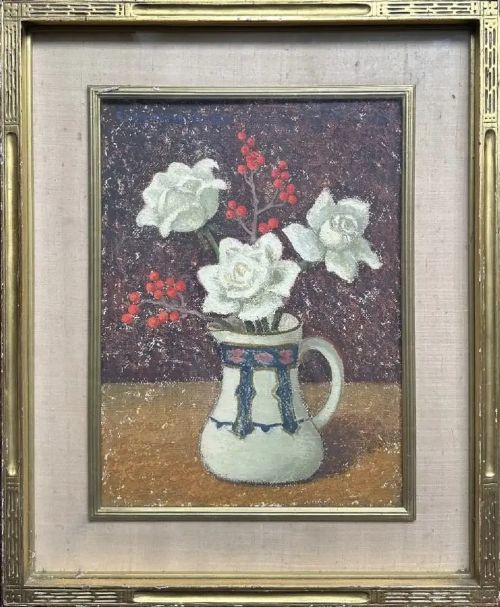
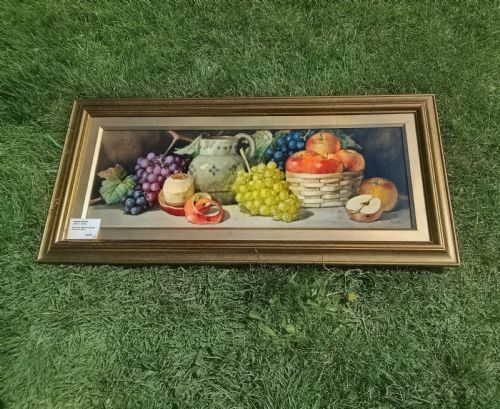
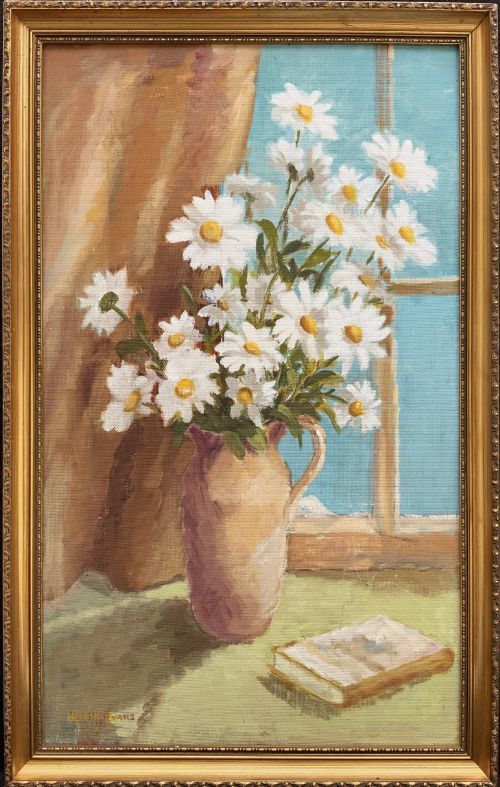
A jug still life centres on ceramic or glass vessels arranged alongside fruit or flowers, forming compositions that recur across multiple decades. Buyers encounter these arrangements rendered in oil paint, watercolour and oil on metal, spanning periods from the Victorian era through the mid-century decades.
The most common versions met on this page belong to the mid-century period, often displaying the influence of Modern British and Impressionist movements. Artists from these decades favour looser brushwork and brighter palettes, placing everyday pitchers beside blooms or citrus fruit.
Works also reach back to the nineteenth century and the early decades of the twentieth, showing traditional approaches such as Dutch still life styles alongside American impressionism. Whether executed on canvas, paper or panel, the core subject remains the domestic vessel anchored among simple organic forms.
Materials and techniques
Painters employ oil paint on canvas, board or metal surfaces to build rich textures and deep tones, particularly in mid-century and Victorian works. The oil medium allows for layered application where light catches the curved glaze of a jug or the skin of fruit.
Watercolour on paper defines a distinct group of pieces, relying on fluid washes and precise pencil or pigment control to capture translucent petals and earthenware jugs. Artists working during wartime and the ensuing decades frequently chose this lighter medium for immediate floral studies.
Gilt framing frequently accompanies these original paintings, adding a polished border that complements both nineteenth-century academic watercolours and twentieth-century modernist compositions.
Jug Still Life Retail Price Guide 2026
Typical asking prices for jug still life among the pieces listed under this phrase on Sellingantiques today, from the lower quarter to the upper quarter. They describe what is for sale here now, not the wider market.
Listings feature works in oil paint, watercolour and oil on metal, spanning Victorian times through the 1960s.
Distinctions in quality
Quality rests upon the confidence of the mark-making and the balance of the composition, where light directs the eye across the surface of the jug and surrounding objects. Stronger works demonstrate a deliberate command of perspective and tone rather than a mere inventory of items.
The handling of the medium dictates the distinction between standard decorative output and accomplished artistic expression, visible in how oil is laid on canvas or watercolour sits upon paper. Pieces by named artists or those exhibiting distinct modernist and impressionist tendencies display a surer grasp of colour relationship.
Emma Fordyce MacRae·Arthur Dudley·James Tower·Owen Bowen·Margaret Laing·Jabez Bligh·Marion Broom·Edith Alice Andrews
The Jug Still Life Glossary
- Still life
- An artwork depicting inanimate subject matter, typically commonplace objects such as food, flowers and vessels. This genre allows artists to concentrate purely on form, colour and light.
- Impressionism
- A nineteenth and twentieth century painting style focused on accurate depiction of light in its changing qualities, ordinary subject matter and visible brush strokes. Works in this mode privilege overall atmospheric effect over tight academic finish.
- Mid-Century Modern
- A style spanning roughly the middle decades of the twentieth century, characterised by clean lines, simplified forms and modernist abstraction. In painting, this translates to flattened perspective and vibrant colour palettes.
- Watercolour
- A paint wherein the colourants are suspended in a water-soluble vehicle, typically applied to paper surfaces. It produces luminous washes that rely on the white of the paper for highlights.
- Oil on canvas
- Pigments bound in a drying oil medium applied to a stretched fabric support. This combination permits extensive blending, rich impasto and enduring depth of colour.
Jug Still Life: Frequently Asked Questions
What periods do these paintings cover?
The works span from the nineteenth century through the Victorian era and into the 1920s, 1930s, 1940s, 1950s and 1960s. Mid-century examples appear frequently alongside earlier academic and impressionist pieces.
This broad chronological range allows collectors to select works reflecting distinct historical shifts in artistic technique and domestic interior taste.
What materials were used by the artists?
Artists utilised oil paint on canvas, board and metal, alongside watercolour on paper. Gilt frames often accompany these original paintings to complement the composition.
These varied supports reflect the changing preferences of painters across the Victorian period and the mid-century modernist era.
How do I identify a mid-century piece?
Mid-century works often display modernist, impressionist or slightly cubist influences with looser brushwork and simplified forms. Subjects frequently include everyday domestic items rendered with vibrant colour palettes characteristic of the 1950s and 1960s.
Examining the canvas texture, framing style and recorded period details helps confirm the era of execution.