



Jug and Fruit Painting
Jug and fruit painting brings together tabletop compositions of ceramic vessels and ripe produce in oil, watercolour, and porcelain.
Jug and Fruit Painting
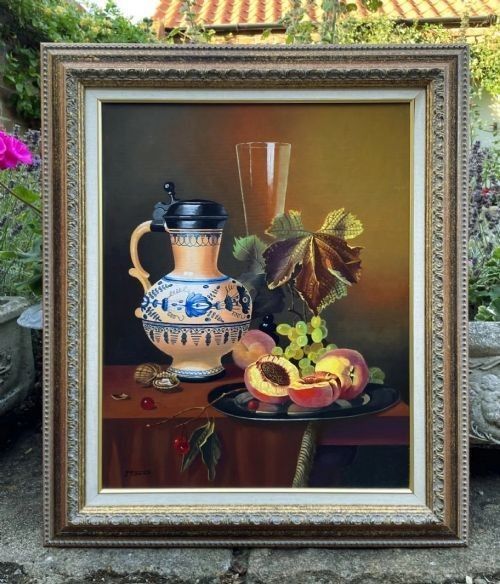
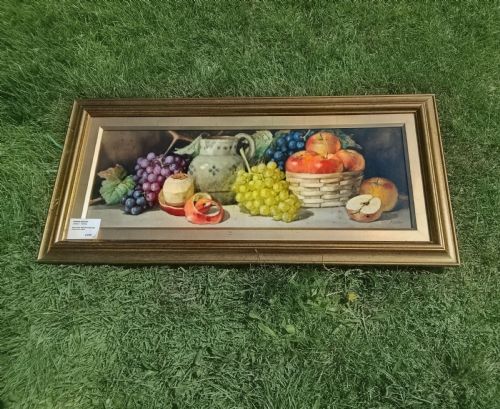
When you search for jug and fruit painting, you encounter tabletop still life studies spanning oil on canvas, watercolour on paper, and decorated porcelain vessels. These works capture arrangements of pitchers, cream jugs, and bowls accompanied by apples and other produce.
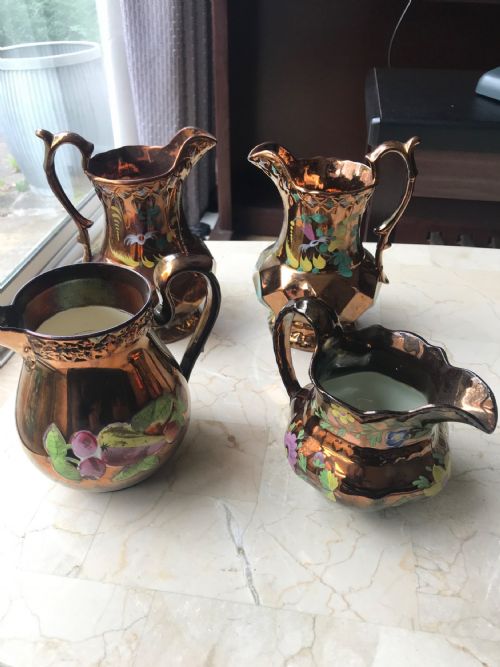
The selections range from nineteenth-century Victorian watercolours and copper lustre ceramics to twentieth-century Modern British and mid-century European canvases. Cream jugs and sugar bowls from factories such as Royal Worcester appear alongside framed wartime watercolours and oil paintings.
You meet both flat wall art and physical ceramic cream jugs bearing hand-painted fruit decoration. The grouping bridges fine art painting and decorative porcelain tableware united by a single traditional subject.
How they were made
Painters work in oil on canvas or watercolour on paper, building up compositions of blue and white jugs alongside bowls of fruit. Artists utilise brushwork and pigment to capture the light falling across ceramic surfaces and organic forms.
Ceramic pieces combine porcelain bodies with hand-decorated enamel painting and copper lustre finishes. Artisans shape cream jugs and sugar bowls on the wheel or in moulds before firing and applying detailed fruit motifs.
Jug and Fruit Painting Retail Price Guide 2026
Typical asking prices for jug and fruit painting among the pieces listed under this phrase on Sellingantiques today, from the lower quarter to the upper quarter. They describe what is for sale here now, not the wider market.
Periods represented span from the nineteenth century through the 1920s, 1940s, 1950s, and 1960s.
What varies in quality
The standard of execution in the brushwork distinguishes ambitious canvas studies from simpler decorative items. In paintings, the handling of light, shadow, and spatial depth across the jug and fruit determines the strength of the piece.
On porcelain, the crispness and detail of the hand-painted fruit decoration set the finer items apart. Signed works and pieces from established makers demonstrate a higher degree of control in both ceramic form and painted surface.
Arthur Dudley·James Tower·Royal Worcester
The Jug and Fruit Painting Glossary
- Still life
- A painting or drawing depicting inanimate subject matter, typically everyday objects such as jugs and fruit. This genre focuses on arrangement, light, and colour relationships.
- Copper lustre
- A type of pottery glaze incorporating metallic copper to produce a reflective, iridescent sheen. It appears on nineteenth-century Victorian jugs decorated with fruit.
- Watercolour
- A painting method in which the paints are made of pigments suspended in a water-based solution. Artists use paper supports to create translucent washes of colour.
- Porcelain
- A ceramic material made by heating raw materials in a kiln, known for its white body and fine texture. It serves as the base for painted cream jugs and sugar bowls.
Jug and Fruit Painting: Frequently Asked Questions
What periods do these paintings and ceramics come from?
The pieces span from the nineteenth century through the mid-twentieth century, including Victorian, wartime, and mid-century European examples.
Dates across the selection range from the late eighteen-hundreds to the nineteen-sixties, covering various modernist and traditional movements.
Are these works oil paintings or watercolours?
You find both mediums represented alongside decorated porcelain cream jugs and sugar bowls.
Artists employ oil on canvas for textured tabletop studies and watercolour on paper for framed wartime still life works.
What ceramics feature in these listings?
The selection includes Victorian copper lustre jugs and Royal Worcester cream jugs and sugar bowls.
These ceramic items are hand decorated with fruit motifs, pairing functional tableware with pictorial decoration.
How do modernist works differ from traditional pieces?
Modernist and cubist canvases approach the jug and fruit subject with abstracted forms and simplified spatial arrangements.
Traditional English and Victorian pieces adhere to realistic representation and detailed rendering of textures.