

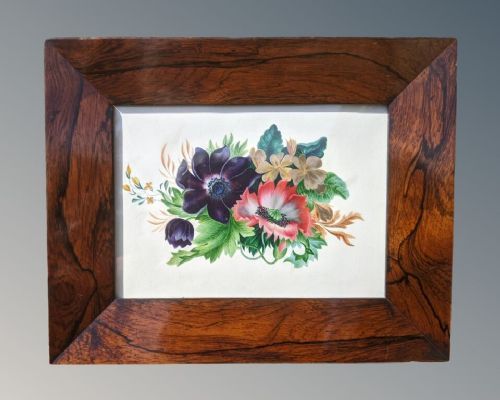
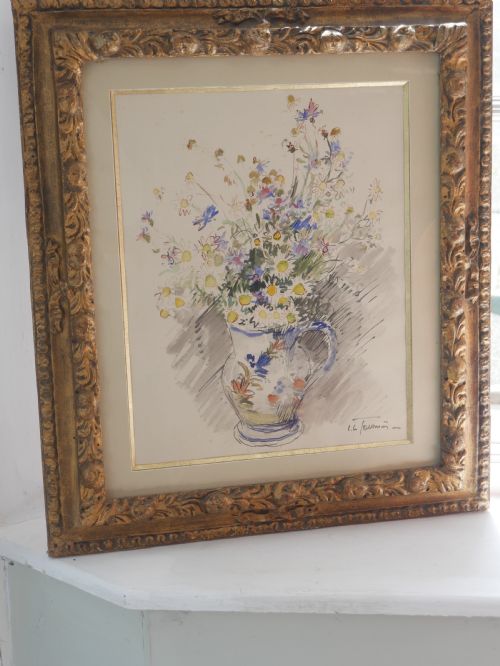


Framed Floral Watercolour Picture
A framed floral watercolour picture brings garden flowers onto interior walls through delicate pigment applied to paper.
Framed Floral Watercolour Picture
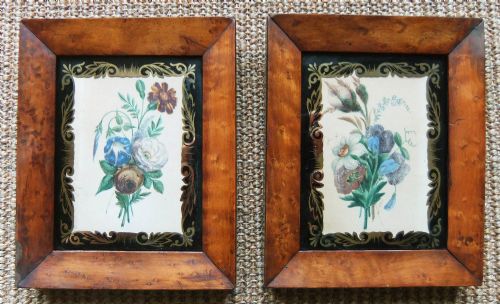
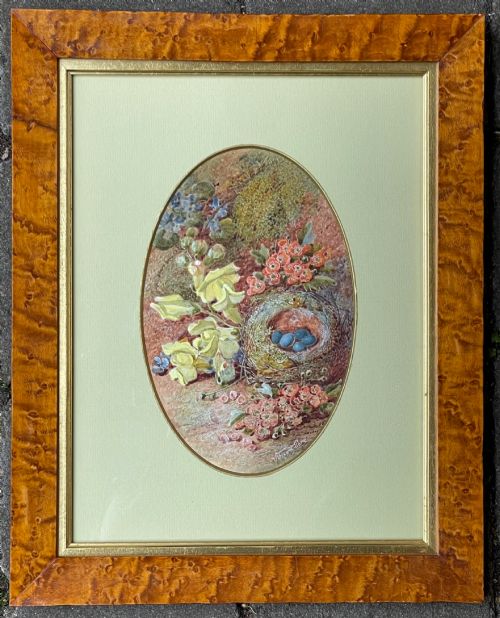
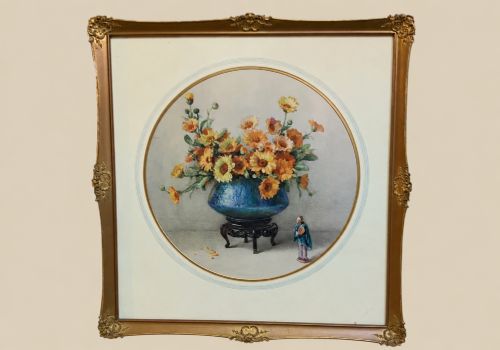
A framed floral watercolour picture presents botanical studies, garden landscapes, and still life arrangements of blooms such as roses, marigolds, and wallflowers. These works capture plants in domestic settings, walled gardens, and ceramic jugs using fluid pigments on paper.
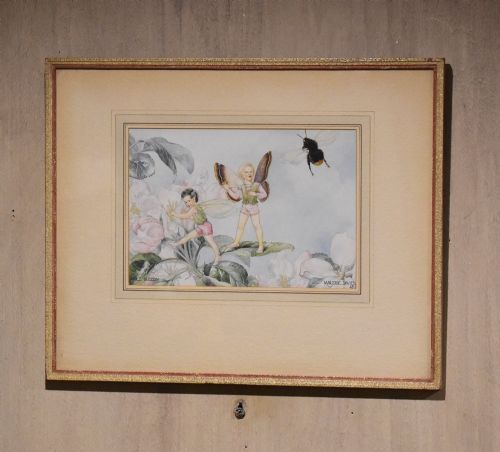
The pieces on this page span from the nineteenth century through the mid-twentieth century, including Victorian naturalism, Edwardian garden scenes, and mid-century compositions. Most examples are mounted behind glass within wood or metal frames.
Makers and painters range from named regional artists and professional botanical illustrators to nineteenth-century English school studies. Buyers encounter both intimate cabinet watercolours and larger wall art pieces.
Materials and Technique
Artists apply watercolour pigment and paint, sometimes combined with gouache and pencil, directly onto paper sheets. This medium relies on the white of the paper to shine through translucent washes, creating luminous floral petals and foliage.
Protection and presentation rely on glass panes and framing materials such as wood and gold leaf, occasionally paired with decorative metal frames like French Aesthetic movement pewter.
Framed Floral Watercolour Picture Retail Price Guide 2026
Typical asking prices for framed floral watercolour picture among the pieces listed under this phrase on Sellingantiques today, from the lower quarter to the upper quarter. They describe what is for sale here now, not the wider market.
Marigolds, wallflowers, and roses captured on paper ensure eternal summer indoors, regardless of the weather outside.
Distinctions in Quality
Quality rests upon the artist's control over pigment transparency, brushwork precision in rendering botanical forms, and composition balance. Stronger works capture light and depth within the petals rather than relying on heavy outlines.
The integrity of the paper support, the preservation of original colour vibrancy without fading, and the harmony of the period frame elevate a piece significantly.
Vincent Clare·Catherine Thomas·James Tower·Harry Wanless·Arthur Hopkins·Lilian Stannard·William Hough·Grace Hastie·Margaret Laing·Phyllis I Hibbert·Marian Chase·Owen Bowen·Charlotte Isa James·David Woodlock·Alice Macallan Swan·Jane Utley·Theresa Sylvester Stannard·George Frederick Nicholls·Arthur H Buckland·Alfred Parsons
The Framed Floral Watercolour Picture Glossary
- Watercolour
- A painting method where natural pigments are suspended in a water-soluble vehicle. It produces translucent washes of colour on paper.
- Gouache
- An opaque water-based paint often used alongside watercolour to add solid highlights and dense colour to botanical studies.
- Botanical study
- A detailed visual record of a plant species, focusing on scientific accuracy of petals, leaves, and stems.
- Still life
- An artwork depicting inanimate subject matter, typically featuring cut flowers in vases, jugs, or baskets alongside everyday objects.
Framed Floral Watercolour Picture: Frequently Asked Questions
How do I hang a watercolour?
Watercolours are sensitive to bright natural light and direct sunlight, which can cause pigments to fade over time. Hang them away from direct sun exposure to preserve the original tones of the floral composition.
Ensure the room humidity remains stable to protect both the paper support and the wood or gold leaf frame from warping.
Are these pieces original art?
Yes, the listings comprise original hand-painted works created directly by the artist rather than modern mechanical reproductions. Each piece shows individual brushstrokes and the physical texture of pigment upon paper.
Signatures or historical attribution notes often accompany the work, pointing to nineteenth or twentieth-century origin.
How do I identify Victorian watercolours?
Victorian examples frequently display detailed botanical naturalism, depicting garden flowers with precise attention to botanical accuracy and rich colour palettes. The paper and framing methods typically match nineteenth-century manufacturing techniques.
Signatures, framing styles, and inscriptions on the reverse often provide clues to the exact decade of creation.
What frames come with these pictures?
Many pieces retain their period frames, ranging from simple wood mouldings to decorative gold leaf and metal surrounds. These housings complement the era in which the watercolour was painted.
The glass acts as a crucial barrier protecting the delicate paper surface from dust, moisture, and atmospheric pollutants.