




Japanned Tea Table
These japanned tea table pieces bring hand-painted Chinoiserie scenes and glossy black or painted surfaces straight into a sitting room.
Japanned Tea Table
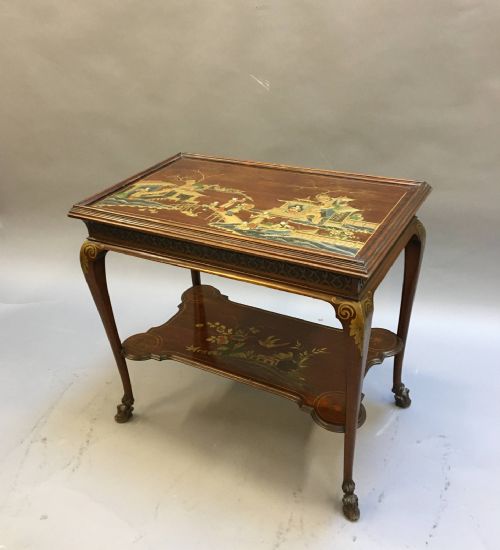
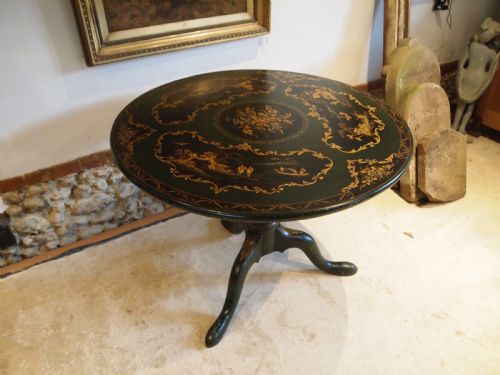
When you search for a japanned tea table, you encounter low occasional furniture, card tables, tilt-top surfaces, and removable serving trays mounted on later or period stands. The forms span the Georgian, Regency, Victorian, and Edwardian eras, alongside early twentieth-century interpretations from Britain and Japan.
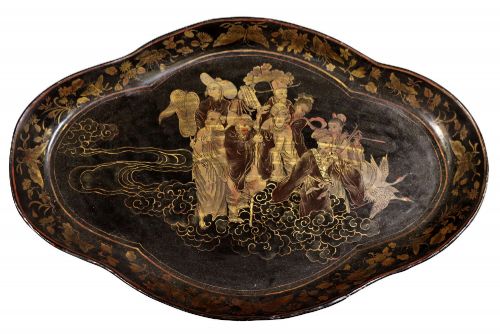
The aesthetic relies heavily on Chinoiserie decoration, featuring gilt figures, pavilions, and landscapes painted across dark lacquered wood, papier-mâché, or painted toleware. Most examples function as small display or serving pieces, moving easily beside seating areas.
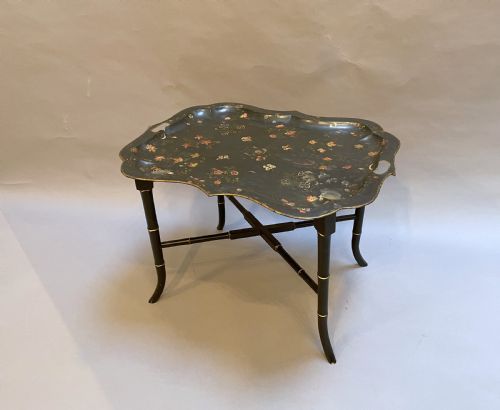
Tray tables dominate this selection, combining a portable serving surface with a folding or fixed wooden stand. These pieces bridge decorative art and practical furniture, offering striking contrast through gilded motifs on black or coloured grounds.
Materials and construction
Cabinetmakers utilised wood, hardwood, papier-mâché, and metal toleware as foundations for multiple layers of lacquer. Artisans built up these surfaces before applying intricate hand-painted details and gold leaf highlights.
Tilt-top mechanisms and folding bases allowed heavy trays or solid tabletops to serve dual purposes as serving equipment and compact wall displays. Brass hinges and fastenings frequently secure the folding stands.
Several trays were once tasked entirely with preventing expensive porcelain teacups from sliding onto Georgian carpets during afternoon gossip.
Judging quality and condition
Quality rests upon the crispness of the hand-painting and the depth of the lacquer finish. Superior examples display fine gold leaf detailing and well-preserved pictorial scenes rather than flat, mechanical stencilling.
The integrity of the underlying papier-mâché or wood foundation dictates durability. Tables that retain their original fitted stands demonstrate greater integrity than composite pieces where an antique tray is married to a later base.
Jennens & Bettridge·Henry Clay
The Japanned Tea Table Glossary
- Japanning
- European imitation of East Asian lacquerwork, created by building up resin layers and heat-drying them to a hard finish. This technique allowed Georgian and Victorian workshops to produce glossy black surfaces decorated with raised gilt motifs.
- Chinoiserie
- European artistic style reflecting Chinese and East Asian motifs, popular across furniture and decorative arts. Artisans depicted imaginary landscapes, pagodas, and figures in gold and colour upon dark backgrounds.
- Papier-mâché
- Composite material made from paper pulp mixed with glue and clay, pressed into moulds and baked. It provided a smooth, stable base for trays and tabletops before being lacquered and painted.
- Toleware
- Painted or lacquered sheet metal items produced in Britain and Europe during the eighteenth and nineteenth centuries. These metal trays and vessels were frequently mounted onto wooden stands to create functional tables.
- Tilt-top table
- A small table featuring a hinged mechanism that allows the surface to pivot vertically when not in use. This clever design saved valuable floor space in period drawing rooms.
Japanned Tea Table: Frequently Asked Questions
What is a japanned tea table?
A japanned tea table is a low surface or tray table decorated with European lacquerwork imitating Asian finishes. These pieces typically feature dark backgrounds adorned with gilded Chinoiserie landscapes and figures.
They served originally for serving tea or displaying decorative objects in formal rooms. Today, collectors value them for their striking visual contrast and portable nature.
Are tray tables removable?
Many examples consist of a detachable serving tray resting upon a separate folding or fixed wooden stand. This design originated so servants could carry the tray independently from the base.
Some stands are period-matching companions, while others represent later adaptations built to support antique trays. Check whether the tray locks securely into the frame.
How do I date a painted table?
Dating relies upon examining the materials, framing construction, and painting style. Georgian and Regency pieces often show finer hand-painted detailing and heavier timber or papier-mâché bases.
Victorian and later Edwardian iterations introduce different framing techniques and varied chemical lacquer formulations. Maker marks, where present, provide the clearest chronological anchor.