
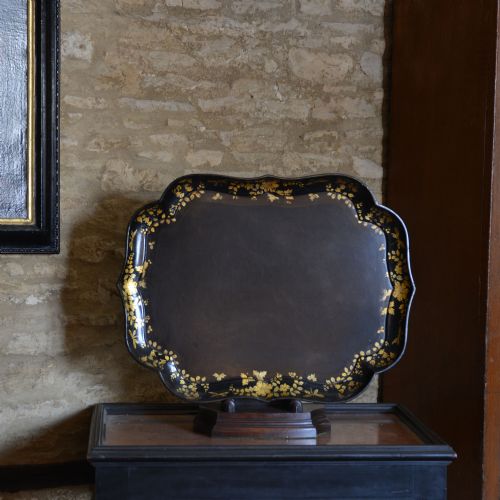
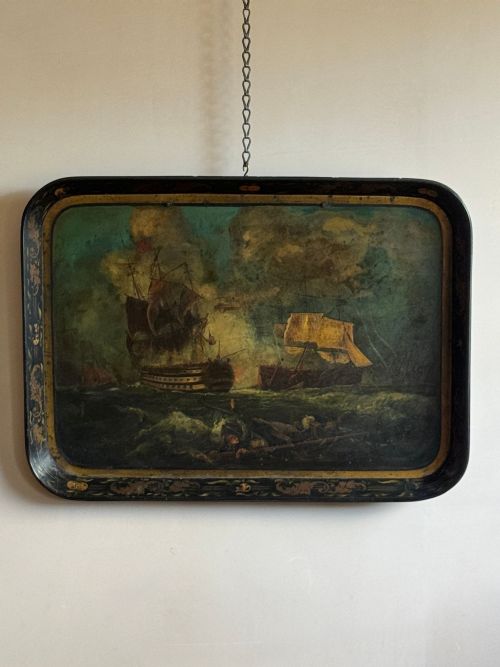
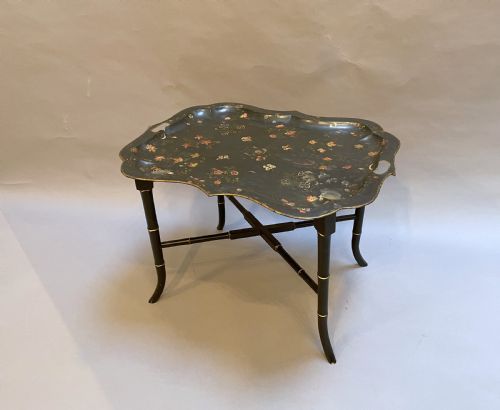


Japanned Papier Mache Tray
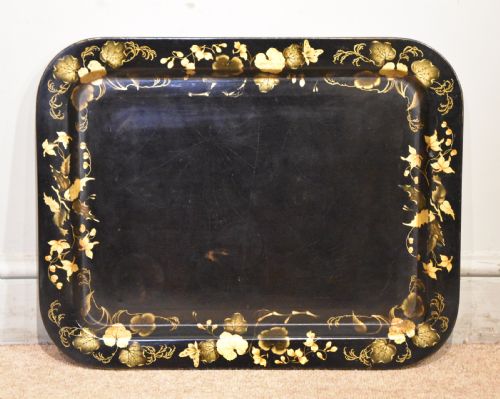
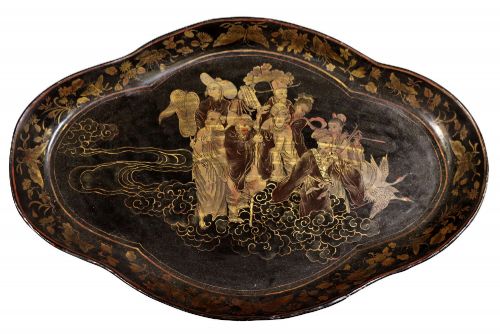
A japanned papier mache tray brings glossy lacquer and gilded Chinoiserie scenes to a room, serving as a striking decorative focal point or a functional surface.
Japanned Papier Mache Tray
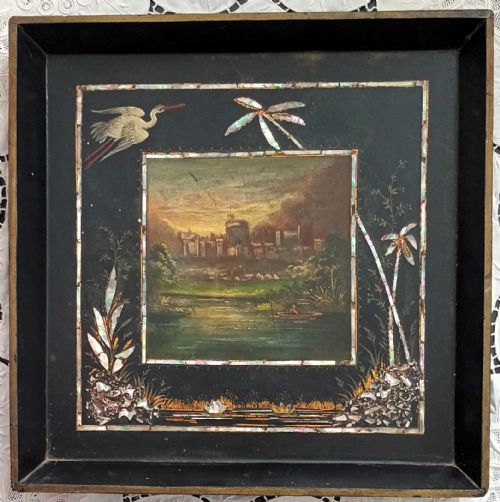
The most common examples met on this page originate from the nineteenth century, including large serving trays, items associated with Windsor Castle, and pieces mounted on later stands to function as tray tables or side tables.
Beyond traditional serving pieces, the evidence shows related forms such as desk sets, letter racks, inkstands, toleware, and boxes with trays, reflecting the widespread popularity of lacquered wares across multiple eras.
Materials and Construction Techniques
These items are constructed from layers of paper pulp and binders pressed and dried into rigid forms of papier-mache, providing a durable foundation for subsequent decoration. Makers then applied layers of dark lacquer to achieve a smooth, glossy surface.
Decoration relied heavily on hand-painted details, gold leaf, and gilded borders, often incorporating mother-of-pearl inlay to create shimmering effects. Brass fittings and wooden stands appear on pieces adapted into tables.
Thejapanned finish mimics East Asian lacquerwork, utilising traditional European techniques to render Chinoiserie landscapes, hunting scenes, and intricate oriental motifs.
Listings feature items spanning from the 18th century through the Victorian era, utilising papier-mache, lacquer, wood, and mother-of-pearl.
Distinctions in Craftsmanship and Origin
Quality separates pieces through the crispness of the hand-painted details, the depth and resilience of the black lacquer, and the precision of the gold leaf application. Finer examples display elaborate Chinoiserie scenes and integrated mother-of-pearl highlights that retain their original lustre.
Jennens and Bettridge·Henry Clay
The Japanned Papier Mache Tray Glossary
- Papier-mâché
- A composite material made from paper pulp or layers of paper reinforced with glue, then moulded and dried to form a sturdy base for lacquer. It allows for lightweight yet robust serving articles.
- Japanned
- A European imitation of East Asian lacquerware, named after the trade with Japan. It involves applying dark varnishes and heat-curing the surface to achieve a glossy finish.
- Chinoiserie
- A European artistic style reflecting Chinese motifs and imaginary oriental landscapes. It appears frequently in the painted decoration of nineteenth-century trays.
- Toleware
- Metalware painted and lacquered, often tin-plate treated in manners similar to papier-mache. It shares stylistic overlaps with lacquered trays in the historic record.
- Mother-of-pearl
- The iridescent inner layer of certain mollusc shells, inlaid into lacquer surfaces to create glowing highlights in floral or architectural designs.
Japanned Papier Mache Tray: Frequently Asked Questions
How were these trays originally used?
These pieces served primarily for carrying tea services, displaying silver, or functioning as portable serving articles in grand houses.
Over time, many were placed upon wooden stands to convert them into occasional tables, side tables, or coffee tables.
What is the difference between papier-mache and toleware?
Papier-mache is constructed from compressed paper pulp or sheets bonded together to form a lightweight, rigid wooden-like body. Toleware uses sheet metal, usually tin-plate, as the foundational substrate for similar painted and lacquered finishes.
Both materials accommodated the glossy japanned aesthetic popular during the Georgian and Victorian eras.
How can I tell a Regency piece from a Victorian one?
Regency items often feature restrained classical motifs, crisp gilding, and specific maker signatures associated with early nineteenth-century workshops like Henry Clay. Victorian examples frequently embrace busier Chinoiserie designs, broader use of mother-of-pearl inlay, and a wider variety of table conversions.
Stylistic shifts also align with the dating recorded across nineteenth-century listings.
How do I care for an antique lacquered tray?
Keep these items away from direct sunlight and excessive heat to prevent the lacquer from cracking or fading. Dust gently with a dry, soft cloth and avoid chemical cleaners or moisture.
If used as a table, place a protective glass top over the surface to prevent scratching the historic finish.