




Japanned Accent Table
A japanned accent table brings surface ornament and distinct character to a room, built through layered lacquer and painted scenes.
Japanned Accent Table
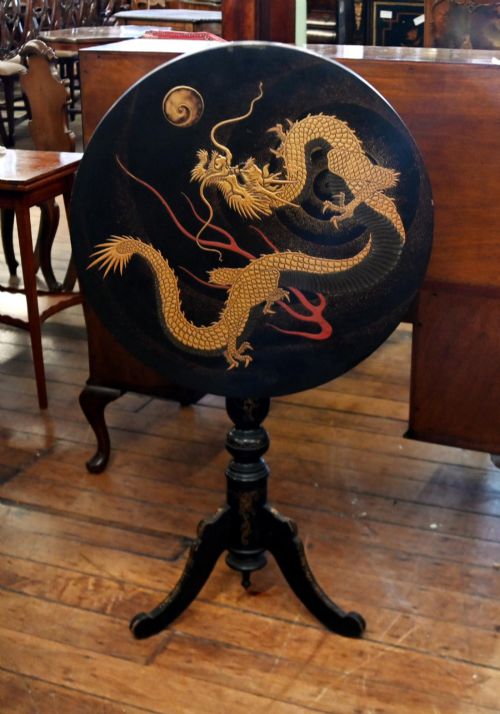
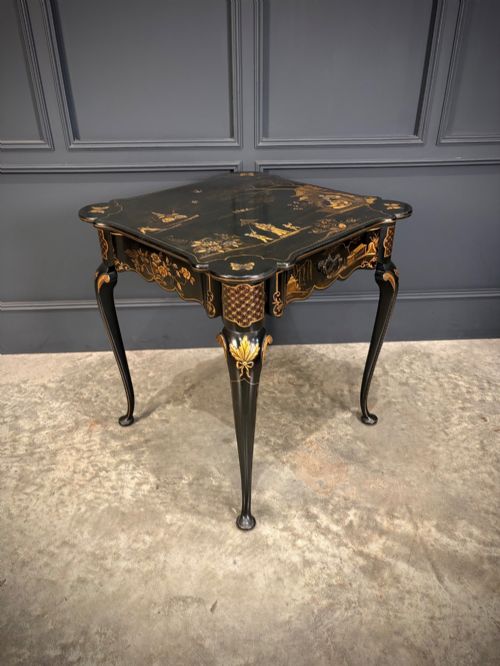
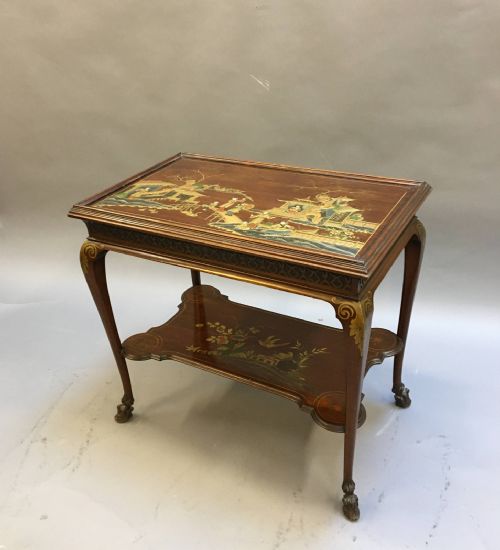
A japanned accent table draws the eye through black and gold lacquer work, often following Chinoiserie or Victorian Aesthetic Movement designs. These pieces function as occasional tables, side tables, and tilt-top tables designed to sit beside seating or in corners.
The selection ranges from Georgian and Regency style examples to early twentieth-century pieces, including nests of tables and wine tables. Materials extend to bamboo, papier-mache, and marble tops paired with hand-painted decoration.
How they were made
Construction relies on timber foundations, papier-mache, or bamboo, finished with applied layers of lacquer to create a smooth, dark ground. Artisans then built up surface ornament using gold leaf, paint, and parcel-gilt detailing.
Metal elements such as brass appear on specific forms, while fabric and toleware feature on related lighting pieces within the group. The decorative schemes typically depict oriental figures, landscapes, and floral motifs applied directly to the lacquered panels.
Japanned Accent Table Retail Price Guide 2026
Typical asking prices for japanned accent table among the pieces listed under this phrase on Sellingantiques today, from the lower quarter to the upper quarter. They describe what is for sale here now, not the wider market.
Periods represented span from Georgian and 1800 through the Victorian era to the 1930s.
What varies in quality
Quality rests in the depth of the lacquer finish and the precision of the hand-painted details. Finer examples display crisp delineation in the gold leaf work and greater subtlety in the pictorial scenes.
Structural integrity also separates standard pieces from finer ones, particularly in the stability of tilt-top mechanisms, tripartite bases, and joinery on bamboo or timber frames.
The Japanned Accent Table Glossary
- Japanning
- European imitation of East Asian lacquerwork, created by applying layers of varnish and metallic dust. This technique produced glossy black surfaces adorned with raised or flat painted designs.
- Chinoiserie
- European decorative style reflecting Chinese artistic influences, popular in furniture and interior design. It incorporates whimsical landscapes, figures, and architectural motifs.
- Tilt-top table
- A small table with a hinged top that rotates to a vertical position when not in use. This mechanism allowed the piece to stand flat against a wall.
- Papier-mache
- A composite material made from paper pulp or layers of paper bound with glue, then moulded and lacquered. It provided a lightweight yet sturdy base for decorative painted surfaces.
- Toleware
- Enamelled or lacquered metalware, frequently painted in black and gold. It shares decorative traits with lacquered wooden furniture of the period.
Japanned Accent Table: Frequently Asked Questions
How do I clean a lacquered table?
Dust gently with a soft, dry cloth to protect the delicate surface layers.
Avoid liquid cleaners, abrasives, and direct sunlight, which can damage the lacquer over time.
Are these tables sturdy enough for daily use?
Most occasional and side tables function well for holding light items like books or lamps.
Tilt-top and papier-mache versions require a gentler touch due to their specific construction and hinged mechanisms.
What is the difference between Chinoiserie and Japanese styles here?
Chinoiserie reflects European interpretations of Chinese motifs, typically featuring fanciful pavilions and figures in gold on black.
Japanese style pieces incorporate authentic Meiji or Taisho period aesthetics originating directly from Japan.
Where should I place a japanned table in a room?
These pieces work effectively as accent furniture beside a sofa or chair where the reflective surface catches the light.
They also serve as lamp tables or freestanding display surfaces in hallways and sitting rooms.