





Japanese Vase Lamps
Japanese vase lamps combine centuries-old ceramic and metal vessels with electrical fittings to create functional table lighting.
Japanese Vase Lamps
When searching for japanese vase lamps, buyers encounter original vessels from the Edo and Meiji periods that have subsequently been adapted for electrical lighting. The inventory spans centuries, reaching back to seventeenth-century Arita porcelain and eighteenth-century Imari works, though nineteenth-century productions appear most frequently.
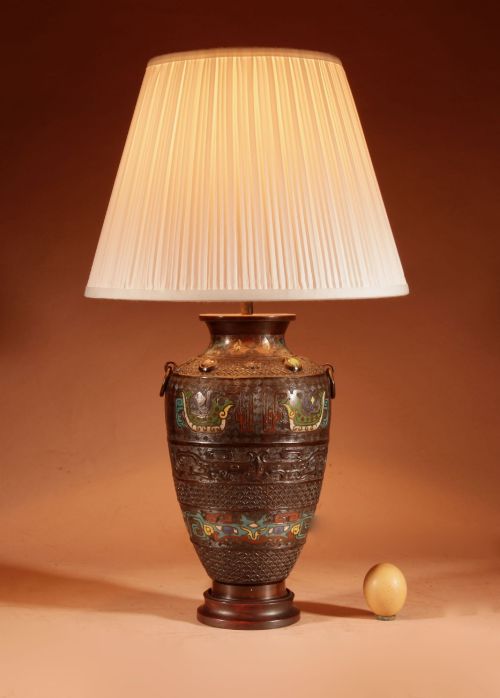
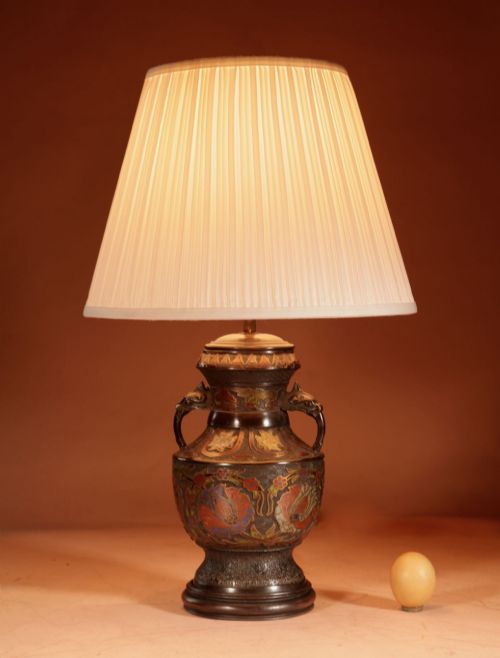
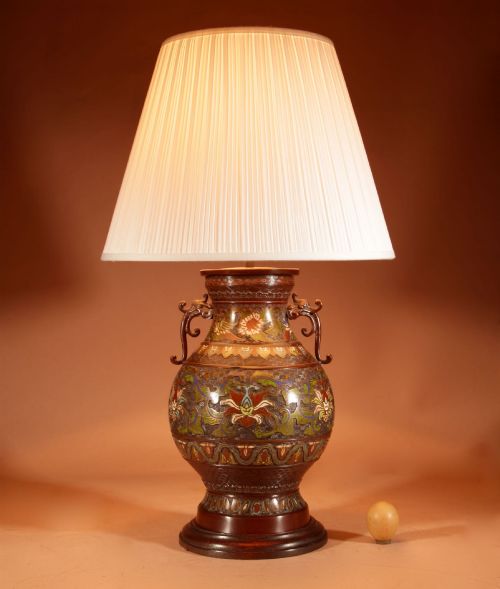
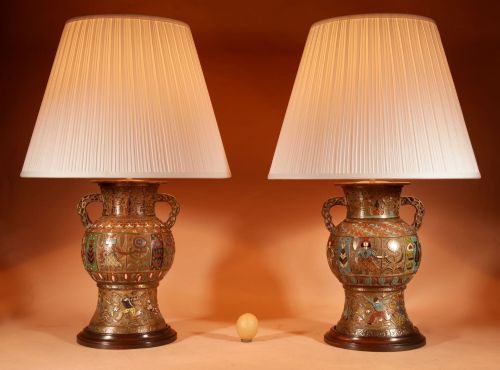
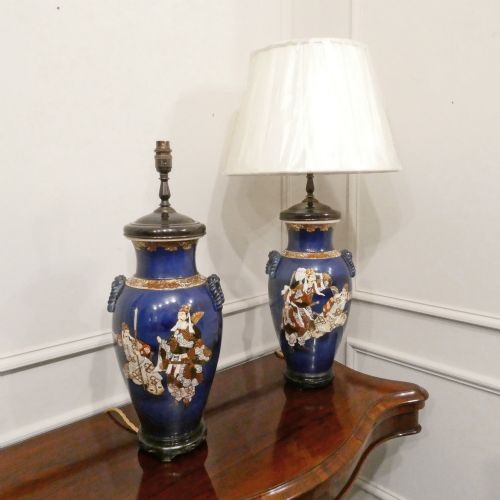
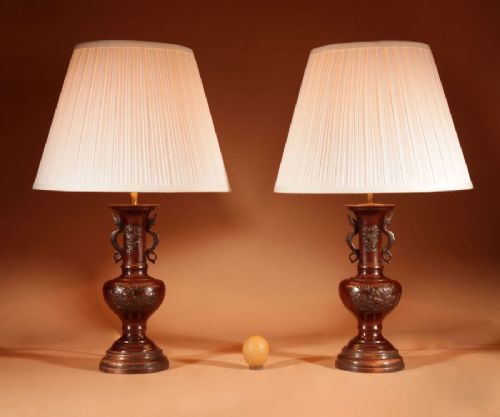
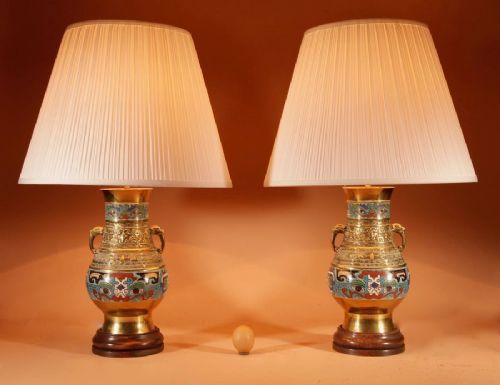
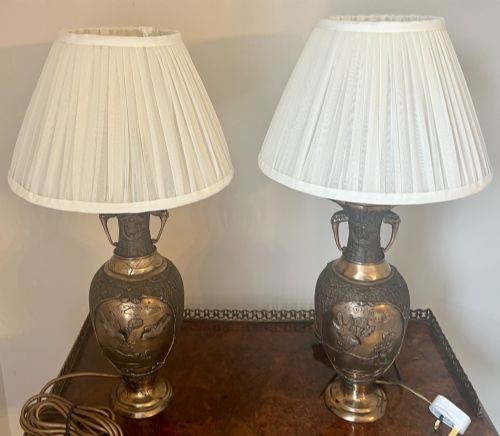
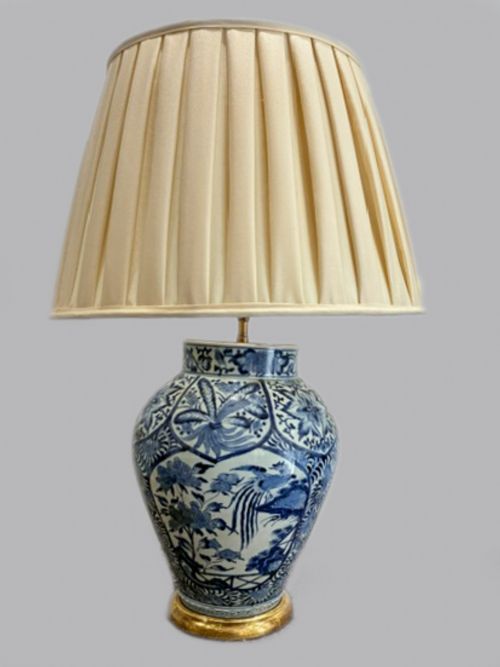
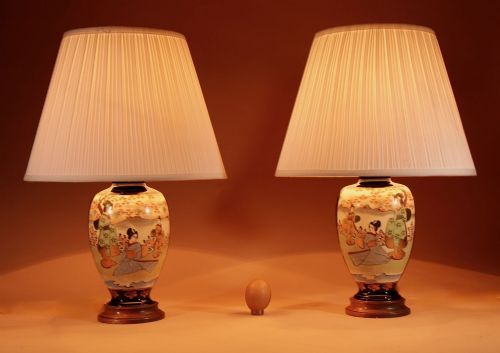
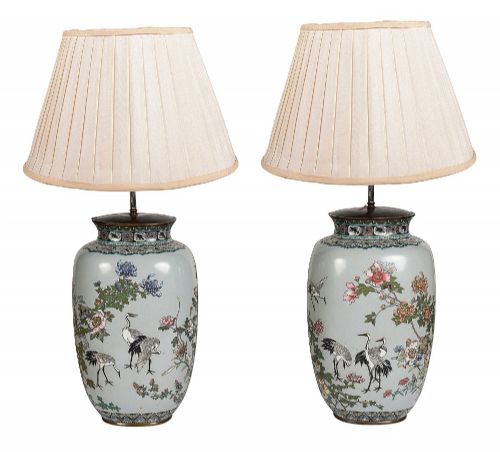
These items primarily take the form of table lamps constructed from converted porcelain vases, earthenware pots, and cast bronze or brass vessels. Many examples arrive as matched pairs, incorporating hand-painted Satsuma, Kutani, and blue and white ceramics alongside cloisonné and champlevé enamel work.
The body of the lamp usually originates as a decorative vessel, occasionally paired with gilt bronze mounts, ormolu, or carved wooden elements. The conversion process integrates wiring and fittings while retaining the character of the original antique container.
Materials and construction
Potters and metalworkers utilised porcelain, earthenware, bronze, brass, and enamel to create the foundational vessels. Ceramic bodies were thrown or moulded before receiving hand-painted pigments, underglaze blue, or intricate enamel designs, while metal vessels employed casting and detailed wirework techniques.
Conversion into lighting involved mounting the vases to stability bases and fitting them with metal hardware such as brass, bronze, or ormolu collars and stems. Silk and fabric shades frequently complete the assembly, paired with wiring suited to domestic table use.
Japanese Vase Lamps Retail Price Guide 2026
Typical asking prices for japanese vase lamps among the pieces listed under this phrase on Sellingantiques today, from the lower quarter to the upper quarter. They describe what is for sale here now, not the wider market.
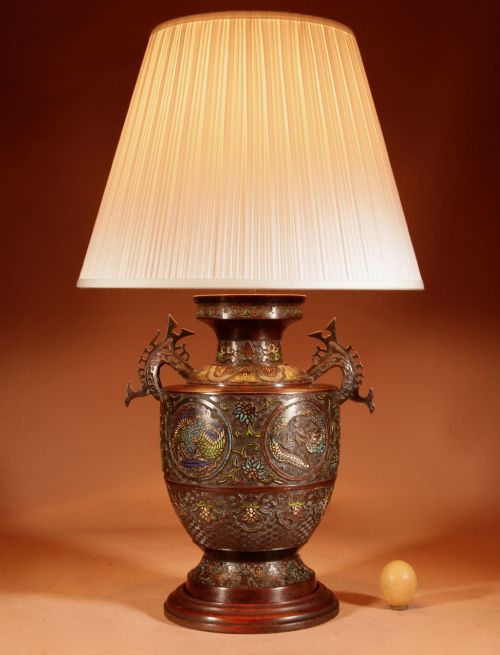
Several heavy bronze dragons manage to hold up the lighting without looking remotely stressed about the extra electrical responsibility.
Indicators of distinction
Quality rests upon the artistic execution of the original vase, distinguishing standard decorative wares from finely painted Satsuma, Kutani, or Arita porcelain and precise cloisonné enamel. The crispness of the bronze casting and the integration of metal mounts also divide everyday examples from more substantial creations.
Condition plays a part, particularly the preservation of hand-painted details, enamel work, and the original glaze without excessive wear. The standard of the conversion hardware and the stability of the mounted vase complete the assessment.
The Japanese Vase Lamps Glossary
- Satsuma
- A type of earthenware originating from the Satsuma Province, typically featuring a crackle-glaze ivory body decorated with elaborate enamels and gilt. These vessels are frequently found converted into table lamps.
- Cloisonné
- A metalwork technique where fine wires are soldered to a bronze or brass body to form compartments, which are then filled with enamel paste and fired. This method creates intricate patterns across the surface of the lamp base.
- Imari
- A traditional style of Japanese porcelain featuring a palette predominantly consisting of underglaze blue, iron red, and gilt. Pieces decorated in this manner date from the Edo period onwards.
- Champlevé
- An enamelling process where troughs or cells are carved directly into a bronze or brass surface to hold coloured enamel before firing. It yields a heavier, tactile finish compared to wire-based cloisonné.
- Kutani
- A style of Japanese porcelain known for bold polychrome painting, often incorporating deep greens, yellows, purples, and reds. These colourful vases provide striking bases for domestic lighting.
Japanese Vase Lamps: Frequently Asked Questions
Are these lamps converted from old vases?
Yes, the majority of these pieces started life as decorative vessels, urns, or spill vases during earlier periods. Artisans subsequently adapted them into table lamps by adding electrical fittings and mounts.
This conversion process allows historical ceramics and bronzes to serve a practical purpose in modern interiors while preserving their traditional craftsmanship.
How do I identify a Meiji period lamp?
Meiji period pieces date between 1868 and 1912, a time when Japanese export arts flourished. They often feature detailed bronze casting, champlevé enamel, or intricate Satsuma and Kutani decoration.
Examining the weight of the metal, the fineness of the hand-painted details, and the characteristics of the glaze helps distinguish this era from earlier Edo items.
Can I use standard lampshades with them?
Most of these lamps feature standard threaded fittings that accommodate a wide variety of contemporary or period-style shades. Fabric and silk shades are commonly paired with ceramic and bronze bodies.
Choosing a shade depends on the proportions of the vase and the colour palette of the painted or enamelled decoration.
What is the difference between Satsuma and Kutani?
Satsuma ware is characterised by an earthenware body with a fine crackled ivory glaze, decorated with detailed enamel and gilt motifs. Kutani refers to porcelain wares celebrated for vibrant, multi-coloured painted designs.
Both styles appear frequently among antique table lamps, offering distinct visual textures and colour combinations for interior display.