




Japanese Studio Ceramics
Japanese studio ceramics bring tactile artistry into your rooms, offering unique vessels shaped by master hands across several centuries.
Japanese Studio Ceramics
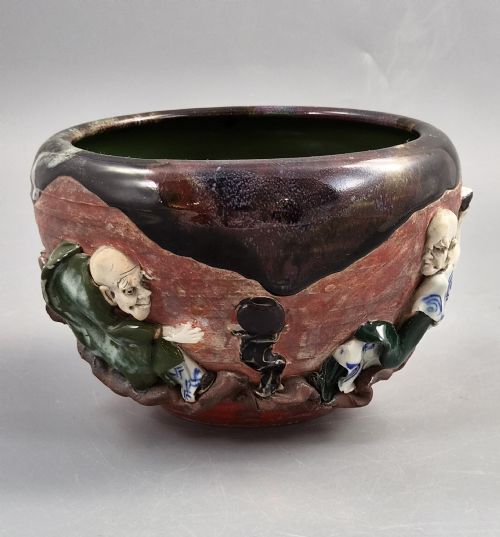
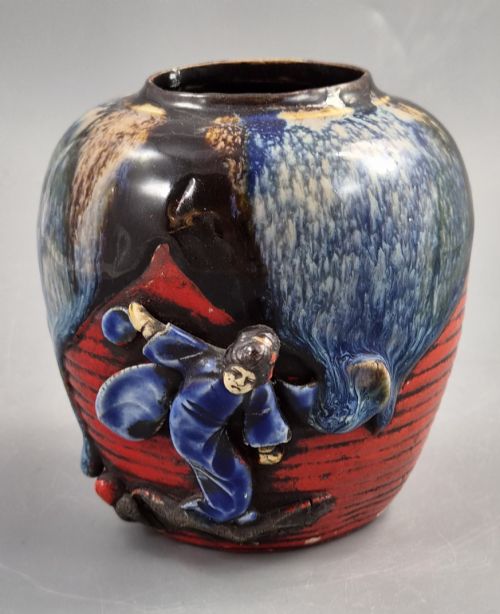
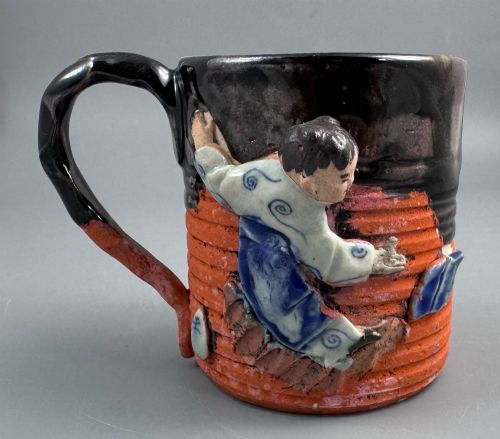
Japanese studio ceramics encompass a diverse array of vessels, including vases, decorative bowls, mugs, and suiban brush washers created by skilled artisans. When you explore Japanese studio ceramics, you encounter forms ranging from Satsuma wares and Arita blue and white porcelain to the distinctive moulded figures of Sumida Gawa pottery.
The pieces on this page originate from various notable eras, spanning the Edo period, the Meiji period, and the Taisho-Showa eras. These historical periods define the aesthetic direction of each object, showing shifts from traditional blue and white designs to heavily textured, figurative relief work.
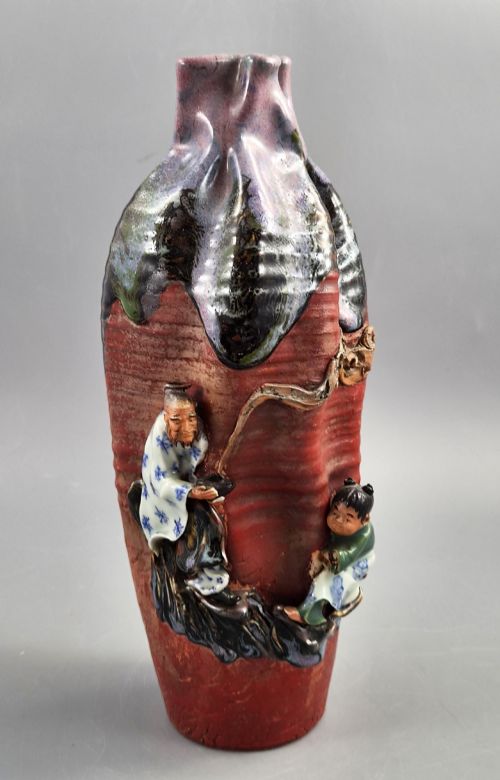
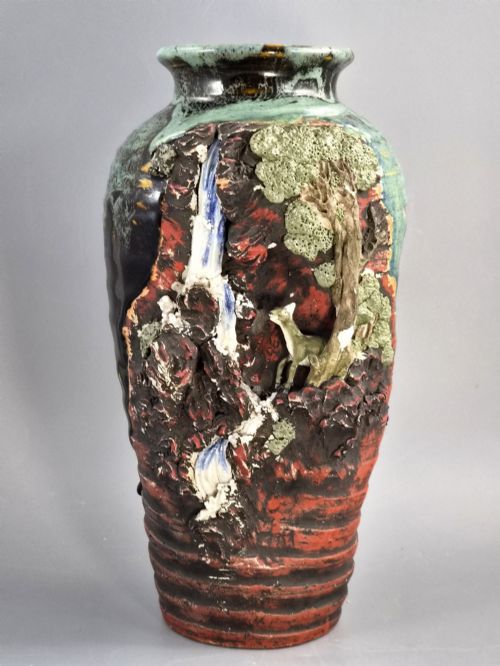
Vessels take many shapes, such as trumpet-shaped beaker vases, globular forms, and sculptural landscape jars complete with applied figures like sages and karako. Each piece reflects the specific workshop tradition and the individual creator's sculptural intent.
Materials and techniques
Potters shaped these Japanese studio ceramics using fundamental earth materials such as earthenware, terracotta, stoneware, porcelain, and ceramic. Artisans then applied rich glazes, including blue flambé and lavender flambé finishes, alongside detailed enamel work and accents of gold leaf.
Makers employed sophisticated techniques to achieve their distinct surfaces, combining thrown or moulded bodies with hand-applied relief figures and detailed pictorial painting. The integration of sculptural elements, such as climbing figures and natural landscapes, required precise control over both clay shrinkage and kiln temperatures.
Listings feature works spanning the Edo, Meiji, and Taisho-Showa periods, utilising earthenware, stoneware, and porcelain.
Distinctions in quality
Excellence in these pieces rests upon the crispness of the applied relief work and the depth of the glaze effects, distinguishing masterful sculptural control from simpler production. The finesse with which figures are modeled and integrated into the body of a Sumida Gawa vase dictates its artistic standing.
The precision of painted detail in Satsuma and Imari palette pieces separates standard output from superior studio examples. Well-defined brushwork, balanced compositions, and carefully preserved gold leaf indicate a higher tier of craftsmanship.
Inoue Ryōsai·Makuzu Kozan·Kinkozan·Shozan·Kizan·Ishiguro Kōko
The Japanese Studio Ceramics Glossary
- Sumida Gawa
- A distinct style of Japanese pottery known for its heavily textured surfaces and applied clay figures in high relief. These pieces often feature flambé glazes and pictorial elements.
- Satsuma
- A type of earthenware with a finely cracked ivory glaze, typically decorated with intricate enamel patterns and gilding. Kyoto studios often produced these decorative vessels.
- Karako
- A traditional decorative motif depicting Chinese children at play. Artists frequently modeled these youthful figures in relief on pottery surfaces.
- Imari
- A style of Japanese porcelain decorated in underglaze blue and contrasting overglaze enamels such as red and gold. This palette originated during the Edo period.
Japanese Studio Ceramics: Frequently Asked Questions
What are Japanese studio ceramics?
Japanese studio ceramics are handcrafted vessels, including vases, bowls, and teacups, produced across periods like the Edo, Meiji, and Taisho-Showa eras.
They encompass diverse styles, from blue and white Arita porcelain to heavily modeled Sumida Gawa pottery and decorated Satsuma wares.
How do I identify a Meiji period piece?
Meiji period ceramics often display intricate enamel decoration, elaborate gilding, or expressive applied relief figures.
Examining the signatures of known makers from this era helps confirm the period of origin.
Where were these ceramics made?
These pieces originated in various Japanese kilns, workshops, and urban studio centres such as Kyoto.
Different regions specialised in specific techniques, including distinct glazing methods and porcelain painting styles.
How do I care for my ceramics?
Display your ceramics away from direct sunlight and areas prone to sudden temperature fluctuations to protect the glazes.
Dust them gently with a soft, dry cloth rather than using liquid cleaners, especially on pieces with gold leaf or delicate applied figures.