


Japanese Porcelain Lidded Jars
These Japanese porcelain lidded jars bring vibrant colour and historic craftsmanship to a room.
Japanese Porcelain Lidded Jars
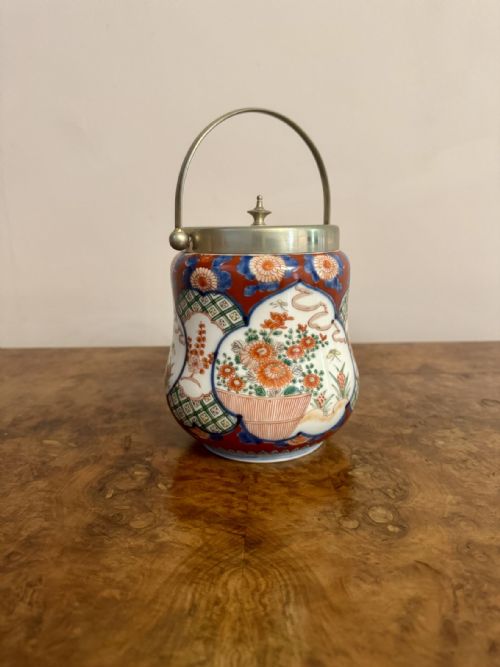
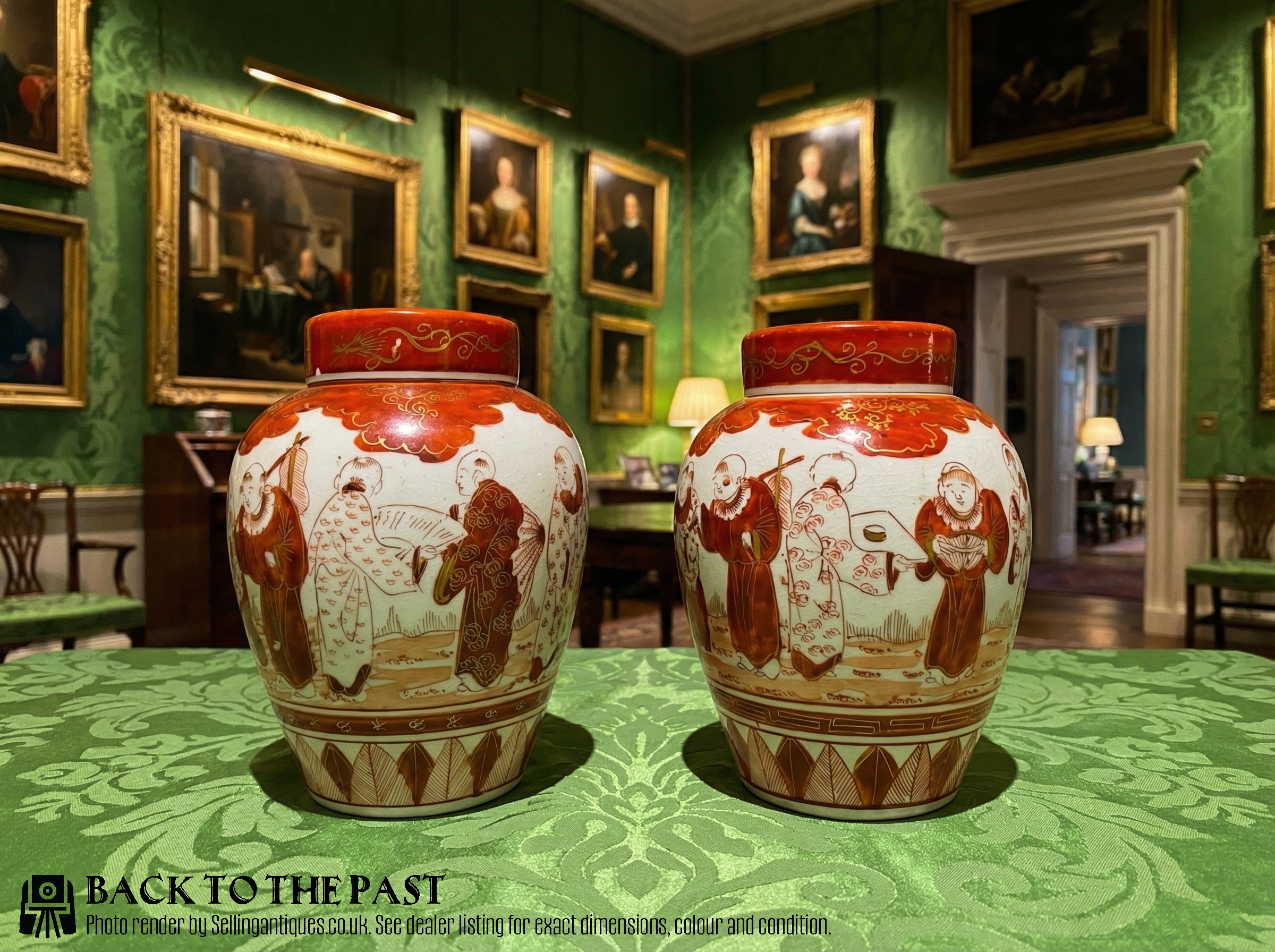
When you search for japanese porcelain lidded jars, you encounter vessels created for domestic use and export during the Edo, Meiji, and later periods. These forms include ginger jars, baluster vases with covers, and biscuit barrels designed to hold dry goods or display intricate patterns.
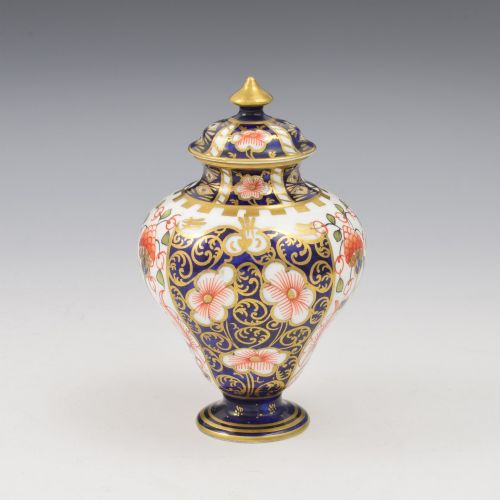
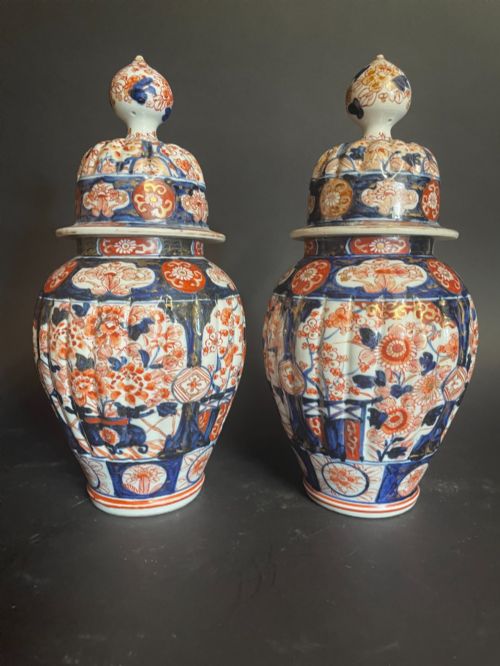
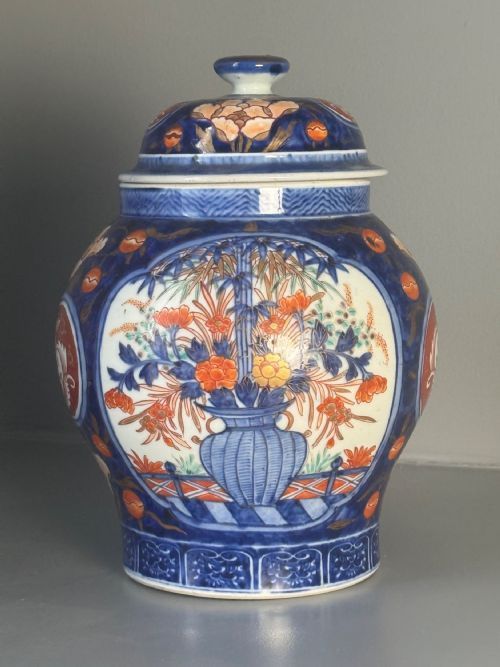
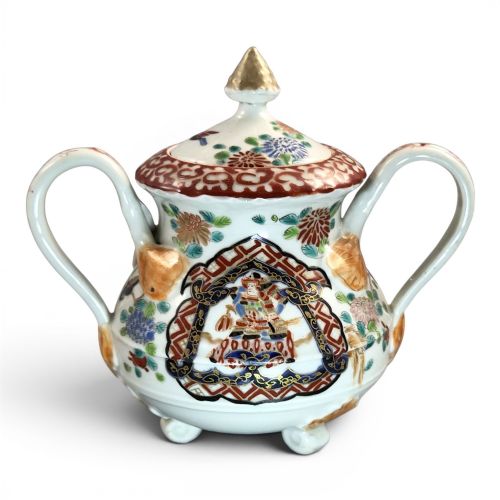
The pieces on this page are predominantly finished in the classic Imari palette, combining deep cobalt blue with iron red and gilt highlights. You also find Satsuma earthenware and Kutani styles represented among the lidded vessels.
Originating largely from kilns in Arita and Kyoto, these covered pots reflect centuries of ceramic tradition adapted for international tastes. Collectors seek them for their bold ornamentation and historical connection to Japanese export history.
How they were made
Potters shaped fine clay or porcelain bodies on the wheel, applying underglaze cobalt blue before the initial firing. Artisans then added overglaze enamels in red, green, and other colours, followed by gold leaf or gilding in subsequent low-temperature firings.
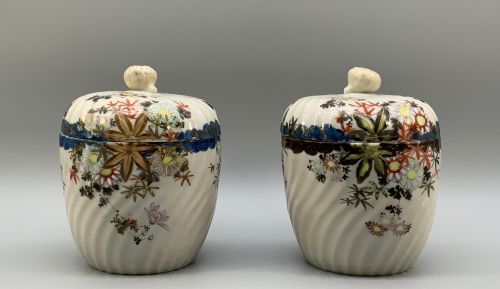
Satsuma pieces utilised an earthenware body covered in a finely crackled ivory glaze, painted by hand with detailed figural scenes and enamel decoration. Arita workshops focused on porcelain durability, creating crisp white surfaces that contrasted with dense cobalt and iron red geometric panels.
The selection includes Arita productions alongside Satsuma and Kutani decorative styles.
What varies in quality
The precision of the brushwork defines the upper tier of these vessels, where intricate floral panels and samurai figures show clean lines without blurring. Lower quality items often feature rushed, repetitive stencil work or muddy enamel application that obscures the underlying porcelain.
The crispness of the porcelain body and the preservation of the gold leaf or gilding set the finer examples apart from heavily worn pieces. Intact, original covers that match the exact glaze and palette of the base jar also elevate the standing of the piece.
Fukagawa·Shozan
The Japanese Porcelain Lidded Jars Glossary
- Imari
- A style of Japanese export porcelain characterised by a palette of underglaze blue, iron red, and gilt overglaze highlights. These wares were produced primarily in Arita from the Edo period onward.
- Satsuma
- A type of Japanese earthenware featuring a pale, crackled ivory glaze decorated with polychrome enamels and gold. Kyoto studios produced many of the finest decorative examples during the Meiji period.
- Kutani
- Japanese ceramics known for bold, pictorial designs often dominated by greens, blues, yellows, and purples. These wares originated in Ishikawa prefecture and gained popularity in the nineteenth century.
- Koro
- A traditional Japanese incense burner fitted with a pierced lid for releasing fragrance. They frequently share forms with lidded jars and vases.
- Baluster
- A vertical architectural form with a swollen lower portion tapering toward the top, commonly seen in the profile of ginger jars and covered vases.
Japanese Porcelain Lidded Jars: Frequently Asked Questions
What were Japanese lidded jars used for?
These vessels originally served practical functions such as storing spices, tea, or ginger in domestic settings. Export versions were also displayed on mantelpieces and tables purely for decorative effect.
Over time, larger covered jars became status symbols in European and Japanese interiors alike. Their lids helped protect sensitive contents from moisture and dust.
How do I date a Japanese lidded jar?
Dating relies on examining the potting technique, glaze characteristics, and stylistic markers associated with the Edo and Meiji periods. Nineteenth-century pieces often display brighter overglaze enamels and denser decorative programmes than earlier works.
Porter marks or studio signatures stamped on the base can provide further chronological context. Comparing the weight and clay body to documented pieces helps narrow the production era.
How do I care for antique porcelain?
Dust these pieces gently with a soft, dry cloth to prevent the accumulation of dirt in recessed areas or crackle glazes. Avoid using chemical cleaners or submerging gilded items in water.
Display them away from direct sunlight and areas subject to sudden temperature shifts to protect fragile enamel and gold leaf. Ensure the lids rest securely on stable surfaces to prevent accidental drops.
What is the difference between Imari and Satsuma?
Imari ware utilises a true porcelain body with a resonant ring, decorated primarily in cobalt blue and iron red with gold. Satsuma ware uses a porous earthenware body covered in a distinctively crackled cream glaze.
Satsuma pieces rely heavily on dense polychrome figures and elaborate floral motifs painted over the glaze. Imari designs lean toward geometric panel patterns, florals, and landscapes.