


Japanese Porcelain Fruit Bowl
A Japanese porcelain fruit bowl brings rich cobalt blue and iron red decoration to a table, offering centuries of ceramic artistry.
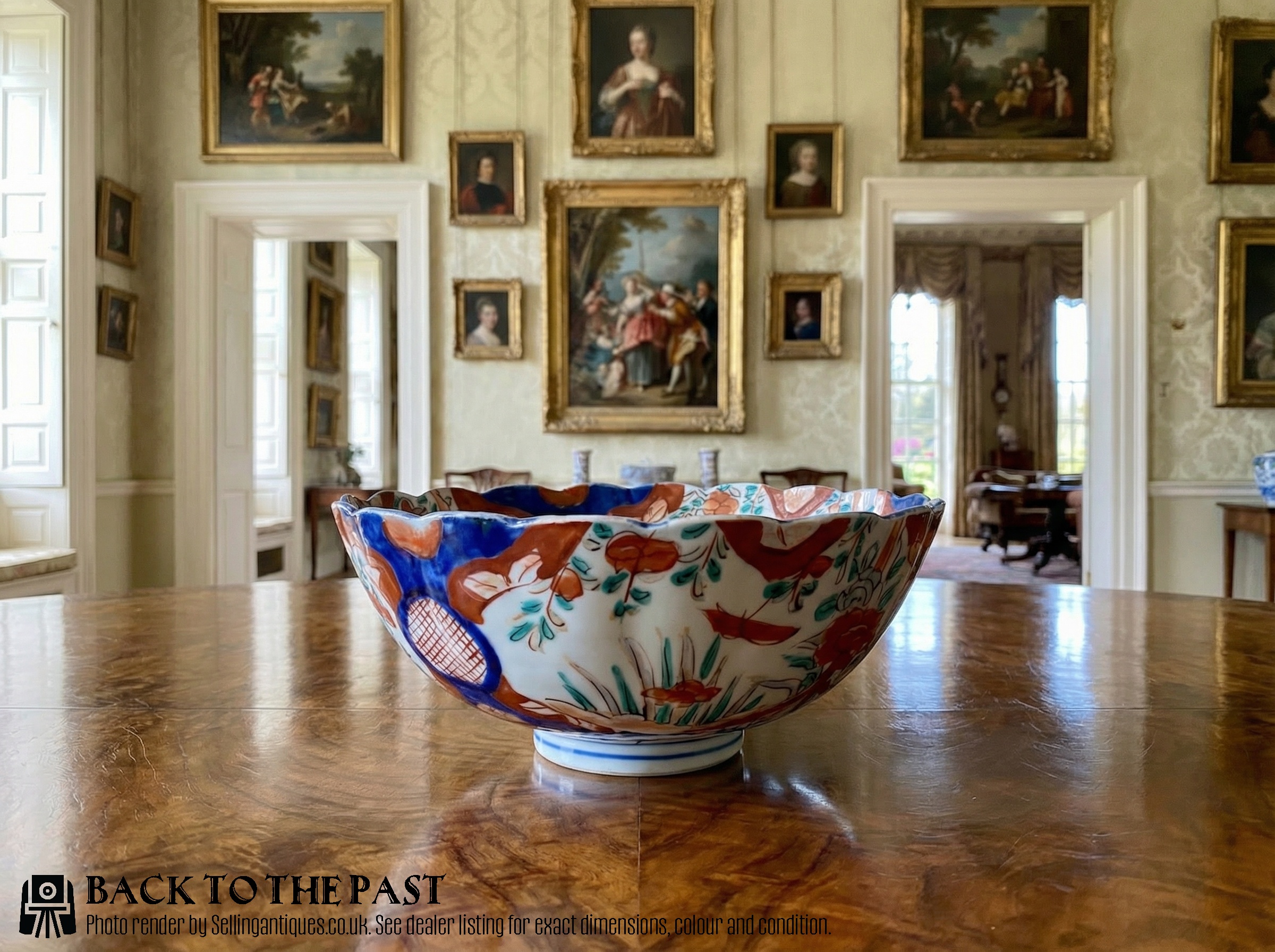
Japanese Porcelain Fruit Bowl
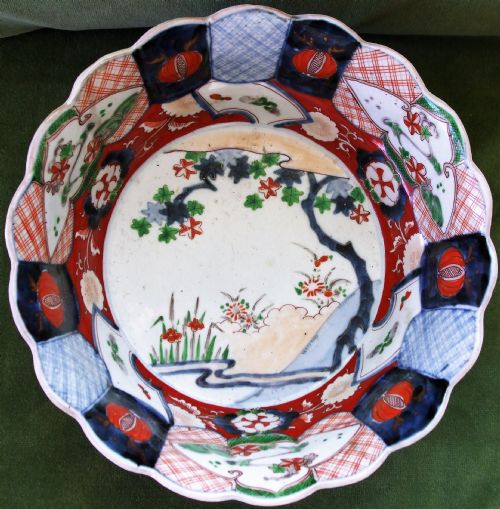
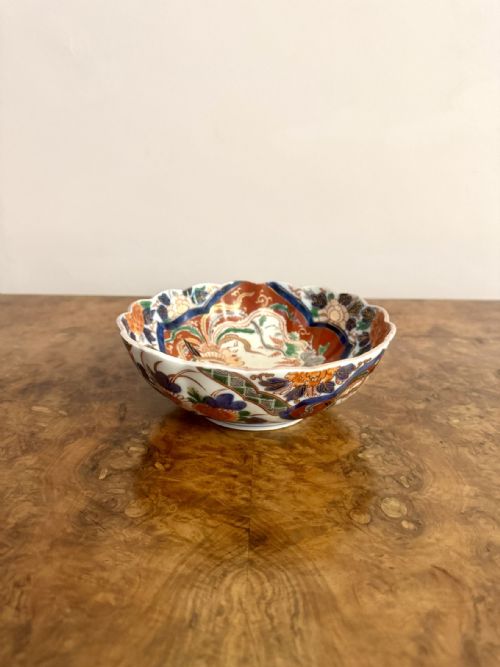
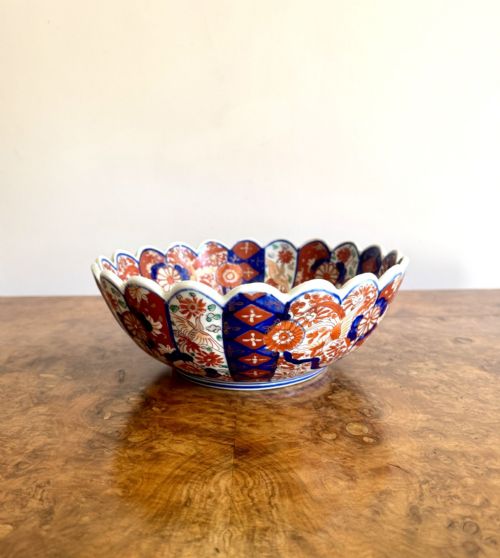
When you search for a japanese porcelain fruit bowl, you are looking at decorative vessels shaped during the Meiji period and the nineteenth century. These pieces emerge predominantly in Japanese Imari styles, characterised by scalloped or fluted edges and rich palettes.
You are most likely to meet circular forms designed as centrepieces, featuring traditional hand-painted motifs executed in porcelain. The listings on this page span the late nineteenth century and around nineteen hundred, capturing a distinct era of export ceramics.
How they were made
The makers formed these vessels from porcelain, applying cobalt blue underglaze and enamel pigments to create intricate surface patterns. Many examples incorporate gold leaf or gilt highlights, adding metallic richness to the fired ceramic body.
Kiln techniques of the Meiji period allowed for controlled high-temperature firing, resulting in durable bowls with refined glazes. Artisans shaped scalloped edges by hand before glazing, giving individual pieces their characteristic outline.
Every scalloped edge was shaped by hand before firing, meaning no two bowls share the exact same wave.
What varies in quality
Quality rests upon the precision of the hand-painted brushwork and the clarity of the cobalt blue beneath the glaze. Finer vessels display crisp delineation in their Imari patterns without blurring or running of the colours.
The weight and balance of the porcelain body, alongside the sparing or lavish use of gold leaf, distinguish standard production wares from superior examples. Better pieces maintain structural symmetry across fluted and scalloped rims.
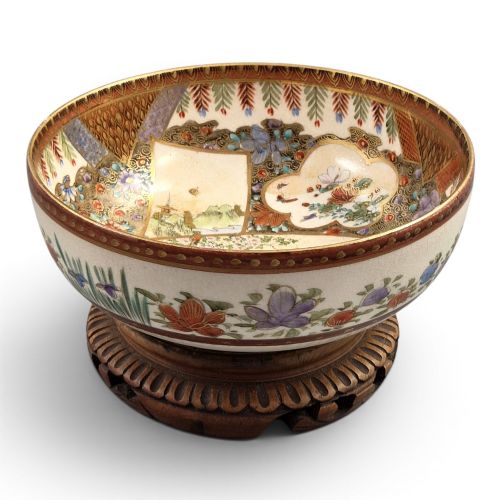
Kozan
The Japanese Porcelain Fruit Bowl Glossary
- Imari
- A style of Japanese export porcelain originating from the town of Arita, traditionally decorated in underglaze blue, iron red, and gold. This palette defines the vast majority of bowls found on this page.
- Meiji Period
- The era in Japanese history lasting from eighteen sixty-eight to nineteen twelve, associated with the opening of trade and a surge in export ceramics. Pieces from this time often feature elaborate decorative schemes.
- Scallop Edge
- A rim shaped into a series of continuous curves resembling a scallop shell, frequently utilised on decorative bowls. This contour adds movement to the silhouette of the piece.
- Cobalt Blue
- A deep blue mineral pigment used beneath the glaze to create permanent underglaze decoration on porcelain. It forms the structural foundation of traditional Imari patterns.
- Gilt
- A thin layer of gold applied to the surface of the ceramic to accent specific details within the painted design. It catches the light and complements the iron red pigments.
Japanese Porcelain Fruit Bowl: Frequently Asked Questions
How do I date a Japanese porcelain fruit bowl?
Dating relies on stylistic markers associated with the Meiji period and the nineteenth century, alongside the character of the glaze and pigments. Pieces from around nineteen hundred often exhibit specific export traits distinct from earlier Edo traditions.
Examining the foot ring and the manner of cobalt blue application also helps determine the chronological placement of the vessel.
Can I use these bowls for serving fruit?
While these decorative bowls were historically produced for display and export, they are constructed from durable porcelain. Many buyers continue to utilise them as table centrepieces for holding fruit.
Care should be taken with pieces featuring extensive gold leaf or enamel work to preserve the surface decoration.
What defines the Imari style?
Imari porcelain is characterised by a strong palette of cobalt blue and iron red, frequently augmented with gold leaf. The designs typically feature complex floral and geometric panels arranged symmetrically.
This aesthetic developed in Arita and became immensely popular throughout the nineteenth century for European export.
How should I display a scalloped bowl?
A scalloped edge bowl makes an effective centrepiece on a dining table or sideboard where the rim contour can be fully appreciated. Placing the piece away from direct sunlight protects the enamel and gilt highlights over time.
Allowing sufficient space around the bowl enhances the visibility of its detailed hand-painted panels.