



Japanese Landscape Porcelain
Japanese landscape porcelain brings hand-painted vistas of distant lakes, mountains, and traditional foliage directly into your room.
Japanese Landscape Porcelain
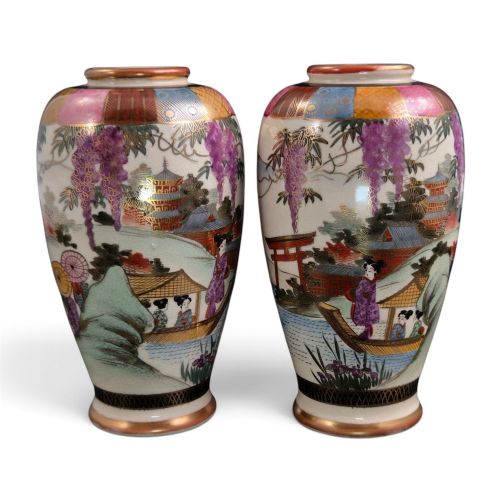
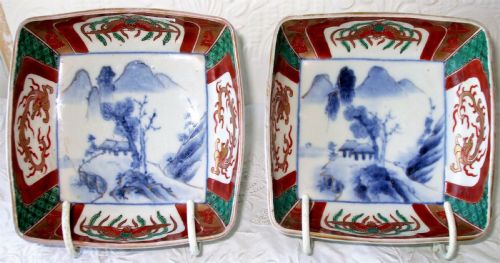
Japanese landscape porcelain encompasses delicate decorative items that showcase traditional scenery painted across plates, jars, bowls, and vases. When exploring Japanese landscape porcelain, you encounter vessels produced across multiple eras, including the Edo, Meiji, and Taisho periods.
The objects listed on this page range from large trumpet-shaped beaker vases and chargers to intricate Satsuma and Imari dishes. Most examples originate from the late nineteenth century and the early decades of the twentieth century, bringing distinctive Eastern motifs into domestic settings.
How Japanese landscape porcelain was made
Makers utilised fine porcelain, ceramic, and earthenware bodies as the foundation for their detailed scenes, shaping them into bowls, jars, and vases. Cobalt glaze provided the deep blue tones found in early pieces, while subsequent generations applied rich enamel and gold leaf highlights.
Artisans combined hand-thrown clay forms with meticulous brushwork, sometimes integrating intricate gilding to illuminate the depicted mountains and lakes. Kiln operators fired these pieces at high temperatures to set the vibrant mineral colours permanently into the glaze.
Japanese Landscape Porcelain Retail Price Guide 2026
Typical asking prices for japanese landscape porcelain among the pieces listed under this phrase on Sellingantiques today, from the lower quarter to the upper quarter. They describe what is for sale here now, not the wider market.
Early potters occasionally included hidden mountains so small you need a magnifying glass to hike them.
What varies in quality
Quality in these pieces is dictated by the precision of the brushwork and the complexity of the landscape composition rendered across the surface. Finer examples display deliberate control over enamel application and gilding, whereas simpler items rely on heavier, less refined decoration.
The reputation of the workshop or maker also influences the standing of a piece, with signed works demonstrating superior execution. Furthermore, the preservation of the delicate gold leaf and enamel pigments over decades marks the difference between average items and exceptional survivals.
Makuzu Kozan·Yamashu
The Japanese Landscape Porcelain Glossary
- Satsuma
- A type of earthenware with a fine crackle glaze, typically decorated with polychrome enamels and gold. It originated in Satsuma Province and became immensely popular during the Meiji period.
- Imari
- A traditional style of Japanese porcelain featuring a distinctive palette of underglaze blue and iron red, frequently accented with gold. These pieces were widely exported from the port of Imari.
- Kutani
- A style of Japanese coloured porcelain known for its bold designs and vibrant palette, often incorporating greens, blues, yellows, and purples. It frequently depicts pictorial scenes including landscapes and figures.
- Arita
- The birthplace of Japanese porcelain production, where skilled potters utilised local clay deposits. Arita wares include early blue and white designs created during the Edo period.
Japanese Landscape Porcelain: Frequently Asked Questions
What is Satsuma ware?
Satsuma ware is a distinct ceramic type featuring a characteristic ivory-coloured body covered in a fine network of crackled glaze. Artisans decorated these surfaces using intricate enamel paints and gold leaf.
These pieces were produced extensively for export during the nineteenth and early twentieth centuries. They often depict detailed figurative scenes, birds, flowers, and distant mountain landscapes.
How do I identify Imari porcelain?
Imari porcelain is readily identified by its striking palette, which traditionally combines underglaze cobalt blue with rust red and generous amounts of gold. The designs are often densely patterned with floral and landscape motifs.
This style emerged during the Edo period from the production centre around Arita. It remains one of the most recognisable forms of Japanese export ceramics.
Where were these pieces displayed?
These decorative vessels were primarily created to ornament domestic interiors, gracing mantelpieces, cabinets, and entrance halls. Large chargers and vases served as focal points within reception rooms.
During the Victorian and Edwardian eras, collecting such items became a fashionable pursuit. Homeowners used them to introduce exotic Eastern aesthetics into Western homes.
How do I date an antique vase?
Dating these ceramics involves examining the material body, the style of decoration, and any associated signatures or period marks. Meiji period pieces often reflect a high degree of pictorial detail and heavy gilding.
Earlier Edo period works, such as seventeenth-century Arita blue and white pieces, tend to display different potting techniques and simpler forms. Comparing the glaze characteristics helps establish the correct era.