




Japanese Lacquer Shelf
A japanese lacquer shelf brings intricate Meiji craftsmanship and polished timber surfaces into your room, offering both display space and historic character.
Japanese Lacquer Shelf
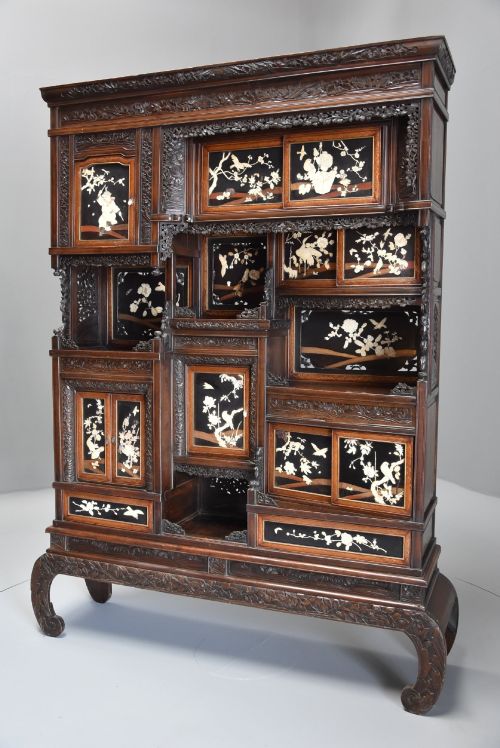
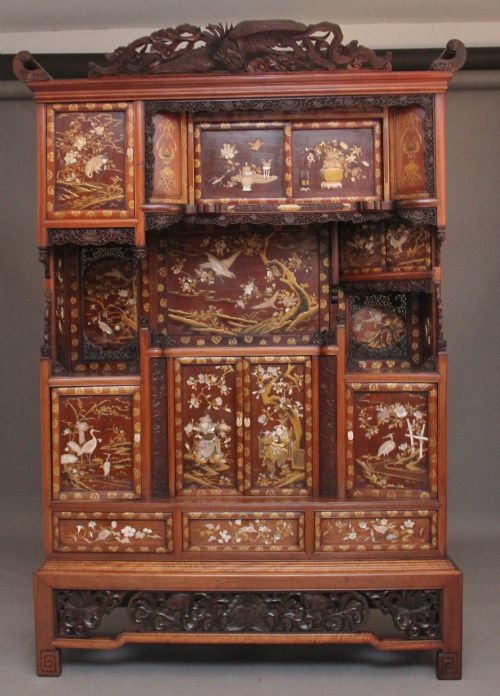
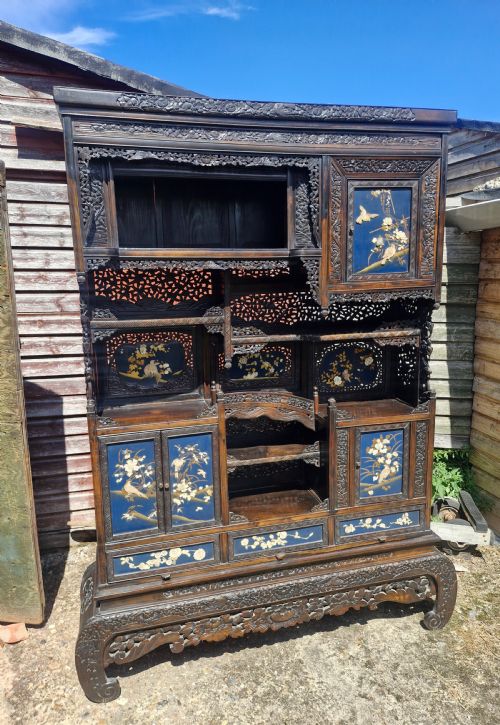
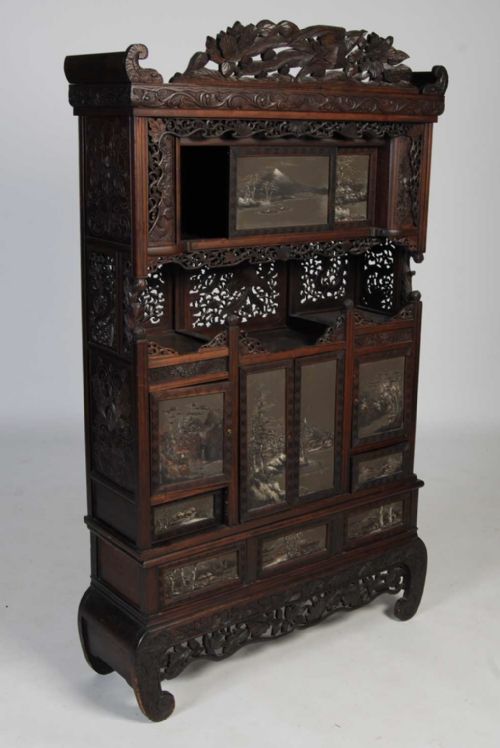
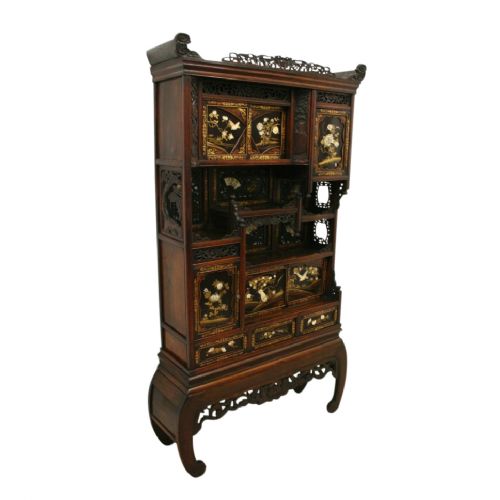
When you search for a japanese lacquer shelf, you encounter elaborate storage forms like the traditional shodana cabinet, alongside related display cabinets and side tables spanning the nineteenth and early twentieth centuries. These pieces combine dark polished wood and rich lacquer finishes to create striking focal points for any room.
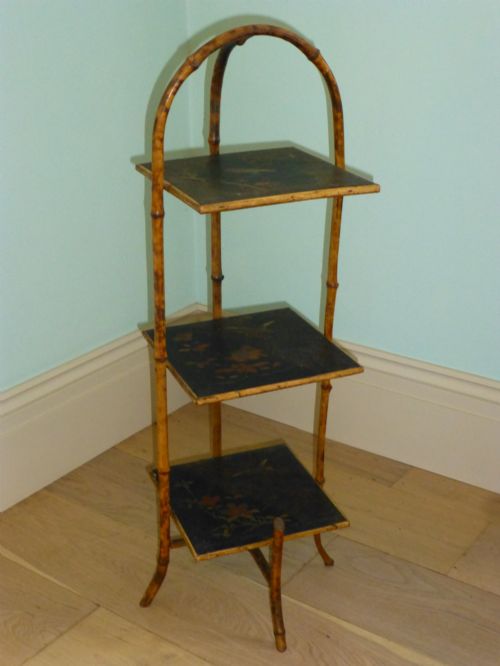
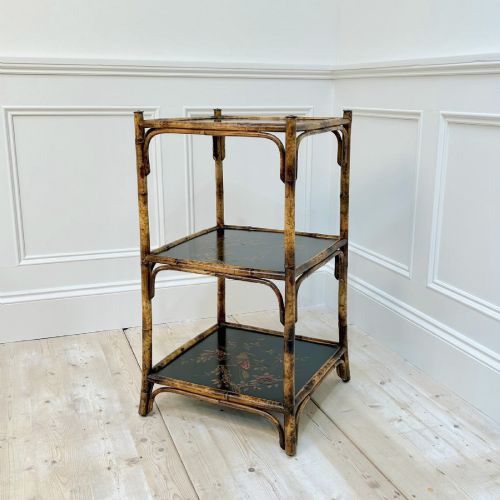
You are most likely to meet Meiji period shodana cabinets on this page, often featuring tiered shelving and compartment doors that showcase detailed craftsmanship. The selection also includes mirrors, mantel clocks, and bamboo side tables reflecting both Japanese aesthetics and British Chinoiserie tastes from the same eras.
How they were made
These items rely on solid hardwoods and lacquered wood as their primary structural base, finished to a high gloss or smooth sheen. Artisans applied successive layers of lacquer to seal and protect the timber while providing a deep, reflective surface.
Decoration often involved intricate inlays of mother-of-pearl and bone, set directly into the lacquer panels to depict floral or figurative scenes. Carved wooden elements and bamboo framing further define the construction methods seen across these nineteenth and early twentieth-century examples.
Japanese Lacquer Shelf Retail Price Guide 2026
Typical asking prices for japanese lacquer shelf among the pieces listed under this phrase on Sellingantiques today, from the lower quarter to the upper quarter. They describe what is for sale here now, not the wider market.
Even a mantel clock on this page manages to wear a coat of green Chinoiserie lacquer.
What varies in quality
Quality rests primarily in the precision of the lacquerwork and the complexity of the internal shelving arrangements within a shodana. Finer examples display smooth, even finishes across multiple tiers without the cracking or dullness that affect lesser pieces.
The sophistication of the inlays also separates standard storage from exceptional work. Pieces utilising finely cut mother-of-pearl and bone depict crisper details and tighter joints than simpler decorative items.
The Japanese Lacquer Shelf Glossary
- Shodana
- A Japanese display cabinet featuring asymmetrical shelving, sliding doors, and small compartments. These versatile storage units formed a centrepiece in many nineteenth-century interiors.
- Chinoiserie
- A European artistic style reflecting Chinese and broader Asian design motifs, popular during various revival periods including the early twentieth century. It often uses green or black painted lacquered grounds.
- Aesthetic Movement
- A late nineteenth-century British design movement that championed art for art's sake and drew heavy inspiration from Japanese artistic traditions. Furniture from this period frequently incorporates bamboo or ebonised wood.
Japanese Lacquer Shelf: Frequently Asked Questions
What is a shodana cabinet?
A shodana is a traditional Japanese cabinet designed with multiple tiers of asymmetrical shelves, small cupboards, and sliding panels. They served as elegant storage and display units for prized possessions.
Craftsmen built these pieces to showcase refined woodworking and decorative lacquer techniques. Today, they function well as focal storage furniture in living spaces.
How do I date a Japanese lacquer piece?
Dating relies on stylistic markers such as Meiji period characteristics, material choices like bamboo or specific hardwoods, and construction techniques. Nineteenth-century examples often display hand-carving and detailed mother-of-pearl inlay.
Examining the underlying wood and the wear patterns of the lacquer finish helps confirm the age of the item. Comparing specific forms against documented nineteenth and early twentieth-century pieces provides further clarity.
Where should I place a lacquer cabinet?
These cabinets suit living rooms, studies, or hallways where their detailed shelving and decorative surfaces can be appreciated. They require placement away from direct sunlight and extreme humidity to protect the delicate lacquer and inlay.
Pairing them with minimalist walls allows the intricate woodwork and polished finishes to stand out. Ensure the chosen spot provides a stable, level surface for heavier wooden frames.
What materials are used in these items?
The listings feature hardwood and lacquered wood foundations, often enhanced by glass panels or bamboo frames. Decorative elements commonly include mother-of-pearl and bone.
These materials combine to create contrasting textures between the smooth glossy lacquer and the matte or carved inlays. Each component contributes to the overall durability and visual depth of the piece.