




Japanese High Relief Metalwork
Japanese high relief metalwork brings tangible depth to your collection through raised birds, florals, and dragons cast in bronze, copper, and silver.
Japanese High Relief Metalwork
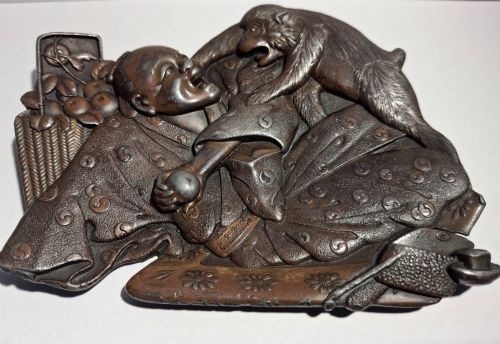
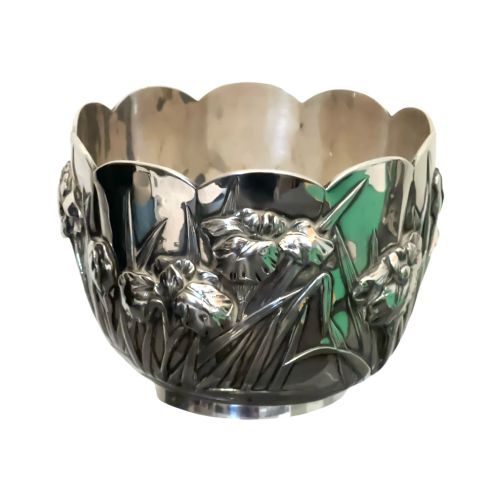
When you search for japanese high relief metalwork, you encounter dimensional decorative objects including vases, bowls, trinket dishes, and sword guards. These pieces emerge predominantly from the Meiji period and the wider nineteenth century, capturing a high point of craftsmanship.
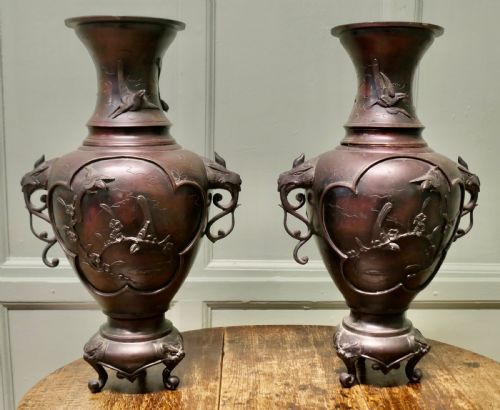
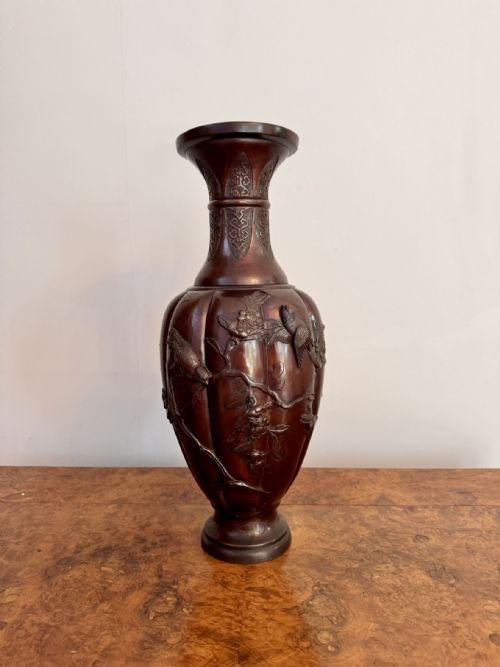
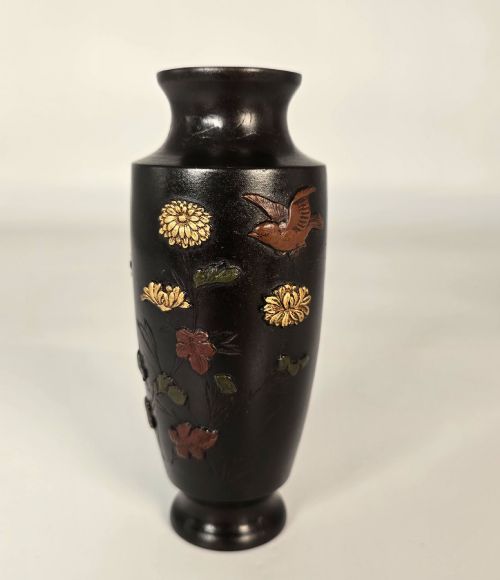
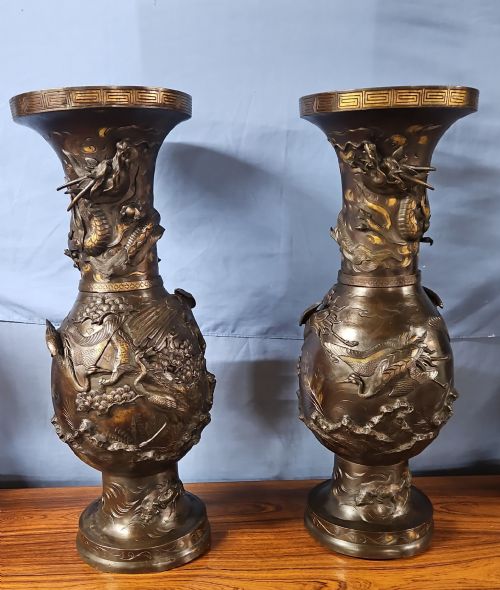
The form most frequently met on this page is the bronze vase, often found as large pairs decorated with raised botanical and avian motifs. You will also discover smaller posy vases, enamel-accented vessels, and ashtrays utilising metal appliqué techniques.
Origins trace back through the Meiji and Edo periods, reflecting traditional metalworking techniques adapted for both domestic display and international export. The aesthetic ranges from floral urns to functional items carrying intricate raised ornamentation.
What Varies in Quality
The distinction between ordinary and exceptional work lies in the crispness and depth of the raised metal elements. Superior pieces demonstrate meticulous detailing in the feathers, petals, and scales of the subjects, bringing genuine animation to the surface.
Subtlety in patination and the skillful integration of mixed metals and gold inlay separate high-tier examples from simpler casts. Maker signatures, such as work by Genryusai Seiya, further distinguish the finest items in this category.
Japanese High Relief Metalwork Retail Price Guide 2026
Typical asking prices for japanese high relief metalwork among the pieces listed under this phrase on Sellingantiques today, from the lower quarter to the upper quarter. They describe what is for sale here now, not the wider market.
Dragons peer out from iron sword guards while tiny birds permanently perch on the rims of heavy bronze vases.
Genryusai Seiya
The Japanese High Relief Metalwork Glossary
- Meiji Period
- The era spanning from eighteen sixty-eight to nineteen twelve in Japan, noted for an explosion of accomplished metalwork and decorative arts destined for global markets.
- Takazōgan
- A Japanese metalworking technique involving high-relief inlay where decorative motifs project significantly from the base metal surface.
- Patinated Bronze
- Bronze treated with chemical solutions or heat to produce a stable, decorative coloured surface ranging from deep brown to black.
- Mixed Metals
- The practice of combining various metallic alloys, such as copper, silver, and bronze, within a single piece to create contrasting colour and texture.
Japanese High Relief Metalwork: Frequently Asked Questions
What is high relief metalwork?
High relief metalwork refers to decorative objects where the ornamentation projects boldly and substantially from the background surface. In Japanese antiques, this technique brings subjects like birds, dragons, and florals into three-dimensional prominence.
Artisans utilised bronze, iron, and mixed metals to cast and apply these raised motifs. The resulting pieces catch the light and offer a deeply tactile visual experience.
Were these vases used or displayed?
Large bronze vases and urns served primarily as decorative display pieces within grand Victorian interiors, reflecting a strong Western appetite for Japanese art. Their substantial scale made them focal points in reception rooms and parlours.
Smaller vessels, such as posy vases and trinket dishes, held practical functions while maintaining intricate aesthetic standards. Sword guards, or tsuba, served a defensive purpose before evolving into highly artistic collector items.
How should I clean bronze and patinated metal?
Bronze and patinated metal surfaces require very gentle maintenance to preserve their historic finishes. Dusting with a dry, soft cloth is usually sufficient for regular upkeep.
Avoid commercial metal polishes, water, or abrasive cleaners, as these can strip away the intentional patination and valuable historical surface colour. Preserving the original finish ensures the integrity of the piece remains intact.