



Japanese Flower Vase
A japanese flower vase brings organic line and meticulous metalwork or ceramics into a room, spanning the Meiji period to the early twentieth century.
Japanese Flower Vase
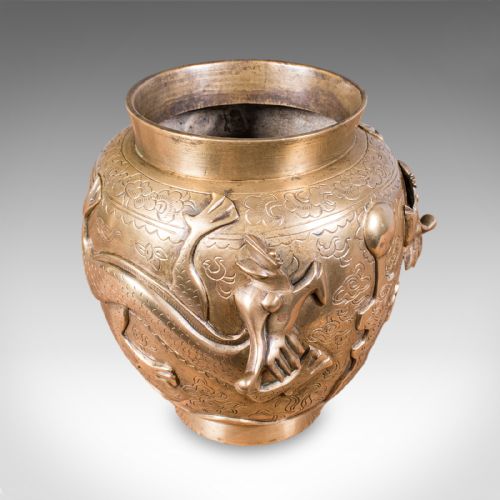
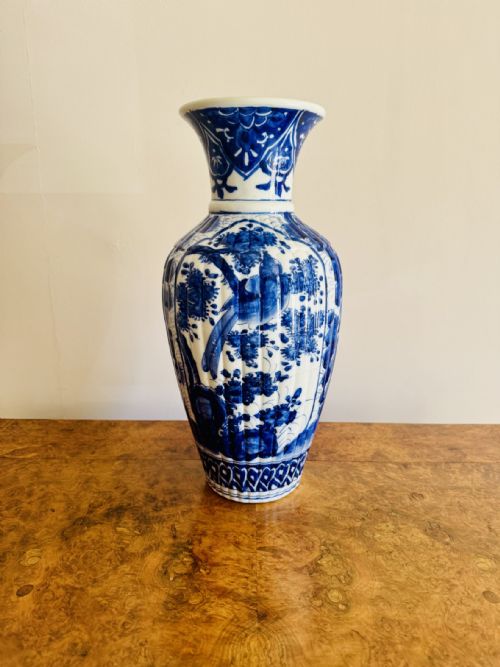
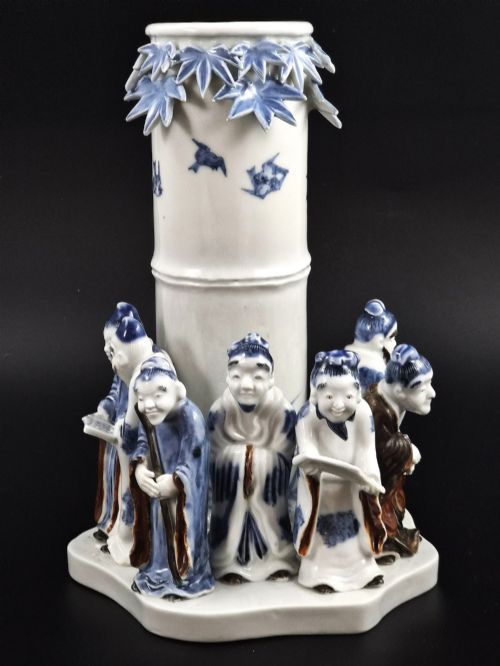
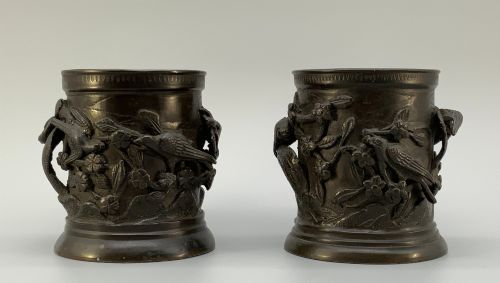
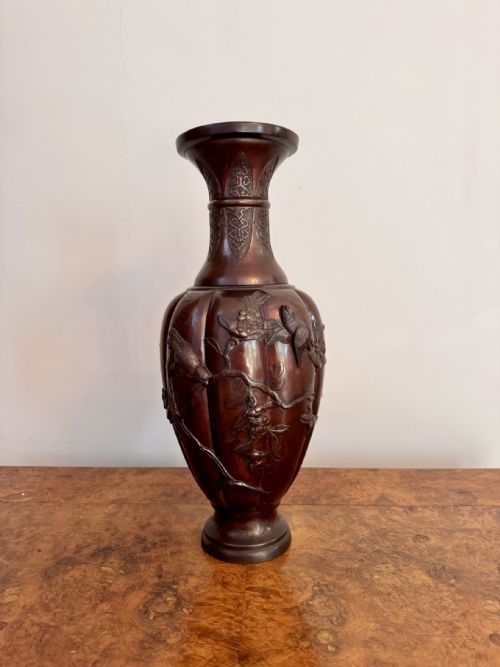
When you search for a japanese flower vase, you encounter a range of forms from tall bronze baluster urns and hexagonal Imari vessels to woven bamboo baskets and earthenware jardinieres. The pieces appearing here predominantly date from the late nineteenth century through to the early decades of the twentieth century, reflecting the output of the Meiji and Taisho periods.
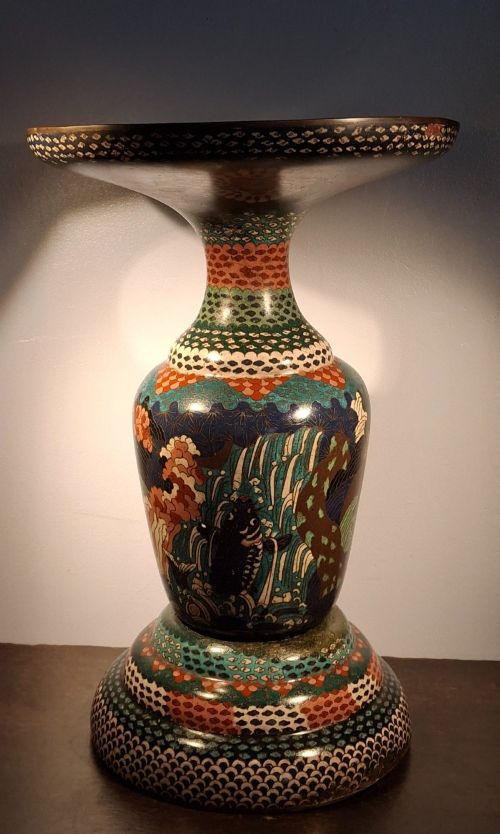
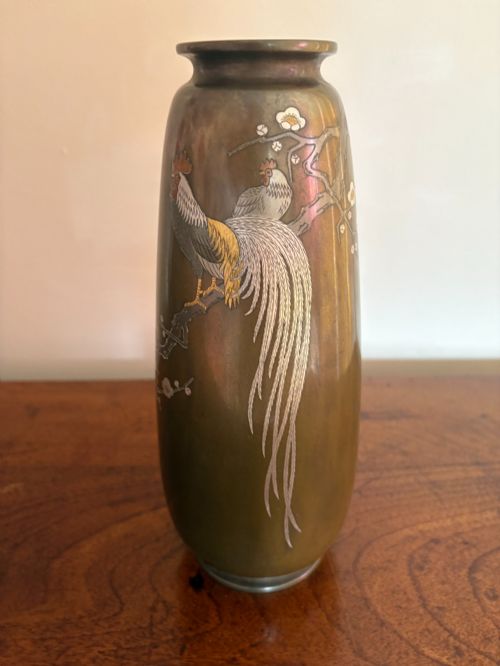
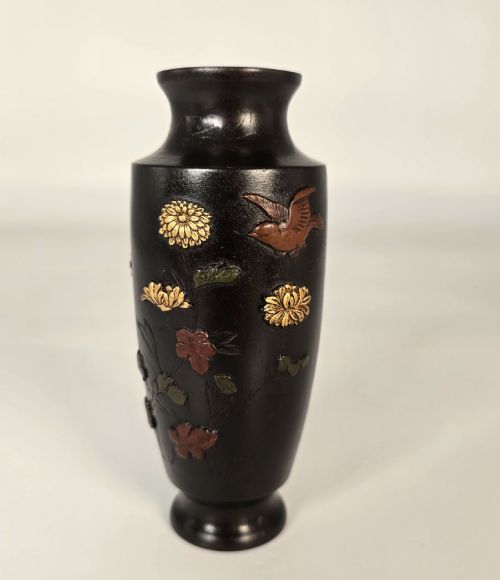
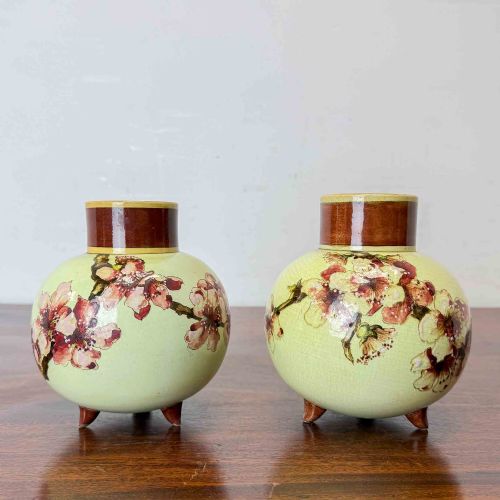
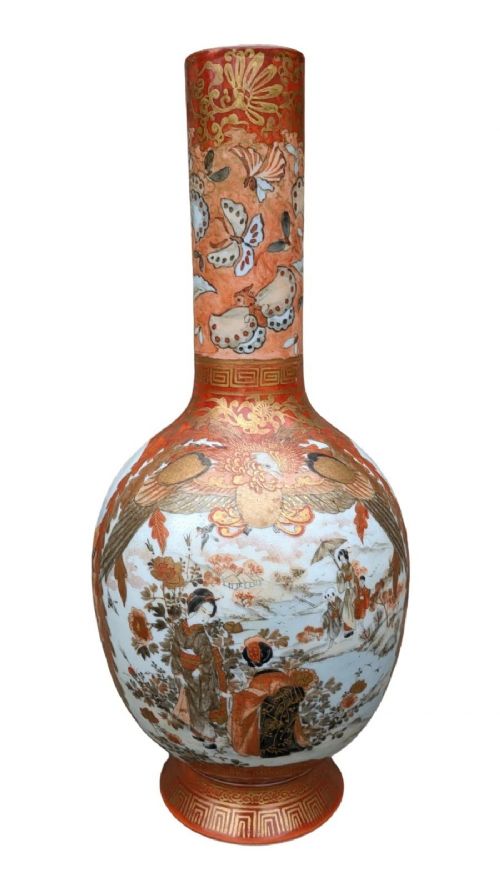
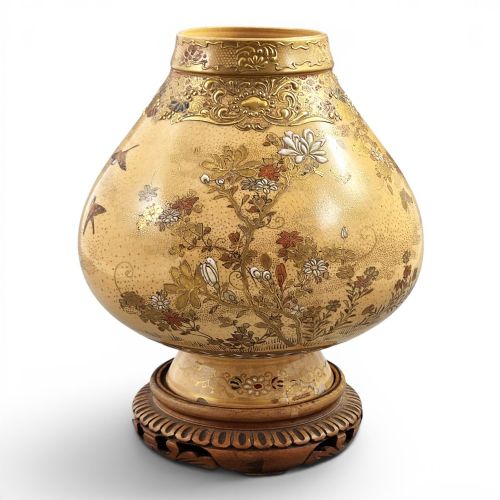
Metal vessels in patinated bronze and copper dominate the selection, often enriched with mixed metal floral and bird motifs or silver wire cloisonne enamel. Alongside these metal forms, ceramic options include Satsuma earthenware, Kutani porcelain, and stoneware, frequently decorated with samurai scenes or intricate flowerheads.
How they were made
Bronze and copper pieces rely on casting and patination, frequently incorporating mixed metal applications where silver, gold leaf, and copper elements create raised detail on the surface. Cloisonne and ginbari red enamel utilise delicate silver wires to section the design before firing, revealing basse-taille translucent layers over textured metal grounds.
Ceramic examples employ porcelain, earthenware, and stoneware bodies shaped on the wheel or in moulds, then painted with iron red, blue, and enamel pigments. Woven bamboo and lacquered ox horn appear in basketry and specialised vessels, demonstrating organic construction alongside mineral arts.
Ox horn flower vases bring animal craft into the floral display, offering a tactile contrast to cold bronze and rigid porcelain.
What varies in quality
The distinction between standard commercial output and the finest work lies in the precision of the detailing, such as the fineness of silver wire in cloisonne work and the crispness of relief cast in bronze. Pieces bearing signatures from recognised makers or workshops demonstrate superior hand execution in their painted scenes and mixed metal inlays.
Overall harmony of form and surface treatment dictates the standing of a vessel, with balanced patination, intact enamel layers, and well-preserved gilding separating masterworks from simpler decorative items.
KANASAWA·Ando Jubei·Makuzu Kozan II·Kinkozan Workshop·Tamura Yukio
The Japanese Flower Vase Glossary
- Meiji Period
- The era in Japanese history spanning from 1868 to 1912, characterised by opening trade with the West and exceptional metalwork and ceramic production. Much of the decorative art traded internationally originates from this time.
- Cloisonne
- A technique where thin metal wires are soldered to a metal base to form compartments, which are then filled with enamel paste and fired. Silver wire cloisonne achieves remarkably delicate outlines.
- Satsuma
- A type of Japanese earthenware originating from Satsuma Province, featuring a crackle-glaze ivory body painted with polychrome enamels and gilding. Often depicts figures, landscapes, and floral arrangements.
- Imari
- Japanese porcelain produced in the town of Arita and exported through the port of Imari, traditionally decorated in underglaze blue and iron red with added gold. Patterns frequently incorporate floral and brocade motifs.
- Ikebana
- The traditional Japanese art of flower arrangement, which influences the asymmetrical and balanced forms of vases designed specifically to hold single stems or sparse botanical displays.
- Basse-Taille
- An enamelling technique in which the metal ground is carved or engraved with a low relief design, allowing light to pass through translucent enamel. This creates rich depth of colour across red enamel surfaces.
Japanese Flower Vase: Frequently Asked Questions
What is a japanese flower vase typically made from?
These vessels appear primarily in bronze, patinated copper, and mixed metals, alongside ceramic bodies such as porcelain, stoneware, and Satsuma earthenware. Selected examples incorporate organic materials including woven bamboo and lacquered ox horn.
Surface enrichment often involves silver wire cloisonne enamel, gold leaf application, and hand-painted polychrome pigments depicting birds, flowers, and historical scenes.
How do I identify a Meiji period piece?
Meiji period items date between 1868 and 1912, aligning with an era of significant craftsmanship expansion for international export. Look for characteristic signatures, finely detailed mixed metalwork, and precise silver wire cloisonne.
While some pieces carry workshop marks or signatures from notable artists, others rely on stylistic indicators like patinated bronze finishes and intricate floral or samurai iconography.
How were these vases used originally?
Many metal and ceramic vessels served as ornamental display pieces in both Japanese interiors and Western Victorian drawing rooms. Others functioned specifically within the Japanese art of flower arrangement, known as ikebana, holding sparse botanical compositions.
Basketry forms and smaller stem vases were constructed to accommodate seasonal flora, bringing natural elements into domestic spaces with deliberate asymmetry.
How do I care for antique bronze and cloisonne?
Bronze and patinated metal surfaces require minimal intervention, needing only gentle dusting with a soft, dry cloth to preserve their original finish. Avoid using chemical polishes that can strip the historic patina.
Cloisonne enamel should similarly be kept away from harsh cleaning agents and moisture to protect the delicate silver wires and coloured glass pastes from degradation.