




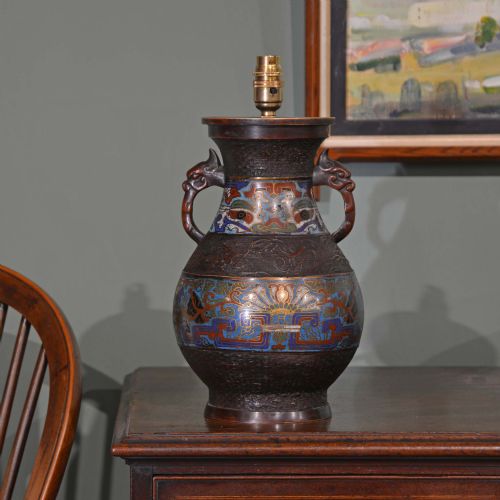

Japanese Enamel Table Light
A Japanese enamel table light brings striking colour and intricate metalwork to a room, combining Meiji period craftsmanship with practical illumination.
Japanese Enamel Table Light
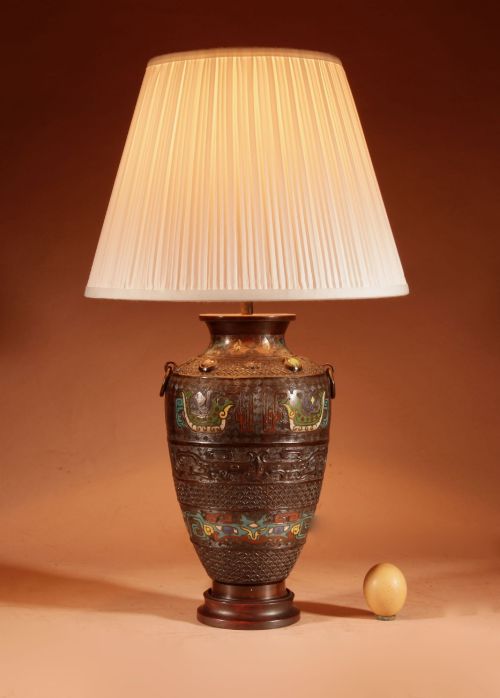
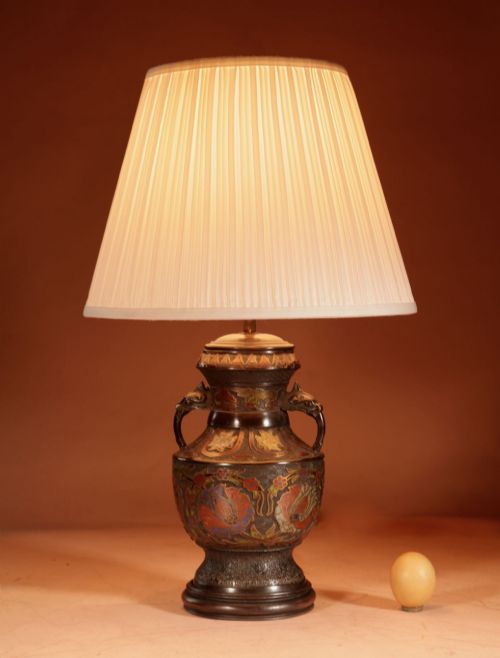
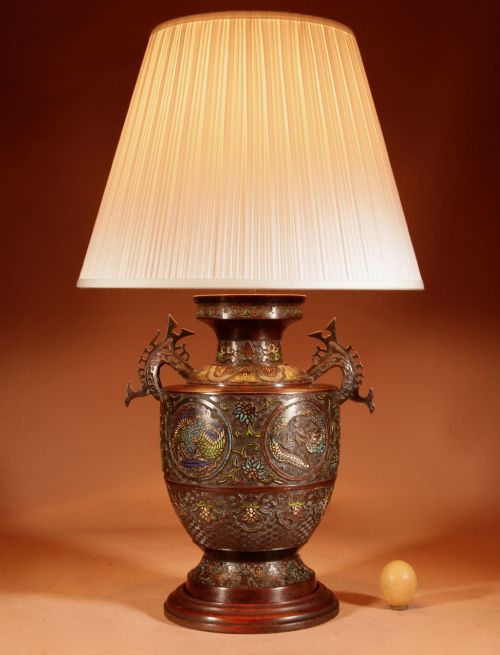
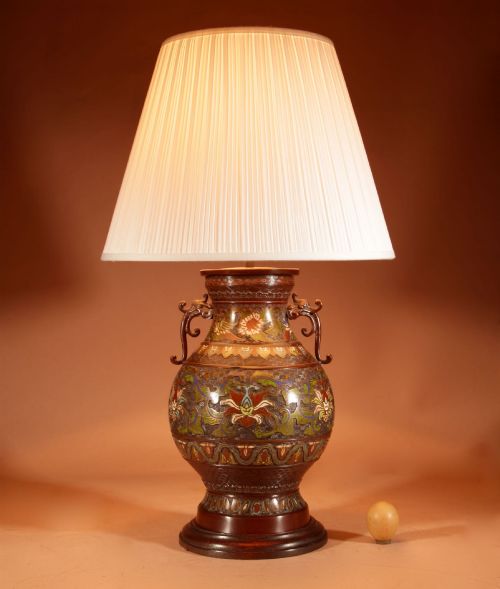
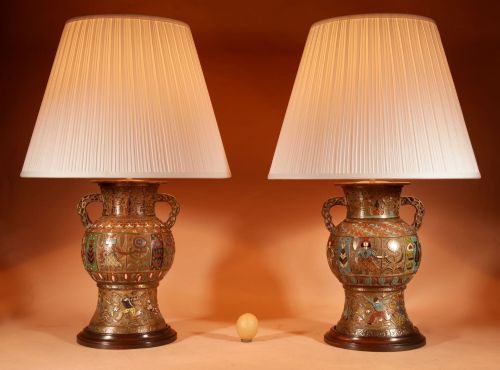
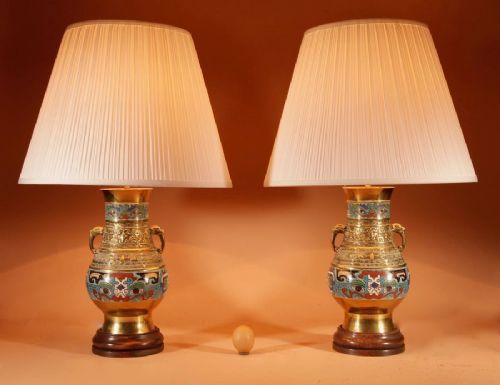
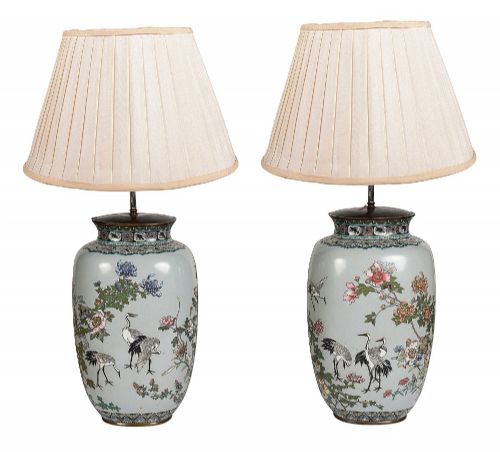
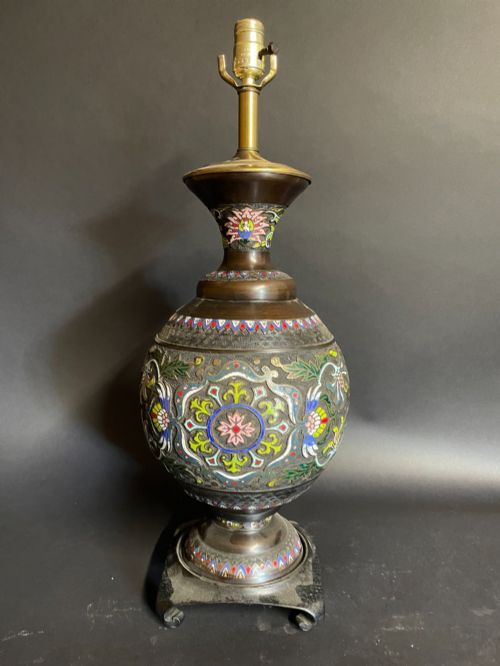
A Japanese enamel table light is a decorative lamp created from a base of bronze or brass, frequently incorporating transformed vases or dedicated lamp bodies. These pieces draw upon nineteenth century oriental design, emerging across periods from Victorian examples to the early twentieth century.
The buyer meets various forms on this page, predominantly featuring cloisonné enamel and champlevé enamel work. Many pieces reflect the Meiji period aesthetic, while others incorporate Chinoiserie elements or distinctive thematic motifs such as Egyptian interest designs.
How they were made
Craftsmen built these lamps using heavy metal foundations of bronze and brass, often pairing the metalwork with structural timber or fabric shades. The primary decorative technique involves applying enamel within metal cells, known as cloisonné, or within cast troughs, known as champlevé.
Makers fused vitreous enamels to the metal surfaces through firing, creating durable coloured patterns that complement the polished bronze and brass. The resulting bodies were subsequently wired or adapted to serve as functional table lights.
Japanese Enamel Table Light Retail Price Guide 2026
Typical asking prices for japanese enamel table light among the pieces listed under this phrase on Sellingantiques today, from the lower quarter to the upper quarter. They describe what is for sale here now, not the wider market.
Listings feature pieces spanning from eighteen eighty to nineteen ten, incorporating bronze, brass, fabric, and both cloisonné and champlevé enamel.
What varies in quality
The distinction between standard examples and the finest pieces lies in the precision and complexity of the enamel work. Superior lamps display intricate cloisonné wirework or deeply cast champlevé patterns with harmonious colour palettes across the bronze or brass body.
Scale and proportion also define the higher tier of the range, particularly with matched pairs that command attention through imposing dimensions. The crispness of the casting and the depth of the metal patination further separate average production from exceptional artistry.
The Japanese Enamel Table Light Glossary
- Cloisonné enamel
- A metalwork technique where thin wire is soldered to a bronze or brass base to create compartments filled with coloured enamel paste before firing.
- Champlevé enamel
- A method where troughs or cells are hollowed directly into the surface of a bronze object and filled with enamel prior to heating and polishing.
- Meiji Period
- The era in Japanese history spanning from eighteen sixty-eight to nineteen twelve, noted for decorative arts exported to Western markets.
- Chinoiserie
- A European stylistic tradition reflecting Chinese and broader East Asian artistic motifs, occasionally integrated into nineteenth century oriental decorative objects.
- Victorian
- The period of British history coinciding with the reign of Queen Victoria, frequently used to date imported decorative items found in nineteenth century interiors.
Japanese Enamel Table Light: Frequently Asked Questions
How do I date a Japanese bronze lamp?
Dating these lamps involves examining the style of the metalwork, the characteristics of the bronze or brass casting, and the specific type of enamel used. Pieces often align with the Meiji period or Victorian era.
Comparing the manufacturing techniques and decorative motifs helps place the lamp within the nineteenth or early twentieth century timeframe.
Where should I place a table light?
These lamps suit prominent locations where their detailed enamel work and bronze or brass bases can be fully appreciated. Placing them on side tables or living room surfaces allows the light to highlight the colourful patterns.
Because many examples possess substantial scale or come in matched pairs, they work effectively as balanced decorative focal points in a room.
What is the difference between cloisonne and champleve?
Cloisonné involves soldering thin metal wires onto a bronze or brass foundation to form distinct cells that hold the coloured enamel. This creates a detailed, compartmentalised surface pattern.
Champlevé relies on carving or casting troughs directly into the thick bronze body of the object to receive the enamel. The metal itself forms the raised boundaries between the coloured areas.