





Vintage Asian Bronze Lamp
These vintage asian bronze lamp examples bring heavy metal craftsmanship and rich decorative detail into a room.
Vintage Asian Bronze Lamp
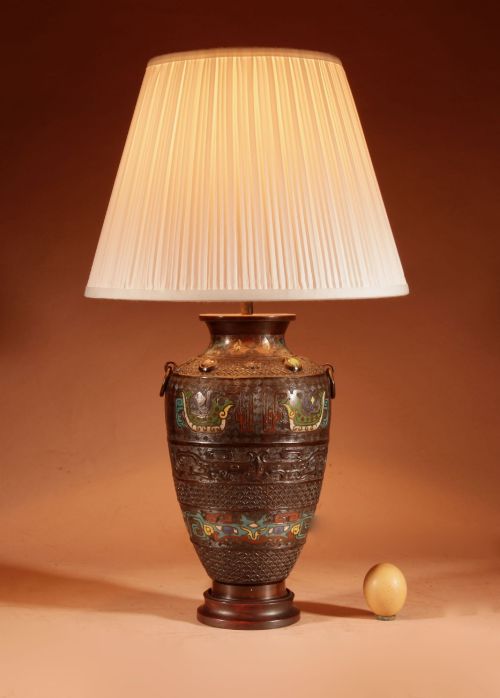
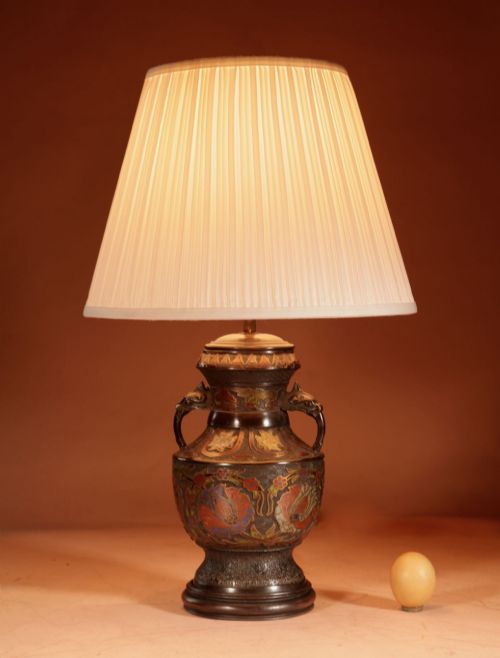
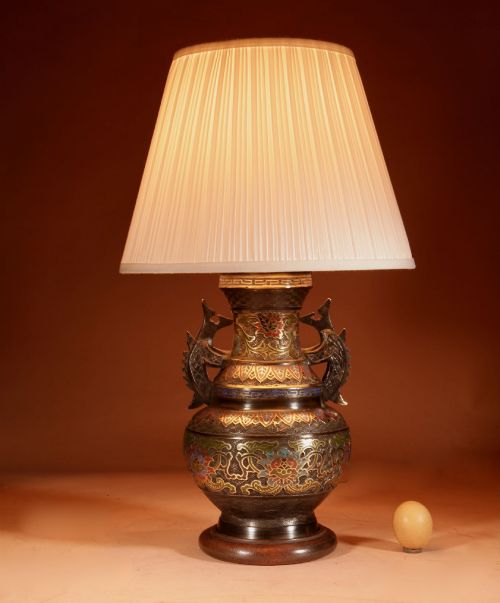
When you search for vintage asian bronze lamp items, you encounter heavy metal vessels and vases converted into domestic lighting. These pieces span the nineteenth century through the nineteen-thirties, reflecting diverse influences from Meiji period Japan and Chinese Qing dynasty aesthetics. Table lamps and oil lamp conversions dominate the selections available on this page.
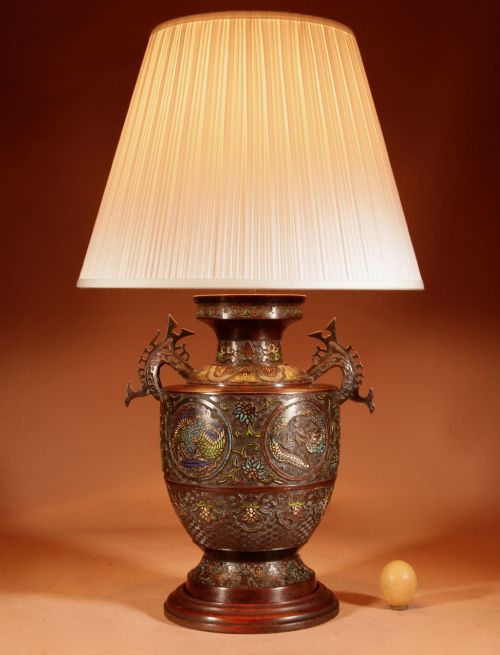
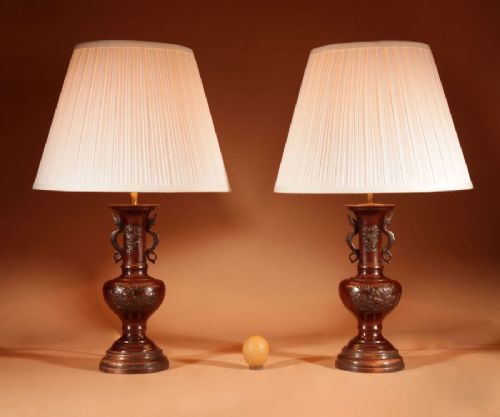
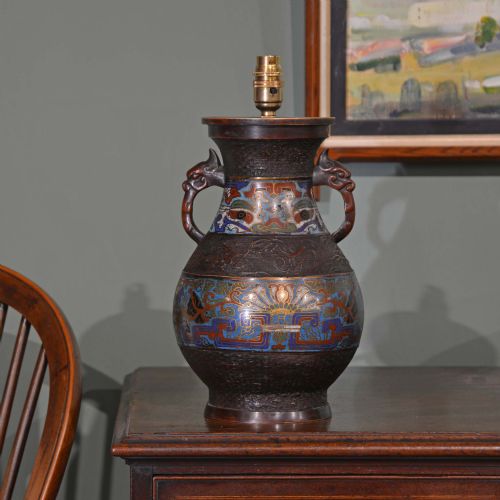
The aesthetic leans heavily toward decorative champlevé, cloisonné enamel work, and Satsuma earthenware. You find both single statement lights and matching pairs, often bearing intricate surface patterns and patinated metal surfaces developed over decades. These lighting pieces serve as focal points in traditional and eclectic interiors alike.
How they were made
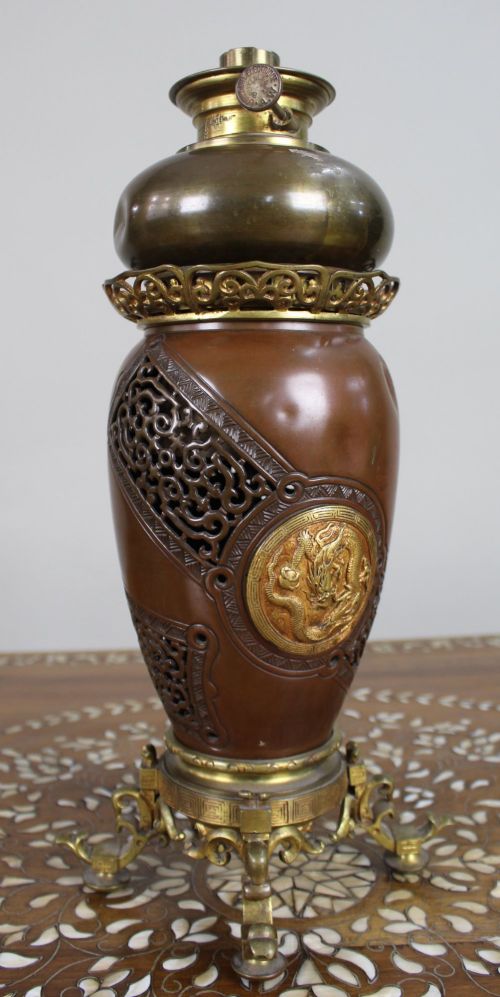
The foundation of a vintage asian bronze lamp is cast metal, frequently utilising gilt bronze or brass alongside standard bronze alloys. Artisans applied complex surface decoration using enamel techniques like champlevé and cloisonné, where recessed cells or wire partitions hold coloured glass pastes before firing.
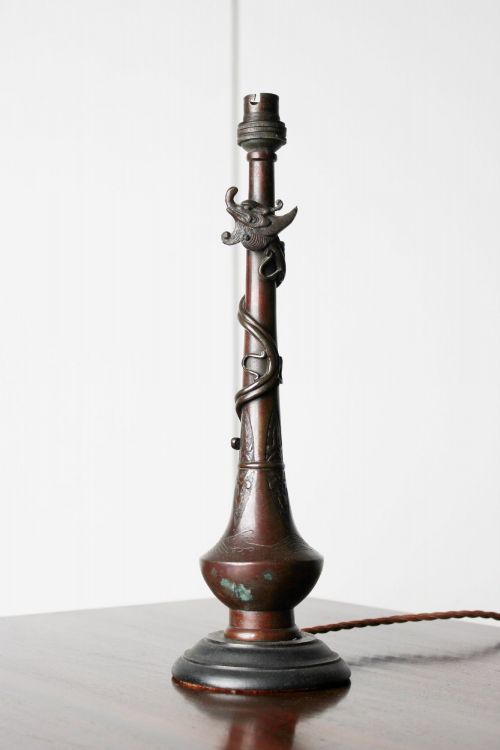
Many of these bodies started life as oil lamps, vases, or ceremonial vessels before undergoing later conversion into electric table lamps. Fabric and silk shades are often paired with these heavy bases to complete the lighting fixture.
Vintage Asian Bronze Lamp Retail Price Guide 2026
Typical asking prices for vintage asian bronze lamp among the pieces listed under this phrase on Sellingantiques today, from the lower quarter to the upper quarter. They describe what is for sale here now, not the wider market.
Several heavy bronze bases on this page started their long domestic careers burning oil before discovering electricity.
What varies in quality
Quality in a vintage asian bronze lamp rests upon the crispness of the bronze casting and the precision of the enamel work. Finer examples display deeply chased surface details and cleanly potted cloisonné wires that remain entirely intact without pitting or major enamel loss.
The weight of the metal and the integrity of the original patination distinguish superior pieces from simpler later adaptations. Pairs matching in size, colour palette, and decorative motif command greater attention than mismatched conversions.
The Vintage Asian Bronze Lamp Glossary
- Champlevé
- An enamelling technique where troughs or cells are carved into the bronze surface and filled with enamel powder before firing. This method creates bold linear patterns across the metal body.
- Cloisonné
- A technique featuring thin metal wires soldered to the bronze base to create compartments filled with enamel paste. The piece is then fired and polished to a smooth finish.
- Meiji Period
- The era in Japanese history spanning from eighteen sixty-eight to nineteen twelve, noted for exceptional metalwork and decorative arts destined for export. Pieces from this time show high technical mastery.
- Chinoiserie
- A European stylistic tradition reflecting Chinese artistic motifs and decorative themes. This style appears blended with Victorian and Edwardian manufacturing methods.
- Satsuma
- A type of Japanese earthenware featuring a pale, ivory-crackled glaze decorated with enamels and gilt. These ceramic bodies frequently appear mounted as lamp bases.
Vintage Asian Bronze Lamp: Frequently Asked Questions
What is a vintage asian bronze lamp?
A vintage asian bronze lamp is a lighting fixture constructed from or incorporating nineteenth or early twentieth-century metalwork originating in Japan or China. These items are typically created by mounting antique bronze, brass, or cloisonné vessels onto wired lamp bases.
They bring historical craftsmanship and textural depth into modern living spaces while retaining their original decorative character.
How do I date these lamps?
Dating relies on stylistic markers such as Meiji period motifs, Victorian brass fittings, or Edwardian wiring components. The specific manufacturing techniques used in the enamel and bronze casting also point toward specific decades.
Examining the base and interior hardware often reveals the timeline of when an original vessel was converted into a lamp.
Are these lamps sold as pairs?
Many listings feature matching pairs of lamps, which are particularly sought after for symmetry on sideboard tables or mantels. Single lamps also appear frequently as standalone accent pieces.
Pairs usually share identical enamel colourways, casting details, and overall height dimensions.
Where should I place a bronze lamp?
These lamps suit studies, living rooms, and hallways where their metallic patinas and detailed enamel work can catch ambient light. They anchor traditional library settings or add weight to eclectic modern rooms.
Pair them with silk or textured fabric shades to complement the rich tones of the bronze and enamel body.