



Orientalist Bronze Lighting
Orientalist bronze lighting brings atmospheric narrative and rich figurative detail into a room, offering a distinct departure from standard period fixtures.
Orientalist Bronze Lighting
Orientalist bronze lighting encompasses decorative table lamps, floor lamps, wall lights, candlesticks, and candelabra produced across the nineteenth and early twentieth centuries. These pieces draw heavily on Middle Eastern, North African, and East Asian aesthetic traditions, manifesting through complex figural designs and architectural motifs.
Buyers frequently encounter table lamps and candlesticks dating from the Victorian era up to the nineteen-twenties. Common stylistic expressions on this page include Meiji Period Japanese works, Moorish Revival forms, and continental interpretations of Arabic and Islamic subjects.
Materials and construction methods
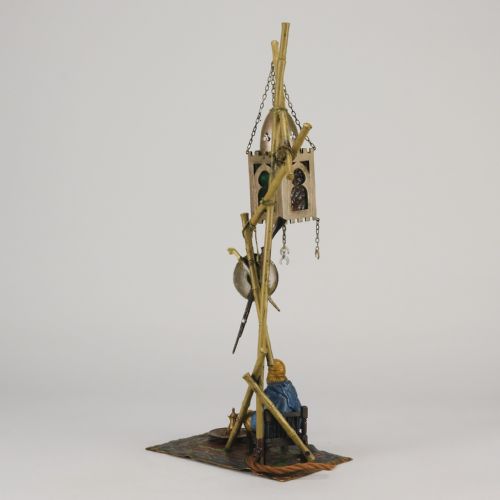
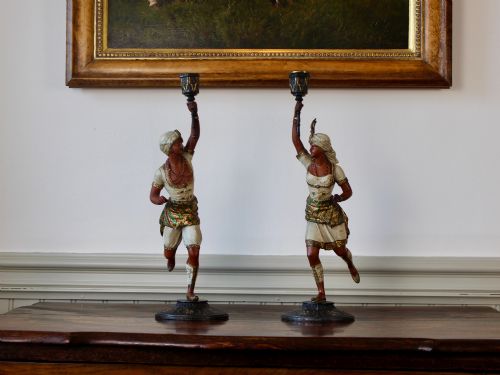
Items in this category rely primarily on bronze and spelter, often enhanced with cold-painted polychrome finishes that bring out the intricate details of robes, furnishings, and architectural elements. Artisans also utilised patinated white metal to achieve specific surface textures and tonal contrasts.
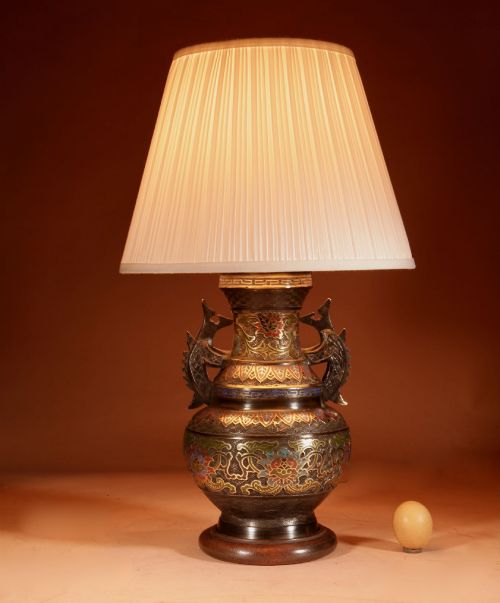
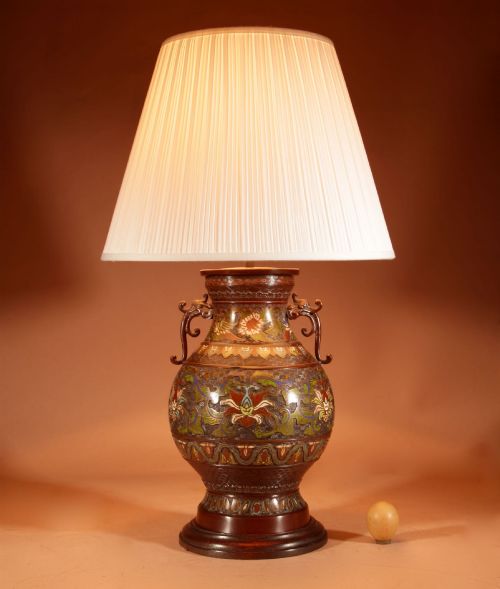
Colour and visual depth are frequently introduced through enamel and champlevé enamel work applied directly to the metallic body. Selected pieces incorporate fabric and glass components to diffuse light and complement the heavily ornamented metalwork.
Orientalist Bronze Lighting Retail Price Guide 2026
Typical asking prices for orientalist bronze lighting among the pieces listed under this phrase on Sellingantiques today, from the lower quarter to the upper quarter. They describe what is for sale here now, not the wider market.
Listings feature items spanning the nineteenth century through the nineteen-twenties, incorporating materials such as bronze, spelter, enamel, and glass.
Factors that distinguish quality
The integration of decorative techniques such as champlevé enamel also separates standard production from finer pieces. Workmanship that maintains clean enamel cells and harmonious colour palettes indicates a higher standard of manufacture.
Franz Bergman·Bruno Zach
The Orientalist Bronze Lighting Glossary
- Champlevé enamel
- A technique where troughs or cells are hollowed out of the metal surface and filled with vitreous enamel before firing. This method creates rich decorative patterns that contrast sharply with the surrounding bronze.
- Cold-painted bronze
- Bronze sculpture finished with oil- or paint-based pigments applied after casting without subsequent firing. Because the paint sits on the metal surface rather than fusing to it, careful handling is required to preserve the original finish.
- Spelter
- An alloy of zinc and copper often used as a less expensive alternative to bronze during the nineteenth and twentieth centuries. It accepts patination and paint well, allowing makers to achieve similar visual effects to heavier metal.
- Meiji Period
- The era in Japanese history spanning from eighteen sixty-eight to nineteen twelve, characterised by increased cultural exchange with the West. Works from this period heavily influenced European decorative arts and lighting design.
Orientalist Bronze Lighting: Frequently Asked Questions
What defines orientalist lighting?
Orientalist lighting consists of decorative fixtures created in Europe and Asia that incorporate Middle Eastern, North African, or East Asian motifs. These pieces often feature figurative sculptures, elaborate geometric patterns, and rich surface decoration.
They serve as both functional illumination and sculptural works of art, reflecting Western fascination with Eastern aesthetics during the nineteenth and early twentieth centuries.
How do I distinguish bronze from spelter?
Bronze is heavier, denser, and generally cooler to the touch than spelter, with a more sonorous ring when tapped gently. Spelter is a softer zinc alloy that often shows lighter weight and may reveal a greyish metal underneath worn paint.
Examining the underside or hidden areas can reveal the base metal composition, though original patination should not be disturbed.
Where should I place these lamps?
These decorative fixtures work effectively as focal points on sideboards, desks, or mantelpieces where their detailed casting can be appreciated up close. Wall lights and candelabra require placement that highlights their architectural and figural qualities without visual clutter.
Pairing them with appropriate bulb warmth enhances the cold-painted colours and enamel work characteristic of the style.
How do I care for cold-painted surfaces?
Cold-painted finishes require gentle dusting with a soft, dry cloth and protection from direct sunlight and moisture. Because the paint is applied without high-temperature firing, harsh cleaning agents or abrasive materials will cause immediate damage.
Maintaining a stable indoor climate helps preserve the integrity of both the metal substrate and the delicate painted details.