




Japanese Edo Period Netsuke
Japanese edo period netsuke are miniature toggles carved from wood, antler and bone, designed to secure small pouches and boxes to a traditional sash.
Japanese Edo Period Netsuke
Japanese edo period netsuke function as practical toggles, historically suspended from the kimono sash to anchor personal containers like inro, tobacco pouches and coin purses. These small sculptures translate mythological figures, animals and daily observations into three-dimensional miniature art.
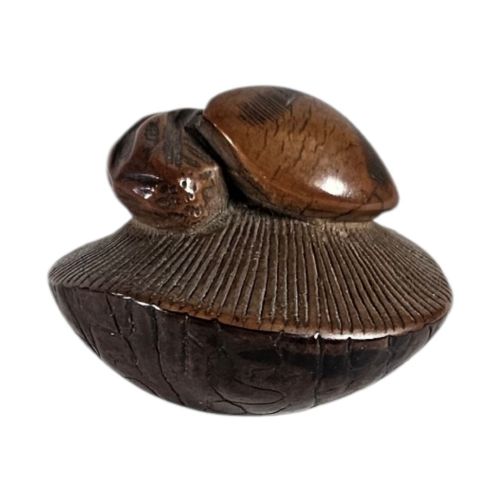
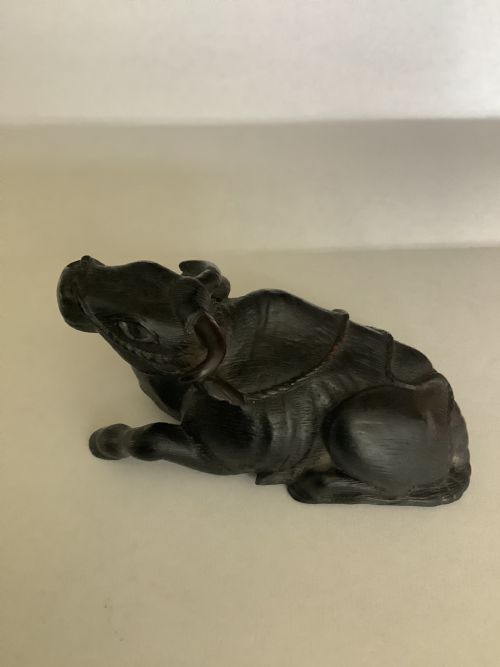
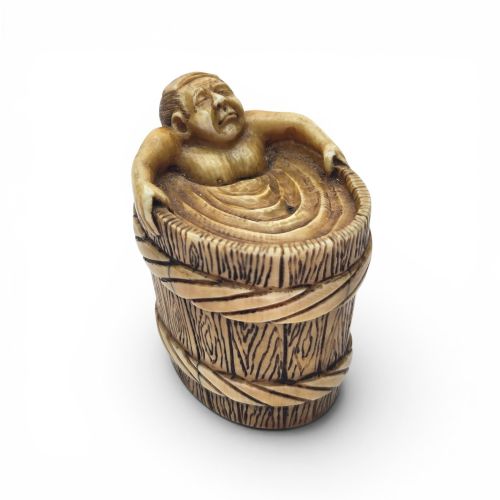
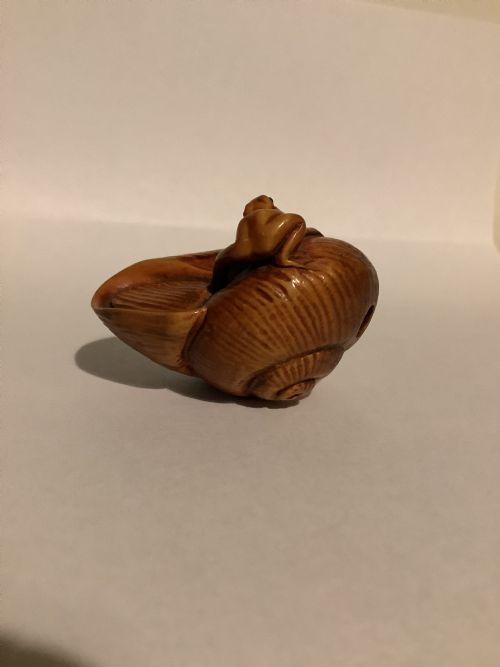
The selections available here range widely in form, from figural representations of wise men and balthers to natural studies of snails, frogs and clusters of nuts. Boxwood and carved wood examples dominate the current selection, accompanied by stag antler and champleve cloisonne enamel kagamibuta variations.
Originating primarily from the 19th century and the broader Edo to Meiji transition, these objects reflect the traditional craftsmanship of Japanese carvers. Collectors encounter both signed masterworks and unsigned utilitarian pieces that have survived from the period.
How they were made
Carvers utilise dense organic materials such as boxwood, stag antler, bone and cherry amber, selecting mediums that withstand constant friction against the sash. Artisans shape these substances using hand gouges and knives to achieve complex, tactile forms with smooth surfaces.
Surface ornamentation incorporates diverse techniques, including fine incision work, gold leaf, lacquer applications and champleve cloisonne enamel inserts. Makers integrate functional cord holes, known as himotoshi, directly into the composition without disrupting the exterior design.
Carvers frequently turned snails, frogs and curled cats into wearable art, proving that Edo period fashion had a wonderful sense of humour.
What varies in quality
Quality rests in the precision of the carving and the vitality of the subject, where skilled artists capture realistic textures in fur, shell and fabric. Finer examples display balanced proportions from every angle and maintain crisp details in facial expressions and naturalistic elements.
Signature placement often distinguishes workshop production, with legible signatures indicating individual carvers or documented schools. The condition of the material, the preservation of the original patina and the integration of the cord channels further separate standard pieces from masterworks.
Masayuki·Masatomo·Masatada·Kusai
The Japanese Edo Period Netsuke Glossary
- Netsuke
- A miniature toggle used in traditional Japanese dress to secure suspended pouches and containers to the sash. These objects evolved from simple functional items into highly decorated miniature sculptures.
- Manju
- A flat, circular netsuke shaped like a traditional Japanese sweet, frequently featuring carved decoration or metal inlay. They often take the form of kagamibuta with a metal disc fitted into a bowl.
- Himotoshi
- The cord holes carved into a netsuke through which the fastening cord passes to secure the container. Their placement is integrated carefully into the overall design of the sculpture.
- Inro
- A traditional multi-tiered case for carrying medicines or seals, suspended from the sash by a cord attached to a netsuke. These sets represent coordinated Japanese craftsmanship.
- Sashi
- A long, slender form of netsuke that slides vertically behind the sash rather than hanging beneath it. This style provides a secure anchor for heavier pipe cases and pouches.
Japanese Edo Period Netsuke: Frequently Asked Questions
What is a japanese edo period netsuke?
A Japanese edo period netsuke is a small carved toggle used historically to anchor personal containers to a traditional sash. These miniature sculptures combine utility with intricate artistic representation.
Carved from materials like boxwood and stag antler, they depict figures, animals and natural forms. Each piece functioned as part of daily dress in historical Japan.
How were netsuke used?
Netsuke served as counterweights for suspended pouches, pipe cases and medicine boxes tucked into the kimono sash. The cord ran from the container, through the netsuke, and secured the ensemble in place.
This system allowed individuals to carry personal items securely without pockets. The toggle remained visible on the outside of the sash as a decorative element.
How do you identify an edo period piece?
Edo period pieces display natural wear, traditional subject matter and organic materials consistent with 19th-century and earlier Japanese craftsmanship. Stylistic indicators include traditional figural types and historical signatures.
Examining the cord holes and the depth of the patina helps distinguish period items from later reproductions. The choice of boxwood, antler or lacquered elements also guides attribution.
How should you display them?
These small carvings suit display in shallow cabinets or enclosed shelves where they can be viewed from multiple angles. Because they are tactile objects, placing them on open surfaces allows for appreciation of their smooth finish.
Stable indoor humidity and protection from direct sunlight preserve organic materials like boxwood and antler. Handling them directly connects the owner with their original tactile purpose.