


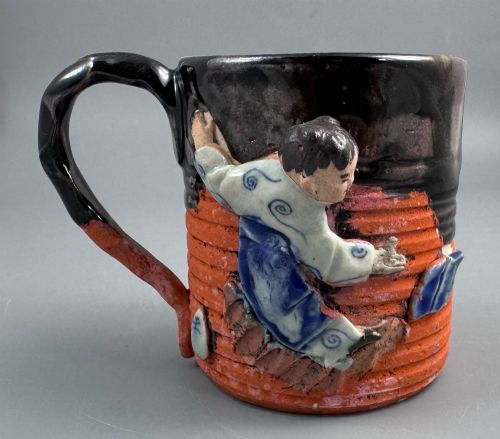


Japanese Earthenware Vessel
A Japanese earthenware vessel brings intricate Meiji period hand-painted detail and rich gilding directly into a modern interior.
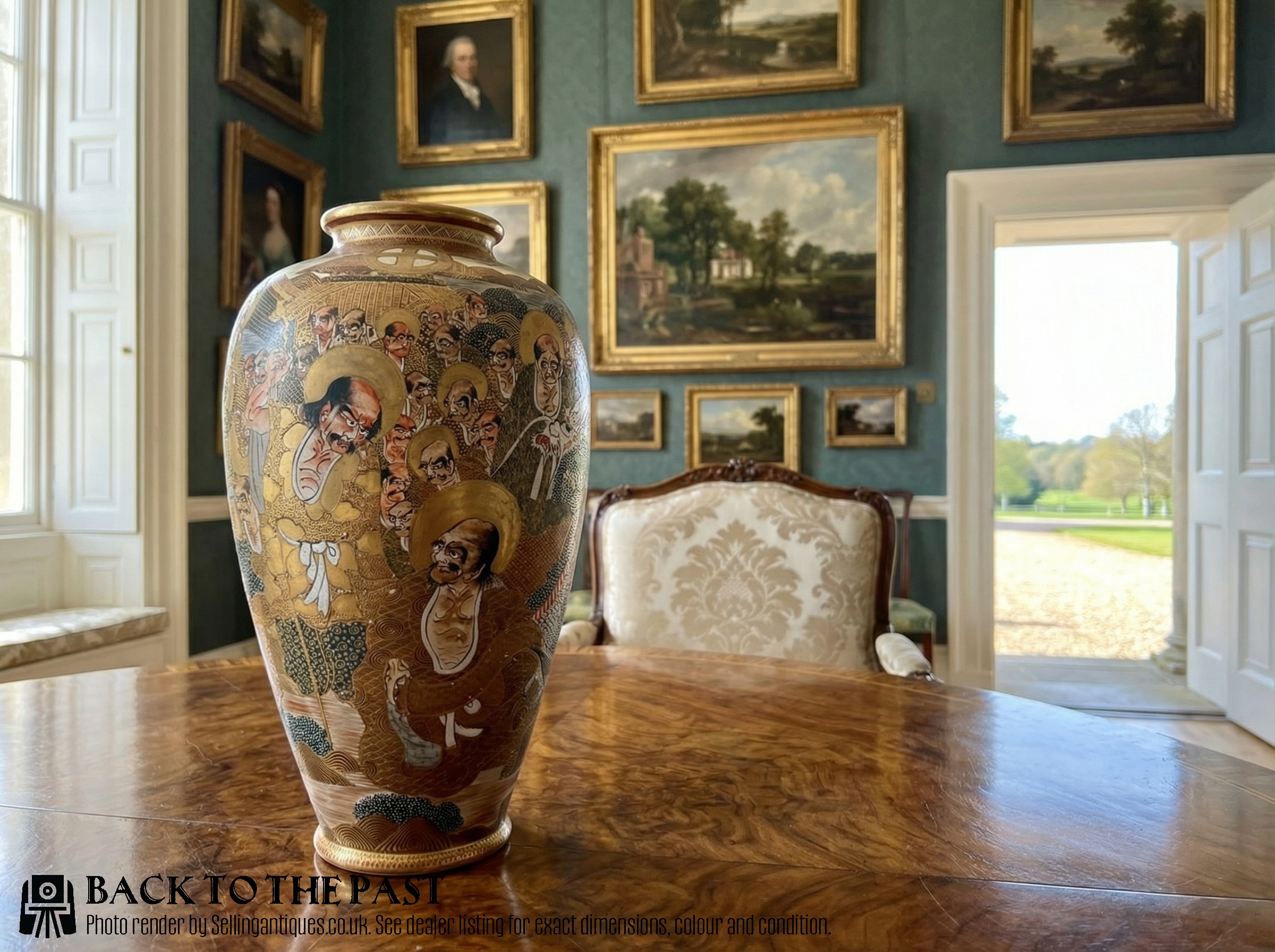
Japanese Earthenware Vessel
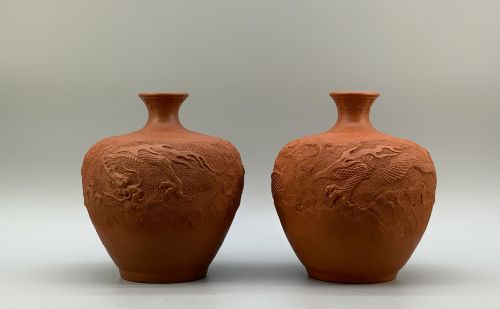
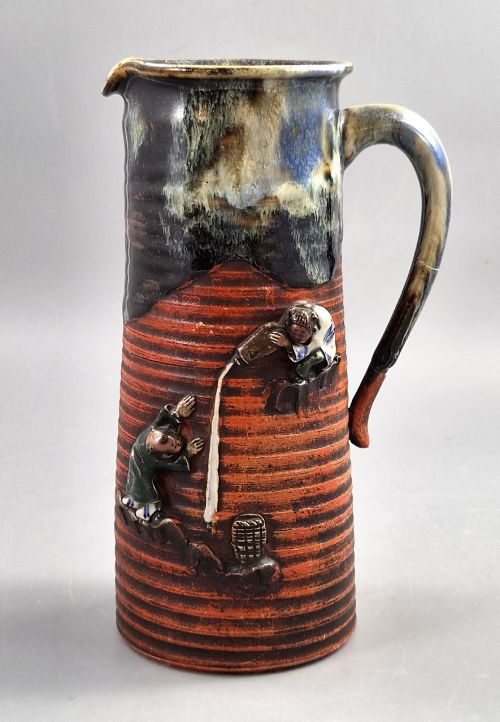
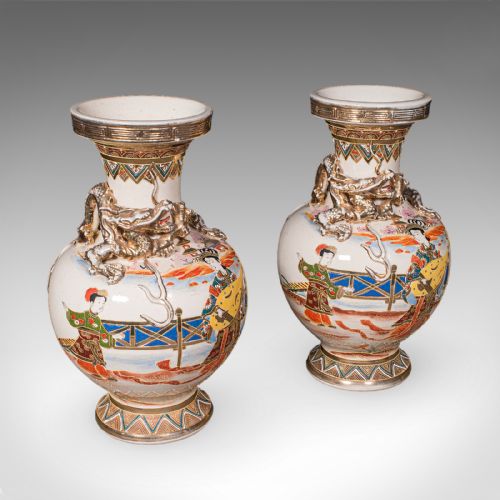
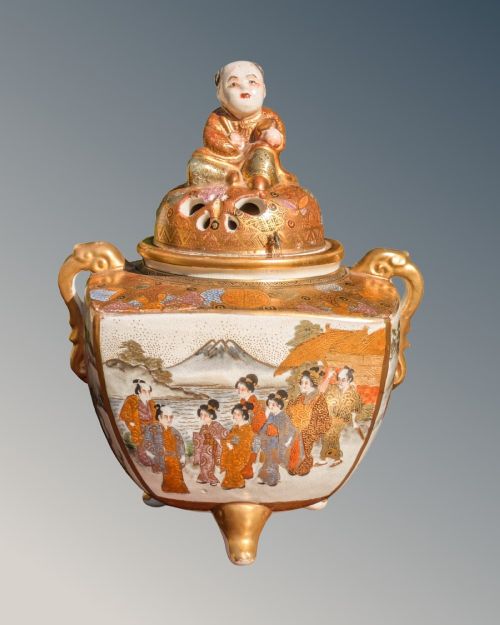
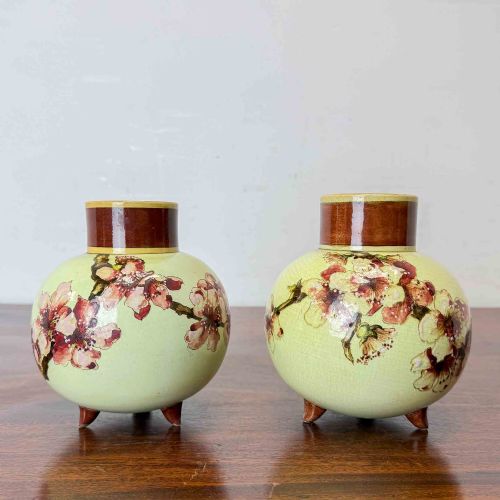
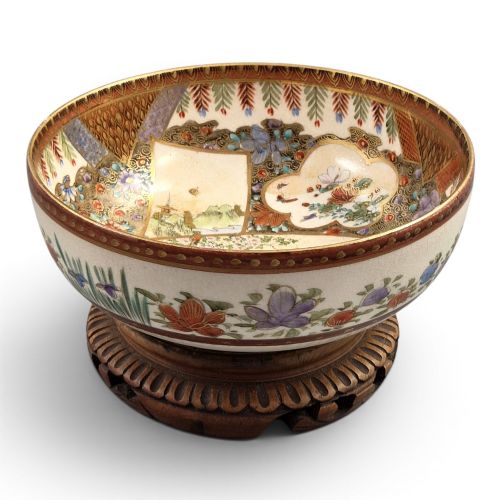
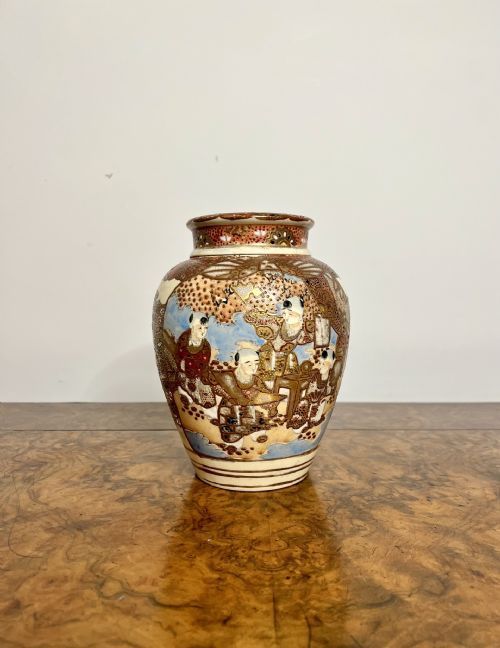
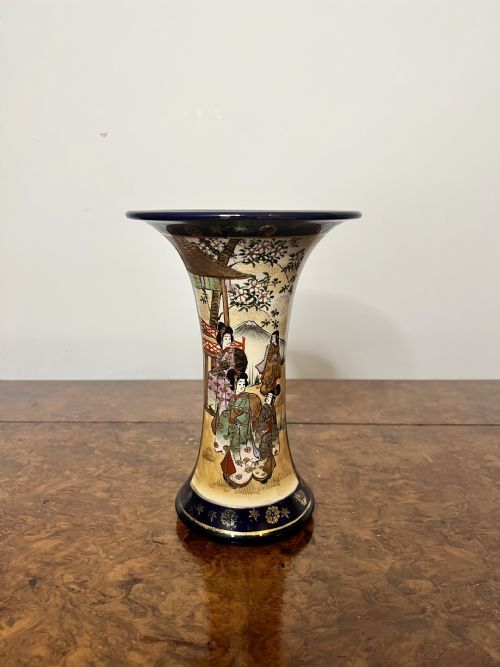
A Japanese earthenware vessel on this page typically takes the form of a Satsuma ware vase, koro, bowl, or tea caddy originating from the late nineteenth or early twentieth century. These decorative objects span diverse regional styles, including Kyoto workshops and Tokyo kilns, alongside distinctive Sumida Gawa pieces with applied figures.
How they were made
Potters shaped earthenware, terracotta, and stoneware bodies before applying detailed enamel pigments and gold leaf details by hand. Many pieces utilise raised moriage decoration to create textured surfaces on panels depicting religious figures, samurai, and floral motifs.
Specialised techniques involve finely crackled glazes that accept dark staining to accentuate the network of fine lines across the ceramic body. Kiln workers also combined glazed ceramic with applied clay figures and wood components, particularly in sculptural Sumida Gawa vessels.
Japanese Earthenware Vessel Retail Price Guide 2026
Typical asking prices for japanese earthenware vessel among the pieces listed under this phrase on Sellingantiques today, from the lower quarter to the upper quarter. They describe what is for sale here now, not the wider market.
Listings feature pieces spanning the Victorian era through the Meiji and Taisho periods, utilising earthenware, stoneware, and gold leaf.
What varies in quality
The standard of a Japanese earthenware vessel depends on the precision of the brushwork and the density of the gilding applied to the panels. Master artists executed minute facial expressions and complex armour details with exceptional control, distinguishing workshop productions from standard commercial wares.
The clarity and evenness of the crackled glaze also determine the distinction of a piece, alongside the crispness of signature marks and mon crests. Structural complexity, such as heavy relief work or openwork handles, demands greater technical skill from the potter.
Kizan·Kozan·Hotoda·Kōko·Makuzu Kozan II·Chosei·Kinkozan·Tokyo Taizan·Shozan·Ippo
The Japanese Earthenware Vessel Glossary
- Satsuma ware
- Earthenware originating from Satsuma province featuring a characteristic ivory-coloured body with a fine network of crackled glaze and extensive polychrome enamel painting. The style evolved extensively in Kyoto and Tokyo workshops during the Meiji period.
- Koro
- A traditional Japanese incense burner typically supported on three feet and fitted with a pierced decorative cover. These vessels frequently incorporate shishi lion finials.
- Moriage
- A decorative ceramic technique involving the piping of thick slip onto the clay surface to create raised, three-dimensional patterns before firing and gilding. This method yields a heavily textured finish.
- Natsume
- A small, flat-topped tea caddy traditionally utilised in Japanese tea ceremonies for holding powdered green tea. These vessels often display delicate miniature paintings.
- Mon
- A traditional Japanese heraldic emblem or badge used by families and clans. The Shimazu family crest frequently appears on high-quality Satsuma vessels.
Japanese Earthenware Vessel: Frequently Asked Questions
What is Satsuma ware?
Satsuma ware is a distinct type of Japanese earthenware characterised by a pale, ivory-coloured clay body covered in a finely crackled transparent glaze. Artisans decorated these surfaces with elaborate enamel colours and heavy gold leaf.
Originally produced in Kagoshima prefecture, the style expanded significantly into major urban centres like Kyoto, where master workshops created intricate pieces for international export during the Meiji period.
How can I tell the period?
Dating these vessels relies on examining the specific art styles, signature marks, and manufacturing techniques recorded across the Meiji and Taisho eras. Pieces created during the late nineteenth century frequently exhibit dense, finely executed figural processions and refined moriage work.
Later items from the early twentieth century often transition toward simplified studio pottery forms or distinct regional clays like those from Tokoname.
What are Sumida Gawa pieces?
Sumida Gawa pottery consists of distinctive earthenware vessels featuring heavily textured, uneven glazes and dramatic applied sculptural figures. Artisans added modelled clay characters, such as karako figures and travellers, directly onto the exterior surfaces.
Originating near the Sumida River in Tokyo, these expressive pieces provide a striking contrast to the precise, flat enamel painting found on traditional Satsuma ware.