



Japanese Dog Sculpture
These japanese dog sculpture pieces bring spirited canine character and traditional craftsmanship into your home.
Japanese Dog Sculpture
The pieces on this page span several distinct historical eras, with a strong representation from the Meiji period alongside Edo-Meiji transition pieces and Showa period works. You will find domestic hounds rendered with charming realism alongside mythological beasts rooted in Buddhist tradition. Each piece reflects the specific aesthetic concerns of its era, whether cast in metal or modelled in clay.
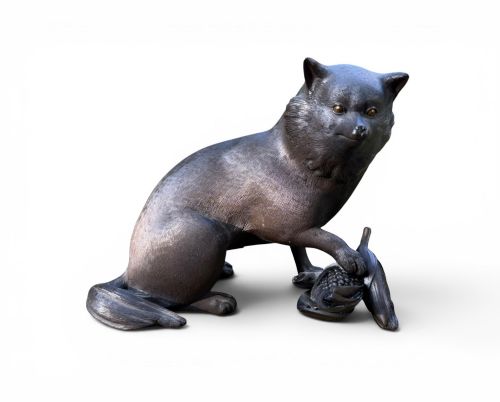
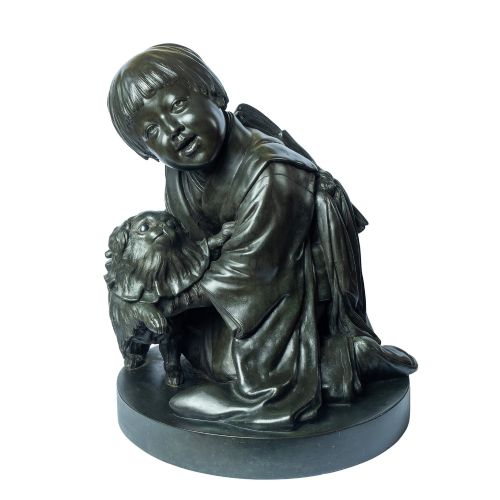
Ceramic representations utilise regional Japanese traditions such as Hirado, Kutani, and Bizen wares. These ceramic sculptures often display detailed glazes, cobalt underglaze, or turquoise finishes that highlight the contours of the animal. Alongside them, bronze okimono demonstrate exceptional metalworking skill, capturing the texture of fur and the alertness of pose.
Materials and construction
Makers utilised bronze and iron for metal sculptures, employing advanced casting techniques to achieve lifelike textures and dynamic poses. Bronze pieces often receive patination or fine chasing to accentuate muscle tone and facial expressions, while iron okimono showcase intricate detailing.
Ceramic figures rely on carefully prepared earthenware and porcelain bodies finished with specialised glazes, gold leaf accents, or cobalt underglaze details. Kiln operators controlled firing temperatures to produce the distinct surfaces seen in Bizen, Hirado, and Kutani wares.
Japanese Dog Sculpture Retail Price Guide 2026
Typical asking prices for japanese dog sculpture among the pieces listed under this phrase on Sellingantiques today, from the lower quarter to the upper quarter. They describe what is for sale here now, not the wider market.
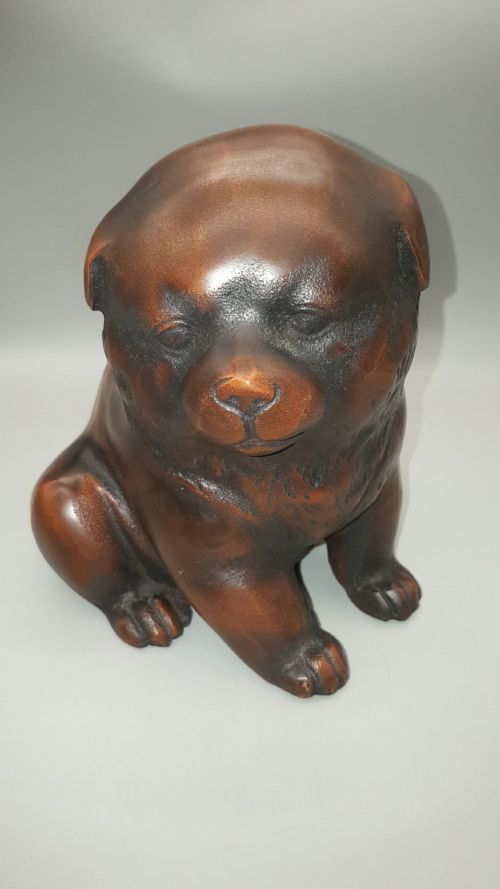
Among the bronze menagerie, a small puppy tilts its head in eternal confusion, ignoring the grand mythical lions nearby.
Factors of quality
The distinction between standard figures and exceptional works lies in the precision of the modelling and the subtlety of surface finishing. Master artisans achieved a lifelike presence through careful observation of canine anatomy and posture, whereas lesser pieces can appear stiff or generic.
Material application also dictates the standing of a piece, from the crispness of a bronze casting to the purity of porcelain and the control of enamel or glaze. Signed works by recognised makers demonstrate a superior level of craftsmanship that elevates them above unsigned production.
Tsunemitsu·Shosai·Masaaki·Unno Shomin
The Japanese Dog Sculpture Glossary
- Okimono
- A Japanese freestanding ornamental statue or sculpture designed for display on a shelf or in a tokonoma alcove. These decorative objects became widely produced during the Meiji period for both domestic and export markets.
- Shishi
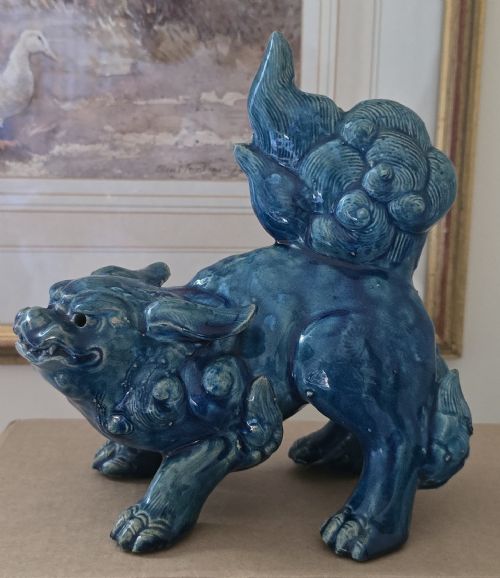
- A mythical guardian lion dog originating from Chinese tradition that protects sacred spaces. Japanese artisans frequently rendered these protective figures in porcelain, bronze, and glazed ceramic.
- Meiji Period
- The era of Japanese history lasting from 1868 to 1912, characterised by rapid modernization and the opening of trade with the West. This period produced many of the finest decorative metalwork and ceramic sculptures available to collectors.
- Kutani
- A style of Japanese porcelain noted for its vibrant coloured glazes and intricate painted details. Pieces from this tradition often incorporate rich pigments and gold leaf accents.
- Hirado Porcelain
- A refined, high-quality Japanese porcelain historically produced for the lords of Hirado. It is celebrated for its brilliant white body and delicate sculptural modelling.
Japanese Dog Sculpture: Frequently Asked Questions
What are shishi figures?
Shishi are mythical guardian lion dogs derived from Buddhist tradition that symbolize protection and prosperity. Sculptors frequently portrayed them with swirling manes and fierce expressions.
These guardian figures appear in various mediums across this category, including Kutani porcelain, Hirado ceramic, and turquoise-glazed earthenware.
How do I care for bronze sculptures?
Bronze sculptures require minimal maintenance beyond occasional dusting with a soft, dry cloth. Avoid using abrasive cleaners or polishes that can damage the underlying metal patina.
Keeping the pieces away from excessive moisture and direct sunlight helps preserve the historic finish of the metal.
How do I identify Meiji period pieces?
Meiji period pieces can often be identified through their intricate detailing, naturalistic styling, and specific manufacturing marks. The era spanned from 1868 to 1912 and saw a peak in export-quality metalwork and ceramics.
Many works from this time feature artist signatures or seals stamped into the bronze or painted on the ceramic base.