





Japanese Cloisonne Enamel Vases
Japanese cloisonne enamel vases are intricate metal vessels decorated with vitreous wires, bringing rich botanical and animal imagery into a room.
Japanese Cloisonne Enamel Vases
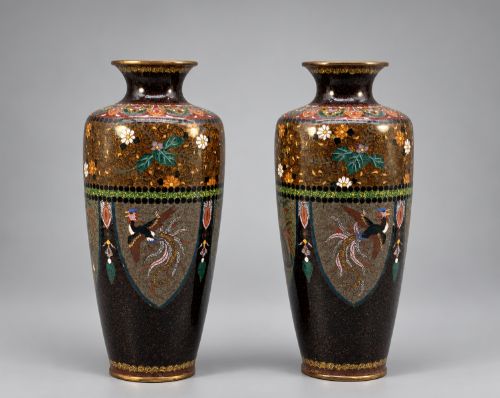
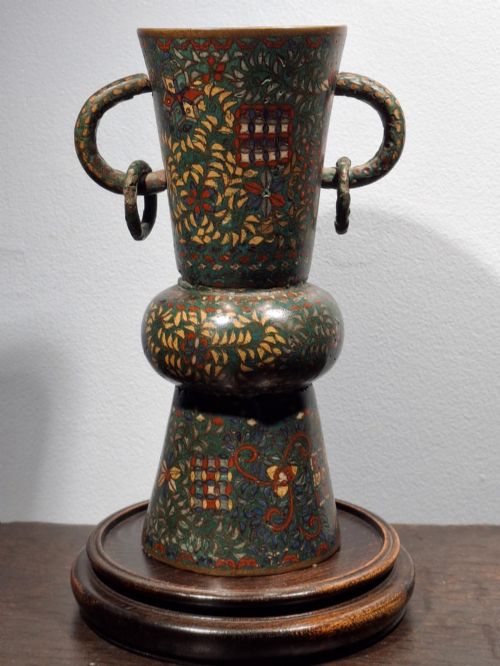
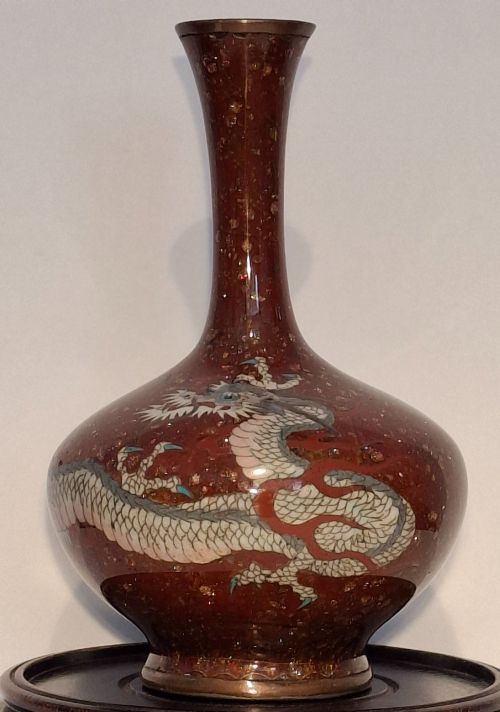
Japanese cloisonne enamel vases encompass delicate miniature vessels and large palace pieces created across the nineteenth and twentieth centuries. The selection on this page centres primarily on works from the Meiji and Taisho periods, featuring forms such as ginger jars, ritual vessels, and jardiniere shapes.
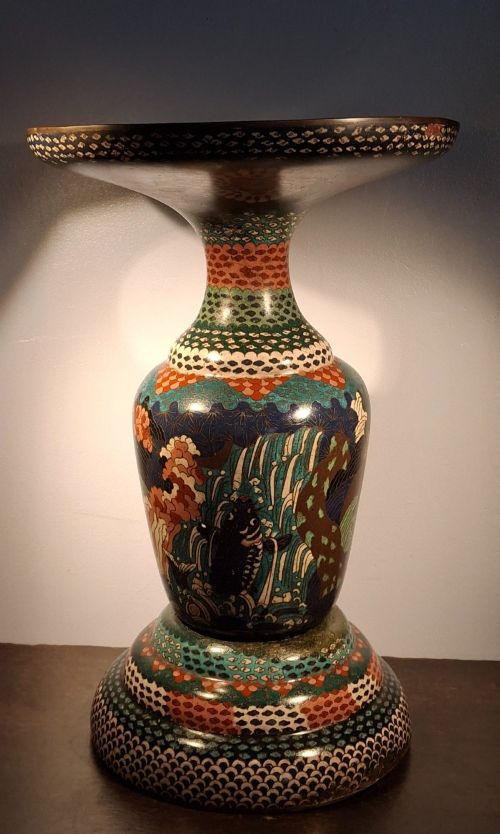
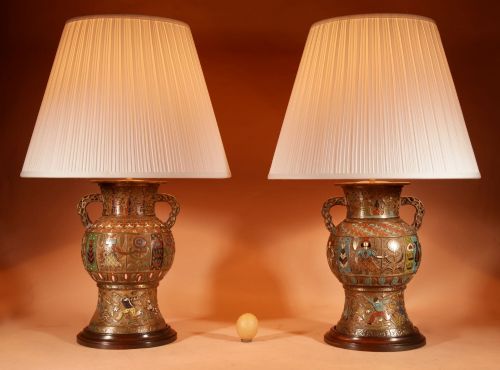
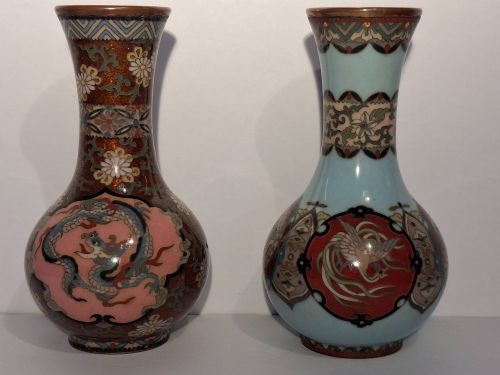
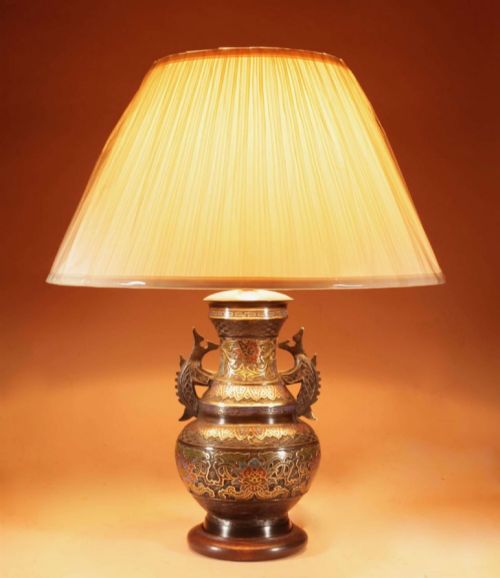
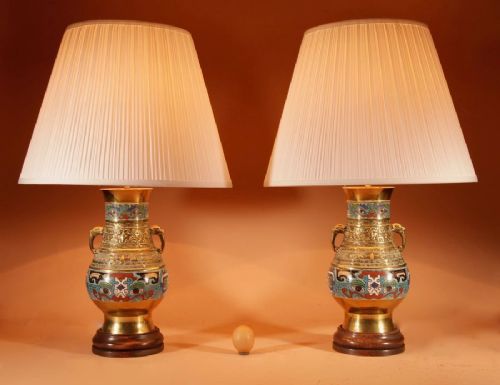
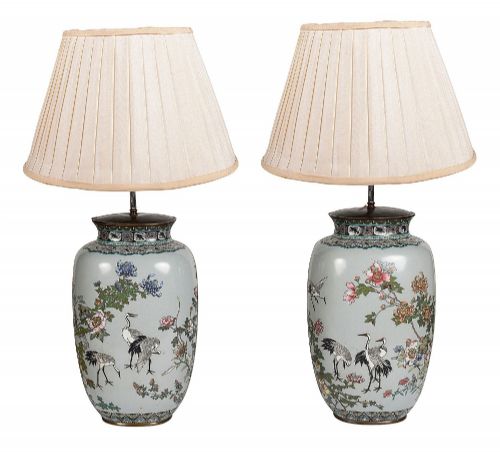
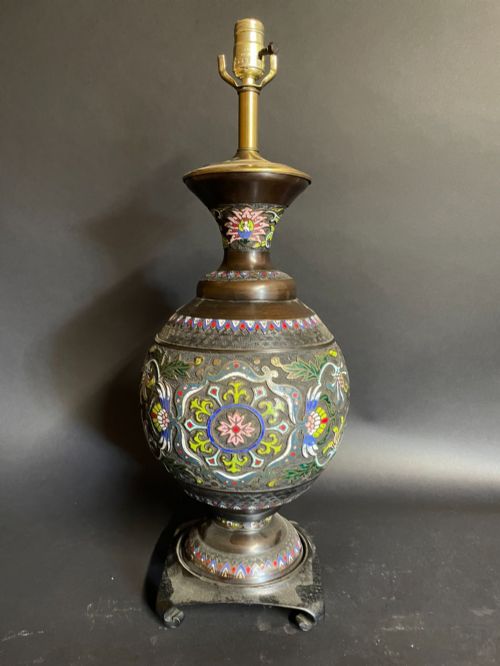
Motive work spans leaping koi, phoenix birds, and mosaic patterns, alongside bronze table lamps adapted from these vessels. Many examples arrive in matched pairs, demonstrating the symmetrical tastes of their original makers.
How they were made
Craftsmen built japanese cloisonne enamel vases by soldering thin metal wires onto copper, brass, or bronze bodies to form distinct cellular compartments. These wires created the outlines for intricate pictorial motifs before the application of coloured glass pastes.
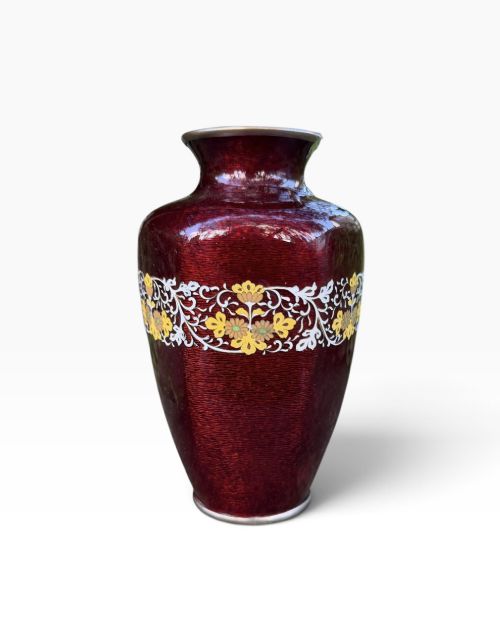
The filled vessels underwent high-temperature firing to vitrify the enamel, followed by extensive grinding and polishing to achieve a smooth surface. Specialised variants incorporated foil underlayers, transparent ginbari enamels, or unbased wire frameworks known as totai shippo.
Japanese Cloisonne Enamel Vases Retail Price Guide 2026
Typical asking prices for japanese cloisonne enamel vases among the pieces listed under this phrase on Sellingantiques today, from the lower quarter to the upper quarter. They describe what is for sale here now, not the wider market.
Leaping koi fish appear frequently on these vases, swimming eternally up metal rivers without ever making a splash.
What varies in quality
Quality in japanese cloisonne enamel vases rests on the fineness of the wirework grid and the precision of the enamel fill. Pieces exhibiting microscopic cellular divisions and flawless colour transitions require exceptional skill compared to simpler, coarser designs.
The weight and finish of the underlying bronze or copper armature also signal standard, alongside the complexity of signatures from recognised workshops. Miniature pieces demanding extreme dexterity often represent the upper tiers of technical accomplishment.
Tsukamoto Hikokichi·Tamura Yukio·Ando
The Japanese Cloisonne Enamel Vases Glossary
- Cloisonne enamel
- A metalwork technique where thin wires are soldered to a body to create cells filled with vitreous paste. This method allows for detailed pictorial designs across vases and vessels.
- Champleve
- An enamelling process where troughs are cast or carved directly into a bronze or brass body to hold the enamel. It produces heavier vessels with recessed coloured decoration.
- Ginbari
- A Japanese enamelling method featuring a textured foil backing beneath translucent enamel. It gives the surface a patterned, shimmering depth.
- Totai shippo
- A wire-based enamel technique where the underlying metal body is removed, leaving a translucent vessel held together solely by enamel and wire. It creates a delicate, semi-transparent effect.
- Meiji Period
- A historical Japanese era spanning from 1868 to 1912, noted for rapid advancements in decorative arts and metalwork. Many fine cloisonne vessels originate from this time.
Japanese Cloisonne Enamel Vases: Frequently Asked Questions
How do I identify a Meiji period piece?
Meiji period japanese cloisonne enamel vases typically display exceptionally fine wirework and complex pictorial themes like birds or flora. Examining the base metal and the density of the wire cells helps distinguish these nineteenth-century works from later productions.
Signatures or attribution marks on the base further clarify the period, though unsigned examples remain common. Comparing the colour palette and finishing techniques against dated specimens provides additional guidance.
Were these vases used as lamps?
Many japanese cloisonne enamel vases were converted into table lamps during the nineteenth and twentieth centuries to suit Western interior tastes. This adaptation often involved drilling the base or mounting the bronze vessel onto fitted hardware.
Collectors encounter both original display vessels and period lamp conversions on the market. Assessing the mountings and wiring reveals whether the conversion happened historically or recently.
What is champleve enamel?
Champleve is a technique where metal surfaces are hollowed out to receive enamel pastes, differing from the soldered wire cells of standard cloisonne. This method produces robust bronze and brass vases with deep, tactile patterns.
These pieces often present a heavier, more archaic appearance compared to delicate wired vessels. The technique frequently appears on table lamps and ritual objects from the era.
How should I clean these vases?
Cleaning japanese cloisonne enamel vases requires only a soft, dry cloth to remove dust from the wire grid and polished surface. Harsh chemical cleaners or abrasive materials will damage the delicate glass enamel and vulnerable metal wires.
Displaying the vessels away from direct sunlight preserves the vibrancy of the coloured pastes. Gentle handling protects the fine metallic outlines from accidental bending.